Vitiligo: What Patients Need to Know

Vitiligo happens when pigment-producing cells in the skin are lost or stop working. It often appears as smooth white patches on the face, hands, arms, feet, or around body openings.
Key Takeaways
- Vitiligo happens when pigment-producing cells in the skin are lost or stop working.
- It often appears as smooth white patches on the face, hands, arms, feet, or around body openings.
- Diagnosis is usually clinical, but doctors may use a Wood's lamp and blood tests to look for associated conditions.
- Treatment may include topical medicines, light therapy, camouflage strategies, and in selected cases surgery.
- Sun protection and emotional support are important parts of day-to-day care.
- A dermatologist should assess new or spreading pigment loss to confirm the diagnosis and discuss options.
Vitiligo is a long-term skin condition that causes well-defined patches of skin to lose pigment. It is not contagious or dangerous to others, but it can affect appearance, confidence, and sometimes signal a need to check for related autoimmune conditions.
Overview
Vitiligo is a condition in which areas of skin lose their normal color and become lighter or completely white. This happens because melanocytes, the cells that make melanin pigment, are reduced or stop functioning in affected skin. Vitiligo can occur at any age and in people of any skin tone, although it is often more noticeable in those with darker skin.
For many patients, the most important first point is that vitiligo is not an infection and it cannot be passed from person to person. It is also not a form of skin cancer. Even so, it can be distressing because it changes appearance unpredictably and may affect visible areas such as the face, hands, or scalp.
Vitiligo may remain limited to a few areas or gradually involve larger parts of the body. Some people have periods of stability, while others notice new patches over time. Because pigment changes can have more than one cause, a medical evaluation helps confirm whether the changes are due to vitiligo or another skin condition.
How vitiligo looks and where it appears
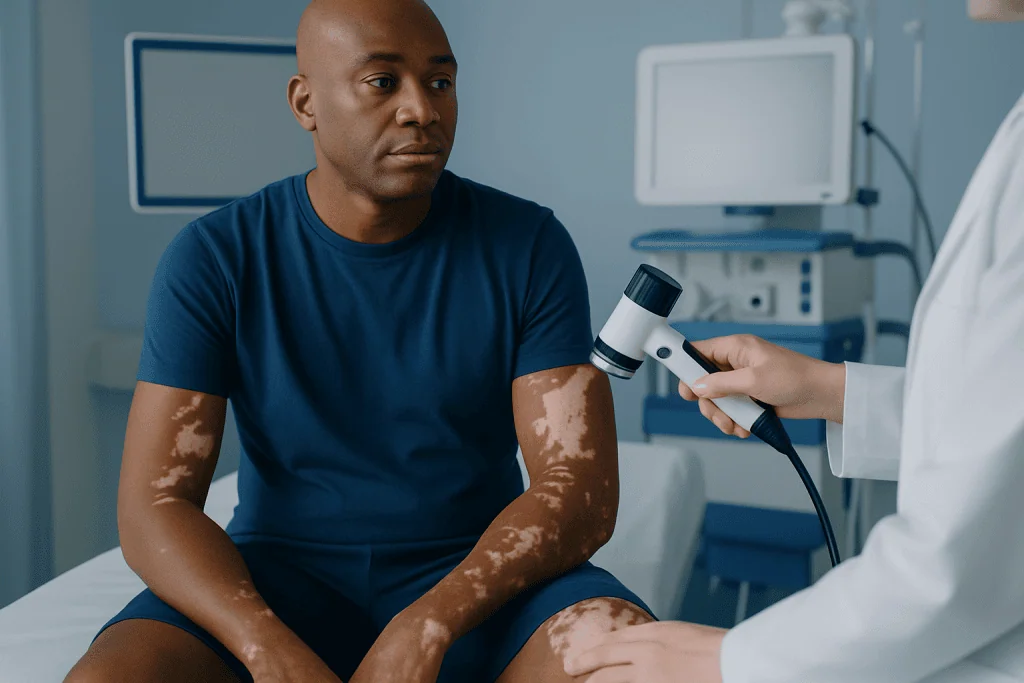
The typical sign of vitiligo is a sharply defined patch of lighter skin that feels normal to the touch. The skin is usually not scaly, raised, or painful. In some people, the hair growing in affected areas may also turn white, including scalp hair, eyebrows, eyelashes, or beard hair.
Vitiligo often affects sun-exposed or friction-prone areas. Common sites include the face, around the eyes or mouth, fingers, backs of the hands, wrists, elbows, knees, feet, and the genital area. It can also involve the lips or inside the mouth in some cases.
Doctors sometimes describe vitiligo by pattern. Nonsegmental vitiligo is the most common type and often appears on both sides of the body in a roughly symmetrical way. Segmental vitiligo tends to affect one part or side of the body and may progress for a period before stabilizing.
- Small pale or white patches that slowly enlarge
- Early whitening of hair in the involved area
- Color loss around the eyes, mouth, fingers, or joints
- Changes that become more obvious after tanning or sun exposure
Causes and risk factors

Vitiligo is considered a complex condition with autoimmune features. In many patients, the immune system appears to mistakenly target melanocytes. Genetics also plays a role, which means vitiligo can run in families, although not everyone with a family history will develop it.
Researchers believe vitiligo develops through a combination of factors rather than a single cause. These may include inherited susceptibility, immune system activity, oxidative stress within the skin, and environmental triggers. Emotional stress is often discussed by patients, but it is better understood as a possible trigger in some people rather than a sole cause.
Vitiligo may occur together with other autoimmune conditions, such as autoimmune thyroid disease, type 1 diabetes, pernicious anemia, or alopecia areata. A doctor may therefore ask about symptoms beyond the skin and sometimes recommend testing. Patients who have conditions linked to hair or skin autoimmunity, such as alopecia areata, may benefit from broader dermatologic assessment.
How doctors diagnose vitiligo
Diagnosis usually begins with a skin examination and medical history. A dermatologist looks at the pattern of pigment loss, when it started, whether it is spreading, and whether there is a family or personal history of autoimmune disease. In many cases, the appearance is characteristic enough for diagnosis during the visit.
A Wood’s lamp, which emits ultraviolet light, may help make areas of pigment loss more visible and distinguish vitiligo from other causes of lighter skin. This can be especially useful in fair skin tones or in very early disease, when changes are subtle under normal room light.
If needed, blood tests may be ordered to look for associated autoimmune conditions, especially thyroid disorders. Rarely, a skin biopsy is used when the diagnosis is uncertain and another condition needs to be ruled out. Patients being evaluated for broader skin changes or associated dermatologic concerns may also undergo a detailed dermatology assessment.
Treatment options and what they can achieve
Treatment for vitiligo is individualized. The main goals are to slow progression, encourage repigmentation where possible, and help patients feel more comfortable with their appearance. Response varies from person to person, and treatment often works best when started earlier and continued consistently under medical supervision.
Topical therapies are commonly used for limited areas. Depending on the body site and the patient’s age, a doctor may recommend anti-inflammatory creams or ointments, including corticosteroids or calcineurin inhibitors. These may be useful for small patches, especially on the face or neck, but they should be used exactly as directed to reduce side effects.
For more widespread or active vitiligo, light-based treatment can be helpful. Narrowband UVB phototherapy is a well-established option that may stimulate repigmentation over time and is often combined with topical treatment. Some patients may be considered for phototherapy as part of a supervised treatment plan.
Selected patients with stable vitiligo that has not responded to other methods may be candidates for procedural treatment, including grafting techniques. Cosmetic camouflage, self-tanning products, and counseling are also valid parts of care. In specialized settings, broader support through skin-focused specialist care can help patients weigh the benefits and limits of each approach.
Daily life, self-care, and prevention of complications
Vitiligo cannot always be prevented, but everyday skin care can reduce discomfort and protect areas that have lost pigment. Sun protection is especially important because depigmented skin burns more easily. A broad-spectrum sunscreen, protective clothing, hats, and shade can help prevent sunburn and reduce the contrast between affected and unaffected skin.
Gentle skin care is also useful. Since skin injury or repeated friction can sometimes trigger new patches in susceptible individuals, avoiding unnecessary trauma may help. This means being careful with scratching, tight straps, or repetitive rubbing when possible.
Many patients also benefit from camouflage cosmetics or self-tanning products designed for sensitive skin. These do not treat vitiligo itself, but they can make color differences less noticeable if the patient wishes. Emotional well-being matters too, and support groups, counseling, or open discussion with family can help reduce the social and psychological impact of visible skin change.
When to seek medical care
A patient should seek medical care if new white patches appear, existing patches begin to spread, or hair in the affected area turns white unexpectedly. An evaluation is also important if lighter patches are accompanied by itching, scaling, or inflammation, since those features may suggest a different diagnosis.
Prompt medical review can be helpful for children, for pigment loss on the face or genitals, and for anyone with symptoms that may point to associated autoimmune disease, such as fatigue, unexplained weight change, hair loss, or heat and cold intolerance. These do not mean a person definitely has another condition, but they are reasons to discuss broader testing with a doctor.
If treatment is being considered, a dermatologist can explain realistic expectations and choose the safest approach based on skin type, age, disease activity, and the body areas involved. For international patients, Acibadem International’s multidisciplinary specialists and JCI-accredited hospitals diagnose and treat vitiligo, including evaluation for related skin conditions such as psoriasis when clinically relevant.
Frequently asked questions
Is vitiligo contagious?
No. Vitiligo is not caused by an infection, so it cannot spread from one person to another through contact, shared items, or the air. People with vitiligo can safely take part in school, work, sports, and normal daily activities.
Does vitiligo always keep spreading?
Not always. Some people develop only a few small patches that remain stable for years, while others notice gradual spread or periods of new activity. The course is unpredictable, which is why follow-up with a dermatologist can be useful.
Can vitiligo be cured completely?
There is no single guaranteed cure that works for everyone. However, several treatments can help restore some pigment, slow progression, or improve the appearance of the skin. Results depend on the type of vitiligo, the areas involved, and how early treatment begins.
Is vitiligo linked to stress?
Stress is not considered the sole cause of vitiligo. In some people, physical or emotional stress may act as a trigger or may coincide with disease activity, but vitiligo is usually related to immune and genetic factors as well. Managing stress can still be helpful for overall well-being.
Should people with vitiligo avoid the sun completely?
They do not necessarily need to avoid going outdoors, but careful sun protection is important. Skin without pigment burns more easily, and tanning can make the contrast more noticeable. Sunscreen, protective clothing, and shade are practical ways to protect the skin.
Can children get vitiligo?
Yes. Vitiligo can begin in childhood as well as adulthood. If a child develops white patches, a medical assessment is recommended to confirm the diagnosis and discuss safe treatment and skin-protection options.
References
- American Academy of Dermatology
- National Institute of Arthritis and Musculoskeletal and Skin Diseases
- National Health Service
- Mayo Clinic
- British Association of Dermatologists
This article is for general information only and is not a substitute for professional medical advice. Please consult a qualified doctor about your individual situation.
Vitiligo in Turkey — costs, top hospitals & a free quote
JCI-accredited · board-certified surgeons · reply within 24h
Add us as a Preferred Source to see more of our trusted health content across Google Search, AI Overviews and Discover.