Understanding Glaucoma: A Complete Patient Guide

Glaucoma can develop with no symptoms at first, which is why routine eye exams matter. It often involves increased eye pressure, but glaucoma can also occur with normal eye pressure.
Key Takeaways
- Glaucoma can develop with no symptoms at first, which is why routine eye exams matter.
- It often involves increased eye pressure, but glaucoma can also occur with normal eye pressure.
- Early treatment may include eye drops, laser procedures, or surgery to protect remaining vision.
- Risk increases with age, family history, certain medical conditions, and long-term steroid use.
- Sudden eye pain, blurred vision, halos, headache, nausea, or vomiting need urgent medical evaluation.
Glaucoma is a group of eye conditions that damage the optic nerve, usually over time and often without early warning signs. Although vision already lost from glaucoma usually cannot be restored, timely diagnosis and treatment can help slow or prevent further vision loss.
Overview: what glaucoma is and why it matters
Glaucoma is a group of eye diseases that gradually damage the optic nerve, the structure that carries visual information from the eye to the brain. In many people, this damage is linked to increased pressure inside the eye, called intraocular pressure. However, glaucoma can also develop even when eye pressure is in the normal range.
What makes glaucoma especially important is that it often begins quietly. A person may notice no pain and no change in central vision until the disease is already advanced. The earliest loss usually affects side, or peripheral, vision, which can be easy to miss in daily life.
Glaucoma is one of the leading causes of permanent vision loss worldwide, but early detection can make a meaningful difference. Treatment cannot usually reverse damage that has already happened, but it can help preserve the vision that remains. This is why regular eye care is a key part of prevention and long-term eye health.
Types of glaucoma and how they differ
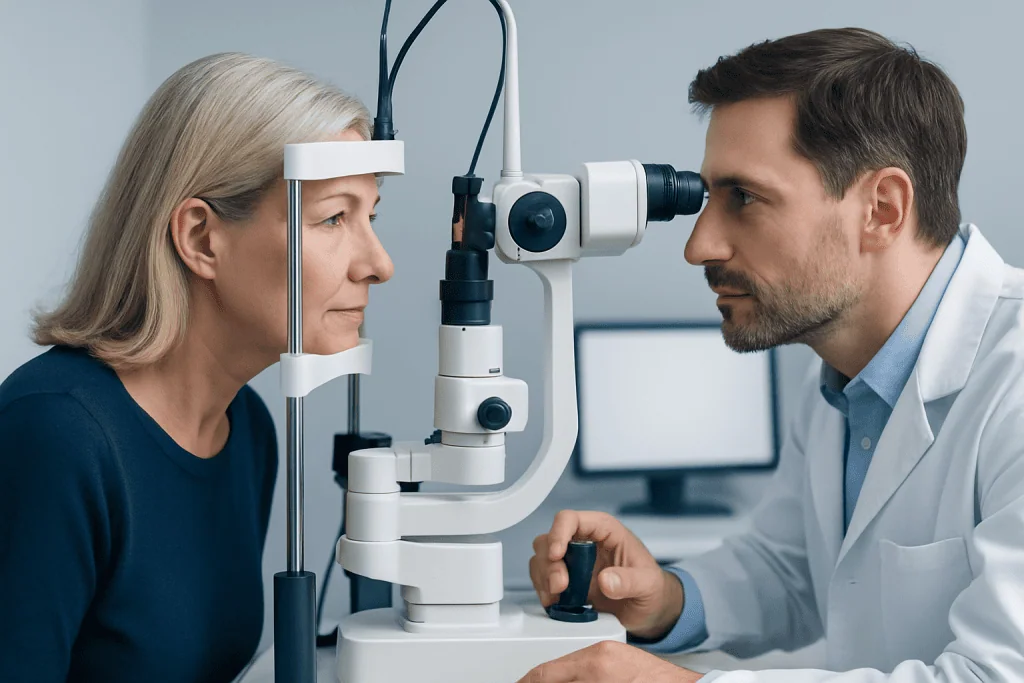
Glaucoma is not a single disease. The most common form is open-angle glaucoma, which develops slowly when fluid drainage in the eye becomes less efficient over time. Pressure may rise gradually, and optic nerve damage can progress without noticeable symptoms.
Angle-closure glaucoma happens when the drainage angle between the iris and cornea becomes blocked. This can occur suddenly, causing an acute attack, or more gradually. A sudden attack is an emergency because pressure can rise quickly and threaten vision within a short time.
Other types include normal-tension glaucoma, where optic nerve damage occurs despite eye pressure in the usual range; secondary glaucoma, caused by another eye problem, injury, inflammation, medication, or disease; and congenital or childhood glaucoma, which is present at birth or develops early in life. Some patients may also have related retinal or optic nerve conditions that need separate evaluation, such as retinal detachment if there are flashes, floaters, or a curtain-like shadow in vision.
Because different types behave differently, the treatment plan depends on the exact diagnosis. A comprehensive eye examination helps determine the glaucoma type, its severity, and how urgently treatment is needed.
Symptoms: common signs and warning signals
Most people with early open-angle glaucoma do not notice symptoms. Vision may seem normal because the brain adapts well to gradual changes. Over time, untreated glaucoma can narrow peripheral vision, making it harder to see objects to the side, move safely in dim light, or drive comfortably.
As the disease advances, blind spots may become more noticeable. Reading and detailed tasks may remain possible for a long time because central vision is often preserved until later stages. This can create a false sense of reassurance and delay diagnosis.
Symptoms of acute angle-closure glaucoma are very different and usually appear suddenly. These may include:
- Severe eye pain
- Red eye
- Blurred vision
- Halos around lights
- Headache
- Nausea or vomiting
These symptoms need urgent medical attention. They are not typical of chronic open-angle glaucoma, but when they occur, prompt treatment is important to relieve pressure and reduce the risk of permanent damage.
Causes and risk factors
The eye continuously produces a clear fluid called aqueous humor. This fluid normally drains through specialized channels at the front of the eye. When fluid does not drain properly, pressure inside the eye may rise and place stress on the optic nerve. Over time, this can lead to nerve damage and visual field loss.
Eye pressure is an important risk factor, but it is not the only one. Some people with high eye pressure never develop glaucoma, while others develop glaucoma at normal pressure. This means that optic nerve sensitivity, blood flow, anatomy, and inherited factors may all play a role.
Known risk factors include older age, a family history of glaucoma, African, Asian, or Hispanic ancestry for certain glaucoma types, diabetes, high or low blood pressure, severe nearsightedness or farsightedness, previous eye injury, thin corneas, and long-term use of steroid medications. Secondary glaucoma may also arise from eye inflammation, tumors, advanced cataract, or complications of other eye conditions.
People who have multiple risk factors may benefit from more frequent eye examinations. Someone being treated for another eye problem, such as cataract, may also have glaucoma screening as part of a broader ophthalmology assessment.
How glaucoma is diagnosed
Glaucoma diagnosis is based on more than one test. An eye doctor usually starts with a review of symptoms, personal and family history, current medications, and a full eye examination. Measuring eye pressure is helpful, but pressure alone cannot confirm or rule out glaucoma.
A glaucoma evaluation may include examination of the optic nerve after dilating the pupils, visual field testing to look for areas of side-vision loss, and imaging tests that measure the thickness of the optic nerve fiber layer. The doctor may also measure corneal thickness and inspect the drainage angle using a test called gonioscopy.
These tests help answer several important questions: Is glaucoma present? What type is it? How much damage has occurred? Is it stable or progressing? Because glaucoma often changes slowly, follow-up testing over time is a major part of diagnosis and monitoring.
Regular monitoring is especially important because treatment decisions are individualized. A person with mildly elevated pressure and a healthy optic nerve may be observed closely, while someone with clear nerve damage may need treatment even if pressure is not very high.
Treatment options: protecting vision over time
The main goal of glaucoma treatment is to lower eye pressure enough to reduce further optic nerve damage. The target pressure is different for each person and depends on the type and stage of glaucoma, the appearance of the optic nerve, and whether vision loss is progressing. Treatment plans often change over time based on follow-up results.
For many patients, treatment begins with prescription eye drops. Different drops work in different ways, such as helping fluid drain better or reducing the amount of fluid the eye makes. It is important to use them exactly as directed, because missed doses can reduce protection. If drops cause irritation or are hard to manage, the doctor may adjust the plan.
Laser treatment can be an effective next step or, in some cases, an early option. Laser procedures may improve drainage in open-angle glaucoma or create an opening for fluid flow in angle-closure glaucoma. Depending on the situation, a specialist may recommend laser treatment for glaucoma to help control eye pressure.
If medicines and laser treatment are not enough, surgery may be considered. Options include procedures that create a new drainage pathway or implant tiny devices to improve fluid outflow. Some patients may need glaucoma surgery, while others may benefit from broader eye surgery planning if there are additional eye problems to address. In complex cases, careful review by an ophthalmology team is important, and Acibadem International’s multidisciplinary specialists in JCI-accredited hospitals diagnose and treat glaucoma for international patients.
Living with glaucoma: self-care, prevention, and follow-up
There is no guaranteed way to prevent every case of glaucoma, but early detection is one of the best tools for protecting vision. Routine eye exams are especially important for adults over 40, people with a family history of glaucoma, those using steroid medicines long term, and anyone with other eye or medical risk factors.
Self-care starts with following the treatment plan consistently. Patients should use eye drops as prescribed, attend follow-up visits, and tell their doctor about side effects or difficulties with cost, scheduling, or technique. Simple strategies such as setting reminders or linking drops to a daily habit can help improve regular use.
General health habits also support long-term eye health. Managing blood pressure, diabetes, and other chronic conditions may help reduce overall risk. Protective eyewear can lower the chance of eye injury, and patients should avoid stopping prescribed steroid medicines on their own; instead, they should discuss safer alternatives with their doctor if needed.
It is also helpful to ask about home safety and driving if peripheral vision is affected. Some people benefit from low-vision support, visual aids, or mobility guidance. While lifestyle changes do not replace medical treatment, they can make daily life safer and more comfortable.
When to seek medical care
Anyone who has risk factors for glaucoma or has not had a recent eye exam should arrange routine evaluation with an eye doctor. This is particularly important when there is a family history of glaucoma, gradual difficulty with side vision, or uncertainty about whether current symptoms are related to eye pressure or another eye condition.
Urgent care is needed for sudden severe eye pain, redness, blurred vision, halos around lights, sudden headache with nausea or vomiting, or a rapid drop in vision. These symptoms may suggest acute angle-closure glaucoma or another eye emergency and should not be ignored.
People already diagnosed with glaucoma should seek medical advice sooner than planned if they notice worsening vision, new side effects from treatment, trouble using drops, or signs of infection after a procedure. Timely follow-up helps the care team adjust treatment before additional vision is lost.
Frequently asked questions
Can glaucoma cause blindness?
Yes, glaucoma can lead to permanent vision loss if it is not treated. However, many people keep useful vision for life when the condition is found early and managed consistently.
Does glaucoma always happen because eye pressure is high?
No. High eye pressure is a major risk factor, but some people develop glaucoma even when their pressure is within the normal range. This is why a complete eye exam is needed rather than pressure testing alone.
Can vision lost from glaucoma come back?
In most cases, vision already lost from glaucoma cannot be restored. Treatment is aimed at protecting the remaining vision and slowing further damage to the optic nerve.
Who should be screened for glaucoma?
Adults over 40, people with a family history of glaucoma, and those with diabetes, steroid use, or certain ethnic risk factors should discuss regular screening with an eye doctor. Screening may need to start earlier or happen more often in higher-risk groups.
Are glaucoma eye drops lifelong?
Many patients use glaucoma drops for years, and some need them long term. The exact plan depends on how well pressure is controlled, whether laser or surgery is used, and how the optic nerve changes over time.
Is glaucoma surgery always necessary?
No. Many people are treated successfully with eye drops, laser procedures, or a combination of both. Surgery is usually considered when pressure remains too high, damage is progressing, or other treatments are not suitable.
References
- American Academy of Ophthalmology
- National Eye Institute
- Centers for Disease Control and Prevention
- World Health Organization
- American Glaucoma Society
This article is for general information only and is not a substitute for professional medical advice. Please consult a qualified doctor about your individual situation.
Glaucoma in Turkey — costs, top hospitals & a free quote
JCI-accredited · board-certified surgeons · reply within 24h
Add us as a Preferred Source to see more of our trusted health content across Google Search, AI Overviews and Discover.
Check your numbers in seconds
BMI, calories, due date, blood pressure and 30+ more clinical calculators — free, instant, doctor-reviewed ranges.

Ophthalmology
Comprehensive eye care from laser vision correction to retina, cornea and cataract surgery.
75 specialists in this unit