Bursitis: Early Signs, Risk Factors, and How It Is Treated

Bursitis is inflammation of a bursa that causes joint pain, swelling, and tenderness, often from overuse or pressure; treatment usually includes rest and…
Key Takeaways
- Bursitis commonly affects the shoulder, elbow, hip, knee, and heel.
- Early signs include localized pain, tenderness, swelling, and pain that worsens with movement or pressure.
- Repetitive motion, prolonged pressure, injury, and some medical conditions can increase the risk.
- Diagnosis is usually based on symptoms and examination, with imaging or fluid testing used when needed.
- Treatment often includes rest, ice, activity modification, physiotherapy, and sometimes medications or injections.
- Sudden severe pain, fever, marked redness, or inability to use the joint should prompt medical assessment.
Bursitis is inflammation of a small fluid-filled sac called a bursa, which cushions bones, tendons, and muscles near a joint. It often improves with activity changes, rest, and anti-inflammatory treatment, but persistent pain should be assessed by a doctor to confirm the cause and rule out other joint problems.
Overview: what bursitis is and why it happens
Bursitis is inflammation of a bursa, a small fluid-filled sac that helps reduce friction around a joint. Bursae act like cushions between bone and nearby soft tissues such as tendons, muscles, and skin. When a bursa becomes irritated, it can swell and cause pain with movement or direct pressure.
This condition most often affects areas that do repetitive work or bear pressure, including the shoulder, elbow, hip, knee, and heel. Some cases start after a clear strain or injury, while others develop gradually from repeated motions at work, sports, or everyday activities.
Bursitis is a descriptive diagnosis rather than a single disease pattern. For some people it is short-lived and mechanical, meaning it relates to overuse or posture. In others, it may be associated with inflammatory joint disease, crystal-related problems such as gout, or less commonly infection. That is why evaluation focuses not only on pain relief, but also on identifying the reason the bursa became inflamed.
Early signs and symptoms of bursitis
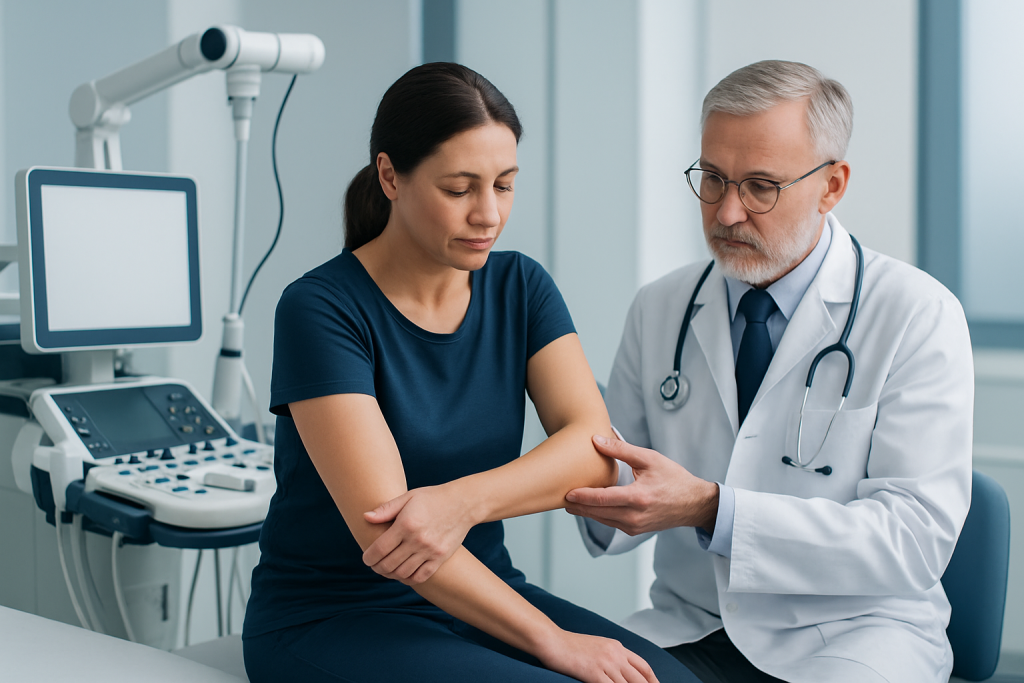
The earliest signs of bursitis are usually localized discomfort and tenderness around a joint. A person may notice pain when pressing on the area, lying on that side, kneeling, lifting the arm, climbing stairs, or repeating a certain motion. The pain can feel achy at first and then become sharper with movement.
Swelling and warmth may also appear, depending on which bursa is affected and how inflamed it is. In some areas, especially the elbow or knee, the swelling can be visible. In deeper bursae, such as around the hip or shoulder, there may be little to see from the outside, but movement can still be painful and limited.
Common symptoms include:
- Pain near a joint, especially with movement or pressure
- Tenderness over a specific point
- Swelling or a sense of fullness
- Stiffness or reduced range of motion
- Discomfort after repetitive activity or prolonged positions
Symptoms can overlap with tendon irritation, arthritis, or other joint conditions. For example, shoulder bursitis may occur alongside rotator cuff problems, while hip pain may be mistaken for back or muscle pain. Because the structures around a joint work together, accurate diagnosis is important when symptoms persist.
Causes and risk factors

The most common cause of bursitis is repeated irritation of a bursa. This can happen with frequent overhead reaching, repetitive kneeling, leaning on the elbows, running, poor training technique, or staying in one position for long periods. A direct blow or minor trauma may also trigger inflammation.
Risk increases with age because tendons and surrounding tissues become less resilient over time. Occupations and hobbies that involve repeated movement or pressure on a joint are also important contributors. Examples include gardening, painting, carpentry, cleaning, racket sports, throwing sports, and jobs that require kneeling or lifting.
Some medical conditions make bursitis more likely or more persistent. These include inflammatory arthritis such as rheumatoid arthritis, crystal deposition disorders such as gout, diabetes, and structural problems that change how a joint moves. Footwear, posture, muscle weakness, and poor flexibility can also increase friction around a bursa and lead to recurring symptoms.
Less commonly, a bursa becomes infected. This is called septic bursitis and is more likely to affect superficial bursae such as the elbow or knee. Skin breaks, recent trauma, immune suppression, or repeated pressure can increase this risk. Infection needs prompt medical assessment because it is treated differently from mechanical bursitis.
How bursitis is diagnosed
Diagnosis usually begins with a medical history and physical examination. The clinician asks where the pain is felt, what movements provoke it, whether there was recent overuse or injury, and whether there are signs of infection such as fever or redness. On examination, they look for swelling, tenderness, joint motion limits, muscle weakness, and pain patterns that suggest nearby tendon or joint disease.
Imaging is not always necessary, especially when symptoms and examination clearly point to bursitis. However, ultrasound or MRI may be helpful if the diagnosis is uncertain, if symptoms are severe, or if a tendon tear or other soft tissue problem is suspected. Plain X-rays do not show bursae well, but they may help exclude bone-related causes of pain.
If a bursa is very swollen, warm, or unusually painful, the doctor may recommend aspiration, which means removing a small amount of fluid with a needle. This can help check for infection or crystals. Blood tests may also be used when an inflammatory condition is suspected. In some cases, bursitis is identified alongside related problems such as arthritis, which may influence long-term management.
Treatment options and recovery
Treatment depends on the cause, the joint involved, and how long symptoms have been present. In many cases, early care focuses on reducing irritation and allowing the bursa to settle. This often includes modifying the activity that triggered the pain, resting the area briefly, applying ice, and using supportive positions or padding to reduce pressure.
Doctors may also recommend pain-relieving or anti-inflammatory medicines when appropriate, along with physiotherapy. Therapy can be especially helpful because it addresses the reasons the bursa became irritated in the first place, such as poor biomechanics, weak stabilizing muscles, tight surrounding tissues, or training errors. A guided rehabilitation plan may include stretching, strengthening, posture work, and gradual return to activity.
When pain persists despite conservative care, more targeted treatment may be considered. Depending on the location and clinical findings, this could include image-guided aspiration or an injection to reduce inflammation. In selected cases, people benefit from physical therapy and rehabilitation or further orthopedic assessment, especially if bursitis occurs together with structural problems such as tendon disease. For shoulder cases linked to ongoing impingement or tendon irritation, evaluation within orthopedics and traumatology can help guide care.
If bursitis is caused by infection, treatment is different and may include drainage and antibiotics under medical supervision. Surgery is uncommon and is usually reserved for chronic, recurrent, or complicated cases that do not respond to non-surgical care. Recovery times vary, but many people improve over days to weeks when the source of irritation is corrected and activity is increased gradually.
Prevention and self-care
Preventing bursitis usually means reducing repeated stress on vulnerable joints. Small changes can make a meaningful difference, such as improving posture at work, taking breaks during repetitive tasks, using knee pads for kneeling, avoiding prolonged leaning on the elbows, and building activity levels gradually rather than suddenly increasing training or workload.
Warm-up, flexibility, and muscle balance matter as well. Strong supporting muscles help distribute force more evenly around a joint, while stretching can reduce friction in some movement patterns. Shoes with good support may help lower-limb alignment, especially when heel, knee, or hip symptoms are involved.
During a flare, simple self-care is often useful:
- Rest the area briefly but avoid complete inactivity for long periods
- Use ice packs for short intervals to reduce discomfort
- Avoid the motion or position that reproduces pain
- Use cushioning or padding if pressure triggers symptoms
- Resume activity gradually as pain settles
Self-care is most effective when it is paired with identifying the trigger. If symptoms keep coming back, a doctor or physiotherapist can assess movement patterns and rule out related conditions. At Acibadem International, multidisciplinary specialists in JCI-accredited hospitals diagnose and treat bursitis for international patients, including cases that require imaging, rehabilitation, or orthopedic review.
When to seek medical care
Medical advice is recommended if joint pain lasts more than a few days, keeps returning, limits daily activity, or does not improve with rest and simple self-care. Assessment is also sensible when the diagnosis is unclear, because pain around a joint can come from tendons, ligaments, cartilage, or the joint itself rather than the bursa alone.
Prompt medical care is especially important if there is fever, marked redness, a hot swollen area, sudden severe pain, significant loss of movement, or an inability to bear weight or use the limb. These features raise concern for infection, a more significant injury, or another condition that should not be managed at home.
People with diabetes, immune system disorders, inflammatory arthritis, or a history of gout should seek early medical advice if bursitis is suspected. These factors can affect both the cause and the treatment plan. If symptoms involve persistent loss of function, a clinician may also consider whether there is associated tendon damage, and referral for shoulder and elbow surgery or another specialist service may be appropriate in selected cases.
Frequently asked questions
What is the difference between bursitis and arthritis?
Bursitis is inflammation of a bursa, the cushioning sac near a joint. Arthritis affects the joint itself. Both can cause pain and stiffness, so a medical assessment may be needed if the cause is not clear.
Can bursitis go away on its own?
Yes, mild bursitis often improves with rest, ice, and avoiding the activity or pressure that triggered it. However, symptoms that are severe, recurrent, or persistent should be checked to confirm the diagnosis and look for contributing factors.
How long does bursitis usually last?
Recovery depends on the cause, the joint involved, and whether the irritation continues. Some cases improve within days to a few weeks, while chronic or recurrent bursitis may take longer and may need physiotherapy or other treatment.
Is bursitis caused by exercise?
Exercise itself is not always the problem, but sudden increases in intensity, repetitive movement, or poor technique can irritate a bursa. A gradual training plan, proper form, and adequate recovery can lower the risk.
Can bursitis be infected?
Yes, although this is less common than overuse-related bursitis. Infection is more likely when there is marked redness, warmth, swelling, fever, or a skin break near the area, and it needs prompt medical care.
Should a person keep moving with bursitis?
Gentle movement is often helpful, but activities that clearly increase pain should be reduced for a time. The goal is usually relative rest rather than complete inactivity, followed by a gradual return to normal use.
This article is for general information only and is not a substitute for professional medical advice. Please consult a qualified doctor about your individual situation.
Bursitis in Turkey — costs, top hospitals & a free quote
JCI-accredited · board-certified surgeons · reply within 24h
Add us as a Preferred Source to see more of our trusted health content across Google Search, AI Overviews and Discover.

Orthopedics & Spine
Care for bones, joints and the musculoskeletal system, including joint replacement, sports injuries and trauma.
125 specialists in this unitOrthopedic Surgery & Traumatology Specialists at Acibadem

Assoc. Prof. Dr. Altuğ Yücekul
Orthopedic Surgery & Traumatology
Prof. Dr. Arel Gereli
Orthopedic Surgery & Traumatology
Assoc. Prof. Dr. Ata Can
Orthopedic Surgery & Traumatology
Prof. Dr. Ata Can Atalar
Orthopedic Surgery & Traumatology
Dr. Ayhan Ulusoy
Orthopedic Surgery & TraumatologyMore from the Health Library

Iodine Before Surgery: Procedure, Recovery and Results

Flap Surgery: Procedure, Recovery and Results

Gastric Cancer: Symptoms, Causes, and Treatment Options

Hair Transplant Istanbul: Procedure, Recovery and Results

Vulvar Cancer Treatment: How It Works, Results and What to Expect