Dead Bug Exercise: A Complete Medical Overview
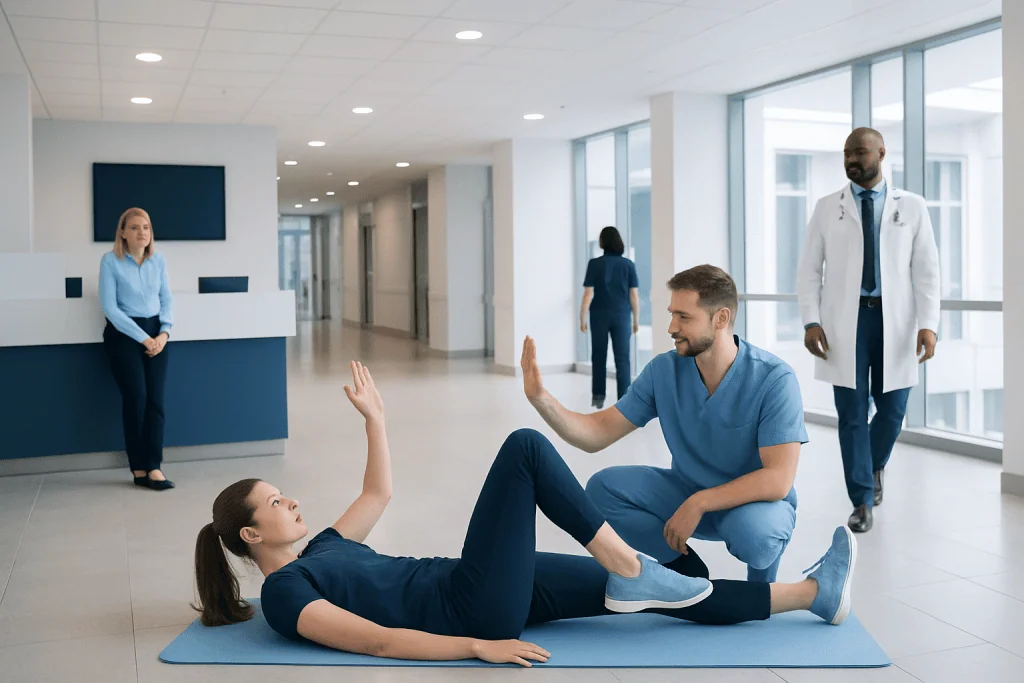
The dead bug exercise focuses on core stability rather than speed or heavy effort. Good technique includes steady breathing, a neutral pelvis, and controlled arm and leg movement.
Key Takeaways
- The dead bug exercise focuses on core stability rather than speed or heavy effort.
- Good technique includes steady breathing, a neutral pelvis, and controlled arm and leg movement.
- It may help support posture, movement efficiency, and low back comfort as part of a broader exercise plan.
- People with pain, recent injury, pregnancy-related concerns, or neurological symptoms should seek individualized guidance.
- Progressions and modifications make the exercise suitable for many fitness and rehabilitation levels.
The dead bug exercise is a controlled core-stability movement that helps train the abdominal muscles, spine, and hips to work together while keeping the lower back supported. It is widely used in fitness and rehabilitation because it can improve trunk control with relatively low strain when form is correct.
Overview: What the Dead Bug Exercise Does
The dead bug exercise is a floor-based movement used to build core control. A person lies on the back with the arms and legs raised, then slowly lowers the opposite arm and leg while keeping the trunk steady. The goal is not to create large movement, but to resist unwanted motion through the abdomen, pelvis, and lower back.
This exercise is often recommended because it trains coordination between the deep abdominal muscles, breathing muscles, hip flexors, and spinal stabilizers. In practical terms, it teaches the body to move the limbs while keeping the middle of the body controlled. That pattern is important for daily activities such as walking, lifting, reaching, and changing position safely.
Unlike some high-load abdominal exercises, the dead bug exercise is generally considered low impact. It may be appropriate for general conditioning, supervised rehabilitation, and return-to-exercise programs when tailored to the individual. It does not treat every cause of back or hip pain, but it can be a useful part of a broader plan designed by a qualified clinician or therapist.
Why It Is Used in Fitness and Rehabilitation
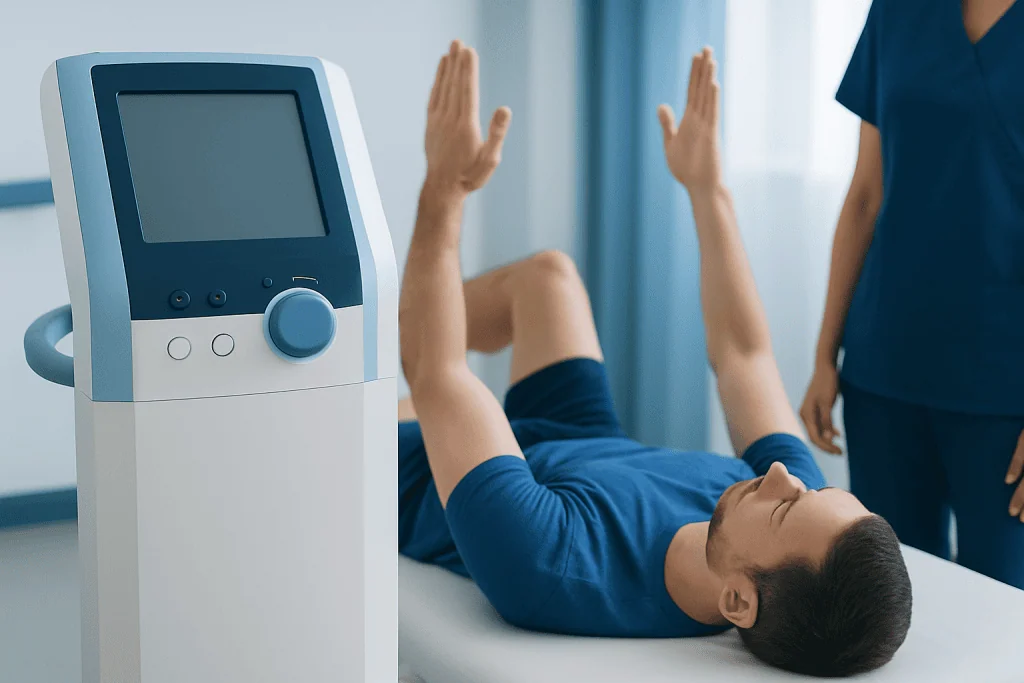
The dead bug exercise is valued because it emphasizes control over repetition count. Many common core exercises rely on repeated bending or twisting of the spine, but the dead bug trains the body to keep the trunk stable while the arms and legs move. This is why it is frequently included in programs aimed at improving posture, movement quality, and spinal support.
In rehabilitation settings, clinicians often look for exercises that can challenge the core without placing unnecessary stress on sensitive structures. The dead bug exercise can often be adapted by limiting how far the limbs move, using one limb at a time, or adding support under the head or feet. These changes can make the movement more manageable for people with reduced strength, coordination, or confidence after pain episodes.
It may also complement treatment for movement-related back symptoms, especially when the aim is to improve trunk endurance and body awareness. For some patients, clinicians may combine it with stretching, walking, posture training, and guided rehabilitation such as physical therapy and rehabilitation.
Muscles Involved and Potential Benefits

The dead bug exercise mainly targets the abdominal wall, including the rectus abdominis, transverse abdominis, and oblique muscles. It also involves the diaphragm for breathing control, the pelvic floor, the hip muscles, and the deep stabilizing muscles around the spine. Rather than isolating a single muscle, it trains these areas to work together.
Potential benefits may include better trunk stability, improved coordination between breathing and movement, and greater awareness of pelvic position. For some people, these changes can support more comfortable movement during exercise and daily tasks. Athletes may use it to improve movement efficiency, while non-athletes may use it to build a safer foundation before trying more demanding exercises.
Although many people think of core exercises mainly for appearance, the more important medical and functional role is stability. A stronger-looking abdomen does not always mean better trunk control. The dead bug exercise is useful because it helps a person practice quality of movement, which may be especially helpful when recovering from deconditioning or after periods of inactivity.
- Encourages controlled trunk stability
- Supports coordination of breathing and abdominal bracing
- Can be scaled for beginners or progressed for advanced exercisers
- May fit into prevention and rehabilitation programs
How to Perform the Dead Bug Exercise Safely
To begin, a person usually lies on the back with knees bent to about 90 degrees and hips flexed so the shins are parallel to the floor. The arms point toward the ceiling. The neck should feel supported, and the rib cage should remain relaxed rather than flared upward. Before moving, it helps to gently tighten the abdominal wall and find a neutral pelvis, avoiding forceful flattening or excessive arching of the lower back.
From this starting position, one arm slowly reaches overhead as the opposite leg extends away from the body. The movement should be slow and controlled, with breathing kept steady. The lower back should not lift sharply from the floor or press down with strain. After returning to the start, the person repeats on the other side.
Common mistakes include moving too quickly, extending the leg too far, holding the breath, shrugging the shoulders, or arching the lower back. If these happen, the exercise may be too advanced in its current form. A simpler version may involve tapping one heel to the floor while keeping both arms still, or moving only the arms first before adding the legs.
Good-quality repetitions matter more than doing many. If pain increases, numbness appears, or form is lost after a few repetitions, the set should stop and the movement should be reassessed. People with ongoing spinal concerns may benefit from evaluation for conditions such as herniated disc or other musculoskeletal causes before progressing their exercise program.
Who May Benefit, and Who Should Be Cautious
Many adults can include the dead bug exercise in a general exercise routine, especially if they want a low-impact way to train the core. It may be useful for beginners, office workers with deconditioning, older adults needing basic trunk control, and athletes who want to improve movement quality. It is also commonly used after periods of inactivity when a gradual return to exercise is appropriate.
Caution is important for anyone with acute pain, recent surgery, significant balance or coordination problems, severe osteoporosis, uncontrolled symptoms during pregnancy, or a known spinal condition that worsens with leg movement. The exercise is not automatically unsafe in these situations, but it may need modification or professional supervision. If a person cannot maintain comfortable breathing and spine control, it should be simplified or replaced.
For individuals with persistent low back pain, neck strain, or leg symptoms, the exercise should not be seen as a one-size-fits-all solution. Back pain can have many causes, including posture-related strain, disc problems, inflammatory conditions, and nerve compression. If symptoms suggest sciatica or another nerve-related issue, medical assessment can help identify the safest exercise approach.
Modifications, Progressions, and Related Care
The dead bug exercise can be adjusted to match a person’s ability. Easier versions include keeping the feet on the floor, performing heel slides instead of full leg extensions, moving one limb at a time, or reducing the range of motion. A folded towel under the head may improve comfort for those with neck tension, and using slow exhalation can help maintain abdominal control.
Progressions can include extending the leg lower without losing trunk position, holding a light object in the hands, adding a resistance band, or increasing time under tension. These changes should be gradual. A progression is only useful if posture, breathing, and control remain consistent throughout the movement.
Because the dead bug exercise is only one part of core training, many people benefit from combining it with other strategies such as hip strengthening, mobility work, walking, and guided rehabilitation. In some cases, clinicians may pair exercise with evaluation of persistent pain through orthopedic care or supportive therapies aimed at restoring functional movement. When pain is complex or linked to a spine disorder, more specialized assessment may be needed through spine and neurosurgical evaluation.
When to Seek Medical Care
A person should seek medical advice if the dead bug exercise causes sharp pain, radiating leg pain, numbness, weakness, dizziness, or loss of bladder or bowel control. These symptoms are not typical of normal muscle effort and may suggest a condition that needs prompt assessment. New symptoms after injury, a fall, or sudden heavy lifting also deserve attention.
Medical review is also sensible when back or hip discomfort persists despite rest and appropriate exercise modification, or when pain keeps returning during simple activities. A doctor or physical therapist can assess posture, nerve function, joint mobility, and movement patterns to decide whether the exercise is appropriate and how it should be adapted.
People who are pregnant, recovering after surgery, or living with a known spinal diagnosis should ask for individualized guidance before starting or progressing core exercises. Near the end of a care pathway, some international patients choose multidisciplinary assessment at Acibadem International, where JCI-accredited hospitals evaluate and treat musculoskeletal and spine-related conditions with coordinated specialist input.
Frequently asked questions
Is the dead bug exercise good for the lower back?
The dead bug exercise can be helpful for many people because it trains core stability with relatively low spinal load. However, it is only beneficial when done with good form and when it matches the person's condition. If it increases pain or triggers leg symptoms, a clinician should assess the cause.
What muscles does the dead bug exercise work?
It mainly works the abdominal muscles, especially the deeper stabilizing muscles, along with the obliques and rectus abdominis. It also involves the diaphragm, pelvic floor, hip muscles, and small stabilizers around the spine. The exercise is designed to improve coordination across these muscle groups.
Why does my lower back arch during the dead bug exercise?
Lower back arching often happens when the movement is too advanced, the leg is extending too far, or the abdominal muscles are not staying engaged. Breathing patterns can also affect control. A simpler variation and slower pace usually help restore proper technique.
How many dead bug repetitions should a beginner do?
Beginners usually do better with a small number of slow, high-quality repetitions rather than large sets. The exact number depends on control, breathing, and comfort. Stopping before form breaks down is more important than reaching a specific target.
Can the dead bug exercise replace other core exercises?
No single exercise can meet every core-training need. The dead bug exercise is useful for teaching stability and coordination, but a complete program may also include walking, strengthening, mobility work, and other trunk exercises. A balanced plan depends on the person's goals and health status.
Should the dead bug exercise cause pain in the hip or neck?
It should not cause sharp or worsening pain. Mild muscle effort can be normal, but hip pinching, neck strain, or radiating pain suggests that form or exercise selection may need to change. If discomfort continues, a healthcare professional should evaluate it.
This article is for general information only and is not a substitute for professional medical advice. Please consult a qualified doctor about your individual situation.
Joint and spine care in Turkey — expert assessment & treatment
JCI-accredited · board-certified surgeons · reply within 24h
Add us as a Preferred Source to see more of our trusted health content across Google Search, AI Overviews and Discover.

More from the Health Library

Kernicterus: An Evidence-Based Guide for Patients

HSV Testing — Explained by Medical Evidence, Not Myths
Skin Fissure: An Evidence-Based Guide for Patients

Body Acne: An Evidence-Based Guide for Patients

Osmotic Diarrhea: What Patients Need to Know