Dermatome Map — Explained by Medical Evidence, Not Myths
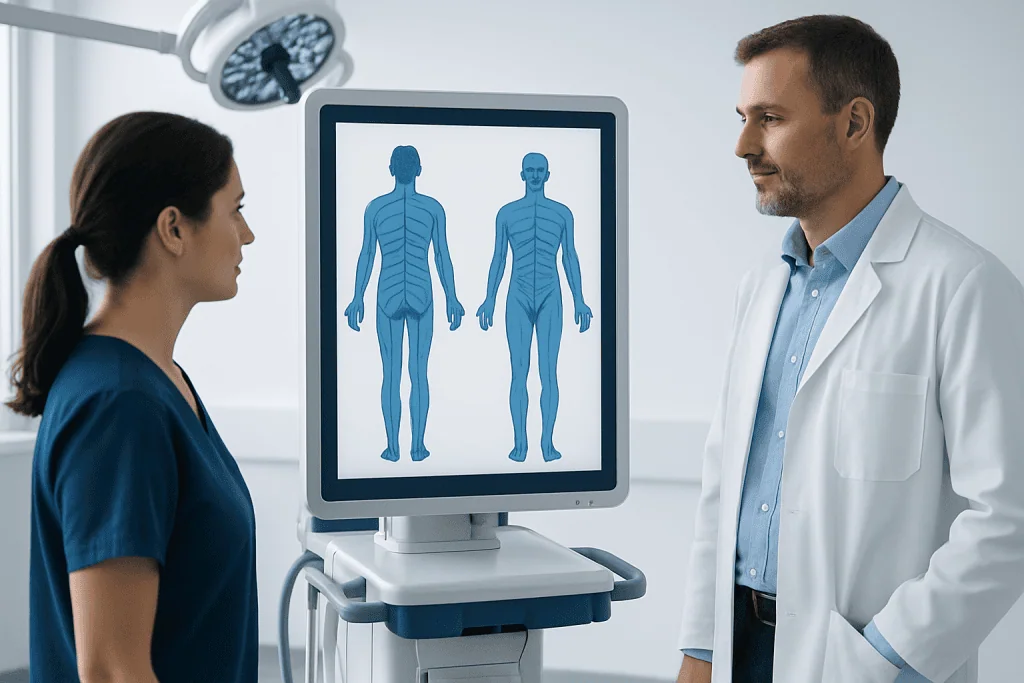
A dermatome map links skin sensation areas to specific spinal nerve roots. Doctors use dermatome patterns to evaluate nerve compression, injury, and shingles.
Key Takeaways
- A dermatome map links skin sensation areas to specific spinal nerve roots.
- Doctors use dermatome patterns to evaluate nerve compression, injury, and shingles.
- Dermatome borders can overlap, so symptoms do not always fit one textbook line.
- Neck or back problems may cause pain, tingling, or numbness in a dermatomal pattern.
- New weakness, bowel or bladder changes, or severe unexplained symptoms need prompt medical assessment.
A dermatome map is a medical guide that shows which area of skin gets sensation from each spinal nerve root. It helps clinicians connect symptoms such as numbness, tingling, pain, or a shingles rash to a possible nerve level, but it is a practical clinical tool rather than a perfectly fixed diagram.
What a dermatome map means
A dermatome map is a diagram that shows which spinal nerve root carries feeling from each area of skin. In simple terms, it helps explain why pain, numbness, tingling, burning, or a rash may appear in one part of the body when a particular nerve is irritated or inflamed. Doctors use it to connect symptoms on the skin to the spine and nervous system, rather than relying on myths that every body area always matches a single exact line.
Medical evidence shows that dermatomes are useful, but they are not perfectly rigid zones. Neighboring nerves overlap, and people vary somewhat in how symptoms appear. That is why a dermatome map is best understood as a clinical guide: it can point toward a likely nerve level, but a diagnosis still depends on the person’s history, physical examination, and sometimes imaging or nerve tests.
The concept is especially important when symptoms suggest nerve root irritation, also called radiculopathy, or when a rash from shingles follows a band-like pattern. A dermatome map may also help explain symptoms caused by spinal disorders, nerve inflammation, trauma, or less commonly tumors or infections affecting the spine or nerves.
How dermatomes are organized in the body
Spinal nerves leave the spinal cord in segments. Most of these segments correspond to a dermatome, meaning a skin region mainly supplied by one sensory nerve root. They are usually grouped by spinal level: cervical in the neck, thoracic in the chest and upper back, lumbar in the lower back and front of the legs, and sacral in the buttocks, back of the legs, and parts of the feet.
Cervical dermatomes often relate to the shoulders, arms, and hands. Thoracic dermatomes tend to wrap around the trunk in bands. Lumbar dermatomes commonly involve the front or inner leg and parts of the foot, while sacral dermatomes usually affect the back of the leg, outer foot, and pelvic region. The face is different because facial sensation is largely supplied by the trigeminal nerve rather than spinal dermatomes.
Although charts look neat, real-life symptoms can blur across borders. A person may feel pain in more than one dermatome, or a compressed nerve may cause symptoms that radiate in a broader area. This is one reason doctors also assess muscle strength, reflexes, walking, posture, and symptom triggers in addition to using a dermatome map.
- Cervical: neck, shoulders, arms, hands
- Thoracic: chest, ribs, upper abdomen, back
- Lumbar: lower back, front and inner legs, part of the feet
- Sacral: buttocks, back of legs, outer foot, pelvic area
Why doctors use a dermatome map

The main value of a dermatome map is localization. If symptoms follow a familiar sensory pattern, a clinician can narrow down which nerve root may be affected. For example, arm tingling with neck pain may suggest a cervical nerve root problem, while shooting leg pain with lower back symptoms may point toward lumbar root irritation.
This tool is commonly used when evaluating possible herniated disc problems, spinal stenosis, degenerative spine disease, trauma, or post-viral nerve pain. It is also relevant in shingles, where the rash often appears in one stripe-like distribution on one side of the body because the virus reactivates in a sensory nerve ganglion.
Dermatome maps also help distinguish nerve root conditions from other causes of pain. For example, poor circulation, joint disease, muscle strain, or generalized peripheral neuropathy may not follow a clear dermatomal pattern. Even so, the map is only one piece of the puzzle, and symptom overlap means clinicians must interpret it carefully rather than using it in isolation.
Symptoms that may follow a dermatome pattern
Symptoms linked to dermatomes usually involve altered sensation. People may describe numbness, pins and needles, burning, stabbing pain, electric-shock sensations, increased skin sensitivity, or reduced ability to feel touch. These symptoms may be constant or may worsen with certain movements such as bending, twisting, coughing, or looking up.
Pain from nerve root irritation often radiates away from the spine. In the neck, it may travel into the shoulder, arm, or hand. In the lower back, it may move into the buttock, thigh, calf, or foot. If a problem involves both sensory and motor fibers, symptoms may also include weakness, reduced grip strength, foot drop, or changes in reflexes, even though those findings are not part of the dermatome itself.
Shingles is another classic example. Before a rash appears, some people notice burning, itching, or tenderness in a narrow band of skin. The rash usually stays on one side and does not cross the body’s midline. When doctors suspect a structural spine cause for nerve symptoms, they may also evaluate for conditions such as spinal stenosis or other causes of radicular pain.
Common causes of dermatomal pain or numbness
The most common cause of dermatomal symptoms is compression or irritation of a spinal nerve root. This may happen because of a disc problem, age-related wear in the spine, bone spurs, thickened ligaments, inflammation, or narrowing of the spaces where nerves exit. In the neck this can cause cervical radiculopathy, and in the lower back it can cause lumbar radiculopathy.
Shingles is another well-known cause. The varicella-zoster virus can reactivate years after chickenpox and affect a single sensory nerve root, producing pain and then a blistering rash in that dermatome. Less commonly, dermatomal symptoms may arise from spinal injury, tumors, infections around the spine, diabetic nerve problems, or complications after surgery or injections.
Risk factors depend on the cause. For spine-related nerve irritation, they may include aging, repetitive strain, heavy lifting, smoking, poor posture, obesity, or previous spine injury. For shingles, risk rises with age and reduced immune function. Because some causes are minor and others require urgent attention, persistent or progressive symptoms should be assessed by a qualified doctor.
How diagnosis is made
Diagnosis begins with a detailed history. A doctor asks where symptoms started, where they travel, whether they affect one side or both, and what makes them better or worse. The timing matters too. A sudden band-like rash points toward shingles, while pain triggered by neck or back motion may suggest a nerve root being mechanically irritated.
The physical examination may include checking light touch, pinprick sensation, muscle strength, reflexes, walking, balance, and spinal movement. Doctors compare findings with expected dermatome and myotome patterns, but they also look for red flags that suggest something more serious. Because the body is variable, no map alone can confirm the exact level with certainty.
If more information is needed, tests may include MRI or CT to look at discs, bones, and nerve compression, especially when symptoms are severe or lasting. Nerve conduction studies and electromyography can help in selected cases to distinguish nerve root disease from peripheral nerve disorders. Depending on the suspected cause, care may involve specialists in neurology, spine care, pain medicine, infectious diseases, or neurosurgery.
Treatment and self-care depend on the cause
There is no treatment for a dermatome map itself, because it is a diagnostic concept rather than a disease. Treatment focuses on the underlying problem causing the dermatomal symptoms. For nerve root irritation from the spine, care often begins with rest from aggravating activity, posture adjustment, physical therapy, and medicines recommended by a doctor to reduce pain or inflammation. Some people may benefit from image-guided injections or other pain procedures.
If imaging shows significant structural compression, or if symptoms include worsening weakness, surgery may sometimes be considered. Options depend on the level and cause of nerve pressure. In selected cases, a clinician may discuss procedures such as microdiscectomy when a disc is pressing on a nerve root.
When shingles is the cause, antiviral treatment is usually most helpful when started early, and pain management may also be needed. Self-care can support recovery in many situations: avoiding heavy strain, using correct body mechanics, staying physically active within comfort, managing long-term conditions such as diabetes, and following a rehabilitation plan if prescribed. Near the end of the care pathway, some international patients choose evaluation at centers such as Acibadem International, where multidisciplinary specialists in JCI-accredited hospitals diagnose and treat neurological and spine-related conditions.
When to seek medical care
Medical review is a good idea if numbness, tingling, or pain follows a clear stripe or radiating pattern and lasts more than a few days, keeps returning, or interferes with sleep, walking, work, or daily activities. A new one-sided painful rash should also be assessed promptly, especially if shingles is suspected, because early treatment may reduce complications.
Urgent medical care is important if symptoms are accompanied by significant weakness, trouble walking, loss of balance, fever with back pain, recent major injury, new bowel or bladder problems, numbness in the groin or saddle area, or rapidly worsening pain. These features can point to conditions that need immediate evaluation.
It is also sensible to seek help if symptoms do not fit a simple explanation or if over-the-counter measures are not helping. A qualified doctor can determine whether the pattern is truly dermatomal, whether imaging is needed, and whether symptoms are related to the spine, shingles, peripheral nerves, or another condition altogether.
Frequently asked questions
What is a dermatome map in simple terms?
A dermatome map is a chart that shows which spinal nerve root supplies feeling to each area of skin. Doctors use it to help understand where symptoms like numbness, tingling, pain, or a shingles rash may be coming from.
Are dermatome maps always exact?
No. They are medically useful, but the boundaries are not perfectly fixed in every person. Neighboring nerve roots overlap, so real symptoms may not follow a textbook pattern exactly.
Can a herniated disc cause symptoms in a dermatome pattern?
Yes. A herniated disc can press on a spinal nerve root and cause pain, numbness, or tingling that radiates into the arm or leg in a pattern that often matches a dermatome. The exact pattern depends on which nerve root is affected.
Why is shingles often mentioned with dermatomes?
Shingles usually affects one sensory nerve root, so the rash and pain often appear in a narrow band on one side of the body. This one-sided, stripe-like pattern is a classic dermatomal presentation.
How is a dermatome problem diagnosed?
A doctor reviews the symptom pattern, examines sensation, strength, and reflexes, and looks for clues that point to a specific nerve root. If needed, imaging such as MRI or tests of nerve function may be used to confirm the cause.
When is dermatomal pain an emergency?
Urgent care is needed if pain or numbness comes with new weakness, difficulty walking, bowel or bladder changes, groin numbness, high fever with back pain, or recent major injury. These signs can suggest serious nerve or spinal cord involvement.
This article is for general information only and is not a substitute for professional medical advice. Please consult a qualified doctor about your individual situation.
Joint and spine care in Turkey — expert assessment & treatment
JCI-accredited · board-certified surgeons · reply within 24h
Add us as a Preferred Source to see more of our trusted health content across Google Search, AI Overviews and Discover.

More from the Health Library

Bacitracin: A Complete Medical Overview

Burning Sensation in Leg — Explained by Medical Evidence, Not Myths

Wart on Tongue: An Evidence-Based Guide for Patients

Body weight for 5’3 female: Symptoms, Causes, and Treatment — Complete Patient Guide

Midodrine — Explained by Medical Evidence, Not Myths