Knee Surgery Surgery: Benefits, Risks, and Recovery — A Complete Guide

Knee surgery may help reduce pain, improve stability, and restore function when medicines, physiotherapy, or injections are not enough. There is no single “knee surgery”; options include arthroscopy, ligament reconstruction, cartilage procedures, osteotomy, partial knee replacement, and total knee replacement.
Key Takeaways
- Knee surgery may help reduce pain, improve stability, and restore function when medicines, physiotherapy, or injections are not enough.
- There is no single “knee surgery”; options include arthroscopy, ligament reconstruction, cartilage procedures, osteotomy, partial knee replacement, and total knee replacement.
- A careful evaluation with imaging and physical examination helps determine whether surgery is appropriate and which procedure is most suitable.
- Recovery time varies widely, from weeks after minor arthroscopic procedures to several months after joint replacement or ligament reconstruction.
- Like any operation, knee surgery has risks such as infection, blood clots, stiffness, ongoing pain, or the need for further treatment.
- Rehabilitation, wound care, and following medical advice are central to a safe recovery and the best long-term result.
Knee surgery surgery is an umbrella term for procedures that repair damaged knee structures or replace part or all of the joint when pain, instability, or limited movement affect daily life. The right operation depends on the cause of symptoms, the condition of the joint, and the person’s age, activity level, and treatment goals.
Overview: What knee surgery surgery means
Knee surgery surgery refers to a range of operations used to treat injuries, wear-and-tear changes, and structural problems in the knee. In many people, surgery is considered when symptoms such as pain, swelling, locking, giving way, or loss of function continue despite non-surgical care. The goal is not simply to operate, but to improve movement, support daily activities, and protect joint health where possible.
The knee is a complex joint made up of bones, cartilage, ligaments, tendons, and cushioning menisci. Because several structures work together, different problems require different procedures. Some operations are minimally invasive and use small incisions and a camera, while others involve reshaping bone or replacing damaged joint surfaces.
Not every painful knee needs surgery. Doctors usually begin with a full assessment and may recommend exercise therapy, weight management, activity changes, pain relief, or injections before considering an operation. When surgery is appropriate, the best option depends on the exact diagnosis, the severity of damage, and the person’s expectations for recovery and activity.
Why knee surgery may be recommended

Knee surgery may be recommended when knee damage clearly explains symptoms and non-surgical treatment has not provided enough relief. Common reasons include advanced osteoarthritis, meniscus tears, ligament injuries such as ACL rupture, cartilage damage, fractures involving the joint, kneecap instability, or deformity that changes how the knee bears weight.
Doctors also look at how much the knee problem affects quality of life. Surgery may be appropriate if pain interrupts sleep, walking is limited, stairs become difficult, the knee repeatedly gives way, or a person can no longer work, exercise, or manage routine tasks comfortably. In some injuries, such as certain fractures or major ligament tears in active individuals, surgery may help restore stability and function more effectively.
For people with arthritis, surgery is usually not the first step. However, when severe joint damage causes persistent pain and stiffness, procedures such as knee replacement may offer meaningful improvement. In selected cases, treatment planning also involves evaluating related conditions such as osteoarthritis, which is a common reason for long-term knee pain and reduced mobility.
Types of knee surgery and how they work
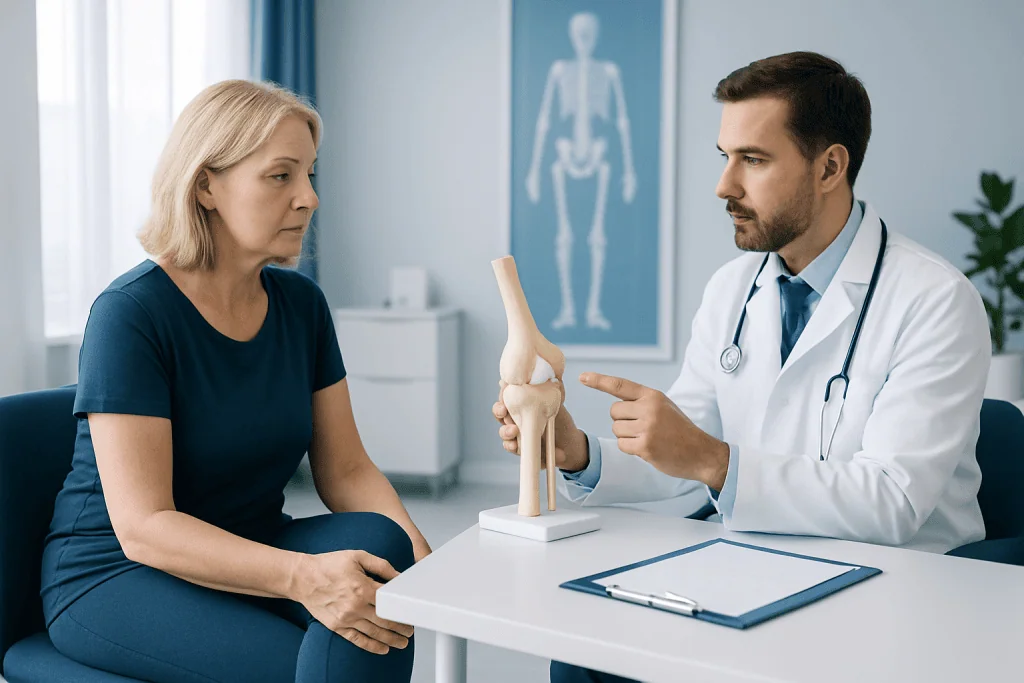
There is no one standard knee operation. Arthroscopic knee surgery uses small incisions and a camera to inspect and treat problems inside the joint. It may be used to repair or trim certain meniscus tears, remove loose fragments, or address some cartilage problems. Arthroscopy is often less invasive than open surgery, but it is not helpful for every cause of knee pain, especially advanced arthritis.
Ligament reconstruction is commonly performed when the ACL or another stabilizing ligament is torn and the knee remains unstable. In this procedure, the damaged ligament is reconstructed using a graft, often taken from the patient’s own tissue or from donor tissue. Other procedures include cartilage restoration techniques for selected focal defects and osteotomy, which realigns the leg to shift weight away from a damaged part of the knee.
When joint surfaces are badly worn, partial or total knee replacement may be considered. In partial replacement, only the most damaged compartment of the knee is resurfaced. In total replacement, the surgeon removes damaged cartilage and a small amount of bone and places artificial components designed to restore smoother joint movement. For patients needing a broader orthopedic treatment plan, related options such as orthopedic and traumatology care may be part of the evaluation and recovery pathway.
Each technique has different goals, benefits, and recovery patterns. The best choice is based on imaging findings, symptoms, alignment, age, activity level, and the overall health of the joint rather than on one procedure being universally “best.”
Who may be a candidate and how doctors decide
Candidacy for knee surgery depends on the diagnosis and whether symptoms match the structural problem found on examination and imaging. Doctors usually ask how long symptoms have been present, which treatments have already been tried, and what activities are most limited. A person with severe arthritis and major walking difficulty may need a very different procedure from a younger athlete with a torn ligament.
Evaluation typically includes a physical exam, X-rays, and sometimes MRI or CT imaging. The doctor assesses range of motion, alignment, stability, swelling, muscle strength, and gait. Medical history also matters. Conditions such as diabetes, obesity, smoking, circulation problems, or inflammatory disease may affect timing, surgical planning, and recovery.
Good candidates are usually those with a clear knee problem that is likely to improve with surgery, realistic expectations, and willingness to participate in rehabilitation. Surgery may be delayed or avoided when symptoms can still be managed well with conservative treatment, when the source of pain is uncertain, or when health issues make the risks too high until they are better controlled.
What happens before, during, and after the procedure
Before surgery, the care team confirms the diagnosis, reviews imaging, checks general health, and discusses the expected benefits and limitations of the operation. Preoperative blood tests, heart assessment, and medication review may be needed. Patients are often advised about fasting, stopping certain medicines temporarily, arranging help at home, and beginning exercises that prepare the muscles around the knee.
During the procedure, anesthesia may be general, regional, or a combination, depending on the operation and the patient’s health. Arthroscopic procedures are performed through small incisions using a camera and specialized instruments. For joint replacement or more complex reconstruction, the surgeon makes a larger incision, repairs or removes damaged structures, and places grafts or implants as needed. The exact steps differ by procedure, but the aim is always to restore function while protecting surrounding tissues.
After surgery, the early focus is on pain control, safe movement, and preventing complications. Some people go home the same day, while others stay in the hospital for observation, especially after replacement surgery. Walking aids, braces, ice, elevation, and prescribed exercises are common. In many cases, a structured program of physical therapy and rehabilitation starts soon after surgery to improve range of motion, strength, and confidence.
Benefits, risks, and possible complications
The main potential benefits of knee surgery are less pain, better stability, improved walking and movement, and greater ability to take part in daily activities. In some cases, surgery may also help correct deformity, repair tissue damage, or slow further deterioration in a specific part of the joint. For many patients, the value of surgery is measured by better function rather than by a perfectly “normal” knee.
Still, all surgery carries risk. General risks include bleeding, infection, blood clots, reactions to anesthesia, and wound-healing problems. Knee-specific risks can include stiffness, swelling, persistent pain, numbness around the incision, implant wear or loosening after joint replacement, graft failure after ligament surgery, or the need for another procedure later on.
Outcomes vary because recovery depends on the original condition, the type of surgery, general health, and rehabilitation. Some people improve quickly, while others need longer to regain strength and trust in the knee. A clear discussion with the surgeon about expected results, alternatives, and possible complications helps patients make informed decisions.
Recovery timeline and self-care after knee surgery
Recovery after knee surgery is different for each procedure. After some arthroscopic operations, people may return to desk work within days to a few weeks, although full return to sports can take longer. Recovery after ACL reconstruction often takes months because the graft must heal and strength and balance need to be rebuilt. After knee replacement, many people improve steadily over several weeks, but full recovery and adaptation may continue for months.
Early self-care usually includes keeping the wound clean and dry, taking medicines as prescribed, using ice and elevation to reduce swelling, and doing exercises exactly as instructed. Walking aids such as crutches or a walker may be needed for a period of time. Avoiding high-impact activity too soon is important, even if the knee starts to feel better.
Rehabilitation is one of the strongest influences on outcome. Strengthening the quadriceps, hamstrings, hip muscles, and core supports the knee and improves balance and confidence. Patients should contact their doctor promptly if they develop increasing redness, fever, drainage from the wound, calf pain, chest symptoms, severe swelling, or sudden loss of function.
Near the end of the treatment journey, some patients benefit from coordinated follow-up with orthopedic, imaging, and rehabilitation specialists. Acibadem International’s multidisciplinary specialists and JCI-accredited hospitals diagnose and treat knee conditions for international patients when advanced evaluation and ongoing care are needed.
When to seek medical care
Medical care should be sought for knee pain that is severe, persistent, or associated with swelling, instability, locking, or inability to bear weight. Assessment is also important after a sports injury, a fall, or any event followed by a pop, sudden swelling, or a feeling that the knee is no longer reliable.
Urgent care is needed if the knee looks deformed, the person cannot walk, there is intense pain after trauma, or there are signs of infection such as fever, increasing redness, warmth, or drainage. After surgery, calf swelling, chest pain, or shortness of breath should be treated as urgent symptoms because they may signal a complication.
Even when symptoms are not urgent, an orthopedic assessment can be helpful if knee pain limits work, sleep, exercise, or everyday movement. In some people, knee problems may relate to conditions that also involve nearby joints or the spine, and a fuller review can help guide the most suitable treatment plan, including options such as meniscus tear care where relevant.
Frequently asked questions
Is knee surgery surgery always necessary for knee pain?
No. Many knee problems improve with physiotherapy, activity changes, weight management, pain relief medicines, or injections. Surgery is usually considered when symptoms remain significant, the diagnosis is clear, and non-surgical treatment has not helped enough.
How long does it take to recover from knee surgery?
Recovery depends on the type of operation and the person’s overall health. Minor arthroscopic procedures may improve within weeks, while ligament reconstruction or knee replacement often requires several months of rehabilitation.
What is the difference between arthroscopic surgery and knee replacement?
Arthroscopic surgery uses small incisions and a camera to treat selected problems inside the joint, such as some meniscus injuries. Knee replacement is a larger operation that resurfaces damaged joint areas when arthritis or severe wear causes major pain and stiffness.
What are the main risks of knee surgery?
Potential risks include infection, bleeding, blood clots, stiffness, swelling, persistent pain, and problems related to anesthesia. Depending on the procedure, there may also be implant-related issues, graft failure, or a need for further surgery.
Will knee surgery completely remove pain?
Surgery often improves pain, but it does not guarantee a pain-free knee in every case. Results depend on the underlying condition, the type of surgery, surgical healing, and commitment to rehabilitation.
Can someone walk after knee surgery?
Most people begin some degree of walking soon after surgery, often with assistance such as crutches, a walker, or a brace. The amount of weight allowed on the leg depends on the specific procedure and the surgeon’s instructions.
References
- American Academy of Orthopaedic Surgeons
- National Institute of Arthritis and Musculoskeletal and Skin Diseases
- National Health Service
- OrthoInfo
- Centers for Disease Control and Prevention
This article is for general information only and is not a substitute for professional medical advice. Please consult a qualified doctor about your individual situation.
Joint and spine care in Turkey — expert assessment & treatment
JCI-accredited · board-certified surgeons · reply within 24h
Add us as a Preferred Source to see more of our trusted health content across Google Search, AI Overviews and Discover.

More from the Health Library



Related Specialists

Dr. Doğaç Çağlar Gürbüz
Cardiology
Dr. Kadir Uçar
Radiation Oncology
Dr. Tuğçe Özdemir Gültekin
Neurology
Dr. Burak Sercan Erçin
Aesthetic Plastic & Reconstructive Surgery