Retrolisthesis — Explained by Medical Evidence, Not Myths

Retrolisthesis means backward displacement of a vertebra, most often seen in the cervical or lumbar spine. Some people have no symptoms, while others develop pain, reduced mobility, or nerve irritation.
Key Takeaways
- Retrolisthesis means backward displacement of a vertebra, most often seen in the cervical or lumbar spine.
- Some people have no symptoms, while others develop pain, reduced mobility, or nerve irritation.
- Diagnosis usually combines a physical examination with imaging, especially X-rays and sometimes MRI or CT.
- Treatment often begins with posture support, physical therapy, pain relief, and activity changes rather than surgery.
- Medical review is important if symptoms are severe, persistent, or include weakness, numbness, or bladder or bowel changes.
Retrolisthesis is a spinal alignment finding in which one vertebra shifts slightly backward relative to the one below it. It can be painless or linked to back pain, stiffness, and nerve-related symptoms, depending on its location, degree, and underlying cause.
Overview: what retrolisthesis means
Retrolisthesis is a term used when one vertebra moves backward in relation to the vertebra beneath it. In simple terms, it describes a change in spinal alignment rather than a disease by itself. It may be found in the neck or lower back and can range from mild to more noticeable slippage.
This finding does not always cause symptoms. Some people learn they have retrolisthesis only after imaging is performed for back or neck pain, stiffness, or another reason. When symptoms do occur, they often relate to joint strain, disc wear, muscle tension, or pressure on nearby nerves.
Retrolisthesis is different from spondylolisthesis, a broader term that describes vertebral slippage in general and is more commonly used for forward slippage. Backward slippage may appear alongside age-related spinal changes such as disc degeneration or arthritis. Related spinal conditions, including scoliosis or disc problems, can sometimes affect overall spinal mechanics as well.
How retrolisthesis can feel: common symptoms
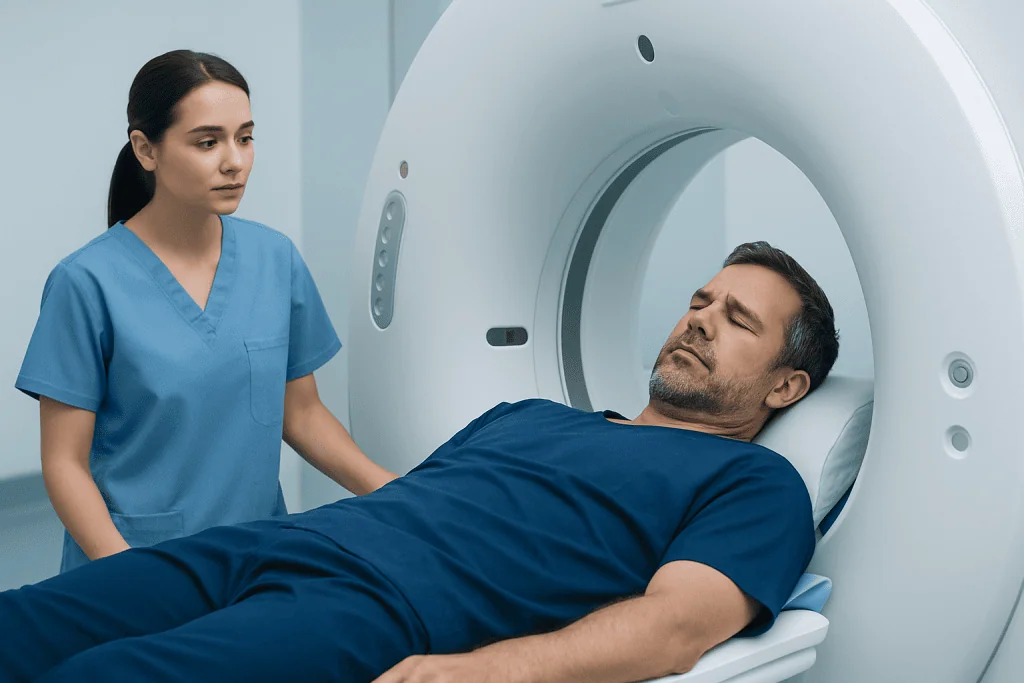
Symptoms vary by the part of the spine involved and by whether nerves are affected. In the lower back, retrolisthesis may cause aching pain, stiffness after rest, muscle tightness, or discomfort when standing, bending, or walking for long periods. In the neck, it may lead to neck pain, reduced range of motion, and tension spreading to the shoulders.
If the backward shift narrows spaces around spinal nerves, nerve-related symptoms can appear. These may include tingling, numbness, burning pain, or weakness traveling into an arm or leg. Some people notice that symptoms worsen with certain positions and improve with rest or gentle movement.
Not every case is painful, and the degree seen on imaging does not always match the level of discomfort. A small alignment change can still irritate nearby structures, while a more visible shift may cause few problems. This is why symptoms, examination findings, and imaging all matter together.
- Localized neck or back pain
- Stiffness and reduced flexibility
- Muscle spasms or tightness
- Numbness, tingling, or radiating pain
- Weakness in an arm or leg in more significant nerve involvement
Why it happens: causes and risk factors
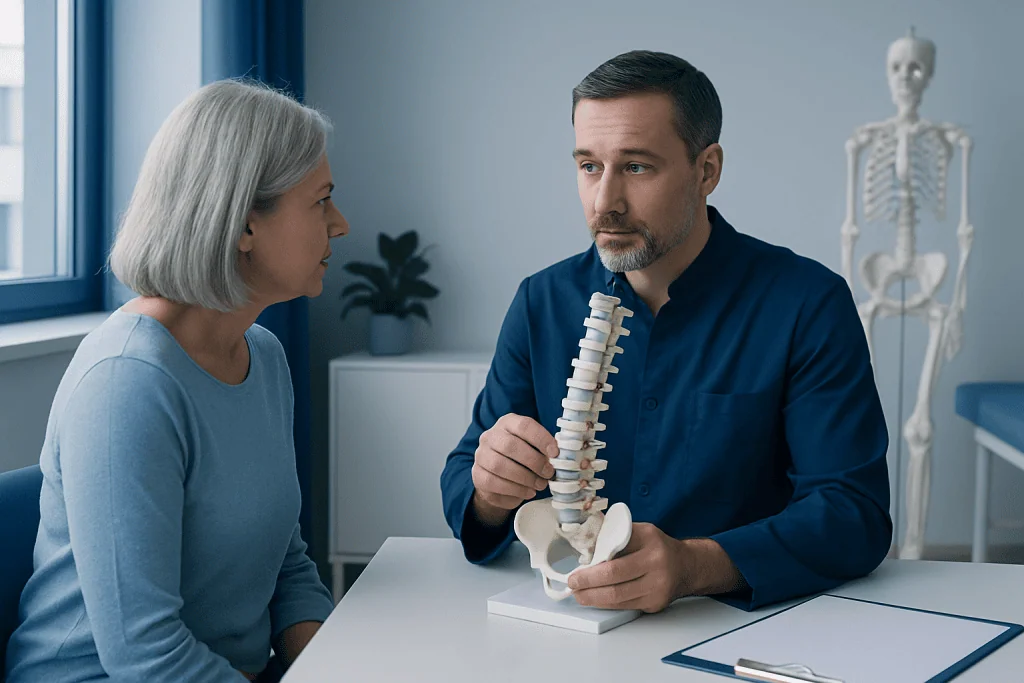
Retrolisthesis most often develops from gradual wear and tear in the spine. As discs lose height and hydration with age, the joints and supporting ligaments can become less stable. This may allow a vertebra to shift backward slightly, especially in areas already under repeated mechanical stress.
Other causes include spinal arthritis, previous injury, repetitive strain, poor posture, and weakened core or back muscles. In some people, congenital differences in spinal structure may contribute. A traumatic event can also play a role, although chronic degenerative change is a more common explanation than sudden injury.
Risk factors can include older age, jobs or sports involving repeated lifting or twisting, obesity, prolonged sitting, smoking, low physical conditioning, and existing spinal disorders. Retrolisthesis may also be seen with degenerative disc disease or alongside herniated disc changes, especially when the spine has been under long-term stress.
Importantly, retrolisthesis is not automatically a sign of severe damage. It is best understood as one part of a broader clinical picture. A doctor considers the patient’s symptoms, activity limits, nerve findings, and imaging before deciding how significant the slippage is.
How doctors diagnose retrolisthesis
Diagnosis begins with a medical history and physical examination. The doctor asks about pain location, timing, triggers, prior injuries, work and exercise habits, and any numbness or weakness. On examination, they assess posture, spinal motion, tenderness, muscle strength, reflexes, and sensation.
Plain X-rays are commonly used to identify vertebral alignment and estimate the degree of backward slippage. Standing images can be especially useful because they show the spine under normal load. In some cases, flexion and extension X-rays are ordered to assess whether the segment moves abnormally with motion.
MRI may be recommended if there are nerve symptoms, persistent pain, or concern about discs, soft tissues, or spinal canal narrowing. CT can help clarify bony details when needed. Imaging is interpreted alongside symptoms because many spinal changes can be present without causing pain.
When symptoms suggest complex spinal compression or structural instability, a specialist may guide further evaluation. This can include consultation in spine surgery services or assessment by clinicians experienced in neurosurgery when nerve structures are involved.
Treatment options: from conservative care to procedures
Treatment depends on symptom severity, spinal location, nerve involvement, and the underlying cause. For many people, the first step is conservative care. This may include short-term activity modification, posture correction, physical therapy, and appropriate pain relief recommended by a doctor. The aim is to reduce strain, improve support around the spine, and restore function safely.
Physical therapy is often central to treatment. Exercises may focus on core strength, hip mobility, spinal stabilization, and flexibility, with attention to movement patterns that reduce repeated stress. Heat, manual therapy, and guided home exercise programs can also help some patients. If neck symptoms are present, treatment may include posture training and shoulder girdle strengthening.
When nerve irritation is significant or symptoms do not improve, doctors may consider image-guided injections or other pain-management approaches, depending on the individual case. Surgery is usually reserved for selected situations, such as persistent nerve compression, instability, or loss of function despite appropriate non-surgical treatment.
If surgery is considered, the exact procedure depends on the anatomy and the source of symptoms. In carefully chosen patients, this may involve decompression, stabilization, or related spinal fusion surgery. The goal is not simply to correct an X-ray finding, but to relieve symptoms and protect nerve function when conservative care is not enough.
Prevention and self-care in daily life
It is not always possible to prevent retrolisthesis, especially when age-related degeneration plays a role, but spine-friendly habits can reduce strain and help manage symptoms. Regular physical activity, especially exercises that strengthen the core and support posture, can improve spinal stability. A physiotherapist can help tailor a safe program to the individual.
Good lifting technique matters. Bending at the hips and knees, keeping loads close to the body, and avoiding twisting while lifting can lower stress on the spine. For people who sit for long periods, changing position often, using ergonomic support, and taking movement breaks are simple but useful steps.
Weight management and smoking cessation may also support spinal health. Excess body weight can increase mechanical load, while smoking is associated with poorer disc and bone health. Sleep position, mattress support, and comfortable footwear may also influence day-to-day symptoms, even though they do not directly correct vertebral alignment.
Self-care should not rely on prolonged bed rest. Gentle movement is usually better for recovery than complete inactivity, unless a doctor advises otherwise. If symptoms repeatedly flare, a structured rehabilitation plan in physical therapy and rehabilitation may help improve control, strength, and confidence with movement.
When to seek medical care
Medical review is appropriate if back or neck pain lasts more than a few weeks, keeps returning, or interferes with work, sleep, walking, or daily activities. A doctor should also assess pain that follows an injury or is steadily worsening instead of gradually improving.
Prompt medical attention is important if there is numbness, tingling, weakness, problems with balance, or pain that travels down an arm or leg. Emergency care is needed for new loss of bladder or bowel control, numbness in the groin area, or rapidly progressive weakness, because these can signal serious nerve compression.
A careful assessment can help distinguish retrolisthesis from other causes of spinal pain and nerve symptoms. For international patients who need evaluation and treatment, Acibadem International’s multidisciplinary specialists at JCI-accredited hospitals diagnose and manage spinal conditions using evidence-based care plans.
Frequently asked questions
Is retrolisthesis the same as a slipped disc?
No. Retrolisthesis refers to a vertebra shifting backward relative to another vertebra, while a slipped or herniated disc involves disc material bulging or protruding. The two conditions can occur together, but they are not the same finding.
Can retrolisthesis heal on its own?
The alignment change itself may not fully reverse, especially when related to degeneration, but symptoms often improve with conservative care. Many people feel better with exercise therapy, posture changes, and pain management. The main goal is symptom control and spinal function.
Is retrolisthesis always serious?
Not necessarily. Some cases are mild and found incidentally on imaging without causing symptoms. It becomes more clinically important when it is linked to significant pain, reduced function, or nerve compression.
What kind of exercise is best for retrolisthesis?
Exercises are usually chosen to improve core strength, flexibility, posture, and movement control. A physiotherapist can recommend a program based on the location of the retrolisthesis and the person's symptoms. High-impact or poorly supervised exercises may aggravate symptoms in some people.
Can retrolisthesis cause nerve symptoms?
Yes. If the altered alignment contributes to narrowing around nearby nerves, symptoms such as numbness, tingling, radiating pain, or weakness can occur. These symptoms should be assessed by a doctor, especially if they are progressive.
When is surgery considered for retrolisthesis?
Surgery is usually considered only when symptoms remain significant despite appropriate non-surgical treatment, or when there is instability or nerve compression causing functional problems. The decision depends on symptoms, imaging findings, neurological examination, and overall health. A spine specialist can explain whether an operation is likely to help.
This article is for general information only and is not a substitute for professional medical advice. Please consult a qualified doctor about your individual situation.
Joint and spine care in Turkey — expert assessment & treatment
JCI-accredited · board-certified surgeons · reply within 24h
Add us as a Preferred Source to see more of our trusted health content across Google Search, AI Overviews and Discover.

More from the Health Library

Eucalyptus Oil for Congestion How to Use: What Patients Need to Know
Linea Alba: What Patients Need to Know

Atomoxetine: What Patients Need to Know

Snuff: An Evidence-Based Guide for Patients
Astigmatism: A Complete Medical Overview