Leaking Atomic Fluid — Explained by Medical Evidence, Not Myths

Leaking atomic fluid is not a recognized medical term. The phrase most often points to watery eyes, tearing, or eye discharge.
Key Takeaways
- Leaking atomic fluid is not a recognized medical term.
- The phrase most often points to watery eyes, tearing, or eye discharge.
- Common causes include irritation, allergies, dry eye, infection, and blocked tear drainage.
- New pain, vision changes, light sensitivity, or one-sided swelling should be assessed by a doctor.
- A proper eye exam helps identify the cause and guide treatment safely.
“Leaking atomic fluid” is not a medical diagnosis. In most health-related searches, it appears to be a mistaken or informal way of describing watery eyes or unusual eye discharge, which can happen for many reasons ranging from irritation and allergies to infection or tear drainage problems.
Overview: what “leaking atomic fluid” usually means
“Leaking atomic fluid” is not a term used in medicine. When people search for it, they are usually trying to describe fluid coming from the eye, such as excessive tearing, watery eyes, or eye discharge. In other words, the concern is real, but the phrase itself is a myth or misunderstanding rather than a diagnosis.
Medical evidence points to several common explanations for eye fluid. Tears may overflow when the eye is irritated, inflamed, dry, infected, or unable to drain properly through the tear ducts. The appearance of the fluid matters too: clear, watery tears often suggest irritation or allergy, while thicker yellow or green discharge may suggest infection.
Because many different conditions can look similar at first, it helps to focus on the symptoms rather than the phrase. A clinician will usually ask whether the fluid is clear or sticky, whether one or both eyes are affected, and whether there are other symptoms such as redness, itching, blurred vision, pain, fever, or swelling around the eye.
How normal tears work
The eyes constantly make tears to keep the surface moist, clear debris, and protect against infection. These tears are produced by the lacrimal glands and spread across the eye with each blink. Normally, they drain through tiny openings in the inner corners of the eyelids into the tear ducts and then into the nose.
When tear production increases or drainage decreases, tears can spill over the eyelid and run down the face. This is called epiphora, or excessive tearing. It can happen even when the eye feels dry, because dryness may trigger a reflex response that causes the eye to produce extra tears.
This is why eye “leaking” does not always mean the eye is making too much fluid. Sometimes the problem is poor tear quality, inflammation of the eye surface, or a blocked drainage pathway. Understanding this helps explain why the right treatment depends on the cause, not just the symptom.
Symptoms that can happen with watery eyes or discharge

People may notice tears running down the cheek, wetness at the inner corner of the eye, or repeated need to wipe the eyes. Some also describe stinging, burning, grittiness, itching, redness, swelling of the eyelids, or crusting on waking up. These details can help distinguish irritation, allergy, infection, or drainage problems.
Clear watery fluid is often linked with allergy, irritation, dry eye, or environmental triggers such as wind and smoke. Thick mucus-like discharge may occur with conjunctivitis, blepharitis, or inflammation of the eyelids. If there is severe pain, light sensitivity, or reduced vision, the cause may be more serious and should not be ignored.
Other clues are also important. Symptoms affecting one eye may suggest a blocked tear duct, foreign body, or localized infection. Both eyes being affected at the same time can fit better with allergy, viral conjunctivitis, or exposure to irritants.
- Watery, clear tears
- Redness or itching
- Burning or gritty sensation
- Sticky or crusted discharge
- Eyelid swelling
- Blurred vision that does not clear with blinking
Common causes and risk factors
Several everyday conditions can lead to the symptom people call “leaking atomic fluid.” Allergies are a very common cause and often come with itching, redness, and sneezing. Dry eye is another frequent explanation; although it sounds contradictory, a dry eye surface can trigger reflex tearing. Irritants such as smoke, dust, strong fumes, makeup, or contact lenses may also make the eyes water.
Infections can cause both watery eyes and discharge. Viral conjunctivitis often causes redness and watery tearing, while bacterial infection may lead to thicker discharge. Eyelid problems such as blepharitis can also disturb tear quality and cause irritation. In some people, the underlying issue is a blocked or narrowed tear duct, especially if tearing is persistent and affects one side more than the other.
Less common but important causes include a scratch on the cornea, an ingrown eyelash, a foreign body in the eye, inflammation inside the eye, or structural problems of the eyelids. Tear-related symptoms may also occur alongside eye diseases that affect the eye surface or eyelids. Risk can be higher in older adults, contact lens users, people with allergies, those with chronic skin conditions affecting the eyelids, and anyone exposed to irritants at work or home.
How doctors diagnose the cause
Diagnosis begins with a medical history and eye examination. The doctor will ask when the tearing started, whether it is constant or intermittent, whether there is pain or itching, and whether vision has changed. They may also ask about contact lens use, recent colds, allergies, eye injury, or exposure to chemicals or dust.
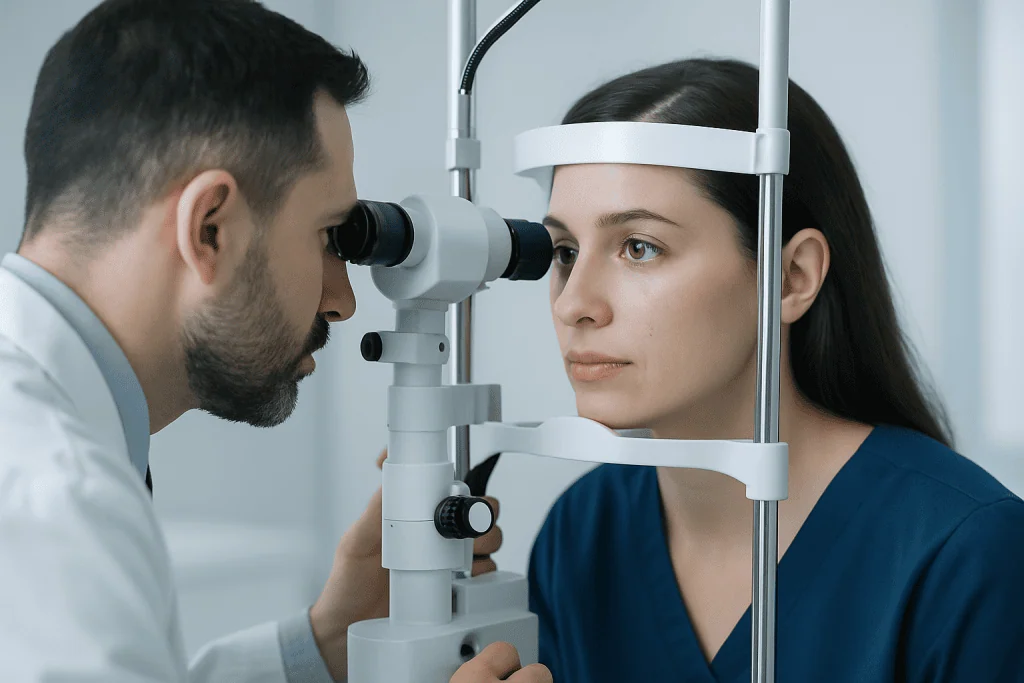
During the exam, the clinician checks the eyelids, tear film, conjunctiva, and cornea. They look for redness, discharge, signs of dryness, foreign material, eyelid inflammation, or abnormal eyelash growth. If the symptoms suggest a drainage problem, they may assess the tear ducts and the openings where tears normally drain.
Sometimes special tests are used, especially when symptoms persist. These may include staining the eye surface to look for scratches or dryness, measuring tear production, or evaluating tear drainage. If a blocked tear duct or a structural issue is suspected, the patient may be referred for more detailed ophthalmic assessment, and in selected cases an eye examination helps guide the next steps clearly.
Treatment options based on the cause
Treatment depends on what is causing the eye to water or discharge. If allergy is the main problem, avoiding triggers and using clinician-recommended allergy treatment may help. If dry eye is contributing, lubricating eye drops, eyelid care, and changes in screen habits or environment are often useful. When irritation is caused by smoke, dust, cosmetics, or contact lenses, removing the trigger is an important first step.
Infections are treated according to the type and severity. Viral conjunctivitis usually improves with supportive care, while bacterial infection may require prescription treatment. Eyelid inflammation often responds to warm compresses and careful eyelid hygiene. If a foreign body or eyelash is irritating the eye, it should be removed by a qualified professional rather than at home.
When the tear drainage system is blocked, treatment may involve procedures rather than drops alone. Depending on the location and severity of the blockage, an eye specialist may consider oculoplasty or related lacrimal procedures. If a broader structural problem is present or if persistent symptoms relate to a more complex tear duct obstruction, specialist evaluation is especially helpful. Acibadem International’s multidisciplinary specialists in JCI-accredited hospitals diagnose and treat eye and tear drainage conditions for international patients.
Self-care and prevention
Simple self-care can reduce symptoms and help prevent flare-ups in many people. Washing the hands regularly, avoiding rubbing the eyes, and not sharing towels or cosmetics are especially important when infection is possible. Contact lenses should be used exactly as directed, and lenses should be removed if the eye becomes painful, red, or unusually watery.
Environmental measures can also help. It may be useful to limit exposure to smoke, wind, dust, and strong fragrances. People with allergy-related symptoms often benefit from reducing known triggers and rinsing the eyes gently with clean water or sterile saline if advised by a clinician. For eyelid margin irritation, warm compresses and gentle lid hygiene may be recommended.
Prevention also includes routine eye care. Persistent eye discomfort, blurred vision, or repeated tearing deserves professional evaluation because home treatment alone may miss the true cause. In some situations, a specialist may recommend advanced care within ophthalmology services to protect the eye surface and improve drainage.
When to seek medical care
Medical care is appropriate if watery eyes or discharge do not improve, keep returning, or interfere with daily life. It is especially important to seek prompt assessment if symptoms affect vision, are mainly on one side, or are accompanied by swelling near the inner corner of the eye where tears drain.
Urgent medical attention is recommended if there is moderate to severe eye pain, sensitivity to light, significant redness, injury, chemical exposure, or sudden change in vision. These symptoms can point to conditions more serious than simple irritation. Infants with persistent tearing or discharge should also be evaluated, as tear duct blockage and infection need proper care.
In general, it is safest not to assume that any eye leakage is harmless. A qualified doctor or eye specialist can identify whether the fluid is due to allergy, dryness, infection, eyelid disease, or a drainage problem, and can recommend treatment that fits the cause.
Frequently asked questions
Is leaking atomic fluid a real medical condition?
No. “Leaking atomic fluid” is not a recognized medical diagnosis. It is usually an informal or mistaken way of describing watery eyes, excessive tearing, or eye discharge.
Why can eyes water even when they feel dry?
Dry eye can irritate the eye surface and trigger reflex tearing. This means the eyes may produce extra fluid in response to dryness, even though the underlying problem is poor tear quality or insufficient lubrication.
Does watery eye fluid always mean an infection?
No. Clear watery tears are often caused by irritation, allergy, dry eye, wind, or blocked tear drainage. Infection is more likely when there is marked redness, sticky discharge, crusting, or swelling, but an exam may be needed to tell the difference.
Can allergies cause what people call leaking atomic fluid?
Yes. Allergies are a common cause of watery, itchy, red eyes and can make tears overflow. Symptoms often affect both eyes and may happen along with sneezing or nasal congestion.
When should someone worry about watery eyes or discharge?
Medical advice is important if symptoms are persistent, recurrent, or affect vision. Prompt evaluation is needed for eye pain, light sensitivity, injury, one-sided swelling, chemical exposure, or sudden visual change.
Can a blocked tear duct cause constant eye leaking?
Yes. If tears cannot drain normally, they may spill over the eyelid and run down the cheek. This can be more noticeable on one side and may sometimes be accompanied by recurrent irritation or infection.
This article is for general information only and is not a substitute for professional medical advice. Please consult a qualified doctor about your individual situation.
Explore treatments in Turkey — costs, top hospitals & a free quote
JCI-accredited · board-certified surgeons · reply within 24h
Add us as a Preferred Source to see more of our trusted health content across Google Search, AI Overviews and Discover.

More from the Health Library

Keloid: What Patients Need to Know

Anorectal Manometry — Explained by Medical Evidence, Not Myths

Pressure Points for Anxiety: What Patients Need to Know

Duct Ectasia — Explained by Medical Evidence, Not Myths

Frontotemporal Dementia: What Patients Need to Know

Hypnobirthing: An Evidence-Based Guide for Patients
Infectious Diseases & Clinical Microbiology Specialists at Acibadem

Prof. Dr. A. Çağrı Büke
Infectious Diseases & Clinical Microbiology
Dr. Ahmad Nejat Ghaffarı
Infectious Diseases & Clinical Microbiology
Assoc. Prof. Dr. Aslıhan Demirel
Infectious Diseases & Clinical Microbiology
Dr. Aytan Seydalıyeva
Infectious Diseases & Clinical Microbiology