

Invisalign
Invisalign uses custom clear aligners to gradually straighten teeth without fixed metal braces. It is a removable, discreet orthodontic option planned with digital dental assessment.
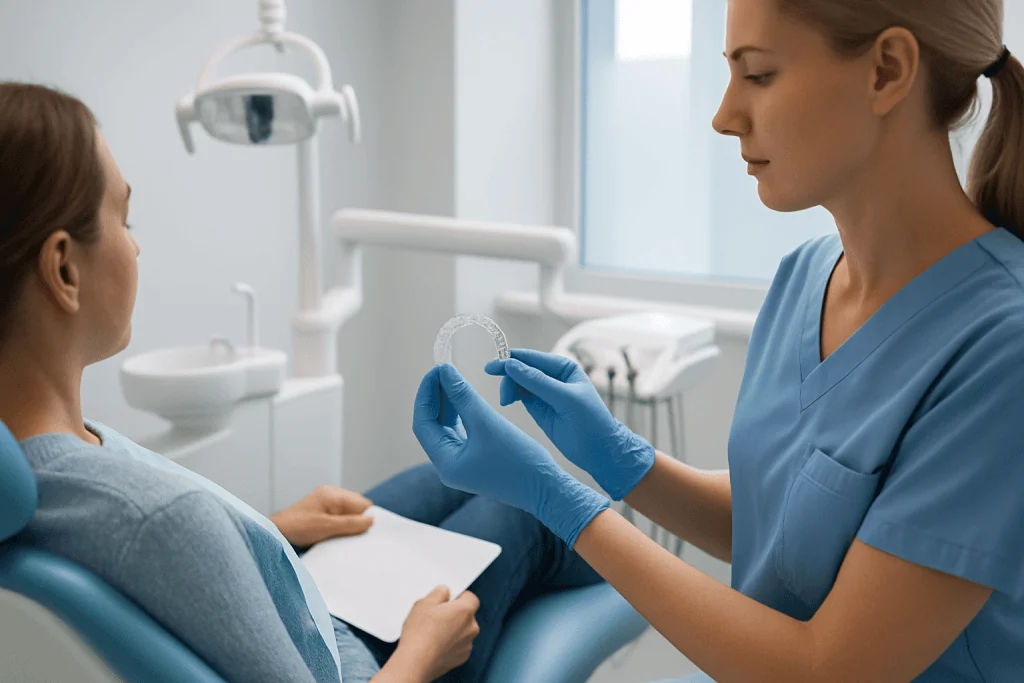
Quick answer
Invisalign is an orthodontic treatment that straightens teeth using a series of custom-made, clear removable aligners instead of fixed metal braces. At Acibadem in Turkey, treatment is planned with a digital dental assessment, and the aligners are changed over time to gently move teeth into the desired position.
Considering Invisalign: A More Discreet Path to Straighter Teeth
Choosing orthodontic treatment as an adult, teenager, or international patient often involves more than the position of the teeth. Many people are concerned about how braces might affect their appearance, professional life, social confidence, speech, eating habits, travel schedule, or oral hygiene. For patients who want to improve tooth alignment without fixed metal brackets, Invisalign offers a clear, removable alternative that can fit more naturally into daily life.
Invisalign treatment uses a planned series of custom-made transparent aligners to guide teeth gradually into better positions. Each aligner applies controlled, gentle pressure to specific teeth according to a digital treatment plan. Because the aligners are removable, patients can eat normally and brush and floss without working around wires or brackets. Because they are clear, they are less noticeable than conventional braces in most everyday situations.
Orthodontic alignment is not only a cosmetic concern. Crowded, rotated, spaced, or poorly fitting teeth can make cleaning more difficult, increase areas where plaque accumulates, contribute to uneven tooth wear, and in some cases affect the bite, jaw comfort, or long-term dental stability. Addressing alignment at the right time can help protect oral health as well as improve the appearance of the smile.
For patients traveling for care, the decision may feel especially complex. You may be comparing treatment options across countries, wondering whether clear aligners are suitable for your case, or trying to understand how many visits are needed. At Acibadem, Invisalign planning is based on a detailed dental assessment, digital imaging, bite evaluation, and a personalized discussion of realistic treatment goals. The aim is to help each patient understand not only what can be improved, but how treatment is expected to progress.
What Is Invisalign?
Invisalign is an orthodontic treatment system that uses a sequence of clear plastic aligners to move teeth gradually. The aligners are designed specifically for each patient after a digital dental assessment. They fit over the teeth like thin, transparent trays and are typically worn for most of the day and night, except during meals, drinking anything other than water, and oral hygiene.
Unlike traditional braces, Invisalign does not use fixed metal brackets and wires. Tooth movement is planned digitally in stages. Each aligner is slightly different from the previous one, creating incremental changes in tooth position. As treatment progresses, the patient changes to the next aligner in the sequence according to the orthodontist’s instructions.
In many Invisalign cases, small tooth-colored attachments may be bonded temporarily to selected teeth. These attachments help the aligners grip the teeth more effectively and deliver specific movements, such as rotation or controlled tipping. They are removed at the end of treatment. Some patients may also require small adjustments between teeth, known as interproximal reduction, to create space when mild crowding is present. These decisions are made carefully, based on dental anatomy and treatment goals.
Invisalign is best understood as a professional orthodontic treatment, not simply a cosmetic appliance. The quality of the result depends on accurate diagnosis, sound treatment planning, patient compliance, and regular monitoring. A clear aligner can only move teeth safely and predictably when the gums, bone support, bite relationship, and dental restorations are properly evaluated before treatment begins.
Who May Need Invisalign?
Patients consider Invisalign for many reasons. Some feel self-conscious about crowded front teeth or gaps that appear when they smile. Others notice that their bite has changed over time, that lower front teeth are becoming more crowded, or that previously straight teeth have shifted after earlier orthodontic treatment. For adults, Invisalign may be appealing because it is less visible during professional meetings, public-facing work, or social events. For teenagers, it may offer a more discreet alternative when appropriate and when cooperation is reliable.
Typical signs that may lead someone to seek Invisalign include overlapping teeth, visible spacing, rotated teeth, uneven smile line, protruding teeth, a bite that does not feel balanced, difficulty flossing certain areas, or relapse after previous braces. Some patients do not have symptoms at all, but they want to improve alignment before restorative dental work such as veneers, crowns, implants, or smile design. In these cases, orthodontic movement may create a healthier foundation for future treatment.
Diagnosis begins with a comprehensive dental and orthodontic examination. The clinician evaluates tooth position, jaw relationship, bite function, gum health, tooth wear, previous dental work, and any signs of temporomandibular joint concerns. Digital scans or impressions are used to capture the shape and position of the teeth. Dental X-rays may be needed to assess roots, bone levels, impacted teeth, missing teeth, or other structural issues that cannot be seen during a visual exam. Photographs are often taken to analyze the smile, facial balance, and bite from several angles.
Not every patient is an ideal candidate for Invisalign. Clear aligners can treat many mild to moderate alignment problems and some more complex cases when carefully planned. However, severe skeletal jaw discrepancies, significant tooth rotations, major bite correction, certain impacted teeth, or cases requiring complex vertical tooth movement may require fixed braces, combined approaches, or surgical orthodontic planning. The most appropriate treatment is determined after diagnosis rather than by preference alone.
Patient commitment is also important. Because Invisalign is removable, it only works when worn as prescribed. Patients who frequently remove aligners, forget to wear them, or do not follow instructions may experience slower progress or less predictable results. For international patients, planning must also consider travel timing, follow-up availability, and how remote check-ins may be integrated when clinically suitable.
Conditions and Indications Invisalign May Address
Invisalign may be used to address a range of orthodontic concerns, depending on their severity and the patient’s oral health. Common indications include mild to moderate crowding, spacing between teeth, relapse after prior orthodontic treatment, and certain bite irregularities such as overbite, underbite, crossbite, or open bite. The suitability of clear aligners depends on the type of movement required and whether the teeth and supporting tissues can respond safely.
Crowding occurs when there is not enough space in the dental arch for teeth to align properly. This may cause teeth to overlap, twist, or sit outside the natural curve of the smile. Crowded areas can be harder to clean, which may increase the risk of plaque buildup and gum inflammation. Invisalign can often create a more orderly alignment through a combination of planned expansion, tooth movement, and selective space management.
Spacing occurs when gaps are present between teeth. Some spaces are related to tooth size, missing teeth, gum conditions, habits, or jaw proportions. Closing spaces can improve smile aesthetics and may reduce food trapping in some areas. However, the cause of the spacing must be understood. If gum disease, tooth-size mismatch, or missing teeth are involved, orthodontic treatment may need to be coordinated with periodontal, restorative, or implant dentistry.
Bite problems involve how the upper and lower teeth meet. An overbite refers to excessive vertical overlap of the front teeth. An underbite occurs when the lower teeth sit ahead of the upper teeth. A crossbite means some upper teeth bite inside the lower teeth instead of outside them. An open bite is present when the upper and lower teeth do not contact properly in a certain area, often at the front. Invisalign may help selected bite issues, but complex bite correction requires careful diagnosis and realistic planning.
Invisalign can also be part of interdisciplinary dental care. For example, teeth may be aligned before implants so that there is adequate space for replacement teeth. Orthodontics may be recommended before cosmetic dentistry to avoid unnecessary tooth reduction. In patients with uneven wear, improving the bite may help distribute forces more evenly. At Acibadem, these decisions may involve collaboration among orthodontists, restorative dentists, periodontists, oral surgeons, and other dental specialists when needed.
How Invisalign Treatment Is Performed
Invisalign treatment begins with a consultation. During this visit, the orthodontist or dental specialist listens to the patient’s concerns, reviews medical and dental history, and examines the teeth, gums, bite, jaw function, and smile characteristics. If clear aligners appear appropriate, diagnostic records are collected. These may include digital intraoral scans, dental photographs, panoramic or cephalometric X-rays, and bite registration. The goal is to build an accurate understanding of the teeth and their supporting structures before movement is planned.
Digital assessment is central to Invisalign planning. A three-dimensional model of the teeth allows the clinician to map tooth movement in stages. This digital plan helps show how teeth may shift over time, where attachments may be needed, whether space must be created, and how the upper and lower arches should coordinate. The plan is reviewed by the treating clinician and adjusted according to biological limits, bite function, facial aesthetics, and the patient’s goals.
Once the plan is approved, the aligners are manufactured for the patient. Each aligner corresponds to a stage of treatment. At the fitting appointment, the clinician checks how the first aligners sit on the teeth, places any planned attachments, and explains how to insert, remove, clean, and store the aligners. Patients are also instructed on how long to wear each aligner and when to change to the next one. The exact schedule varies according to the case and the clinician’s judgment.
During daily treatment, the patient wears the aligners for the recommended number of hours per day. They are removed for eating, drinking beverages that may stain or damage the trays, brushing, and flossing. Good oral hygiene is essential because food and plaque trapped under aligners can increase the risk of cavities or gum irritation. Aligners should be cleaned regularly as instructed and kept in their case when not in use.
Follow-up visits are used to monitor progress. The clinician checks whether the aligners are fitting properly, whether teeth are tracking as planned, and whether any attachments or bite refinements are needed. For some international patients, parts of follow-up may be coordinated around travel plans, with in-person reviews at key points. However, orthodontic treatment still requires professional oversight. If a tooth is not moving as expected, the plan may need refinement or additional aligners.
The duration of Invisalign treatment depends on the complexity of the case. Minor alignment corrections may take several months, while more involved tooth movement can take longer. Patients should be cautious of promises that suggest treatment can be completed very quickly without proper evaluation. Teeth move through living bone and periodontal tissues, and safe orthodontic treatment respects biological response.
Most patients describe Invisalign as manageable, although pressure or soreness is common when starting a new aligner. This usually reflects active tooth movement and often settles after a short adjustment period. Speech may feel slightly different at first, but many patients adapt as the tongue becomes used to the aligners. Because Invisalign does not use metal brackets, irritation to the cheeks and lips may be less frequent than with fixed braces, although aligner edges can occasionally need adjustment.
At the end of active treatment, the clinician evaluates the result and determines whether refinement is needed. Refinement means additional aligners are created to fine-tune tooth positions. Once treatment goals have been achieved, retainers are prescribed. Retention is a critical phase. Teeth naturally tend to shift over time, and retainers help maintain the new alignment. Patients should expect to follow a long-term retainer plan to protect their result.
Why Acting Early Matters
Orthodontic concerns do not always need urgent treatment, but delaying evaluation can allow certain problems to progress. Crowding may become more noticeable with age, especially in the lower front teeth. Areas that are difficult to clean may contribute to gum inflammation or cavities. Bite imbalance may lead to uneven tooth wear, chipping, sensitivity, or stress on restorations. In some patients, shifting teeth may complicate future dental work such as crowns, bridges, veneers, or implants.
Early assessment does not always mean immediate treatment. It means understanding what is happening and choosing the right timing. For teenagers, evaluation may help determine whether growth, eruption patterns, or developing bite problems need to be monitored. For adults, it may identify gum health concerns, bone support limitations, or restorative needs before orthodontic movement begins. This is especially important for patients with previous periodontal disease, missing teeth, or extensive dental restorations.
Delaying care can also reduce treatment options in some situations. For example, untreated gum disease must be controlled before aligner therapy because moving teeth in the presence of active periodontal infection can increase risk. Severe wear or bite collapse may require broader rehabilitation if not addressed. When alignment is evaluated earlier, treatment may be simpler, more conservative, and better coordinated with long-term oral health goals.
Benefits of Invisalign Treatment
The benefits of Invisalign are both aesthetic and practical, although the exact outcome depends on the diagnosis, treatment plan, and patient cooperation.
| Benefit | What It Means for You |
|---|---|
| Discreet appearance | Clear aligners are less visible than metal braces, which may be important for work, school, travel, or social settings. |
| Removable design | You can remove aligners for meals and oral hygiene, making it easier to maintain normal eating habits and clean your teeth thoroughly. |
| Digital treatment planning | A three-dimensional plan helps your clinician map tooth movement, anticipate challenges, and discuss expected changes before treatment begins. |
| Improved alignment | Straighter teeth may be easier to clean, may reduce plaque-retentive areas, and can improve the overall appearance of the smile. |
| Potential bite improvement | In suitable cases, Invisalign can help improve how the teeth meet, which may reduce uneven wear or functional strain. |
| Comfort in daily life | Because there are no fixed brackets or wires, many patients find clear aligners easier to adapt to, although temporary pressure is expected. |
Recovery and Treatment Timeline
Invisalign does not involve surgical recovery, but patients do go through an adjustment period as the teeth begin to move and daily routines change.
| Time Period | What Patients Can Expect |
|---|---|
| Day 1 | The first aligners are fitted and checked. You may feel pressure on the teeth, and speech may feel slightly different at first. |
| First Week | Most patients adapt to inserting, removing, and wearing the aligners. Mild soreness can occur, especially after changing to a new aligner. |
| First Month | Daily wear becomes more routine. Follow-up may confirm that the aligners are tracking properly and that attachments remain secure. |
| During Treatment | You change aligners as instructed, maintain careful oral hygiene, and attend monitoring visits. Refinements may be recommended if teeth need further adjustment. |
| Longer Term | After active treatment, retainers are used to maintain the result. Long-term retention is essential because teeth can shift over time. |
Factors That Influence a Good Invisalign Result
A successful Invisalign outcome begins with the right diagnosis. Clear aligners can be very effective for appropriately selected cases, but they are not the best solution for every orthodontic problem. The clinician must assess whether the desired tooth movements are biologically and mechanically realistic. Root position, bone support, gum condition, bite relationship, tooth shape, missing teeth, and previous dental work all influence what can be achieved.
Patient compliance is one of the most important factors. Aligners must be worn consistently for the prescribed amount of time. If they are left out for long periods, teeth may not move as planned, aligners may stop fitting well, and treatment can take longer. Patients who travel frequently should plan carefully for aligner changes, storage, cleaning, and follow-up appointments.
Oral hygiene also plays a central role. Because aligners cover the teeth, brushing and flossing before reinserting them is important. Patients who snack frequently or drink sugary or acidic beverages while wearing aligners may increase their risk of cavities or enamel changes. Regular dental cleanings and periodontal monitoring may be recommended, especially for adults or patients with a history of gum disease.
The complexity of the bite affects predictability. Simple spacing or mild crowding may respond more directly than deep bite correction, open bite closure, significant rotations, or cases requiring major root movement. In some situations, attachments, elastics, interproximal reduction, or refinement aligners may be needed to improve control. In more complex cases, clear aligners may be combined with other orthodontic or restorative approaches.
Biology matters as well. Teeth move at different rates in different individuals. Age alone does not prevent Invisalign treatment, but adult bone and periodontal conditions may require more cautious planning. Patients with active gum disease, untreated cavities, poor oral hygiene, or unstable dental restorations may need preliminary dental care before starting aligners.
Finally, retention determines how well the result lasts. Orthodontic movement is followed by a stabilization phase, during which bone and soft tissues adapt to the new tooth positions. Without retainers, teeth can relapse. A personalized retainer plan, regular checkups, and timely replacement of worn retainers help protect the alignment achieved during treatment.
Why International Patients Choose Acibadem for Invisalign
For international patients, orthodontic treatment abroad requires trust, clarity, and careful coordination. Invisalign is a planned treatment that may extend over months, so patients need more than a single appointment. They need an accurate diagnosis, a realistic roadmap, clear communication, and a team that understands how to manage care across borders.
Acibadem Hospitals in Turkey provide dental and orthodontic care within a larger healthcare environment known for JCI-accredited hospitals, structured clinical pathways, and multidisciplinary collaboration. When a patient’s case is straightforward, Invisalign planning may be managed primarily by the orthodontic team. When additional concerns are present, such as gum disease, missing teeth, jaw joint symptoms, implants, complex restorations, or facial aesthetic goals, care can be coordinated with other dental and medical specialists.
This multidisciplinary approach is important because tooth alignment is connected to oral health as a whole. Moving teeth without addressing gum inflammation, decay, bite instability, or failing restorations can compromise the result. At Acibadem, treatment planning may include input from periodontology, prosthodontics, oral and maxillofacial surgery, radiology, and other relevant specialties when the case requires it. The purpose is to design a plan that is appropriate for the patient’s health, anatomy, and long-term dental goals.
Modern diagnostic pathways support this process. Digital intraoral scanning can provide precise three-dimensional records without traditional impression material in many cases. Dental radiography helps evaluate roots, bone levels, impacted teeth, and jaw relationships. Clinical photographs and bite analysis help the clinician understand the smile in motion as well as the teeth in isolation. These tools do not replace clinical judgment; they strengthen it by providing detailed information for planning and follow-up.
International patients also benefit from structured communication. Acibadem International assists patients from many countries with appointment coordination, hospital orientation, interpretation support in more than 20 languages, and practical guidance related to travel and care scheduling. For a treatment such as Invisalign, this coordination can help patients understand how many in-person visits may be needed, what records should be prepared, and how follow-up can be organized around their location and travel plans.
Experienced physicians and dental specialists are central to case selection and treatment design. Invisalign technology provides the aligners, but the clinician determines whether the plan is appropriate, how tooth movement should be staged, when refinements are necessary, and how to manage the bite at the end of treatment. Patients are encouraged to ask about their diagnosis, alternatives, expected treatment length, retainer plan, and what limitations may apply to their case.
Personalization is especially important in orthodontics because two patients with similar-looking teeth may need different approaches. One patient’s spacing may be due to small tooth size and require restorative planning after alignment. Another patient’s crowding may be related to arch form and require space management. A patient with previous gum disease may need periodontal stabilization before aligners. A patient seeking cosmetic dentistry may benefit from orthodontic alignment before veneers so that tooth preparation can be more conservative. The best plan is the one that reflects the full clinical picture.
For patients coming from the United States, Europe, the Middle East, or other regions, treatment at Acibadem can be attractive when they are seeking high-quality clinical evaluation, advanced digital planning, and coordinated international services in Turkey. The decision should always be based on suitability, treatment continuity, and confidence in the care plan rather than on convenience alone. Invisalign requires partnership between the patient and the clinical team, and that partnership begins with clear expectations.
Taking the Next Step
If you are considering Invisalign, the most important first step is a professional assessment. Clear aligners can be an excellent option for many patients who want a discreet, removable way to improve tooth alignment, but the right recommendation depends on your bite, dental health, gum condition, treatment goals, and ability to wear aligners consistently.
At Acibadem, patients can request a consultation or second opinion to understand whether Invisalign is suitable for their case. Your clinician can review your dental records, perform the necessary diagnostic assessment, explain treatment alternatives, and outline what your Invisalign journey may involve. For international patients, Acibadem International can help coordinate appointments, language support, and practical details before travel.
A straighter smile can influence confidence, oral hygiene, bite function, and long-term dental planning. With careful diagnosis, digital planning, and consistent follow-through, Invisalign may offer a refined orthodontic option that fits the needs of many adults and teenagers seeking treatment at home or abroad.
This information is intended for general educational purposes and is not a substitute for professional medical or dental advice. Diagnosis and treatment recommendations should always be made by a qualified healthcare professional after an individual evaluation.
Preparation
- A dentist evaluates tooth alignment, bite, gum health, and overall oral condition before treatment. Digital scans, photographs, and X-rays may be taken to design the aligner plan. Cavities, gum disease, or other dental issues should be treated before starting Invisalign.
Aftercare
- Aligners are usually worn 20 to 22 hours per day and removed only for eating, drinking anything other than water, and oral hygiene. Teeth and aligners should be cleaned regularly, and scheduled follow-up visits help monitor progress. After treatment, retainers are typically needed to maintain the new tooth position.
Turkey vs UK, Germany & USA
Invisalign treatment is planned with a digital dental assessment and a sequence of custom clear aligners. Overall cost and experience vary by case complexity, provider expertise, clinic setting and what is included in the care package.
The country where you start Invisalign treatment can influence scheduling, package structure, travel planning and follow-up arrangements.
| Factor | Turkey | UK | Germany | USA |
|---|---|---|---|---|
| Price drivers | Private dental pricing, case complexity, aligner plan, refinements and whether retainers are included. | Mainly private for adult clear aligners; fees vary by region, provider and case complexity. | Private and insurance-related pathways vary; laboratory, planning and specialist fees influence cost. | Mostly private or insurance-dependent; location, provider experience and plan type can strongly affect fees. |
| Clinic and dentist factors | Costs may differ between general dentists, orthodontists and multidisciplinary hospital-based dental teams. | Costs vary between high-street dental clinics, specialist orthodontic practices and city-based providers. | Specialist orthodontic clinics and university-linked or private practices may have different fee structures. | Large variation between private practices, orthodontic specialists and metropolitan centres. |
| Accreditation and quality | International patients may choose hospital groups with recognised quality systems, such as JCI-accredited facilities, and coordinated dental care. | Regulated dental care with established professional standards; accreditation and clinic facilities vary. | Regulated dental care with strong technical standards; clinic infrastructure and specialist access vary. | Regulated dental care with wide choice of providers; quality systems and clinic facilities vary by practice. |
| Waiting times | Private appointments for international patients can often be coordinated around travel plans, subject to assessment and availability. | Private appointments may be available sooner than public routes; availability depends on location and provider. | Private orthodontic scheduling varies by region and specialist availability. | Private scheduling can be flexible, but timing varies by provider, location and case demand. |
| Travel and language logistics | Packages for international patients may include multilingual coordination, appointment planning and guidance for follow-up visits. | Minimal travel for local patients; international patients need to arrange accommodation and follow-up access. | International patients may need language support and clear planning for reviews and aligner delivery. | Travel distances and accommodation can add complexity for international patients; follow-up planning is important. |
| Typical package contents | May include digital assessment, treatment plan, aligners, check-ups, refinements and retainers depending on the package. | Packages vary; retainers, refinements, scans and emergency visits may be included or billed separately. | Packages vary by clinic and insurer; diagnostics, aligners, refinements and retention should be clarified. | Packages vary widely; insurance coverage, retainers, refinements and monitoring tools should be confirmed. |
What affects your final cost
- Severity of crowding, spacing or bite correction needed.
- Whether treatment is simple cosmetic alignment or comprehensive orthodontic correction.
- Number of aligner stages required, without stating this in advance before assessment.
- Need for attachments, interproximal polishing, elastics or additional dental procedures.
- Provider type, clinic location and hospital-based service level.
- Whether retainers, refinements, emergency visits and follow-up monitoring are included.
- Travel, accommodation, translation support and appointment coordination for international patients.
Compare your options
Several orthodontic options may be considered for discreet or comprehensive tooth alignment. Suitability is decided by a dental specialist or orthodontist after clinical examination, imaging and digital planning.
| Option | What it is | Typical use | Key considerations |
|---|---|---|---|
| Invisalign clear aligners | Custom removable transparent aligners planned digitally to move teeth gradually. | Mild to complex alignment concerns depending on case planning, patient compliance and specialist assessment. | Removable and discreet; must be worn as instructed, removed for eating and cleaned carefully. |
| Other clear aligner systems | Alternative branded or clinic-based clear aligners designed from digital scans or impressions. | Selected alignment cases where a clear removable appliance is appropriate. | Materials, planning software, monitoring, refinement policy and provider experience vary. |
| Fixed metal braces | Brackets and wires bonded to the teeth to move them continuously. | Broad range of orthodontic problems, including cases needing strong control of tooth movement. | Visible and fixed; effective for many complex movements but requires careful oral hygiene and regular adjustments. |
| Ceramic braces | Tooth-coloured or clear brackets with wires, offering a less visible fixed appliance. | Patients who need fixed-brace control but prefer a more discreet appearance than metal brackets. | May be more noticeable than aligners and still requires dietary care and hygiene attention. |
| Lingual braces | Custom fixed braces placed on the inner side of the teeth. | Patients seeking a hidden fixed appliance for suitable orthodontic corrections. | Can affect speech and comfort during adaptation; specialist experience and case suitability are important. |
| Retainers after treatment | Removable or fixed devices used to help maintain tooth position after active orthodontic treatment. | Used after Invisalign, other aligners or braces to reduce the risk of relapse. | Retention is a long-term part of orthodontic care; type and schedule are decided by the specialist. |
Trusted care for international patients
General information only — not medical or financial advice. Final costs depend on the factors above and your individual case; request a free, personalised quote.
Doctors Performing This Treatment

Assoc. Prof. Dr. Ferit Bayram
Oral & Dental HealthDr. Ali Riza Özdurmuş
Oral & Dental Health
Dr. Arzu Morçiçek
Oral & Dental Health
Dr. Bedii Ender Topçu
Oral & Dental Health
Dr. Begüm Öykü Kesim
Oral & Dental Health
Dr. Ceyda Sabancı
Oral & Dental HealthDr. Deniz Turgut
Oral & Dental Health
Dr. Destina Suay Sarı
Oral & Dental Health
Dr. Emre Çengelli
Oral Dental & Maxillofacial Surgery
Dr. Eylül Türsen
Oral & Dental Health
Dr. Ezgi Gülüm
Oral Dental & Maxillofacial Surgery
Dr. Halime Bayram
Oral & Dental Health
Dr. Havva Gölalan
Oral & Dental Health
Dr. Helin Kuşsever Topçu
Oral & Dental Health
Dr. Melike Zeynep Çapoğlu
Oral & Dental Health
Dr. Merve Ağartıoğlu
Oral & Dental Health
Dr. Metin Kınacı
Oral & Dental Health
Dr. Mücahit Güner
Oral & Dental Health
Dr. Pelin Açık
Oral & Dental Health
Dr. Sebiha Nihal Yılmaz
Oral Dental & Maxillofacial SurgeryDr. Seda Saygılı Özaydın
Oral & Dental Health
Dr. Uğur Önder
Oral & Dental Health
Dr. Zeynep Ekin Kılınç
Oral & Dental Health
Dr. Zeynep Ezgi Akan
Oral & Dental HealthMedical Units
Available at These Hospitals












Frequently Asked Questions
What affects the cost of Invisalign treatment?
Cost depends on case complexity, the treatment plan, provider expertise, clinic setting, whether refinements are needed and whether retainers and follow-up visits are included. A personalised quote can only be prepared after dental assessment and digital planning.
How can I get a personalised Invisalign quote from Acibadem?
You can request a free consultation and share your dental photos, existing scans or previous orthodontic records if available. The dental team can then advise whether an in-person assessment or additional imaging is needed before confirming a treatment plan.
Is Invisalign usually offered as a package for international patients?
Packages may include consultation, digital scanning, treatment planning, aligners and scheduled reviews, but inclusions vary by case. It is important to confirm whether refinements, retainers, emergency appointments, translations and travel support are part of the proposal.
Can I start Invisalign in Turkey and continue follow-up from my home country?
This may be possible for selected patients if the specialist considers remote monitoring appropriate and if review visits are clearly planned. Some cases still require in-person checks, attachments, refinements or additional dental procedures.
Why does the quote differ between clinics or countries?
Quotes may differ because of provider experience, clinic infrastructure, diagnostic methods, brand policies, follow-up schedules, what is included in the package and local private healthcare costs. Comparing inclusions is as important as comparing the headline fee.