Oral Health Therapy
Oral health therapy focuses on preventive dental care, professional cleaning, gum assessment, and personalized hygiene guidance to maintain healthy teeth and gums and reduce future dental problems.
Quick answer
Oral health therapy is a preventive dental visit that combines professional removal of plaque and tartar, a detailed assessment of the gums and teeth, and personalised hygiene guidance. It is used to treat early gum inflammation, lower the risk of decay and periodontal disease, and plan any further dental care. A routine session is completed in a single outpatient appointment, often in under an hour.
Oral Health Therapy: Preventive Care for Teeth and Gums
Oral health therapy is a structured preventive dental visit that combines professional cleaning, gum assessment, risk evaluation and personalised hygiene guidance. It removes the plaque and tartar you cannot remove at home, checks the health of your gums and teeth in detail, and gives you a clear plan for keeping your mouth healthy between appointments. It is suitable for most adults and adolescents, whether or not anything currently hurts.
That last point matters more than it may sound. For many people, dental care becomes urgent only when something forces the issue: a toothache, bleeding gums, a broken filling, persistent bad breath, or sensitivity that makes everyday eating uncomfortable. Yet many oral health problems begin quietly. Gum inflammation can develop without pain. Plaque can harden into tartar in places that are difficult to see or clean. Small changes in the mouth can progress steadily until treatment becomes more complex than it needed to be. Oral health therapy is designed to shift dental care from reaction to prevention — to find these changes while they are still simple to manage.
It is not simply “a cleaning”. Performed thoughtfully, oral health therapy is a diagnostic and therapeutic appointment in its own right. It assesses the health of your teeth, gums and supporting tissues; removes plaque and calculus professionally; identifies early signs of disease; and teaches you how to protect your mouth at home. Done regularly, it can reduce the risk of gum disease, tooth decay, tooth loss, dental infections, and complications that may affect broader health.
Patients often bring additional questions to this kind of visit. You may want a reliable baseline assessment before starting orthodontics, implants, cosmetic dentistry, cancer treatment, heart surgery or another procedure. You may be seeking a second opinion because you have been told you have gum disease or need extensive dental work. In each of these situations, oral health therapy provides clarity: what is healthy, what needs attention now, and what can safely be monitored.
At Acibadem, oral health therapy sits within the wider Dental & Oral Health service. The aim is to evaluate the mouth carefully, treat inflammation early, support long-term oral hygiene, and coordinate care when other dental or medical specialists need to be involved. For patients arriving with records from previous providers, this careful, documented approach helps make dental care more understandable and better aligned with wider health needs.
What Oral Health Therapy Involves
Oral health therapy is a preventive and supportive dental service that brings together several elements in one appointment: professional cleaning, gum assessment, oral hygiene education, risk evaluation and individualised recommendations. Its purpose is to maintain healthy teeth and gums, detect problems early, and reduce the likelihood of future dental disease.
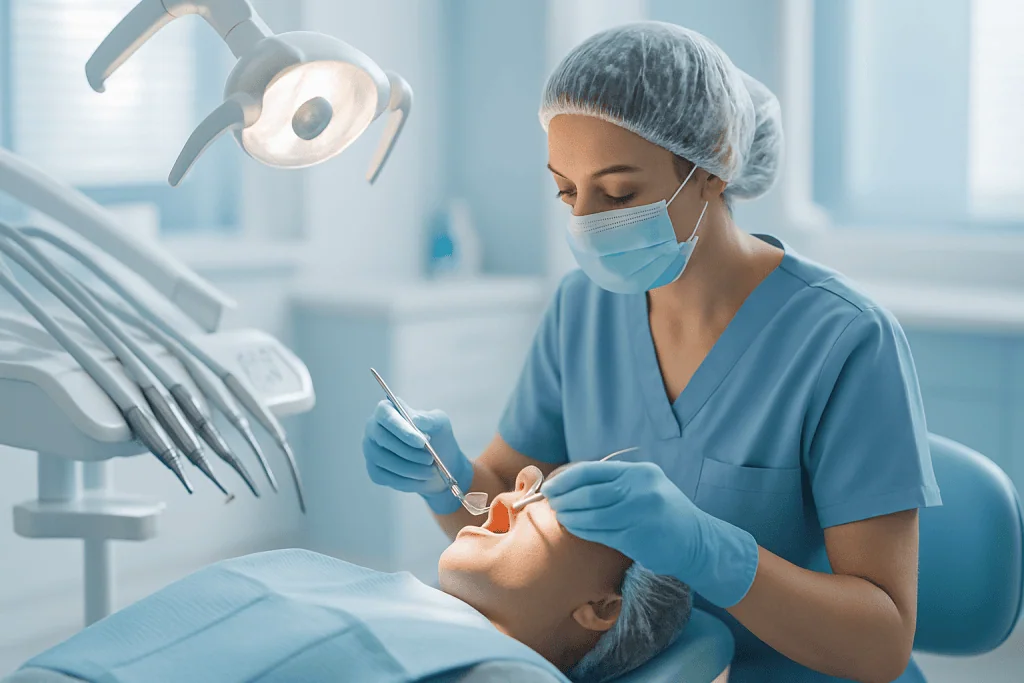
During the visit, a dental professional examines the mouth and evaluates the condition of the gums, teeth, dental restorations, bite surfaces and oral soft tissues. Plaque and calculus — the hardened deposit most people know as tartar — are removed from the teeth and gumline using professional instruments. The teeth may then be polished to remove surface stains and smooth areas where plaque tends to accumulate. Depending on your risk of tooth decay or sensitivity, fluoride or other preventive measures may be recommended.
The gum assessment is central. Healthy gums are firm and do not bleed easily. When plaque remains around the teeth, the gums may become inflamed, swollen, tender or prone to bleeding. This early stage, known as gingivitis, is often reversible with professional cleaning and improved home care. If inflammation progresses and begins to affect the bone and supporting structures around the teeth, it may become periodontitis — a more serious gum disease that requires deeper treatment and ongoing maintenance. Distinguishing between these stages is one of the most valuable things a therapy visit does.
Education is the other half of the appointment, and it is personal rather than generic. A patient with dental implants needs different instructions from a patient with braces. A patient with diabetes, pregnancy-related gum changes, a history of gum disease or frequent cavities may need closer monitoring and a more intensive prevention plan. Guidance may cover brushing technique, interdental cleaning, product selection, nutrition, tobacco use, dry mouth, tooth wear and habits that affect the teeth and gums. Structured coaching of this kind is described in more depth on our Oral Health Education page.
In practical terms, oral health therapy answers questions most patients cannot answer for themselves: Are my gums healthy? Is there tartar below the gumline? Do I have early decay or signs of tooth wear? Am I cleaning effectively at home? How often should I have professional maintenance? Do I need referral to a periodontist, restorative dentist, orthodontist, oral surgeon or another specialist? A well-conducted visit leaves you with a clear picture and a plan — not just cleaner teeth.
What is the difference between oral hygiene and dental therapy?
Oral hygiene refers to the daily care you carry out yourself — brushing, interdental cleaning and the habits that control plaque between professional visits — while dental therapy refers to clinical care delivered by a trained professional in a dental setting. The two are complementary rather than interchangeable. No amount of home brushing removes hardened tartar, and no professional cleaning lasts if daily hygiene lapses afterwards. Oral health therapy deliberately connects the two: the clinical part removes what home care cannot, and the coaching part strengthens what happens at home. Patients who understand this distinction tend to get far more out of their appointments, because they stop treating professional cleaning as a substitute for daily care.
What is the difference between a dentist and an oral health therapist?
A dentist is trained and licensed to diagnose and treat the full range of dental disease, including restorative work, extractions, root canal treatment and complex care, while an oral health therapist or dental therapist works within a defined preventive and early-treatment scope. Depending on the country and its regulations, that scope typically includes professional cleaning, gum assessment, preventive treatments, hygiene education and, in some jurisdictions, simple fillings and care for children. In practice, the two roles work together: the therapist or hygienist manages prevention and maintenance, and the dentist manages diagnosis and treatment decisions that fall outside the preventive scope. What you should take from this is simple — the person cleaning your teeth is part of a team, and a good therapy visit includes a pathway to the dentist whenever findings require it.
How many years does it take to be a dental therapist?
Training length varies by country, but dental therapy and oral health therapy qualifications are generally university-level programmes lasting around three years, often combining hygiene and therapy training in a single degree. Some countries regulate dental therapists as an independent profession; others recognise dental hygienists but not therapists; and in some systems preventive care is delivered by dentists themselves. This is worth knowing because titles vary from one country to another, while the clinical content of the visit remains essentially the same: assessment, cleaning, education and planning under the supervision or referral pathway of a dentist.
Who May Need Oral Health Therapy
Most adults and many adolescents benefit from regular oral health therapy, even with no dental pain at all. Prevention works best before symptoms become obvious. That said, certain signs and life circumstances make a professional assessment especially important rather than merely sensible.
Common symptoms that bring patients to a therapy visit include bleeding gums when brushing or flossing, persistent bad breath, gum tenderness, swollen or red gums, tooth sensitivity, visible tartar, staining, food trapping between teeth, or the persistent feeling that the mouth is not clean despite regular brushing. Some patients notice gum recession, teeth that appear longer, loose teeth, shifting teeth, or changes in the way the teeth meet when biting. These signs may point to gum inflammation, bite changes, tooth wear or more advanced periodontal disease — and only an examination can tell which.
Diagnosis begins with a dental examination. The dentist or oral health clinician reviews your medical history, medications, previous dental treatments, oral hygiene habits, diet, tobacco or nicotine use, and any symptoms. The teeth and gums are examined visually, and the gum pockets may be measured with a periodontal probe. These measurements identify areas where the gums have pulled away from the teeth or where deeper inflammation may be present. Bleeding on probing, gum recession, plaque levels, tooth mobility and tartar deposits are all assessed and recorded, so that changes can be tracked over time.
Dental imaging may be recommended when the clinician needs to evaluate decay between teeth, bone levels around the teeth, impacted teeth, infection, previous restorations, or structures not visible during examination. The type of imaging depends on the clinical question. For routine preventive care, small intraoral X-rays may be sufficient. For more complex cases — implants, oral surgery, orthodontic care or advanced periodontal treatment — panoramic views or three-dimensional imaging may form part of a broader diagnostic pathway.
Some groups have a particular reason to prioritise oral health therapy: people with a history of gum disease, frequent cavities, dental implants, crowns, bridges, veneers or orthodontic appliances; people with diabetes, dry mouth, immune system concerns, pregnancy, heart valve conditions or a cancer treatment history; and anyone with planned surgery where infection control matters. Smokers and users of nicotine products carry a higher risk of gum disease and slower healing. Patients who have not had a dental check-up recently often use oral health therapy as a structured baseline before beginning other medical or dental care.
Just as importantly, oral health therapy is not only for patients with problems. It is for people who want to keep healthy mouths healthy: to preserve dental health, maintain the appearance of the smile, protect existing restorations and avoid avoidable dental emergencies. A well-timed preventive visit finds small issues before they become painful, expensive or disruptive — which is precisely the point.
What are three signs of poor oral health?
Three of the most reliable early signs of poor oral health are gums that bleed during brushing or flossing, persistent bad breath that does not improve with cleaning, and gums that look red, swollen or tender rather than firm and pale pink. Bleeding is the sign patients most often dismiss — many assume it means they are brushing too hard, when it more commonly means plaque has been left along the gumline and the tissue is inflamed. Other signs worth taking seriously include tooth sensitivity to hot, cold or sweet foods, visible tartar buildup, gum recession, loose or shifting teeth, and pain or discomfort when chewing. None of these signs diagnoses a specific condition on its own; each is a reason for a professional assessment, because the same symptom can have several different causes with very different treatments.
Conditions and Indications Addressed by Oral Health Therapy
Oral health therapy addresses a broad range of preventive and early-disease concerns. Its core purpose is to control bacterial plaque, assess gum and tooth health, and guide patients toward habits that reduce risk over time. The conditions below are the most common reasons the visit is recommended.
Gingivitis is the most frequent indication. This is inflammation of the gums caused primarily by plaque accumulation around the teeth. It may cause bleeding, redness, swelling or tenderness — or it may be mild enough to overlook entirely. With professional cleaning and effective daily plaque removal, gingivitis can often improve significantly, and this is the stage at which gum disease is easiest to reverse.
Periodontitis risk is the second major concern. Periodontitis involves deeper infection and inflammation affecting the supporting bone and tissues around the teeth. Oral health therapy alone may not be enough for advanced periodontitis, but it is very often the point at which the disease is first detected, and it forms part of long-term periodontal maintenance after specialist treatment. Patients with treated periodontitis typically return for maintenance visits rather than standard cleanings.
Tartar removal matters because calculus cannot be removed with a toothbrush or floss. Tartar provides a rough surface where more plaque accumulates, making gum inflammation progressively harder to control. Removing these deposits supports healthier gum tissue and restores your ability to keep the area clean at home.
Dental caries risk — the risk of cavities — is also actively managed. During the visit, areas of plaque retention, enamel weakness, exposed root surfaces, dry mouth, diet-related risk and early lesions can be identified. Preventive recommendations may include fluoride use, changes in hygiene technique, dietary counselling, saliva support or more frequent monitoring. Early enamel changes found at this stage can sometimes be managed without drilling at all.
Restoration maintenance is a quieter but important indication. Crowns, bridges, fillings, veneers, implant-supported teeth and dentures all accumulate plaque at margins or under connectors, and early changes are rarely visible to the patient. Regular professional review protects the investment in previous dental work and may reduce the risk of complications around it.
Halitosis, or persistent bad breath, often improves when plaque, tartar, gum inflammation and tongue coating are addressed. However, persistent bad breath can have multiple causes, including dry mouth, sinus issues, gastrointestinal concerns, medications or systemic conditions. A dental assessment helps determine whether the cause is primarily oral or whether further medical evaluation is more appropriate — a distinction that saves patients months of guesswork.
Other indications include tooth staining, early sensitivity, gum recession, oral hygiene challenges related to braces or aligners, and preventive preparation before major dental procedures. For patients undergoing medical treatment where infection control is important, oral health therapy may be part of a wider plan to reduce the oral bacterial burden and improve readiness for care. Where an unusual lesion or soft tissue change is found during examination, referral for oral pathology assessment ensures it is properly evaluated rather than merely observed.
How Oral Health Therapy Is Performed
A therapy visit follows a logical sequence: preparation, assessment, cleaning, coaching and planning. Understanding each step in advance makes the appointment far less abstract, particularly if it has been some years since your last professional cleaning.
- Preparation and history. Before treatment, the clinical team reviews your dental and medical history, including allergies, medications, blood thinners, heart conditions, diabetes, pregnancy, immune system conditions, previous periodontal treatment, dental implants and any history of dental anxiety. This matters because oral care should be adapted to your overall health: a patient with controlled diabetes may need closer gum monitoring, while a patient taking certain medications may need attention to dry mouth or bleeding risk. Any questions about your medications are directed back to your treating doctor rather than answered in the dental chair.
- Clinical examination. The dental professional inspects the teeth, gums, tongue, palate, cheeks, bite, existing restorations and the areas where plaque commonly collects. Gum measurements may be taken around each tooth to assess pocket depths and detect bleeding. These measurements create a map of gum health and help distinguish routine cleaning needs from possible periodontal disease.
- Diagnostic imaging where appropriate. Digital dental X-rays can identify cavities between teeth, bone loss, dental infections, impacted teeth or problems under existing restorations. In selected cases, more detailed imaging evaluates bone anatomy, implant areas or complex conditions. Intraoral photography or digital scanning may also be used to document findings, explain concerns visually and monitor changes over time. Technology here serves one purpose: better accuracy and clearer communication, not a longer appointment.
- Professional cleaning. Plaque and calculus are removed from the teeth and along the gumline using hand instruments and ultrasonic devices. Ultrasonic instruments use controlled vibration and water irrigation to break up deposits efficiently, especially where tartar is firmly attached; hand instruments allow precise finishing and access to detailed surfaces. The clinician adjusts the approach to gum sensitivity, pocket depth, tooth anatomy, implants, restorations and your comfort.
- Polishing and preventive applications. After deposits are removed, the teeth may be polished to remove surface stains and leave the surfaces smoother. Polishing is not whitening — it does not change the natural colour of the teeth — but it removes external discolouration from coffee, tea, tobacco or certain foods. If sensitivity or decay risk is present, a fluoride application or desensitising product may be recommended.
- Personalised hygiene coaching. The clinician may demonstrate brushing technique, interdental cleaning with floss or interdental brushes, tongue cleaning, implant care, care around bridges or orthodontic appliances, and the use of specific home-care aids. This guidance reflects your actual mouth rather than a generic instruction sheet: a patient with tight contacts between teeth needs a different method from someone with open spaces or gum recession.
- Planning and follow-up. Based on the findings, the dentist may recommend routine maintenance, more frequent cleanings, periodontal therapy, restorative treatment, cavity management, implant maintenance, orthodontic evaluation, bite assessment or medical coordination. Everything is documented, so priorities are clear: what should be addressed now, what can wait, and what follow-up is needed later.
What happens if deeper gum disease is found?
If deeper gum pockets, significant tartar below the gumline or signs of periodontitis are found, the clinician may recommend scaling and root planing or referral to a periodontist rather than a standard cleaning. Scaling and root planing is a deeper form of periodontal therapy that cleans below the gumline and smooths the root surfaces so that the gum tissues can heal against them. It is usually delivered over one or more dedicated sessions, sometimes with local anaesthetic, and is followed by reassessment. This is why oral health therapy functions as both a treatment and a diagnostic gateway: the routine visit is often where more serious disease is first identified and staged.
How long does an oral health therapy appointment take?
A routine oral health therapy appointment is usually completed in under an hour, as a single outpatient visit. More detailed assessments, heavier tartar removal or long gaps since the last professional cleaning may require more time or an additional session. Patients with sensitive gums, dental anxiety, a strong gag reflex or advanced periodontal needs can discuss comfort measures in advance. Local anaesthetic is not usually needed for a routine cleaning, but it may be used for deeper periodontal treatment where necessary.
What should I expect afterwards?
Afterwards, the gums may feel slightly tender for a short time, particularly if there was inflammation or substantial tartar. Mild bleeding during brushing can occur for a few days as inflamed tissues begin to heal; this should gradually improve with consistent home care rather than worsen. Temporary sensitivity to cold is also possible, especially if tartar had been covering exposed root surfaces or if gum recession is present. Most patients return to normal activities immediately. Eating and drinking can usually resume straight away, unless a fluoride treatment has been applied and the clinician advises a short wait. If deeper gum treatment was performed, you may receive additional instructions on gentle brushing, antiseptic mouth rinses, diet and follow-up visits.
Oral Health Therapy and Medical Treatment
Oral health does not sit in isolation from the rest of the body, and oral health therapy is often part of preparation for — or recovery from — medical treatment. Dental infections and uncontrolled gum disease can be relevant for patients planning certain surgeries, cancer therapies, organ transplantation, heart valve procedures or treatments that affect the immune system. In these situations, an early dental evaluation reduces avoidable oral sources of infection and allows medical teams to plan more safely. The relationship between the mouth and general health conditions such as diabetes and cardiovascular disease is covered in more depth on our Oral Health and Systemic Diseases page.
How does head and neck radiation therapy affect oral health?
Radiation therapy to the head and neck can significantly affect oral health, most commonly by reducing saliva production, which leads to dry mouth, a sharply increased risk of tooth decay, difficulty swallowing and greater vulnerability to oral infections. Radiation can also cause mucositis — painful inflammation of the mouth lining during treatment — taste changes, jaw stiffness, and in some cases long-term changes to the jawbone that make later extractions riskier. This is precisely why a thorough dental assessment and professional cleaning are commonly arranged before radiation therapy to the head and neck begins: treating gum disease and removing sources of infection beforehand is far safer than dealing with them mid-treatment. Patients who have completed head and neck radiotherapy generally need closer, more frequent oral health maintenance for the long term, with particular attention to fluoride use and saliva support. Similar dental preparation is often advised before other cancer treatments that suppress the immune system, and your oncology and dental teams should coordinate the timing between them.
How do inhaled medicines affect oral health?
Inhaled medicines — the inhalers used for asthma and other respiratory conditions — can affect oral health in two main ways: they can dry the mouth, raising the risk of decay and gum inflammation, and certain inhaled medications can encourage oral thrush, a fungal infection that appears as white patches or soreness in the mouth. Simple habits reduce these effects, such as rinsing the mouth with water after using an inhaler and maintaining consistent daily hygiene. If you use inhaled medicines regularly, mention this during your oral health therapy visit so that dryness and soft tissue changes can be checked; decisions about the medicines themselves always remain with your treating doctor. The same principle applies to any long-term medication that causes dry mouth — the dental team manages the oral consequences, never the prescription.
Why Acting Early Matters
Oral diseases usually progress gradually, and their early stages are often painless — which is exactly why they are so frequently ignored. Acting early allows plaque, tartar, gum inflammation, enamel changes and restoration problems to be addressed before they become complicated.
Gingivitis illustrates the point. Treated early, gum inflammation frequently improves with professional cleaning and better home care. Ignored, the inflammation can spread deeper and contribute to periodontal disease. Periodontitis can lead to bone loss around the teeth, gum recession, tooth mobility, abscesses and eventually tooth loss. Once bone support is lost, treatment can control the disease and stabilise the mouth, but lost support is not always fully restored. The earlier the intervention, the more of the original structure survives.
The same logic applies to decay. A minor area of enamel breakdown may be managed conservatively in some cases, while a deeper cavity may require a filling, a crown, root canal treatment or extraction. A small problem around a crown or implant is far easier to address before infection, loosening or bone loss develops around it. Where extractions or surgical management do become necessary, coordination with oral and maxillofacial surgery is arranged — but the aim of preventive care is to make that step unnecessary as often as possible.
Early action is not about fear; it is about preserving options. Problems found at an early stage are usually simpler, less invasive and easier to schedule. Early assessment also reduces the risk of a dental emergency disrupting work, travel or medical plans — a scenario that is far more common than most people expect.
Benefits of Oral Health Therapy
The benefits of oral health therapy range from immediate, practical improvements to long-term risk reduction. The table below summarises what each benefit means in day-to-day terms.
| Benefit | What It Means for You |
|---|---|
| Healthier gums | Professional plaque and tartar removal can reduce gum inflammation, bleeding, tenderness and swelling when combined with effective home care. |
| Earlier detection of problems | Dental decay, gum disease, failing restorations, tooth wear, oral lesions and bite-related concerns may be identified before they cause major symptoms. |
| Lower risk of future dental complications | Regular maintenance can help reduce the likelihood of advanced gum disease, preventable cavities, dental infections and emergency dental visits. |
| Cleaner teeth and fresher breath | Removing deposits and surface stains can improve the feel and appearance of the teeth and may help with breath concerns related to plaque or gum inflammation. |
| Personalised home-care guidance | You receive specific recommendations for brushing, interdental cleaning, implant care, orthodontic hygiene, sensitivity, dry mouth or decay prevention. |
| Better planning for other dental or medical care | A clear oral health assessment can support decisions about implants, orthodontics, cosmetic dentistry, surgery or medical treatments where infection control matters. |
Recovery Timeline After Oral Health Therapy
Recovery after oral health therapy is usually quick and uneventful, although the exact experience depends on how inflamed the gums were, how much tartar was removed, and whether deeper periodontal treatment was needed. The timeline below describes a typical course; your clinician will tell you if yours is likely to differ.
| Time Period | What Patients Can Expect |
|---|---|
| Day 1 | The teeth usually feel cleaner and smoother. Mild gum tenderness, temporary bleeding with brushing, or short-lived sensitivity may occur, especially if the gums were inflamed. |
| First Week | Gum bleeding and swelling often begin to improve with consistent brushing and interdental cleaning. Sensitivity typically decreases gradually. |
| First Month | Patients who follow home-care guidance may notice firmer gums, fresher breath and better plaque control. Any recommended follow-up or periodontal reassessment may be scheduled. |
| Longer Term | Regular maintenance visits help sustain results, monitor risk areas, and adjust prevention strategies as dental health, medical history and lifestyle factors change. |
Factors That Influence Outcomes
The success of oral health therapy depends on several factors: the condition of the gums at the start of care, the amount of tartar present, your medical history, your daily hygiene habits, and the consistency of follow-up. A single professional cleaning makes the mouth feel significantly cleaner, but lasting improvement comes from the combination of professional maintenance and effective daily plaque control. It is worth being honest about this from the outset — the appointment starts the process; your daily routine sustains it.
Home care is one of the strongest influences. Brushing twice daily with an appropriate technique, cleaning between the teeth, and using recommended products prevent plaque from returning quickly. Many patients brush regularly yet consistently miss areas near the gumline or between back teeth. Oral health therapy identifies these blind spots and gives practical strategies to correct them, which is why the coaching part of the visit is not an afterthought.
Gum disease history shapes the maintenance plan. Patients who have had periodontitis usually require periodontal maintenance more often than patients with healthy gums. Even after successful treatment, some individuals remain at higher risk of recurrence. Regular monitoring allows the clinician to catch early changes in pocket depth, bleeding, recession or mobility before the disease becomes active again.
Medical conditions influence oral outcomes more than most patients realise. Diabetes, immune system disorders, hormonal changes, dry mouth, certain medications and nutritional factors can all affect gum inflammation, saliva quality, healing and cavity risk. Tobacco and nicotine use are strongly associated with periodontal disease and can mask gum bleeding, making disease harder for you to detect at home. Addressing these factors does not eliminate every risk, but it allows the dental team to build a prevention plan that is realistic rather than idealised.
Dental anatomy and previous treatment also matter. Crowded teeth, deep grooves, open contacts, dental implants, bridges, orthodontic appliances, crowns and areas of gum recession all create additional plaque-retentive sites, and each requires tailored cleaning methods. The best therapy plan recognises that every mouth has its own maintenance challenges rather than applying a standard routine to everyone.
Diet and lifestyle round out the picture. Frequent sugar exposure, acidic drinks, snacking patterns, dehydration, alcohol, and heavy coffee or tea consumption affect decay risk, enamel wear, staining and dry mouth. Rather than issuing broad restrictions, a good clinician helps you identify the two or three specific habits most likely to influence your oral health — a far more achievable target than an overhaul of everything at once.
Communication, finally, affects outcomes in a way that is easy to underestimate. You should feel able to discuss sensitivity, anxiety, previous difficult dental experiences, time limitations, travel schedules and expectations. When the dental team understands these constraints, care is adapted around them. Clear documentation and written follow-up recommendations also make it easier to continue maintenance consistently over time, whichever clinician you see next.
Oral Health Therapy Across Life Stages
Preventive dental care changes shape across a lifetime, and oral health therapy adapts accordingly. In children and adolescents, the emphasis falls on establishing effective habits early, protecting newly erupted teeth, managing decay risk during orthodontic treatment, and making dental visits a routine rather than a crisis; this age group is covered in detail on our Pediatric Oral Health page. In older adults, priorities shift toward exposed root surfaces, dry mouth related to medications, gum recession, the maintenance of long-standing restorations, dentures and implants, and the practical challenges that arthritis or reduced dexterity can create for daily cleaning — themes explored on our Gerontological Oral Health page.
The middle decades bring their own patterns: pregnancy-related gum changes, work and travel schedules that interrupt maintenance, the cumulative effects of diet and staining, and the point at which earlier dental work begins to need review. Whatever the stage, the underlying structure of oral health therapy stays constant — assessment, cleaning, coaching, planning — while the specific content of each element is adjusted to the risks that matter most at that age. This is one reason a consistent maintenance relationship is more valuable than isolated cleanings scattered across different providers: the record of change over time is itself a diagnostic tool.
Oral Health Therapy at Acibadem
At Acibadem, oral health therapy may look routine, but for many patients it is the first step in a larger care pathway: preparing for implants, evaluating suspected gum disease, checking oral health before medical treatment, or obtaining a second opinion on a proposed dental plan. The visit is treated accordingly — as an assessment with consequences, not a formality.
Care planning is individualised. The dental team evaluates your current oral condition, previous dental work, medical history, risk factors and goals. A patient seeking routine preventive care may need nothing more than a straightforward cleaning and a maintenance interval. A patient with bleeding gums and bone loss may need periodontal evaluation. A patient preparing for implant treatment may need gum stabilisation and imaging first. A patient undergoing oncology or cardiac care may need dental assessment built into the wider medical plan, with timing agreed between departments.
Multidisciplinary collaboration is available when cases require it. Dentists, periodontists, restorative dentists, oral and maxillofacial surgeons, orthodontists, radiology teams and medical specialists can coordinate care when oral health affects — or is affected by — systemic disease, planned surgery, cancer care or complex rehabilitation. Modern diagnostic pathways support this: digital imaging, intraoral visualisation, periodontal charting and, when indicated, advanced radiologic assessment help clinicians detect disease, explain findings clearly and plan treatment accurately. Technology here supports clinical judgement — to see what the eye cannot, to document baseline conditions, and to help you understand your options.
Experienced clinicians also understand that patients arrive with different dental records, treatment philosophies and expectations shaped by previous care. A careful consultation clarifies terminology, compares options, and separates urgent needs from elective plans. This matters most for patients who have been advised to undergo extensive dental treatment and want a measured, evidence-based assessment before deciding. The approach is not to make preventive care more complex than necessary, but to make it more meaningful: a cleaner mouth, clearer information, and a documented path forward.
Maintaining the Results
Oral health therapy is one of the most practical investments a person can make in long-term dental well-being. It helps prevent disease, detect early changes, support gum health, protect existing dental work, and shape the daily habits that matter between appointments. For many people it also removes uncertainty: instead of wondering whether bleeding gums, sensitivity, bad breath or tartar buildup is serious, you have a professional assessment and a clear answer.
What happens after the visit determines how long the results last. The maintenance interval recommended at the end of your appointment reflects your individual risk — gum history, decay risk, restorations, medical factors and hygiene effectiveness — and keeping to it is the single most reliable way to preserve what the visit achieved. Between appointments, the personalised techniques demonstrated during the coaching part of the visit do the daily work: brushing that actually reaches the gumline, interdental cleaning that suits your tooth spacing, and attention to the specific risk areas identified in your assessment.
The most appropriate long-term plan always begins with a detailed understanding of your oral health today. Some people need only preventive therapy and routine maintenance. Others need periodontal treatment, restorative care or specialist review before a maintenance rhythm can be established. Either way, the logic of oral health therapy remains the same: assess honestly, treat what needs treating, teach what can be improved, and keep watching — because the cheapest, simplest dental problem is the one found before it becomes one.
Preparation
- Your dentist reviews your dental history, current symptoms, medications, and previous treatments before the appointment. Routine brushing and flossing can continue unless your dentist advises otherwise. Bring recent dental X-rays or records if available, especially for gum disease or complex dental history.
Aftercare
- Mild tooth or gum sensitivity may occur for a short time after cleaning or gum care. Continue regular brushing, flossing, and any dentist-recommended mouthwash or interdental cleaning routine. Follow-up visits are scheduled based on gum health, plaque control, and individual risk factors.
Turkey vs UK, Germany & USA
Oral health therapy is a preventive dental service focused on gum assessment, professional cleaning and personalised hygiene advice. Costs and patient experience can vary by country depending on clinic type, provider expertise, inclusions and access routes.
The comparison below highlights non-price factors that commonly influence the total cost and experience of arranging oral health therapy abroad or at home.
| Factor | Turkey | UK | Germany | USA |
|---|---|---|---|---|
| Care setting | Often arranged through private dental clinics or hospital dental departments, with package coordination for international patients. | May be accessed through public or private pathways; availability and scope can differ by provider. | Commonly delivered in private practices and specialist dental settings, with structured clinical documentation. | Usually delivered in private dental offices or specialist practices, with broad variation by location and provider network. |
| Price drivers | Cost is influenced by dentist or hygienist assessment, gum condition, cleaning complexity, imaging if needed and whether other dental treatments are combined. | Cost may depend on public eligibility, private clinic fees, periodontal status, radiographs and follow-up needs. | Cost can be affected by fee schedules, insurance status, periodontal classification, diagnostic work and maintenance planning. | Cost often varies with insurance coverage, provider network, clinic location, gum disease severity and added diagnostics. |
| Quality and accreditation | International patients may choose hospitals with internationally recognised quality systems, including JCI-accredited facilities where available. | Regulated dental care with established professional standards; private and public settings may differ in service format. | Regulated dental care with strong emphasis on documentation, diagnostics and preventive maintenance. | Regulated dental care with provider credentials, insurance networks and clinic protocols playing an important role. |
| Waiting and scheduling | Private scheduling can be convenient for planned travel, especially when consultation, cleaning and guidance are coordinated together. | Public access may involve waiting or eligibility checks; private appointments may be more flexible. | Scheduling is generally structured, with specialist periodontal appointments planned according to clinical need. | Access depends on provider availability, insurance approvals and local demand. |
| Travel and language logistics | International patient departments may assist with appointment planning, translation, travel guidance and consolidated visits. | Minimal travel burden for residents; international visitors may need to arrange private access and accommodation independently. | Visitors may need language support and advance coordination for dental records, appointments and follow-up. | Travel distances, insurance administration and regional clinic availability can affect convenience. |
| Typical package inclusions | May include dental examination, gum assessment, professional cleaning, hygiene instruction and care coordination; inclusions should be confirmed in writing. | Packages vary; public and private pathways may separate examination, cleaning, imaging and periodontal care. | Plans often specify diagnostic, preventive and periodontal maintenance components separately. | Plans commonly separate examination, cleaning, imaging, periodontal therapy and maintenance depending on insurance and clinic policy. |
What affects your final cost
- Current gum health and the amount of plaque, tartar or staining present.
- Whether the visit is preventive cleaning or periodontal therapy for gum disease.
- Need for dental radiographs, periodontal charting or specialist evaluation.
- Provider type, clinic location, hospital setting and accreditation profile.
- Whether oral health therapy is combined with fillings, crowns, implants, orthodontics or other dental care.
- Travel, translation, accommodation and follow-up arrangements for international patients.
Compare your options
Oral health therapy may include different preventive and periodontal options. Suitability is decided by a dental specialist after examination, gum assessment and review of your oral health history.
| Option | What it is | Typical use | Key considerations |
|---|---|---|---|
| Oral health assessment | A clinical review of teeth, gums, plaque levels, bite factors and oral hygiene habits. | Used to identify risk factors and create a personalised prevention plan. | May include periodontal charting and dental radiographs if clinically indicated. |
| Professional cleaning | Removal of plaque, tartar and surface staining using dental instruments and polishing techniques. | Used for routine prevention and maintenance of healthy gums. | Depth and duration depend on tartar build-up, sensitivity and gum condition. |
| Periodontal therapy | More detailed cleaning below the gumline to manage gum inflammation or periodontal pockets. | Used when signs of gum disease are present. | May require local anaesthesia, staged appointments and ongoing periodontal maintenance. |
| Fluoride or desensitising care | Application of protective or soothing agents to support enamel and reduce sensitivity. | Used for patients with sensitivity, early enamel risk or higher decay susceptibility. | Choice of product depends on dental history, enamel condition and professional judgement. |
| Oral hygiene coaching | Personalised instruction on brushing, interdental cleaning, diet habits and product selection. | Used to improve daily home care and reduce future dental problems. | Advice should be tailored to restorations, implants, orthodontic appliances and gum status. |
| Maintenance planning | A follow-up plan for preventive visits and monitoring of gum stability. | Used after cleaning or periodontal therapy to maintain results. | Visit frequency is personalised according to risk level and specialist recommendation. |
General information only — not medical or financial advice. Final costs depend on the factors above and your individual case; request a free, personalised quote.
Frequently Asked Questions
What affects the cost of oral health therapy?
The final cost depends on gum health, cleaning complexity, need for radiographs or periodontal charting, provider expertise, clinic setting and whether additional dental treatments are needed. A consultation is the safest way to confirm what is appropriate for you.
How can I get a personalised quote from Acibadem?
You can request a free consultation and share your dental concerns, recent dental records if available and any relevant medical history. The team can then outline the recommended assessment, likely inclusions and any follow-up requirements.
Is oral health therapy only a cleaning appointment?
Not always. It may include gum assessment, professional cleaning, preventive advice, sensitivity support and a maintenance plan. If gum disease is suspected, a dentist or periodontal specialist may recommend more advanced care.
What is usually included in an international patient package?
Inclusions vary, but a package may cover appointment coordination, dental examination, hygiene therapy, personalised oral care instructions and language support. Travel, accommodation, imaging or additional dental treatments should be clarified before booking.
Will I need follow-up care after oral health therapy?
Many patients benefit from planned maintenance, especially if they have gum inflammation, implants, orthodontic appliances or a history of periodontal problems. Your specialist will advise a follow-up plan based on your individual risk.
Medically reviewed by the Acıbadem International Medical Board — August 30, 2026
See our medical review board →
Update history
- PublishedJune 8, 2026
- Medical review approvedAugust 30, 2026
- Last content updateAugust 30, 2026
References4
- Dental Health — medlineplus.gov
- Take care of your teeth and gums — nhs.uk
- Oral Hygiene — my.clevelandclinic.org
- Oral Health — who.int
Trusted care for international patients
Doctors Performing This Treatment

Assoc. Prof. Dr. Ferit Bayram
Oral & Dental Health
Dr. Ezgi Gülüm
Oral Dental & Maxillofacial Surgery
Dr. Emre Çengelli
Oral Dental & Maxillofacial Surgery
Dr. Arzu Morçiçek
Oral & Dental HealthDr. Deniz Turgut
Oral & Dental Health
Dr. Ceyda Sabancı
Oral & Dental Health
Dr. Çağla Su Doğangün Ayduk
Oral & Dental Health
Dr. Begüm Öykü Kesim
Oral & Dental Health
Dr. Eylül Türsen
Oral & Dental Health
Dr. Zeynep Ezgi Akan
Oral & Dental Health
Dr. Metin Kınacı
Oral & Dental Health
Dr. Duygu Yavuzer Karadeniz
PeriodontolgyDr. Ali Riza Özdurmuş
Oral & Dental Health
Dr. Bedii Ender Topçu
Oral & Dental Health
Dr. Sebiha Nihal Yılmaz
Oral Dental & Maxillofacial SurgeryDr. Seda Saygılı Özaydın
Oral & Dental Health
Dr. Zeynep Ekin Kılınç
Oral & Dental Health
Dr. Uğur Önder
Oral & Dental Health
Dr. Helin Kuşsever Topçu
Oral & Dental Health
Dr. Pelin Açık
Oral & Dental Health
Dr. İpek Saygılı
Oral & Dental Health
Dr. Halime Bayram
Oral & Dental Health
Dr. Havva Gölalan
Oral & Dental Health
Dr. Merve Ağartıoğlu
Oral & Dental HealthMedical Units
Available at These Hospitals