Superman Exercise: An Evidence-Based Guide for Patients

The superman exercise targets the spinal extensor, gluteal, and shoulder-supporting muscles. Good technique matters more than lifting the arms and legs as high as possible.
Key Takeaways
- The superman exercise targets the spinal extensor, gluteal, and shoulder-supporting muscles.
- Good technique matters more than lifting the arms and legs as high as possible.
- The movement may help improve back endurance and posture, but it can aggravate symptoms in some people.
- Beginners often do better with modified versions such as lifting one arm and the opposite leg.
- Persistent pain, numbness, weakness, or pain after injury should be assessed by a clinician.
The superman exercise is a simple bodyweight movement used to strengthen the muscles along the back, hips, and core. It can be helpful for posture and trunk control when performed correctly, but people with back pain, spinal conditions, or recent injury should use caution and seek personalized advice.
Overview: What Is the Superman Exercise?
The superman exercise is a floor-based strengthening movement usually performed while lying face down. The person gently lifts the arms, chest, and legs off the floor, then lowers with control. This position challenges the muscles that extend the spine and support the pelvis and shoulders, which is why the exercise is often included in general fitness, posture training, and some rehabilitation programs.
In practical terms, the superman exercise is designed to improve muscular endurance rather than maximum strength. It mainly works the erector spinae muscles along the back, the gluteal muscles, and parts of the upper back and shoulders. Because the abdomen must also help stabilize the trunk, it can contribute to core control as part of a balanced exercise plan.
However, the superman exercise is not a universal solution for back pain. Some people tolerate it well, while others find that repeated back extension increases discomfort. For that reason, it is best viewed as one option among many back and core exercises, not the single best movement for everyone.
How the Exercise Helps the Body

When performed with good form, the superman exercise can help build endurance in the posterior chain, the group of muscles on the back side of the body. These muscles play an important role in keeping the trunk upright during daily activities such as standing, walking, lifting, and reaching. Better endurance may support posture and reduce fatigue during routine movement.
The exercise may also improve body awareness. Many people spend long periods sitting, which can contribute to deconditioning of the back and hip muscles. A controlled extension exercise can help a person feel how the gluteal muscles, shoulder blades, and lower back work together. This can be especially useful when paired with stretching, mobility work, and other strengthening exercises.
Potential benefits are usually greatest when the movement is part of a broader program rather than performed in isolation. A balanced routine may include walking, hip strengthening, abdominal bracing, and flexibility exercises. For some patients with persistent spine symptoms, a structured rehabilitation plan such as physical therapy and rehabilitation may be more appropriate than self-directed exercise alone.
- May strengthen back extensor muscles
- May support posture and trunk endurance
- Can activate the gluteal and upper back muscles
- Requires no equipment and can be modified for different ability levels
How to Do the Superman Exercise Safely
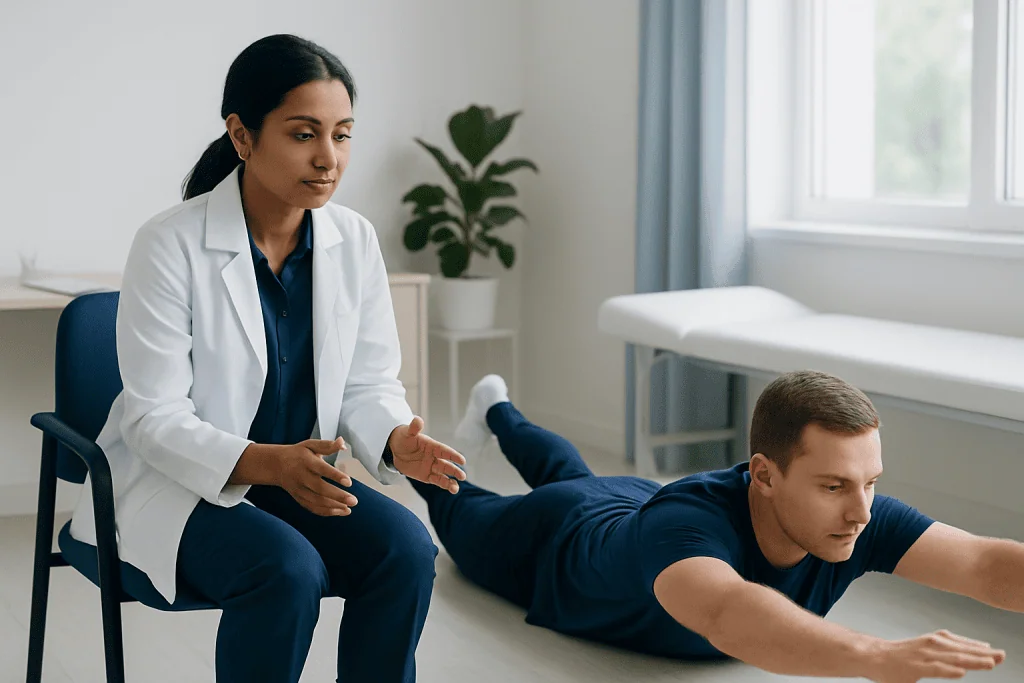
To begin, the person lies face down on a firm but comfortable surface, with the legs extended and the arms reaching forward or resting beside the body. The neck should stay in a neutral position, with the gaze down toward the floor rather than lifted forward. Before moving, it helps to gently tighten the abdominal muscles as if bracing the trunk.
Next, the person slowly lifts the arms and legs only a small distance from the floor, keeping the movement smooth and controlled. The goal is length, not height. The buttock muscles should do some of the work, and the lower back should not feel sharply compressed. After a short hold, the body returns to the starting position in a controlled way.
For many beginners, a modified version is safer and easier to control. Instead of lifting both arms and both legs at once, they can lift one arm and the opposite leg, then switch sides. Another option is to lift only the chest slightly or only the legs. Stopping the exercise is important if it causes sharp pain, spreading pain, or a feeling of instability.
- Keep the neck neutral
- Lift only slightly off the floor
- Breathe steadily and avoid holding the breath
- Use slow, controlled repetitions rather than jerking
- Choose a modified version if full extension feels uncomfortable
Common Mistakes and Who Should Be Cautious
A common mistake is trying to lift too high. Excessive arching can increase pressure on the lower back and shift the work away from controlled muscle activation. Another frequent problem is moving too quickly, which makes it harder to maintain alignment and may reduce the quality of the exercise.
People should also avoid forcing the shoulders upward toward the ears or turning the head to look forward. These habits can create unnecessary tension in the neck and upper back. The movement should feel steady and deliberate, with the torso remaining long rather than compressed.
Caution is especially important for people with active low back pain, recent spine injury, osteoporosis, severe hip pain, or symptoms such as numbness, tingling, or leg weakness. Conditions such as a herniated disc may respond differently to extension-based exercises depending on the person and the stage of symptoms. Those with known structural spinal problems, including scoliosis, may benefit from professional guidance before adding the movement to their routine.
What Evidence Says About Superman Exercise and Back Pain
The available evidence supports exercise in general as part of maintaining musculoskeletal health, improving function, and managing many cases of nonspecific low back pain. However, research does not show that one single exercise is best for every person. The superman exercise can strengthen the back, but whether it is appropriate depends on the person’s symptoms, movement pattern, and underlying diagnosis.
For some people, extension-based exercises may feel relieving and improve tolerance to activity. For others, especially those whose pain worsens when bending backward, the movement may aggravate symptoms. This is why clinicians often individualize exercise prescriptions rather than recommending the same routine to everyone with back discomfort.
In rehabilitation settings, a doctor or therapist may assess posture, mobility, strength, and nerve-related symptoms before advising an exercise plan. When imaging or specialist assessment is needed, tools such as MRI can help evaluate certain spinal conditions, but imaging is not necessary for every episode of routine back pain. The most helpful approach is usually a symptom-guided, gradual program supervised when needed.
Safer Alternatives and Exercise Progressions
If the full superman exercise feels too demanding, several alternatives can train similar muscle groups with less strain. Bird-dog, glute bridge, prone arm lifts, and prone leg lifts are often better starting points because they allow more precise control. These options may strengthen the hips, trunk, and upper back while reducing the amount of lumbar extension.
A practical progression is to start with short holds and low repetitions, then increase only if the exercise remains comfortable during and after the session. A person should be able to breathe normally, keep the movement smooth, and recover without a flare-up of symptoms the next day. If pain increases, reducing the range of motion or switching exercises is usually wiser than pushing through.
Patients with ongoing pain, balance problems, or limited mobility often benefit from an individualized plan. In some cases, clinicians combine exercise with posture advice, manual therapy, and education about daily movement habits. If a spinal problem requires specialist evaluation, services related to neurosurgery may be considered in selected cases, though most exercise-related back discomfort is managed without surgery.
- Begin with one-limb lifts or bird-dog
- Progress gradually rather than increasing intensity quickly
- Monitor symptoms during exercise and later the same day
- Choose consistency and control over difficulty
When to Seek Medical Care
The superman exercise should be stopped and medical advice sought if it causes sharp or worsening pain, pain that travels down the leg, new numbness or tingling, marked weakness, or loss of bladder or bowel control. These symptoms can suggest nerve involvement or another condition that needs prompt evaluation. Pain after a fall, sports injury, or accident also deserves medical attention.
Medical review is also sensible when back pain lasts more than a few weeks, interferes with sleep, limits daily activities, or keeps returning despite rest and gentle exercise. A clinician can check for muscle imbalance, joint issues, nerve irritation, or other causes and recommend an appropriate treatment plan. In a small number of cases, tests such as CT scan or other imaging studies may be needed depending on the history and examination findings.
Near the end of a care pathway, some patients also want coordinated evaluation from different specialists. Acibadem International provides diagnosis and treatment for musculoskeletal and spine-related conditions through multidisciplinary specialists at JCI-accredited hospitals for international patients.
Frequently asked questions
What muscles does the superman exercise work?
The superman exercise mainly targets the muscles that extend the spine, along with the gluteal muscles and parts of the upper back and shoulders. The abdominal muscles also help stabilize the trunk during the movement.
Is the superman exercise good for lower back pain?
It can be helpful for some people, but it is not suitable for everyone with lower back pain. If bending backward worsens symptoms, the exercise may irritate the area and a different movement may be a better choice.
How often should someone do the superman exercise?
Frequency depends on fitness level, symptoms, and the rest of the exercise program. Many people start with a few controlled repetitions on nonconsecutive days and increase gradually if the movement remains comfortable.
What is the safest version for beginners?
A beginner-friendly option is to lift one arm and the opposite leg instead of lifting all four limbs at once. Keeping the lift small and the neck neutral usually makes the exercise easier to control.
Can the superman exercise be harmful?
It can be uncomfortable or aggravating if done with excessive arching, poor control, or in people with certain spinal problems. Sharp pain, radiating leg pain, numbness, or weakness are signs to stop and seek medical advice.
Are there alternatives if the superman exercise hurts?
Yes. Bird-dog, glute bridge, prone arm lifts, and prone leg lifts are common alternatives that may place less stress on the lower back. A physical therapist can help choose the most appropriate option based on symptoms and goals.
This article is for general information only and is not a substitute for professional medical advice. Please consult a qualified doctor about your individual situation.
Joint and spine care in Turkey — expert assessment & treatment
JCI-accredited · board-certified surgeons · reply within 24h
Add us as a Preferred Source to see more of our trusted health content across Google Search, AI Overviews and Discover.

More from the Health Library

Capillaries — Explained by Medical Evidence, Not Myths

Lymphocytes High: A Complete Medical Overview

Right Heart Catheterization: An Evidence-Based Guide for Patients

Paresis: An Evidence-Based Guide for Patients

Fluoride Toothpaste: An Evidence-Based Guide for Patients