Oximeter Readings: A Complete Medical Overview

Oximeter readings mainly show oxygen saturation (SpO2) and pulse rate. A reading in the normal range does not always rule out illness, especially if symptoms are present.
Key Takeaways
- Oximeter readings mainly show oxygen saturation (SpO2) and pulse rate.
- A reading in the normal range does not always rule out illness, especially if symptoms are present.
- Cold hands, nail polish, poor circulation, movement, and skin pigmentation can affect accuracy.
- Persistently low readings or sudden breathing symptoms should be assessed by a medical professional.
- Pulse oximeters are useful screening tools but do not replace a clinical examination or blood tests.
Oximeter readings usually display oxygen saturation and pulse rate. For many healthy adults at sea level, oxygen saturation is often 95% to 100%, but the number should always be interpreted alongside symptoms, medical history, altitude, and the device’s limitations.
Overview: what oximeter readings tell a person
Oximeter readings are used to estimate how much oxygen is being carried in the blood. A fingertip pulse oximeter does this noninvasively by shining light through the skin and detecting how hemoglobin absorbs that light. The main number shown is oxygen saturation, often labeled SpO2, and many devices also display pulse rate.
For many healthy adults, oximeter readings for oxygen saturation commonly fall between 95% and 100% at sea level. However, a “normal” reading is not the whole story. A person’s baseline may differ if they have chronic lung disease, certain heart conditions, sleep-related breathing problems, or if they live at high altitude.
An oximeter is best understood as a helpful monitoring tool rather than a stand-alone diagnosis. A reading should be interpreted together with symptoms such as shortness of breath, chest discomfort, bluish lips, confusion, fever, or worsening fatigue. If a person feels unwell, a reassuring-looking number should not delay medical advice.
Understanding the numbers on a pulse oximeter
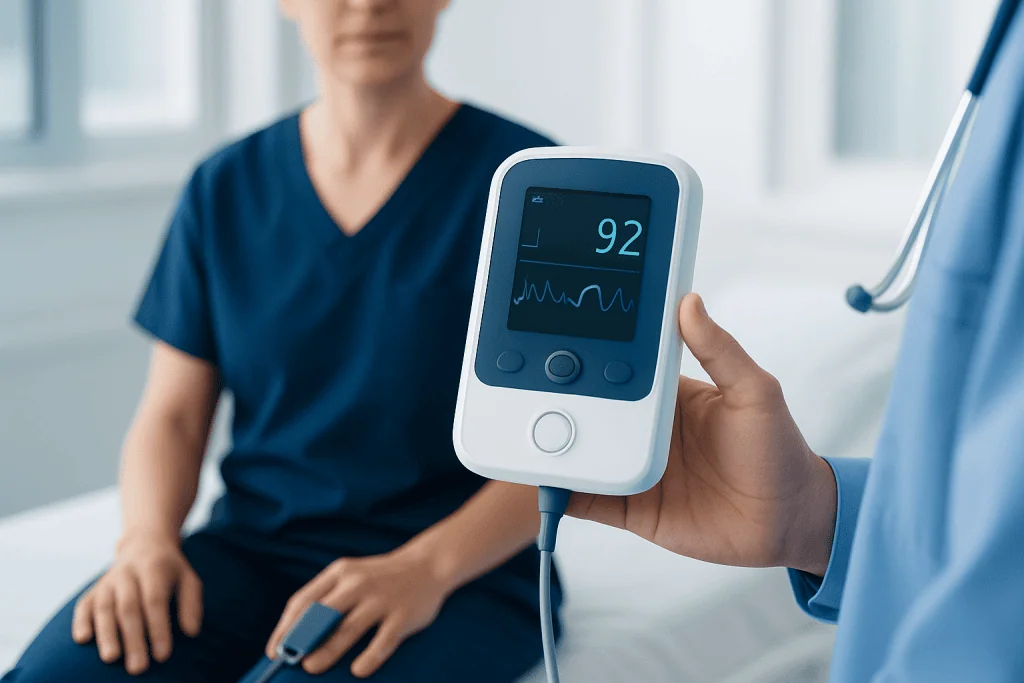
Most pulse oximeters show two core values: SpO2 and pulse rate. SpO2 is the estimated percentage of hemoglobin carrying oxygen. Pulse rate is the number of heartbeats per minute. Some devices may also display a waveform or perfusion indicator, which can help show whether the signal is strong enough for a reliable result.
In general, an SpO2 reading of 95% to 100% is often considered typical for healthy adults at sea level. Readings of 92% to 94% may need closer attention, especially if they are new, persistent, or accompanied by symptoms. Readings below this range can suggest reduced oxygen levels and may need prompt medical assessment, depending on the person’s usual baseline and how they feel.
Pulse rate also matters. A very fast, very slow, or irregular pulse can affect how the reading is interpreted and may point to a separate issue involving the heart or circulation. For example, a person with breathlessness and an unusually rapid pulse may need evaluation for a respiratory or cardiovascular problem. If concerns relate to heart rhythm or circulation, a doctor may investigate broader cardiovascular conditions.
- SpO2: Estimated blood oxygen saturation
- Pulse rate: Heartbeats per minute
- Signal quality: Helps indicate if the measurement is likely reliable
- Trend over time: Repeated readings are often more useful than one isolated number
Why oximeter readings can be misleading
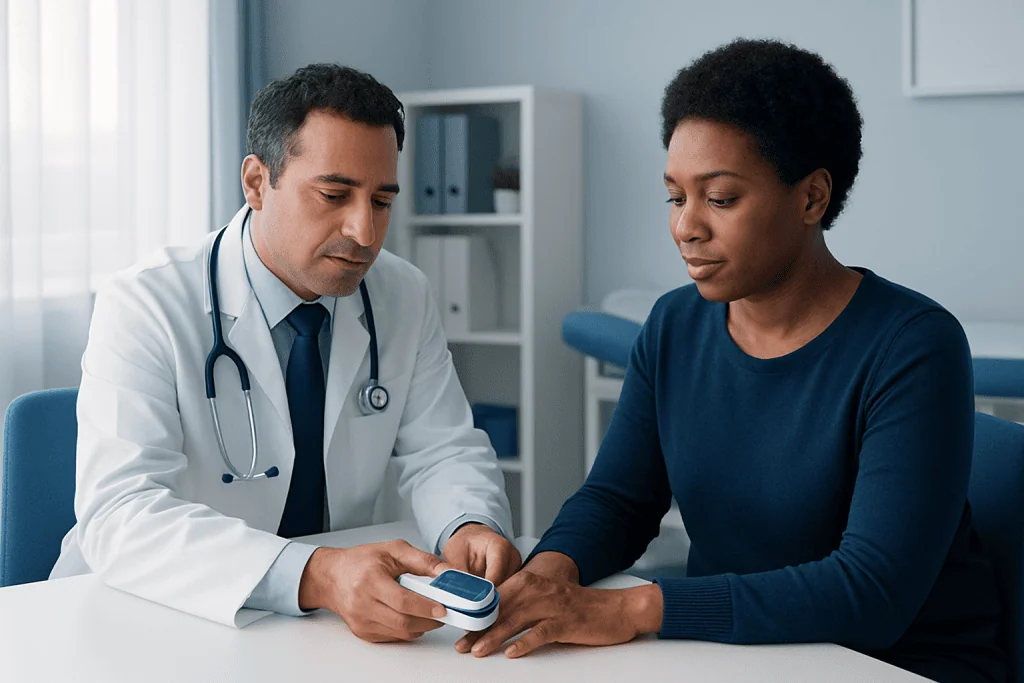
Pulse oximeters are useful, but they are not perfect. Several factors can make oximeter readings falsely low or falsely reassuring. Common causes of inaccuracy include cold hands, poor circulation, tremor or hand movement, dark nail polish, artificial nails, bright external light, and an improperly fitted probe.
Skin pigmentation may also affect pulse oximeter performance in some situations, especially around borderline readings. This does not mean the device is unusable, but it does mean clinicians interpret numbers carefully and consider the full clinical picture. Carbon monoxide exposure is another important limitation because a standard oximeter may not distinguish normal oxygen-bound hemoglobin from carbon monoxide-bound hemoglobin.
Because of these limits, one reading should not be overinterpreted. It is often more helpful to repeat the measurement after resting, warming the hand, removing nail products, and making sure the finger is still. If the number remains low or symptoms are concerning, medical assessment is the safest next step.
Common causes of low oximeter readings
Low oximeter readings can happen for many reasons, ranging from temporary issues to significant medical conditions. Respiratory infections, asthma flare-ups, chronic obstructive pulmonary disease, pneumonia, sleep apnea, pulmonary embolism, and heart failure can all reduce oxygen levels. In some cases, the reading is low because the body is not moving oxygen effectively into the bloodstream; in others, the issue lies in how blood is circulated.
Altitude is another important factor. At higher elevations, the air contains less available oxygen, so oxygen saturation may be lower than expected even in healthy people. A clinician may interpret readings differently depending on where the person lives or travels. Recent surgery, sedative medicines, or neuromuscular weakness can also contribute to lower oxygen levels.
If there are symptoms such as wheezing, persistent cough, chest pain, or reduced exercise tolerance, doctors often assess the lungs and heart more closely. This may include investigation for lung conditions when clinically appropriate, although many low readings are caused by far more common and less serious problems such as infection or poorly controlled chronic lung disease.
People with ongoing breathing symptoms may be referred for specialized evaluation and, when needed, treatments such as bronchoscopy to examine the airways or pulmonary rehabilitation to improve daily function and breath control.
How doctors evaluate abnormal readings
If oximeter readings are lower than expected, a doctor usually starts by checking whether the measurement is accurate and whether the person appears distressed. They will ask about shortness of breath, fever, cough, sleep problems, smoking history, medication use, heart disease, lung disease, and recent travel or immobility. A physical examination can reveal clues that a home device cannot show.
Further testing depends on the situation. Common investigations include a clinical-grade pulse oximeter, chest imaging, lung function tests, electrocardiography, and blood tests. In some cases, an arterial blood gas test is used to measure oxygen and carbon dioxide more precisely. This is especially helpful when the home reading does not match the person’s symptoms.
When chronic or unexplained low oxygen is suspected, a sleep study, echocardiogram, or advanced imaging may be recommended. If an airway obstruction or structural lung problem is a concern, a specialist may consider thoracic surgery evaluation in selected cases. The goal is not just to confirm the number, but to identify and treat the underlying cause safely.
Treatment and practical self-care
Treatment for abnormal oximeter readings depends on the cause rather than the number alone. Some people only need observation, rest, hydration, or treatment for a mild infection. Others may need inhaled medicines, oxygen therapy, treatment for heart or lung disease, or care in a hospital if symptoms are severe or rapidly worsening.
Self-care starts with using the device correctly. The finger should be warm, still, and free of nail polish or artificial nails. It helps to sit quietly for a few minutes before measuring and to repeat the reading if the result seems unexpected. Keeping a note of symptoms, pulse rate, and repeated readings over time can be useful for a doctor.
People who already have a diagnosed respiratory condition should follow their individualized action plan and prescribed treatment. They should not change oxygen flow rates or medications without medical guidance. Supportive steps such as avoiding smoking, staying up to date with recommended vaccines, and managing chronic conditions can also reduce episodes of low oxygen.
For patients who need specialist assessment, Acibadem International’s multidisciplinary teams at JCI-accredited hospitals evaluate oxygenation problems and related heart and lung conditions for international patients.
When to seek medical care
Medical advice is appropriate if oximeter readings are repeatedly lower than a person’s usual baseline, if the numbers are falling over time, or if symptoms are present even when the reading appears acceptable. Symptoms matter greatly because pulse oximeters can miss some problems or underestimate their severity.
Urgent medical care is important if there is severe shortness of breath, chest pain, bluish lips or face, marked confusion, fainting, inability to speak in full sentences, or a sudden worsening in someone with known heart or lung disease. A young child, older adult, or pregnant person with concerning symptoms should also be assessed promptly.
If a person has a chronic condition and is unsure what reading is normal for them, they should ask their doctor for a personalized threshold and action plan. This is especially helpful for people with chronic lung disease, sleep-disordered breathing, or home oxygen therapy, where the target range may differ from the general population.
Frequently asked questions
What do oximeter readings mean?
Oximeter readings usually show blood oxygen saturation, called SpO2, and pulse rate. SpO2 estimates how much oxygen the blood is carrying, while pulse rate shows heartbeats per minute. These numbers are useful, but they should be interpreted together with symptoms and medical history.
What is a normal oxygen reading on a pulse oximeter?
For many healthy adults at sea level, a normal oxygen reading is often around 95% to 100%. Some people may have a different usual range because of chronic lung disease, heart disease, or living at high altitude. A doctor can help define what is normal for an individual person.
Can oximeter readings be wrong?
Yes. Readings can be affected by cold hands, poor circulation, movement, nail polish, artificial nails, bright light, and weak device signal. A pulse oximeter is a screening tool, so an unexpected result should be repeated and interpreted with symptoms.
Why would oxygen saturation be low if someone feels fine?
A low reading without symptoms can happen because of a device error, poor finger placement, or temporary circulation issues. It can also occur at high altitude or in some chronic conditions where the body has adapted. Repeating the measurement correctly and discussing persistent low values with a doctor is sensible.
Should someone worry if the reading is normal but breathing feels difficult?
Yes, symptoms should always be taken seriously. A normal oximeter reading does not rule out every lung, heart, or circulation problem, and some serious conditions can still be present. Medical advice is important if breathlessness, chest pain, or worsening symptoms occur.
How can someone get the most accurate oximeter reading at home?
The hand should be warm and relaxed, and the person should sit still for a few minutes before checking. Nail polish and artificial nails should be removed if possible, and the device should fit properly on the finger. It also helps to repeat the measurement and look for a trend instead of relying on one single number.
References
- World Health Organization
- Centers for Disease Control and Prevention
- National Heart, Lung, and Blood Institute
- American Thoracic Society
- U.S. Food and Drug Administration
This article is for general information only and is not a substitute for professional medical advice. Please consult a qualified doctor about your individual situation.
Explore treatments in Turkey — costs, top hospitals & a free quote
JCI-accredited · board-certified surgeons · reply within 24h
Add us as a Preferred Source to see more of our trusted health content across Google Search, AI Overviews and Discover.

More from the Health Library

How to Perform Heel Slides Exercise Safely

Liquid Iron: An Evidence-Based Guide for Patients

Arnica Cream — Explained by Medical Evidence, Not Myths

Inflammatory Acne — Explained by Medical Evidence, Not Myths

Papaya: An Evidence-Based Guide for Patients