Pseudophakia: A Complete Medical Overview

Pseudophakia refers to an eye with an implanted artificial lens called an intraocular lens. It most commonly occurs after cataract surgery and is not a disease itself.
Key Takeaways
- Pseudophakia refers to an eye with an implanted artificial lens called an intraocular lens.
- It most commonly occurs after cataract surgery and is not a disease itself.
- Many people see well with pseudophakia, but some may still need glasses for certain tasks.
- Blurred vision after surgery is not always due to the lens implant and may have other treatable causes.
- Regular eye follow-up helps detect complications such as inflammation, retinal problems, or posterior capsule opacification.
- New eye pain, flashes, floaters, or sudden vision loss require prompt medical assessment.
Pseudophakia means a person has an artificial lens implanted in the eye, most often after cataract surgery. It is a common and generally successful way to restore vision after the cloudy natural lens is removed.
Overview: what pseudophakia means
Pseudophakia is the medical term used when the eye’s natural lens has been replaced with an artificial lens, called an intraocular lens. This most often happens during cataract surgery, when a cloudy natural lens is removed and a clear artificial lens is placed inside the eye. In everyday use, pseudophakia does not describe an illness on its own. Instead, it describes the eye’s status after lens replacement.
For many people, pseudophakia brings clearer vision and improved quality of life. The implanted lens is designed to stay in the eye permanently and does not usually need routine replacement. Depending on the type of lens used and the overall health of the eye, a person may have excellent distance vision, improved near vision, or a combination of both.
It is important to understand that pseudophakia is different from aphakia, in which the natural lens is absent and no artificial lens has been implanted. It also differs from a natural lens that remains in place but is cloudy, as happens with cataract. Knowing this distinction helps explain why pseudophakia is usually part of treatment and recovery rather than a diagnosis to fear.
How pseudophakia affects vision
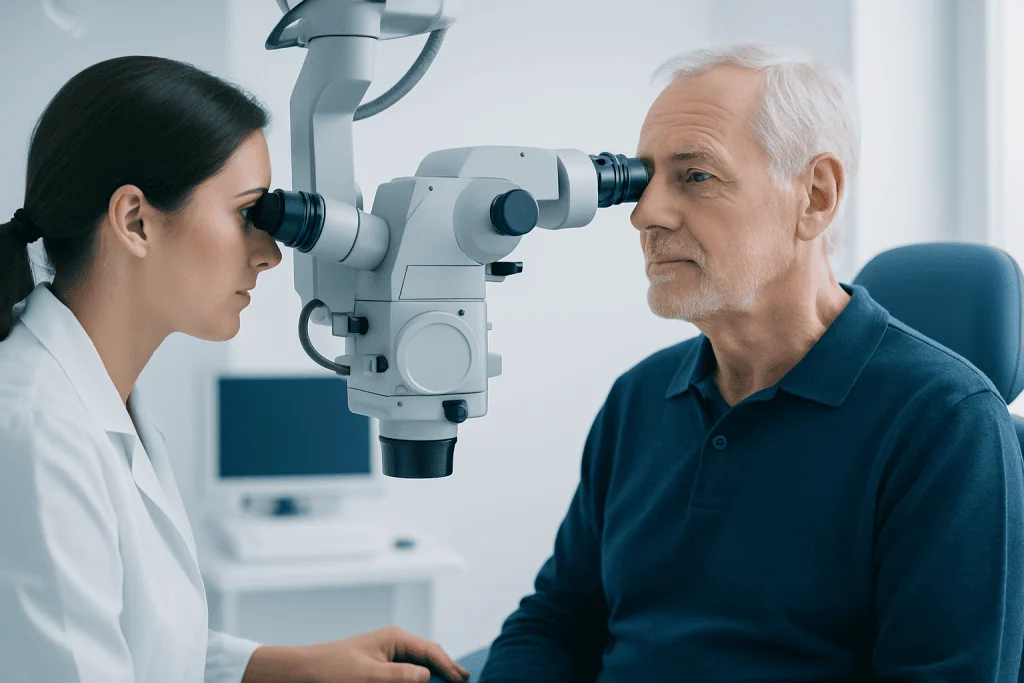
The natural lens helps focus light onto the retina. When it becomes cloudy, vision may become blurry, dim, or sensitive to glare. Replacing that lens with an artificial one usually restores the pathway for light to enter the eye more clearly. As a result, many people notice sharper vision, brighter colors, and easier daily functioning after surgery.
Even so, pseudophakia does not guarantee perfect vision in every situation. Some people still need glasses for reading, computer work, or distance tasks. Vision also depends on the health of other parts of the eye, including the cornea, retina, optic nerve, and macula. Conditions such as astigmatism, age-related retinal disease, or glaucoma can still affect how well a person sees after lens implantation.
Artificial lenses come in different designs. Standard monofocal lenses usually provide one main focus, often for distance, while multifocal or extended-depth-of-focus lenses may help reduce dependence on glasses in selected patients. Toric lenses can help correct significant astigmatism. The most suitable option depends on the person’s eye anatomy, visual goals, and any other eye conditions.
Symptoms, signs, and what is normal after surgery

Pseudophakia itself may cause no symptoms beyond the expected visual changes after cataract surgery. During the early recovery period, mild irritation, light sensitivity, tearing, and slightly blurred vision can be normal as the eye heals. Many people improve over days to weeks, although healing time varies.
Some people notice halos around lights, difficulty judging near vision, or a need for updated glasses after surgery. These changes are not always signs of a problem. They may reflect the type of lens implanted, temporary dryness, normal healing, or the eye adjusting to its new focusing system.
However, certain symptoms should not be ignored. These include increasing pain, worsening redness, marked light sensitivity, a sudden drop in vision, new flashes of light, or a sudden shower of floaters. If vision becomes cloudy months or years later, one possible cause is posterior capsule opacification, a common treatable condition sometimes called a secondary cataract. In that situation, the implant itself is usually still in place, but the thin membrane behind it becomes cloudy.
- Common early recovery symptoms: mild blur, scratchy feeling, tearing, glare
- Possible later issues: glasses still needed, dry eye symptoms, halos, capsule clouding
- Urgent warning signs: severe pain, sudden vision loss, flashes, many new floaters
Why pseudophakia happens and possible risk factors for problems
The most common reason for pseudophakia is cataract surgery. Cataracts develop when the natural lens becomes cloudy, often with aging, but they can also be related to diabetes, eye injury, certain medications such as long-term steroids, prior eye inflammation, or congenital causes. Once the cloudy lens is removed, an intraocular lens is typically inserted to replace it.
Although pseudophakia is common and generally safe, not every person has the same visual outcome or risk profile. Factors that can affect recovery include pre-existing eye disease, very dense cataracts, previous eye surgery, corneal problems, retinal disease, high myopia, or a history of uveitis. General health conditions such as diabetes may also influence healing and visual quality.
Occasionally, issues arise with the lens implant or surrounding structures. These may include lens displacement, inflammation, swelling in the central retina, increased eye pressure, or posterior capsule opacification. These complications are not inevitable, and many are treatable when recognized early. Careful assessment before cataract surgery helps reduce risk and guides lens selection.
Diagnosis and follow-up after lens implantation
Pseudophakia is diagnosed through an eye examination. An ophthalmologist can see the artificial lens during a slit-lamp exam and assess its position, clarity, and how the rest of the eye is healing. Vision testing, refraction for glasses, and pressure measurement are also important parts of follow-up.
If a person has blurred vision after cataract surgery, the doctor will look for causes beyond the lens implant itself. These may include dry eye, residual refractive error, corneal swelling, retinal disease, capsule clouding, or inflammation. Additional testing may include retinal imaging, corneal measurements, or ultrasound in selected cases.
Follow-up visits are important even when recovery seems smooth. They allow the eye specialist to confirm that the lens remains stable and that no delayed complications are developing. Patients who already have retinal or optic nerve disease may need closer monitoring because lens replacement improves vision only to the extent allowed by the rest of the eye.
Treatment options and management of related problems
Pseudophakia itself usually does not require treatment because it is the intended result of lens replacement surgery. Management focuses on healing after surgery and addressing any vision concerns that remain. Eye drops are commonly used for a period after the procedure to reduce inflammation and lower the risk of infection. Later, glasses or contact lenses may still be recommended for the best visual function.
If the posterior capsule becomes cloudy, a quick outpatient laser procedure called YAG laser capsulotomy can often restore clearer vision. If there is swelling in the retina, inflammation, elevated eye pressure, or dry eye, treatment is directed at that specific cause. In less common situations, if the implanted lens is not well positioned or not providing the intended optical result, the surgeon may discuss further intervention.
People with coexisting eye conditions may need broader management. For example, retinal disease may need medical or surgical care, and pressure problems may require ongoing treatment for glaucoma. In selected cases, comprehensive evaluation by eye specialists may include advanced imaging or detailed eye examination services to clarify the cause of continued blur.
Near the end of the care pathway, some patients benefit from support by multidisciplinary ophthalmology teams. Acibadem International’s specialists in JCI-accredited hospitals diagnose and treat eye conditions for international patients, including assessment before and after lens implantation and, when appropriate, retinal treatment or other surgical care.
Self-care, prevention, and protecting vision long term
People with pseudophakia can support long-term eye health by attending scheduled follow-up visits and reporting any sudden visual changes promptly. Using prescribed drops exactly as directed after surgery is one of the most important parts of early recovery. It is also helpful to avoid rubbing the eye and to follow the surgeon’s advice on bathing, exercise, and return to normal activities.
Although cataracts themselves cannot always be prevented, overall eye health can be supported by controlling diabetes, protecting the eyes from injury, avoiding smoking, and having regular eye examinations. UV-protective sunglasses may improve comfort outdoors and are commonly recommended after surgery as the eye heals.
Long-term self-care also includes recognizing that not all visual changes are caused by the artificial lens. New distortion, central blur, poor night vision, or side-vision loss may point to other eye conditions and deserve assessment. A healthy lifestyle, good control of chronic medical conditions, and routine specialist care can help preserve vision over time.
When to seek medical care
Medical attention is advisable if blurred vision persists longer than expected, if the eye becomes increasingly red or painful, or if daily activities remain difficult despite healing. An eye doctor can determine whether the issue is part of normal recovery, a glasses-related problem, or a treatable complication.
Urgent care is especially important with sudden vision loss, severe eye pain, nausea with eye pain, new flashes, a curtain-like shadow, or many new floaters. These symptoms can signal problems such as retinal detachment, a pressure spike, significant inflammation, or infection and should be evaluated promptly.
People with existing retinal disease, diabetes, glaucoma, or prior eye surgery should be especially careful about follow-up. When symptoms change suddenly, it is safest to contact a qualified ophthalmologist rather than wait for the next routine appointment.
Frequently asked questions
Is pseudophakia a disease?
No. Pseudophakia is a medical term that means an artificial lens has been implanted in the eye, usually after cataract surgery. It describes the condition of the eye after treatment rather than a disease by itself.
Can a person see normally with pseudophakia?
Many people see very well with pseudophakia, especially after healing is complete. However, the final result depends on the type of lens implanted and the health of the rest of the eye. Some people still need glasses for reading, distance, or astigmatism.
What is the difference between pseudophakia and cataract?
A cataract is a cloudy natural lens that reduces vision. Pseudophakia means that cloudy natural lens has been removed and replaced with an artificial lens. In other words, pseudophakia is often the result of cataract treatment.
Why is vision blurry after cataract surgery if the lens was replaced?
Blurred vision after surgery can have several causes, including normal healing, dry eye, swelling, refractive error, or posterior capsule opacification. It does not always mean there is a problem with the implant itself. An eye examination is needed if the blur is persistent or worsening.
Does an artificial lens need to be replaced over time?
In most cases, no. Intraocular lenses are designed to remain in the eye permanently. Replacement is uncommon and is usually considered only if there is a significant problem such as lens dislocation, an incorrect lens power, or another specific complication.
What is a secondary cataract, and is it the same as cataract coming back?
A secondary cataract usually refers to posterior capsule opacification, which is clouding of the thin membrane behind the artificial lens. The original cataract does not grow back because the natural cloudy lens has already been removed. This later clouding is often treatable with a brief laser procedure.
This article is for general information only and is not a substitute for professional medical advice. Please consult a qualified doctor about your individual situation.
Explore treatments in Turkey — costs, top hospitals & a free quote
JCI-accredited · board-certified surgeons · reply within 24h
Add us as a Preferred Source to see more of our trusted health content across Google Search, AI Overviews and Discover.

More from the Health Library

Electric Shock: What Patients Need to Know

Heart Health: A Complete Medical Overview

Bulimia Nervosa: An Evidence-Based Guide for Patients

Friable Cervix: A Complete Medical Overview

Marcona Almonds: What Patients Need to Know