

Baby Fever: A Complete Medical Overview

Baby fever is generally a temperature of 100.4°F (38°C) or higher when measured rectally. A fever is a symptom, not a disease, and it often happens with common viral infections.
Key Takeaways
- Baby fever is generally a temperature of 100.4°F (38°C) or higher when measured rectally.
- A fever is a symptom, not a disease, and it often happens with common viral infections.
- Babies under 3 months with fever need prompt medical assessment, even if they seem well.
- The baby’s age, feeding, breathing, alertness, and hydration are key signs to watch.
- Home care focuses on accurate temperature checks, fluids, comfort, and safe use of medicines only if advised.
Baby fever usually means a baby’s immune system is responding to an infection, and many fevers improve with monitoring, fluids, and age-appropriate medical advice. However, fever in very young infants can signal a more serious illness, so the baby’s age, temperature, and overall behavior matter as much as the number on the thermometer.
Overview: What Baby Fever Means
Baby fever is usually defined as a body temperature of 100.4°F (38°C) or higher. In babies, fever is not an illness by itself. It is a sign that the body is responding to something, most often an infection such as a cold, flu-like illness, ear infection, or stomach virus.
The most important point is that baby fever is interpreted differently depending on age. A mild fever in an active older baby may be less concerning than the same temperature in a newborn. Babies younger than 3 months need prompt medical attention for fever because their immune systems are still developing and signs of serious infection may be subtle.
Parents often focus on the exact number, but doctors also look closely at how the baby appears overall. A baby who is feeding well, breathing comfortably, and staying alert between naps may be handled differently from a baby who is hard to wake, refusing feeds, or showing signs of breathing difficulty. This wider picture helps guide whether home monitoring or urgent evaluation is needed.
How to Recognize Symptoms and Check Temperature Correctly
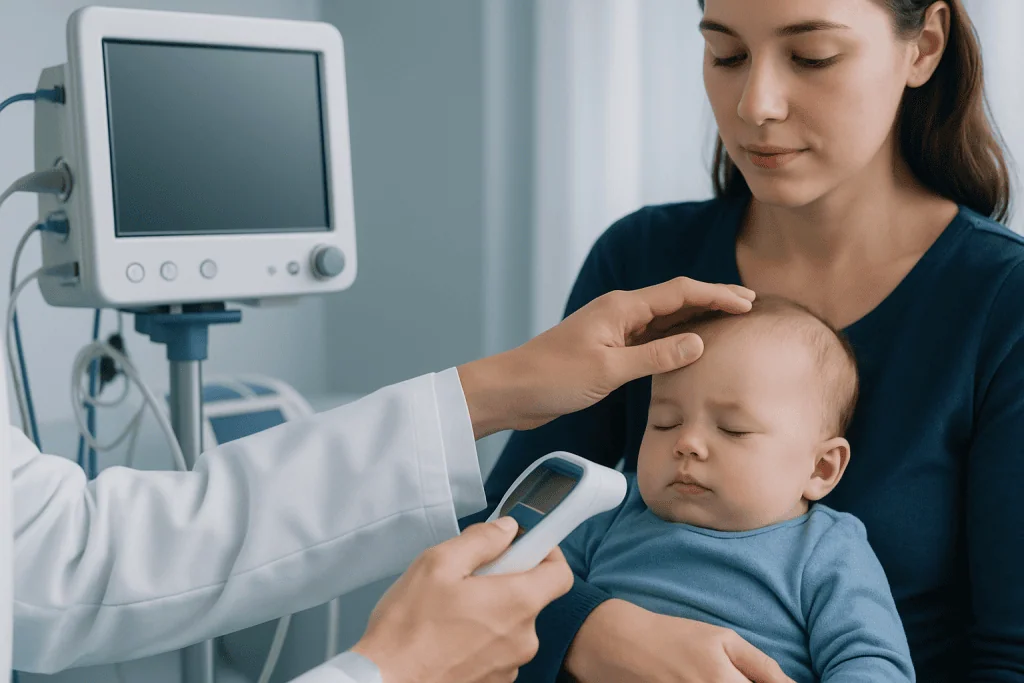
Fever may come with other symptoms, depending on the cause. A baby may feel warm, look flushed, sweat, shiver, seem more irritable than usual, sleep more, or feed less. Some babies develop a runny nose, cough, vomiting, diarrhea, or rash. Others may simply seem less active. Because babies cannot describe how they feel, changes in behavior can be an important clue.
Temperature should be measured with a reliable digital thermometer. For infants and young babies, a rectal temperature gives the most accurate reading. Underarm readings can be used for screening but may be less precise. Forehead and ear thermometers can be helpful in older infants, but technique and age can affect accuracy. If there is any doubt, especially in a young infant, a rectal reading is often the clearest way to confirm a fever.
It is also useful to know that body temperature changes during the day and can rise slightly with heavy clothing, a warm room, or recent crying. These factors do not usually cause a true fever at or above 100.4°F (38°C) when measured accurately. Rechecking the temperature after removing extra layers and allowing the baby to settle can help if the situation is uncertain.
- Common signs that may accompany fever include fussiness, poor feeding, sleepiness, and congestion.
- Rectal temperature is generally the most accurate method for young infants.
- Age and general condition matter more than the temperature number alone.
Common Causes and Risk Factors
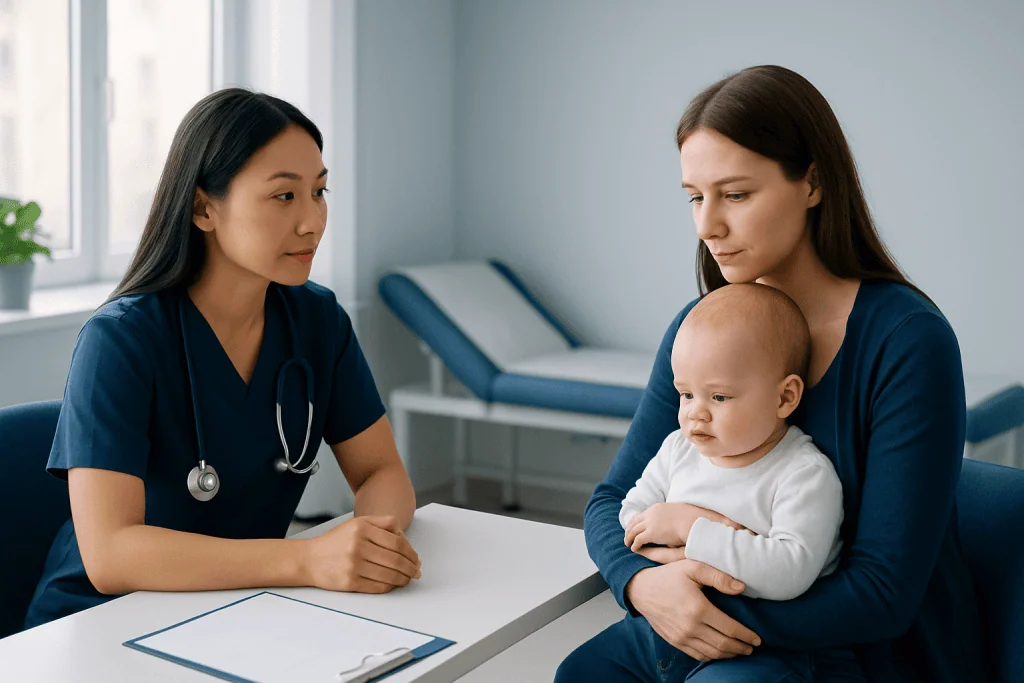
Most cases of baby fever are caused by viral infections. These include common colds, influenza, COVID-19, and stomach viruses. Bacterial infections are less common but may be more serious, especially in newborns. Examples include urinary tract infections, ear infections, pneumonia, and bloodstream infections. In some cases, fever can happen after routine vaccinations as the immune system responds.
Teething is often blamed for fever, but it does not usually cause a true high fever. Teething may lead to mild discomfort, drooling, and a small temperature rise, but a temperature of 100.4°F (38°C) or above should not automatically be attributed to teething. If a baby has a real fever, another cause should be considered.
Certain factors can increase concern. Babies under 3 months are at higher risk of serious infection. Premature infants, babies with chronic medical conditions, and those with weakened immune systems may also need closer attention. Exposure to sick contacts, recent travel, poor intake, and reduced wet diapers can give doctors important clues about the likely cause and severity.
Some illnesses that cause fever may involve specialist evaluation, particularly if symptoms affect breathing or the nervous system. If fever is linked with persistent cough or chest symptoms, doctors may also assess for related pneumonia.
When to Seek Medical Care
Medical care should be sought promptly for any baby younger than 3 months with a rectal temperature of 100.4°F (38°C) or higher. This is true even if the baby looks comfortable, because serious infections in young infants can progress quickly and may not cause obvious symptoms at first.
For older babies, urgent medical advice is needed if fever comes with trouble breathing, bluish lips, seizures, severe lethargy, inconsolable crying, repeated vomiting, signs of dehydration, a stiff neck, or a rash that does not fade when pressed. Parents should also seek care if the baby is difficult to wake, is not feeding, has far fewer wet diapers, or simply seems much sicker than with a typical cold.
A doctor should also be contacted if the fever lasts more than 24 hours in a baby under 2 years without a clear cause, returns repeatedly, or follows known exposure to a serious infection. Trusting parental instinct is important. If a baby’s behavior seems clearly unusual or worrying, it is reasonable to seek assessment even if the temperature is only mildly elevated.
How Doctors Diagnose the Cause of Fever
Diagnosis begins with careful questions about the temperature, age of the baby, duration of fever, feeding, urine output, breathing, vaccination history, and other symptoms. A physical examination looks for signs of ear, throat, lung, skin, or abdominal infection, as well as dehydration and the baby’s level of alertness.
In many older babies with clear viral symptoms, testing may be limited. In younger infants, especially those under 3 months, doctors are more likely to recommend laboratory tests because a serious bacterial infection can be present without many visible signs. These tests may include blood work, urine testing, and sometimes imaging such as MRI or CT scan if there are specific neurological concerns, though these are not routine for simple fever.
Urine testing is especially important because urinary tract infection is a common cause of fever in babies without obvious cold symptoms. If cough, rapid breathing, or low oxygen levels are present, chest assessment may be needed. In selected situations, hospital observation helps ensure the baby remains stable while results are reviewed and treatment decisions are made.
Treatment Options and Home Care
Treatment for baby fever depends on the cause, age, and overall condition. Viral illnesses usually improve with supportive care, such as regular feeds, rest, and monitoring. Bacterial infections may require antibiotics, and very young infants with fever are sometimes admitted to the hospital for observation and treatment while tests are completed.
At home, the goal is comfort rather than forcing the temperature to become completely normal. Babies should be dressed in light clothing, kept in a comfortable room, and offered breast milk, formula, or small sips of fluids if age-appropriate. Parents should avoid cold baths, ice rubs, or alcohol rubs, as these can be uncomfortable and are not recommended.
Fever-reducing medicines may be advised for babies who seem uncomfortable, but they should be used carefully and according to a doctor’s guidance, especially in infants. Aspirin should not be given to children. If a baby is repeatedly sick, dehydrated, or showing signs of complications, supportive hospital care such as IV fluids may be needed.
When a baby’s fever is part of a broader infectious illness, doctors may assess for conditions such as bronchiolitis or other respiratory infections and tailor treatment to the findings. The focus remains on treating the underlying cause and monitoring for warning signs, rather than the fever alone.
Prevention, Monitoring, and Follow-Up
Not all baby fever can be prevented, but some steps reduce risk. Routine vaccinations help protect against several serious infections. Good hand hygiene, limiting exposure to people who are unwell, cleaning shared surfaces, and avoiding smoke exposure can also support a baby’s health. For newborns and young infants, avoiding crowded settings during peak infection seasons may be helpful when practical.
Monitoring fever at home is often most useful when parents record the time, temperature, method used, and the baby’s symptoms. Tracking feeds, wet diapers, sleep, and response to medicine can help a doctor judge the situation more accurately. A baby who remains playful between fevers is generally different from one who is persistently weak or difficult to console.
Follow-up matters if symptoms change or do not improve as expected. Even when a viral infection is likely, medical reassessment is sensible if fever continues, new symptoms appear, or hydration worsens. Near the end of the care pathway, families seeking international evaluation should know that Acibadem International’s multidisciplinary specialists in JCI-accredited hospitals diagnose and treat pediatric infections and fever-related conditions for international patients.
Frequently asked questions
What temperature counts as baby fever?
In general, baby fever means a temperature of 100.4°F (38°C) or higher. In young infants, a rectal reading is usually the most accurate way to confirm it.
Is baby fever always dangerous?
No. Many fevers in babies are caused by common viral infections and improve with time and supportive care. The main concern is the baby’s age and overall condition, especially in infants younger than 3 months.
Can teething cause a fever in babies?
Teething may cause mild discomfort and a small rise in temperature, but it usually does not cause a true fever of 100.4°F (38°C) or higher. If a baby has a real fever, another cause should be considered.
What should parents do first when a baby has a fever?
Parents should check the temperature with a reliable thermometer, note the baby’s age, and watch for feeding, breathing, hydration, and alertness. Babies under 3 months with fever should be assessed promptly by a doctor.
When should a baby with fever go to the emergency department?
Emergency care is appropriate if the baby has difficulty breathing, a seizure, severe sleepiness, blue lips, dehydration, a non-blanching rash, or is very hard to wake. Any fever in a baby younger than 3 months also needs urgent medical evaluation.
Should fever always be treated with medicine?
Not always. Fever medicine is usually used to improve comfort rather than to treat the cause. A doctor can advise whether it is appropriate based on the baby’s age, symptoms, and medical history.
This article is for general information only and is not a substitute for professional medical advice. Please consult a qualified doctor about your individual situation.
Explore treatments in Turkey — costs, top hospitals & a free quote
JCI-accredited · board-certified surgeons · reply within 24h
Add us as a Preferred Source to see more of our trusted health content across Google Search, AI Overviews and Discover.

More from the Health Library

Bell Palsy Prednisolone: What Patients Need to Know

High Arch Feet: What Patients Need to Know

Benign benign: Symptoms, Causes, and Treatment — Complete Patient Guide

Hip Impingement Rehabilitation: What Patients Need to Know

Chest Tube: An Evidence-Based Guide for Patients

Wellbutrin Weight Loss: An Evidence-Based Guide for Patients
Infectious Diseases & Clinical Microbiology Specialists at Acibadem
Prof. Dr. Serap Gençer
Infectious Diseases & Clinical Microbiology
Prof. Dr. Süda Tekin
Infectious Diseases & Clinical Microbiology
Prof. Dr. A. Çağrı Büke
Infectious Diseases & Clinical Microbiology
Dr. Ahmad Nejat Ghaffarı
Infectious Diseases & Clinical Microbiology