Phosphenes: An Evidence-Based Guide for Patients

Phosphenes are light sensations seen without actual light entering the eye. Common triggers include rubbing the eyes, sudden eye movement, migraine aura, and changes in the retina or vitreous.
Key Takeaways
- Phosphenes are light sensations seen without actual light entering the eye.
- Common triggers include rubbing the eyes, sudden eye movement, migraine aura, and changes in the retina or vitreous.
- A sudden increase in flashes, especially with new floaters or a shadow in vision, needs prompt medical evaluation.
- Diagnosis focuses on the pattern of symptoms and a careful eye examination, and sometimes neurological assessment.
- Treatment depends on the cause; there is no single treatment for all phosphenes.
Phosphenes are visual sensations such as flashes, sparks, or patterns of light that appear without an external light source. They are often harmless and brief, but new, persistent, or one-sided phosphenes can sometimes point to an eye or neurological problem that should be checked by a doctor.
Overview: what phosphenes are
Phosphenes are flashes, sparks, shimmering spots, zigzags, or other light-like sensations that a person sees even though no outside light is causing them. Many people notice them briefly after rubbing their eyes, standing up quickly, sneezing, or moving their eyes in the dark. In those situations, phosphenes are usually short-lived and not a sign of disease.
Phosphenes happen because the visual system can be stimulated in ways other than normal light entering the eye. Mechanical pressure on the eye, changes in the retina or vitreous gel, electrical activity linked to migraine, or certain neurological conditions can all activate visual pathways and create the sensation of light.
What matters most is the pattern. A few brief episodes related to eye pressure or migraine may be benign, while a sudden onset of repeated flashes in one eye can suggest traction on the retina and sometimes a retinal tear. For that reason, phosphenes are best understood as a symptom rather than a diagnosis on their own.
How phosphenes may look and feel
People describe phosphenes in different ways. Some see tiny stars or sparks. Others notice arcs of light, shimmering lines, flickering at the edge of vision, or geometric shapes. They may occur with the eyes open or closed, and they may affect one eye or seem to involve both eyes.
The duration can also vary. Pressure-related phosphenes often last only seconds. Migraine-related visual symptoms may gradually spread and continue for several minutes before resolving. Flashes linked to vitreous pulling on the retina may recur repeatedly, especially with eye movement or in dim lighting.
Important details include whether the phenomenon is new, whether it affects one eye, and whether there are other symptoms. These may include new floaters, blurred vision, headache, nausea, light sensitivity, eye pain, or a curtain-like shadow across part of vision. Such details help doctors distinguish between common benign causes and problems that need urgent attention.
- Common descriptions: sparks, stars, lightning streaks, zigzags, shimmering shapes
- Possible locations: central vision, side vision, one eye, or both eyes
- Possible timing: seconds, minutes, or recurrent episodes over days
Common causes and risk factors

One of the simplest causes is pressure on the eye. Rubbing the eyelids or pressing on the eyeball can stimulate the retina mechanically and create brief flashes. These phosphenes usually stop quickly once the pressure is removed. They are common and generally not concerning if they are occasional and clearly triggered.
Another frequent cause is change in the vitreous, the gel-like substance inside the eye. As people age, the vitreous can shrink and pull slightly on the retina, producing flashes. This is often associated with eye floaters, which are small moving specks or cobweb-like shapes in vision. In some cases, vitreous traction can lead to a retinal tear or retinal detachment, which is why new flashes should not be ignored.
Migraine is another well-known cause. Visual aura may produce shimmering patterns, flashing lights, blind spots, or zigzag lines. These symptoms often affect both eyes from the brain’s visual pathways rather than from a problem in the eye itself. Some people have aura with little or no headache. Phosphenes may also occur less commonly with eye inflammation, medication side effects, head injury, low blood pressure episodes, or neurological conditions involving the visual system.
Risk factors depend on the cause but may include older age, nearsightedness, prior eye surgery, eye injury, migraine history, diabetes-related eye disease, and family or personal history of retinal problems. Knowing these risk factors can help guide how quickly evaluation is needed.
How doctors evaluate phosphenes
Diagnosis begins with a careful history. A doctor may ask when the flashes started, whether they are in one eye or both, what they look like, how long they last, and whether they are linked to headaches, trauma, floaters, or loss of vision. These details can strongly suggest whether the source is likely ocular or neurological.
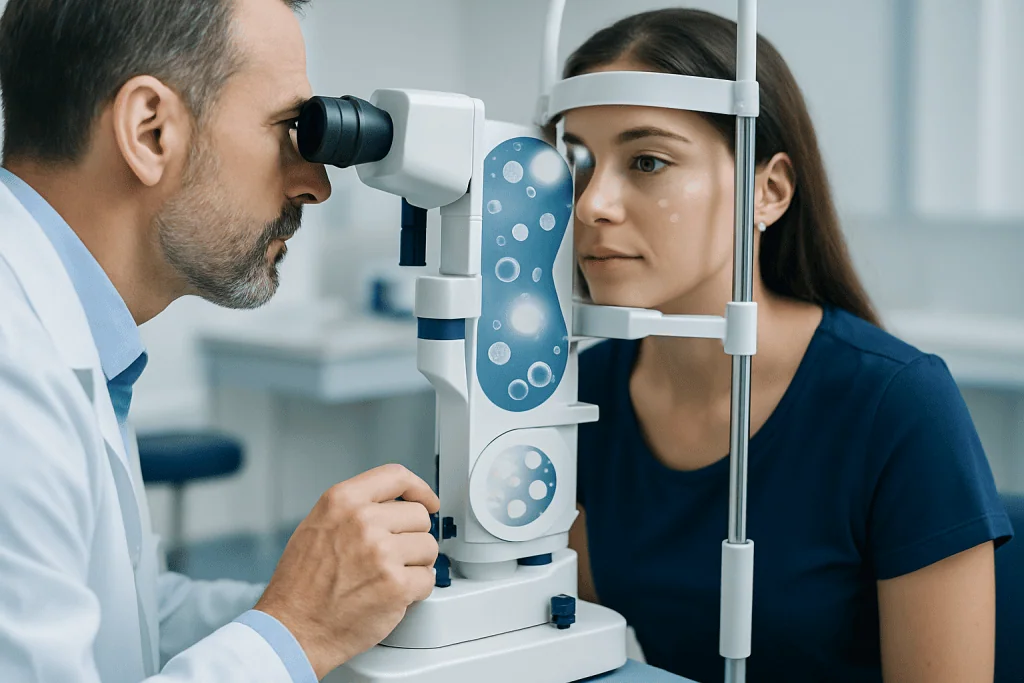
An eye examination is often the next step, especially for new or persistent symptoms. This may include testing visual acuity, checking the pupils, measuring eye pressure, and examining the retina after the pupils are dilated. A dilated retinal exam helps detect tears, bleeding, inflammation, or other structural causes. If needed, the evaluation may include a comprehensive eye examination or retinal imaging.
If symptoms suggest a neurological cause, further assessment may be recommended. This can include review by a neurologist, additional vision testing, or imaging studies in selected cases. When headaches are prominent, the doctor may also assess for migraine or other headache disorders. The goal is to identify the underlying cause rather than simply label the symptom.
Treatment options depend on the cause
There is no single treatment that cures all phosphenes. Management depends on why they are happening. If they are caused by pressure on the eye, treatment may be as simple as avoiding eye rubbing and protecting the eyes from irritation. If migraine aura is the cause, treatment focuses on migraine management, trigger control, and preventive strategies when attacks are frequent.
If examination shows vitreous changes without a retinal tear, the doctor may recommend observation and follow-up, because many symptoms settle as the vitreous finishes separating. However, if a retinal tear or detachment is found, prompt care is important to protect vision. Depending on the findings, treatment may involve retina treatment or retinal detachment surgery.
When inflammation, trauma, or another eye disease is responsible, treatment targets that specific problem. If phosphenes are part of a broader neurological condition, management may involve a neurologist as well as an eye specialist. In some cases, a person may need both neurology evaluation and ophthalmic care to fully understand the symptoms.
It is important not to self-diagnose recurring flashes, especially when symptoms are new. Early assessment can help distinguish harmless causes from conditions that benefit from timely treatment.
Prevention and self-care
Not all phosphenes can be prevented, but a few practical steps may reduce avoidable triggers and support eye health. Avoid pressing or rubbing the eyes, especially if the eyes are irritated or dry. Protect the eyes during sports or high-risk work to lower the chance of injury-related retinal problems.
People who have migraine-related visual symptoms may benefit from keeping a symptom diary. Tracking sleep patterns, stress, hydration, meals, and possible triggers can help identify patterns. Regular sleep, adequate fluids, and consistent meals may reduce episodes in some individuals, although triggers vary from person to person.
Routine eye care is also useful, particularly for older adults, people with high myopia, diabetes, or a history of eye surgery. New changes should not be dismissed as normal aging without an exam. If there is concern about flashes together with floaters or reduced vision, prompt medical advice is safer than waiting to see if it passes.
Near the end of the care pathway, some patients may benefit from multidisciplinary evaluation, especially if symptoms overlap between eye and neurological causes. Acibadem International’s multidisciplinary specialists and JCI-accredited hospitals evaluate and treat eye and neurological conditions for international patients when needed.
When to seek medical care
Phosphenes deserve prompt attention when they are sudden, new, or clearly different from usual. The most important warning signs are flashes in one eye with a burst of new floaters, blurred vision, or a dark curtain or shadow moving across vision. These symptoms can occur with a retinal tear or detachment and should be assessed urgently.
Medical care is also advisable if flashes follow an eye or head injury, are frequent or persistent, or come with eye pain, redness, or vision loss. If visual symptoms are accompanied by weakness, confusion, speech difficulty, severe headache, or other neurological symptoms, immediate medical evaluation is important.
Even when symptoms are mild, it is reasonable to arrange a non-urgent appointment if phosphenes keep recurring or there is uncertainty about the cause. A qualified eye doctor or physician can help determine whether the symptom is benign or whether further tests are needed.
Frequently asked questions
Are phosphenes normal?
They can be normal in some situations, such as after rubbing the eyes or with certain migraine auras. However, phosphenes are a symptom, not a diagnosis, so new or unusual episodes should be assessed in the right clinical context.
What is the difference between phosphenes and floaters?
Phosphenes are light sensations like flashes, sparks, or shimmering patterns seen without actual light. Floaters are small specks, threads, or cobweb-like shapes that drift across vision and are usually caused by changes in the vitreous gel.
Can phosphenes mean retinal detachment?
Sometimes they can be an early sign of vitreous traction, a retinal tear, or retinal detachment, especially if they are sudden and in one eye. The risk is higher when flashes come with many new floaters, blurred vision, or a curtain-like shadow.
Do migraines cause phosphenes?
Yes. Migraine aura can cause flashing lights, zigzags, shimmering shapes, or blind spots, often lasting several minutes. These symptoms may happen before a headache, during a headache, or occasionally without headache.
Should someone go to the emergency room for phosphenes?
Urgent care is appropriate if phosphenes are sudden, one-sided, or linked to new floaters, vision loss, trauma, or a shadow over part of vision. Immediate medical attention is also important if they occur with neurological symptoms such as weakness, trouble speaking, or severe headache.
Can stress cause phosphenes?
Stress itself is not usually a direct cause, but it can contribute to migraine in some people, and migraine can cause phosphenes. Stress may also make a person more aware of visual symptoms that would otherwise be overlooked.
References
- American Academy of Ophthalmology
- National Eye Institute
- American Migraine Foundation
- Merck Manual Professional Edition
- Mayo Clinic
This article is for general information only and is not a substitute for professional medical advice. Please consult a qualified doctor about your individual situation.
Explore treatments in Turkey — costs, top hospitals & a free quote
JCI-accredited · board-certified surgeons · reply within 24h
Add us as a Preferred Source to see more of our trusted health content across Google Search, AI Overviews and Discover.
Check your numbers in seconds
BMI, calories, due date, blood pressure and 30+ more clinical calculators — free, instant, doctor-reviewed ranges.

More from the Health Library

Herpes on Lip: A Complete Medical Overview

Chinese Fruits — Explained by Medical Evidence, Not Myths

Dystonia — Explained by Medical Evidence, Not Myths

Flatback — Explained by Medical Evidence, Not Myths
Ear Candling: An Evidence-Based Guide for Patients