Sunburned Eyes — Explained by Medical Evidence, Not Myths

Sunburned eyes are usually caused by UV exposure from sunlight, snow, water reflection, tanning lamps, or welding arcs. Typical symptoms include pain, gritty sensation, tearing, redness, blurred vision, and sensitivity to light.
Key Takeaways
- Sunburned eyes are usually caused by UV exposure from sunlight, snow, water reflection, tanning lamps, or welding arcs.
- Typical symptoms include pain, gritty sensation, tearing, redness, blurred vision, and sensitivity to light.
- The condition often affects both eyes and symptoms may begin several hours after exposure rather than immediately.
- Most mild cases improve within 24 to 48 hours, but severe pain, vision changes, or persistent symptoms need medical assessment.
- Prevention depends on UV-blocking sunglasses, protective eyewear, and avoiding high-risk exposure settings.
Sunburned eyes usually refer to ultraviolet (UV) injury to the surface of the eye, a condition often called photokeratitis. It can cause pain, tearing, redness, and light sensitivity, but most mild cases improve with prompt protection from light, rest, and medical guidance when symptoms are significant or do not settle.
What sunburned eyes actually mean
Sunburned eyes are not a myth, but the term is informal. In medical practice, it usually refers to photokeratitis, a temporary injury to the cornea and conjunctiva caused by too much ultraviolet light. The cornea is the clear front surface of the eye, and like skin, it can be damaged by excess UV exposure.
This problem can happen after time in strong sunlight, especially at the beach, on snow, or on water where UV rays reflect back into the eyes. It can also occur after exposure to tanning lamps or welding arcs without proper eye protection. Many people expect symptoms immediately, but discomfort often appears several hours later, which can make the cause easy to miss.
Most cases are short-lived because the surface of the eye usually heals well. Even so, the pain can feel intense, and any concern about vision deserves careful attention. Other eye conditions can look similar, including conjunctivitis and corneal injury, so persistent or severe symptoms should not be self-diagnosed.
Symptoms and how they usually feel
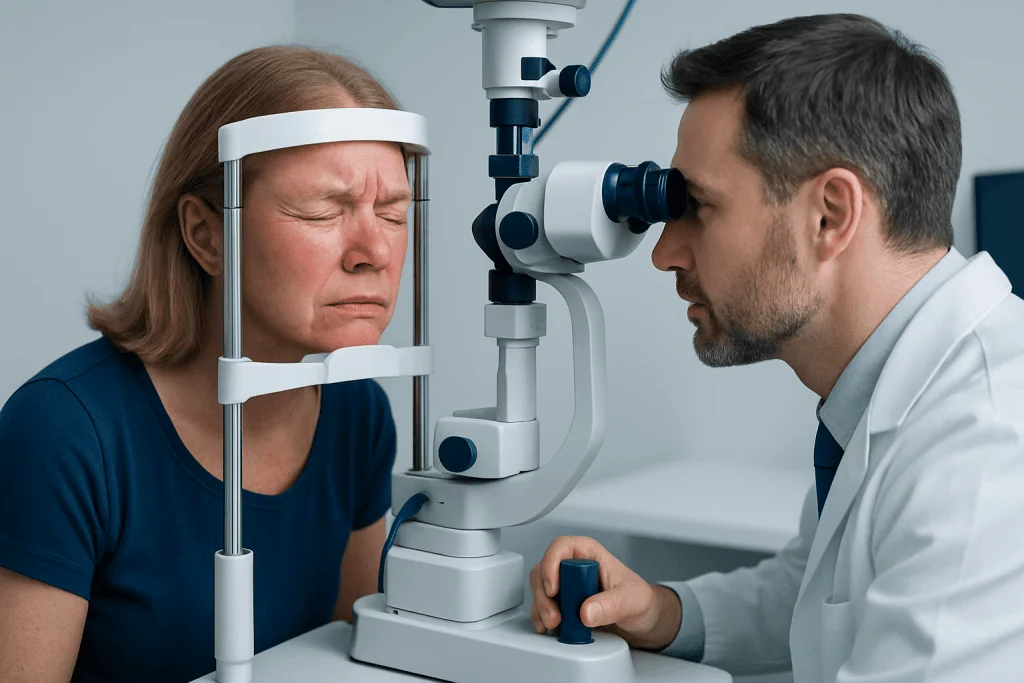
Common symptoms of sunburned eyes include redness, tearing, pain, and a gritty or burning sensation. Many people describe the feeling as if sand is trapped in the eyes. Sensitivity to light is also very common, and some people prefer to keep their eyes closed in a dark room until the irritation eases.
Other possible symptoms include blurred vision, swollen eyelids, headache, and eye twitching. Some people notice halos around lights or feel that it is difficult to focus. In more uncomfortable cases, the eyes may water so much that normal activities become difficult for several hours.
Symptoms often affect both eyes because both were exposed to the same source of UV light. The timing is a useful clue: pain may begin 6 to 12 hours after exposure rather than at the exact moment of sun exposure. That delayed pattern helps distinguish UV injury from some other causes of sudden eye pain.
- Pain or stinging
- Redness
- Tearing
- Light sensitivity
- Gritty sensation
- Temporary blurred vision
Why it happens: causes and risk factors

The main cause of sunburned eyes is ultraviolet radiation, especially UV-B. The eye’s surface tissues absorb this energy, which can lead to inflammation and tiny surface injuries. Unlike myths that blame only hot weather, the real issue is UV intensity and exposure, not temperature.
Risk is highest in places where UV light is reflected or intensified. Snow is a major example, which is why photokeratitis is sometimes called snow blindness. Water, sand, and light-colored concrete can also reflect UV rays. Cloudy days are not fully protective because UV radiation still passes through clouds.
Other high-risk situations include tanning beds, welding without a face shield, high-altitude activities, and spending long periods outdoors without sunglasses that block 100% of UVA and UVB. Contact lens wear does not directly cause UV injury, but it may make irritated eyes feel worse. People with other eye surface problems, such as dry eye, may notice stronger discomfort after exposure.
How doctors diagnose sunburned eyes
Diagnosis begins with the history. A doctor will ask about recent time in the sun, skiing, boating, tanning, or welding, and when symptoms started. The delayed onset after UV exposure is an important clue. Because several conditions can mimic sunburned eyes, the history helps narrow the cause.
The eye examination usually includes checking vision, looking at the eye surface, and assessing whether there is any foreign body, infection, or deeper injury. In many cases, a clinician uses fluorescein dye and a blue light to look for superficial damage on the cornea. This is a standard way to examine irritation or scratching of the eye surface.
Diagnosis matters because not all red, painful eyes are due to UV exposure. Corneal abrasions, infections, inflammation inside the eye, and acute glaucoma can also cause pain and light sensitivity. If symptoms are severe or unusual, an ophthalmology evaluation may be recommended, sometimes with more specialized testing through an eye examination.
Treatment and recovery
Treatment focuses on comfort, protection, and healing while the eye surface recovers. The first step is to get out of the sun or away from the UV source. Resting the eyes, staying in dim light, and avoiding further exposure are usually helpful. Artificial tears or lubricating eye drops may soothe irritation, but any medication should be used according to a doctor’s advice.
People should not rub their eyes, because rubbing can worsen surface irritation. Contact lenses should be removed and not worn again until the eyes feel normal and a clinician says it is safe. If pain is substantial, a doctor may suggest additional treatment. In some situations, eye specialists may assess whether other causes are present and whether care from ophthalmology is needed.
Most mild cases improve within 24 to 48 hours because the corneal surface renews itself quickly. Recovery may take longer if exposure was intense or if there is another eye condition at the same time. If symptoms continue, vision remains blurred, or discharge develops, further medical review is important to exclude infection or a more serious corneal problem.
What not to do and common myths
Several myths can delay proper care. One common myth is that sunburned eyes happen only after obvious, intense sun exposure. In reality, reflected UV light from snow, water, or sand can be enough, and symptoms may appear later in the day. Another myth is that if the eyes are not red, the problem cannot be UV-related. Pain and light sensitivity may begin before redness becomes prominent.
It is also not a good idea to put home remedies, cosmetic products, or non-sterile liquids into the eyes. These may irritate the surface further or increase infection risk. Eye drops that “get the red out” are not the same as lubricating drops and may not be appropriate for UV injury.
People should also avoid driving if light sensitivity or blurred vision affects safe vision. Self-treating repeatedly without knowing the cause is not wise, because recurrent episodes of painful red eyes can point to other problems that need proper evaluation, including corneal disease or inflammation rather than simple UV overexposure.
Prevention and everyday eye protection
Prevention is straightforward and highly effective. Sunglasses should block 100% of UVA and UVB, and wraparound styles give better side protection. A wide-brimmed hat adds another layer of shielding. This matters not only on bright summer days but also during winter sports, boating, hiking, and any activity at high altitude.
Protective eyewear is essential for welding, tanning devices, and occupational UV exposure. Regular eyeglasses do not automatically provide full UV protection unless specified. For children as well as adults, prevention is based on reducing direct and reflected UV exposure rather than waiting for symptoms to appear.
People with ongoing irritation, poor tear quality, or prior eye surface disease may benefit from a general eye health review. In some settings, a doctor may discuss broader eye care or treatment planning if another condition is contributing to discomfort, including support through laser eye surgery only when it is genuinely relevant to a separate diagnosed vision issue rather than to treat photokeratitis itself.
When to seek medical care
Medical care is important if eye pain is severe, vision is reduced, or symptoms do not improve within a day or two. Care is also needed if there is discharge, a feeling that something is stuck in the eye, one eye is much worse than the other, or the injury followed welding, chemicals, or trauma. These features may suggest a different diagnosis or a more significant corneal injury.
Urgent evaluation is especially important for intense light sensitivity, worsening blurred vision, or symptoms in a person who has had recent eye surgery or uses contact lenses regularly. Contact lens wearers have a higher need for careful assessment because infections of the cornea can become serious.
For international patients who need specialist assessment, Acibadem International’s multidisciplinary specialists and JCI-accredited hospitals diagnose and treat eye conditions with coordinated care. The safest approach is always to seek advice from a qualified doctor rather than relying on myths or online self-diagnosis alone.
Frequently asked questions
Can eyes really get sunburned?
Yes. The usual medical term is photokeratitis, which means UV injury to the surface of the eye. It is similar in principle to sun damage on skin, but it affects the cornea and surrounding eye tissues.
How long do sunburned eyes last?
Many mild cases improve within 24 to 48 hours. Recovery can take longer after heavier UV exposure or if another eye problem is also present. If symptoms are not clearly improving, medical review is important.
What are the first signs of sunburned eyes?
Early signs often include pain, tearing, redness, and sensitivity to light. Some people first notice a gritty feeling, as though sand is in the eye. Symptoms may start several hours after exposure rather than immediately.
Should contact lenses be worn with sunburned eyes?
No. Contact lenses should usually be removed until the eyes are comfortable again and a clinician says it is safe to restart them. Wearing lenses during active irritation may worsen discomfort and can complicate the assessment.
Can sunglasses prevent sunburned eyes?
Yes, if they block 100% of UVA and UVB. Wraparound sunglasses and a hat provide better protection, especially near water, sand, or snow where UV rays reflect strongly.
Is blurred vision normal with sunburned eyes?
Mild temporary blurred vision can happen because the eye surface is irritated and tearing is increased. However, persistent or marked vision loss is not something to ignore. It should be assessed by a doctor promptly.
References
- American Academy of Ophthalmology
- National Eye Institute
- Centers for Disease Control and Prevention
- American Optometric Association
- MedlinePlus
This article is for general information only and is not a substitute for professional medical advice. Please consult a qualified doctor about your individual situation.
Explore treatments in Turkey — costs, top hospitals & a free quote
JCI-accredited · board-certified surgeons · reply within 24h
Add us as a Preferred Source to see more of our trusted health content across Google Search, AI Overviews and Discover.

More from the Health Library



Related Specialists

Assoc. Prof. Dr. Hepsen Mine Serin
Pediatrics
Dr. Havva Gölalan
Oral & Dental Health
Dr. Semra Mehmetoğlu
Pediatrics
Prof. Dr. Mehmet Akif Özdemir
Pediatrics