Mild Levoscoliosis: Early Signs, Risk Factors, and How It Is Treated
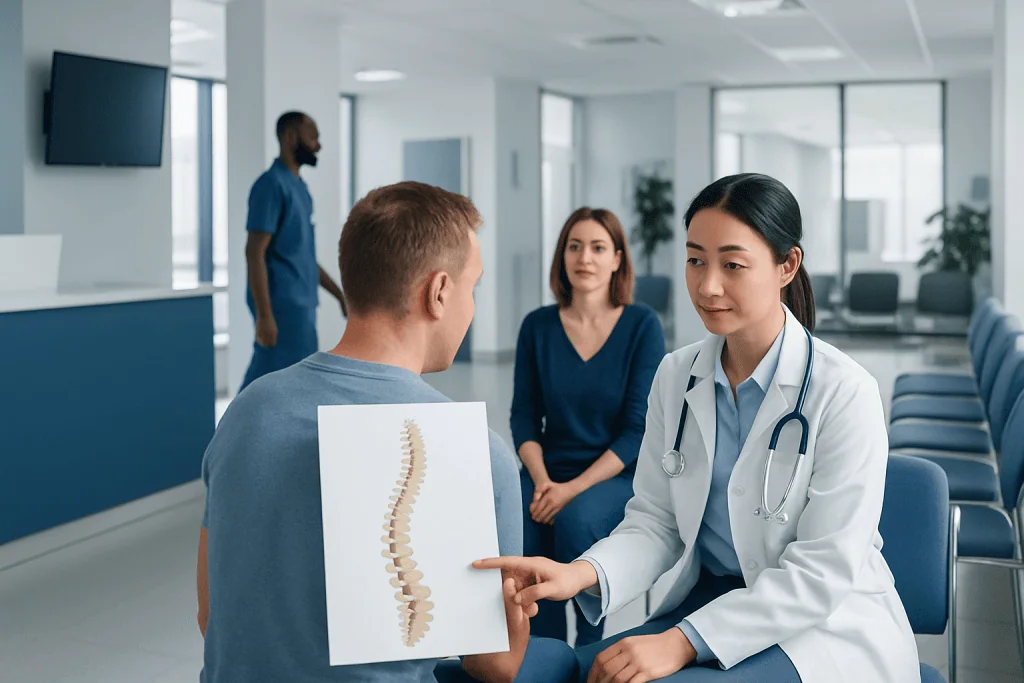
Mild levoscoliosis means a small leftward curve of the spine. Many people have few or no symptoms, especially early on.
Key Takeaways
- Mild levoscoliosis means a small leftward curve of the spine.
- Many people have few or no symptoms, especially early on.
- Evaluation usually includes a physical exam and imaging such as X-rays.
- Treatment depends on age, curve size, symptoms, and whether the curve is progressing.
- Most mild cases are monitored, while some benefit from exercises, therapy, or bracing.
Mild levoscoliosis is a gentle sideways curve of the spine that bends to the left. In many people it causes no major problems and is managed with observation, posture and activity guidance, physical therapy, and regular follow-up when needed.
Overview: what mild levoscoliosis means
Mild levoscoliosis is a type of scoliosis in which the spine curves slightly to the left. “Mild” usually refers to a small curve seen on imaging, often before it causes significant physical limitation. Many people discover it during a routine exam, a school screening, or imaging done for another reason.
The spine naturally has front-to-back curves, but scoliosis involves a side-to-side curve that may also include some rotation of the vertebrae. In levoscoliosis, the curve leans left, most often in the lower or middle back. A mild curve does not always lead to symptoms, and it does not automatically mean the condition will worsen.
This diagnosis can occur in children, teens, or adults. In younger people, doctors pay close attention to growth because curves can change during growth spurts. In adults, mild levoscoliosis may reflect long-standing scoliosis or age-related changes in the spine such as disc wear and joint degeneration.
Understanding the exact pattern of the curve helps guide care. Mild levoscoliosis is often discussed as part of the broader group of scoliosis conditions, but its management is individualized based on symptoms, age, and the likelihood of progression.
Early signs and symptoms
Many people with mild levoscoliosis feel well and notice no clear symptoms. When signs are present, they are often subtle. A shoulder may look slightly uneven, the waist may appear less symmetrical, or one side of the back may seem more prominent when bending forward.
Some people report mild back discomfort, muscle fatigue, or a feeling that posture is “off,” especially after long periods of sitting or standing. These symptoms are usually related to muscle imbalance and body mechanics rather than the curve alone. In mild cases, pain is often manageable and may come and go.
In children and adolescents, parents may first notice that clothing hangs unevenly, one hip looks higher, or the torso seems shifted slightly to one side. In adults, symptoms can overlap with other common spine problems, so an evaluation is useful when back pain, stiffness, or visible asymmetry appears.
- Uneven shoulders or hips
- One side of the waist appearing more curved
- A rib or back prominence when bending forward
- Mild back ache or muscle tightness
- Postural imbalance or leaning to one side
Why it happens: causes and risk factors
Mild levoscoliosis is not a single disease with one cause. In many children and teenagers, the exact reason is unknown; this is called idiopathic scoliosis. It is thought to involve a combination of growth, genetics, and the way the spine develops, although no single explanation fits every case.
In adults, mild levoscoliosis may be linked to wear-and-tear changes in the spine. As discs lose height and small joints in the back age, the spine can gradually shift and curve. Less commonly, scoliosis can be associated with congenital differences in the vertebrae, neuromuscular conditions, or previous spinal injury.
Risk factors depend on age. In adolescents, family history, rapid growth, and female sex are associated with a higher chance that a curve may progress. In adults, risk factors include age-related degeneration, osteoporosis, prior spine imbalance, and chronic asymmetrical loading of the spine.
A leftward curve can sometimes prompt a doctor to look more carefully at the location and pattern of the scoliosis, especially if it is unusual for the patient’s age group or accompanied by neurological symptoms. This does not mean there is always a serious cause, but it is one reason why a proper medical assessment matters.
How doctors evaluate mild levoscoliosis
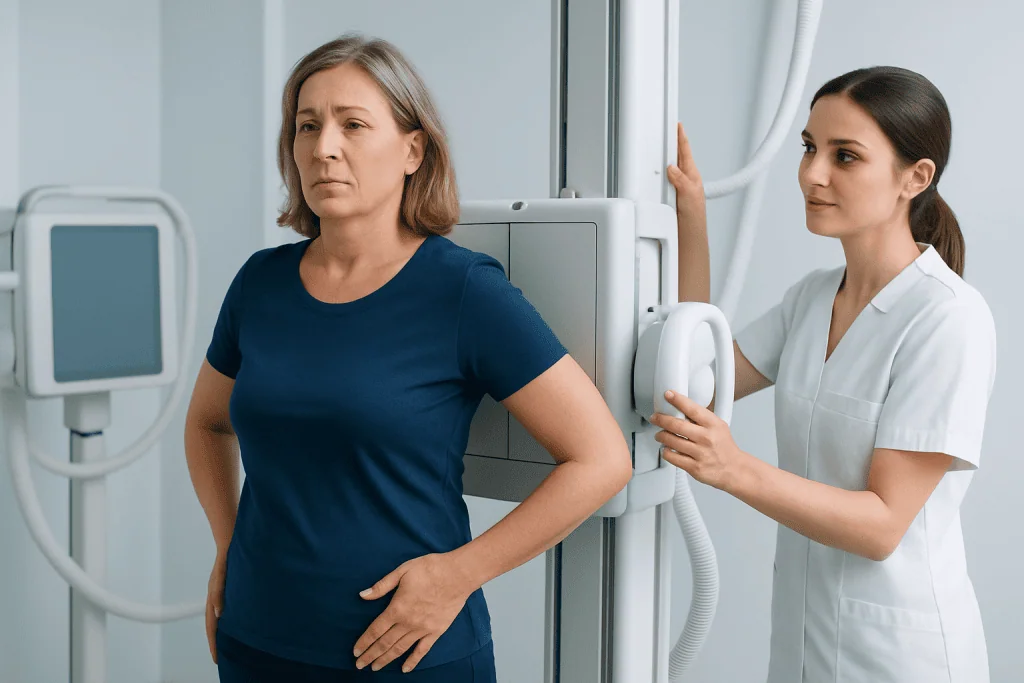
Diagnosis begins with a medical history and physical examination. A doctor asks about pain, growth, family history, daily function, and whether the curve seems to be changing. During the exam, posture, shoulder and hip height, spinal balance, and flexibility are assessed, and the patient may be asked to bend forward so any asymmetry becomes easier to see.
Imaging confirms the diagnosis and measures the curve. Standard standing spinal X-rays are commonly used to calculate the Cobb angle, which helps describe how mild or significant the curve is. The doctor also considers the curve’s location, direction, spinal rotation, and whether the person is still growing.
Additional imaging is not needed for everyone, but it may be recommended when symptoms are atypical, pain is significant, or neurological findings are present. In some situations, detailed imaging such as MRI helps evaluate the spinal cord, discs, and surrounding structures. For a more comprehensive view of the bones and curve pattern, doctors may also use spinal X-ray or, less commonly, CT scanning when specific structural detail is needed.
The goal of evaluation is not only to name the condition but also to understand its behavior. A small curve in a growing adolescent may be monitored differently from a small curve in an adult with degenerative back pain, even if both are described as mild levoscoliosis.
Treatment options and what follow-up may involve
Treatment for mild levoscoliosis is based on the person rather than the label alone. Doctors consider age, symptoms, curve size, future growth, and whether the curve is stable or changing. Many mild cases do not need invasive treatment and are managed with observation and periodic reassessment.
When symptoms such as muscular discomfort, stiffness, or poor posture are present, conservative care is often helpful. This may include physical therapy, guided exercises to support posture and core strength, activity modification, and strategies to improve spinal mechanics in daily life. Exercise does not usually “straighten” the spine completely, but it can improve comfort, body awareness, and function.
For children and adolescents whose mild curve shows signs of progression during growth, bracing may be discussed. The aim of bracing is generally to reduce the risk of further progression rather than to cure scoliosis. Adults with degenerative scoliosis are more likely to need symptom-focused treatment, such as rehabilitation and pain management, than bracing.
Surgery is usually not considered for mild levoscoliosis unless the curve progresses significantly or symptoms become severe and do not respond to non-surgical care. In specialized centers, evaluation by spine surgery teams may be appropriate for complex or advancing cases, but most people with mild curves are treated without an operation.
Daily life, exercise, and self-care
Most people with mild levoscoliosis can continue normal school, work, and exercise activities. Staying physically active is generally encouraged because movement supports muscle strength, flexibility, balance, and general spine health. Walking, swimming, low-impact aerobics, and clinician-guided strengthening are often well tolerated.
Good self-care focuses on comfort and posture rather than trying to force the spine into a perfect position. Practical steps may include taking breaks from prolonged sitting, setting up an ergonomic workstation, using safe lifting technique, and maintaining a healthy body weight. When discomfort occurs, a doctor or physical therapist can suggest individualized ways to manage it.
Some people benefit from structured scoliosis-specific exercises, while others do well with general conditioning and core work. The best plan depends on age, symptoms, and the shape of the curve. It is wise to avoid starting intense, unsupervised correction programs based only on online advice.
If there are concerns about progression, keeping follow-up appointments is part of self-care. Repeat examinations or imaging help show whether the curve is stable over time, especially during adolescence or when adult symptoms are changing.
When to seek medical care
Medical review is advisable if a child or adult develops visible spinal asymmetry, uneven shoulders or hips, or persistent back pain. Evaluation is also important if a known mild levoscoliosis seems to be changing, particularly during growth spurts in children and teenagers.
Prompt medical attention is needed if scoliosis is accompanied by numbness, weakness, difficulty walking, bowel or bladder changes, or pain that is severe, constant, or present at night. These features do not always signal a serious problem, but they should not be ignored because they may point to another spinal condition that needs assessment.
People who already have a diagnosis should also seek care if treatment is no longer controlling symptoms or if daily activities become harder. Near the end of the care pathway, referral to a multidisciplinary spine team may help coordinate imaging, rehabilitation, and specialist review. Acibadem International’s multidisciplinary specialists and JCI-accredited hospitals diagnose and treat spinal conditions for international patients when advanced assessment is needed.
Frequently asked questions
Is mild levoscoliosis serious?
Mild levoscoliosis is often not serious and may cause few or no symptoms. Its importance depends on the size of the curve, the person’s age, symptoms, and whether the curve is progressing over time.
Can mild levoscoliosis go away on its own?
A spinal curve usually does not completely disappear on its own, but many mild curves remain stable and never cause major problems. In growing children, regular follow-up helps determine whether the curve is staying the same or increasing.
Does mild levoscoliosis always cause back pain?
No. Many people with mild levoscoliosis do not have pain at all. When pain is present, it is often mild and may relate to muscle imbalance, posture, or another spine issue rather than the curve alone.
What is the difference between levoscoliosis and dextroscoliosis?
Levoscoliosis means the spine curves to the left, while dextroscoliosis means it curves to the right. Both are forms of scoliosis, and treatment decisions are based more on curve pattern, symptoms, age, and progression than on the direction alone.
Will mild levoscoliosis need surgery?
Most people with mild levoscoliosis do not need surgery. Surgery is generally reserved for more severe or progressive curves, or for cases causing significant symptoms that do not improve with conservative treatment.
Can exercise help mild levoscoliosis?
Yes, exercise can help many people by improving strength, flexibility, posture, and comfort. A doctor or physical therapist can recommend the safest and most appropriate program based on the individual’s age, symptoms, and curve pattern.
References
- Scoliosis Research Society
- American Academy of Orthopaedic Surgeons
- National Institute of Arthritis and Musculoskeletal and Skin Diseases
- National Health Service
- MedlinePlus
This article is for general information only and is not a substitute for professional medical advice. Please consult a qualified doctor about your individual situation.
Joint and spine care in Turkey — expert assessment & treatment
JCI-accredited · board-certified surgeons · reply within 24h
Add us as a Preferred Source to see more of our trusted health content across Google Search, AI Overviews and Discover.