Will an EKG Detect Heart Failure: An Evidence-Based Guide for Patients

An EKG cannot confirm or rule out heart failure by itself. An abnormal EKG may show rhythm problems, prior heart damage, or strain that can be linked to heart failure.
Key Takeaways
- An EKG cannot confirm or rule out heart failure by itself.
- An abnormal EKG may show rhythm problems, prior heart damage, or strain that can be linked to heart failure.
- An echocardiogram is one of the most important tests for evaluating heart pumping and valve function.
- Blood tests, chest imaging, and physical examination help doctors understand the cause and severity of symptoms.
- New shortness of breath, swelling, chest pain, or fainting should be assessed by a doctor promptly.
Will an EKG detect heart failure? Usually, no—not on its own. An EKG can show changes that raise suspicion for heart problems, but doctors usually need symptoms, an exam, blood tests, and heart imaging to diagnose heart failure accurately.
Overview: Can an EKG detect heart failure?
In most cases, an EKG does not directly detect heart failure on its own. It can show electrical patterns that suggest the heart may be under strain, beating abnormally, or affected by another problem that can lead to heart failure, but it is only one part of the evaluation.
Heart failure is a clinical syndrome, which means doctors diagnose it by putting together several pieces of information. These usually include symptoms such as shortness of breath or swelling, a physical exam, blood tests, and imaging tests that show how well the heart pumps and how its valves are working.
This distinction is important for patients. A normal EKG does not completely rule out heart failure, and an abnormal EKG does not automatically mean a person has heart failure. Instead, the test helps guide the next steps and may point toward common causes such as coronary artery disease, atrial fibrillation, or prior heart damage.
What an EKG can and cannot show
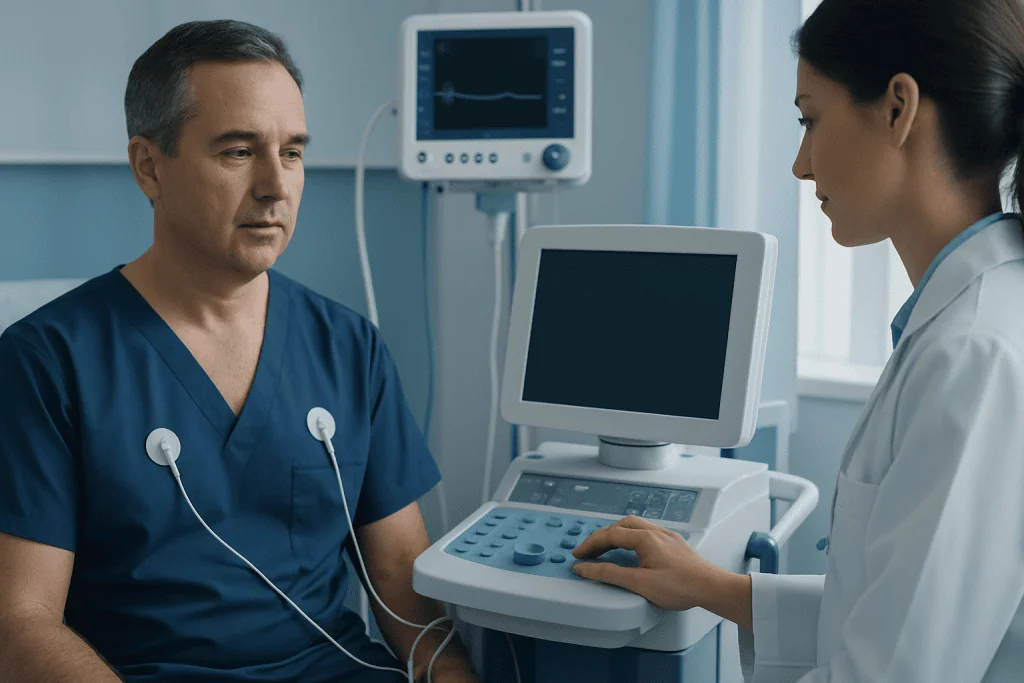
An EKG, also called an electrocardiogram, records the heart’s electrical activity through electrodes placed on the skin. It is quick, painless, and widely used because it can identify rhythm disturbances, signs of a past heart attack, conduction delays, and patterns that may reflect enlargement or strain in parts of the heart.
In people who may have heart failure, an EKG can sometimes show clues rather than a diagnosis. These clues may include atrial fibrillation, fast or slow heart rhythms, bundle branch block, evidence of left ventricular hypertrophy, or changes that suggest reduced blood flow to the heart muscle. Some of these findings can help explain why symptoms are happening.
However, an EKG cannot measure the heart’s pumping strength in a direct way. It also cannot reliably show whether fluid is building up in the lungs or whether the heart chambers are enlarged enough to affect circulation. That is why doctors usually combine it with other tests, especially an echocardiogram.
- What an EKG is good at: spotting rhythm problems, electrical conduction changes, and possible prior heart injury
- What an EKG is not designed for: confirming fluid overload, measuring ejection fraction, or establishing the type of heart failure
Symptoms and signs that lead doctors to suspect heart failure
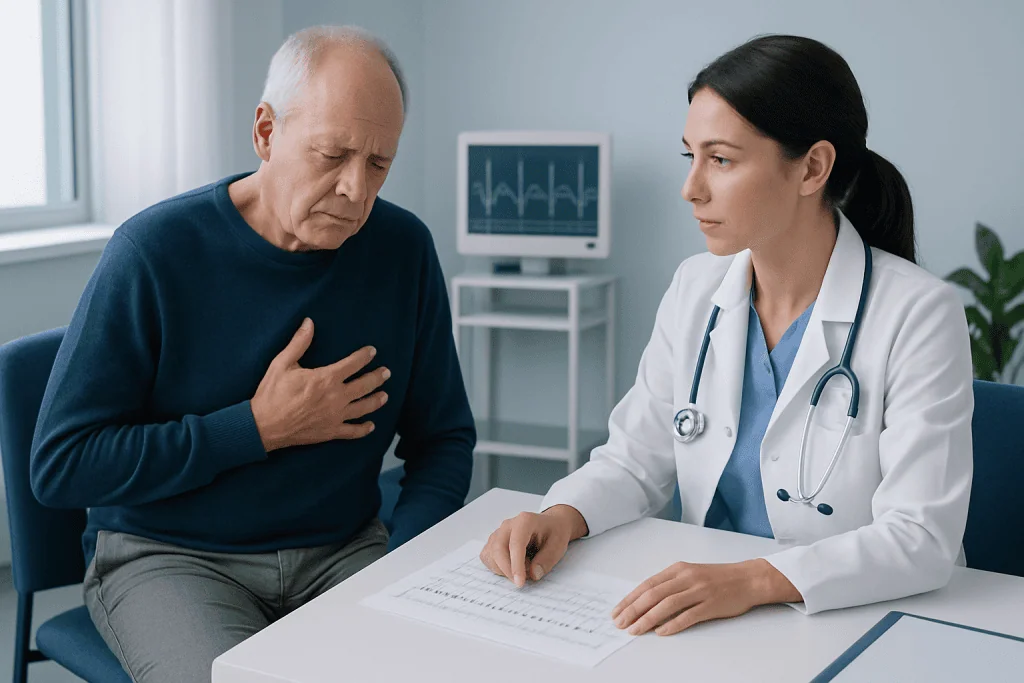
Heart failure is often suspected because of symptoms rather than because of an EKG alone. Common symptoms include shortness of breath during activity or when lying flat, unusual tiredness, swelling in the legs or ankles, rapid weight gain from fluid retention, and reduced ability to exercise or perform daily tasks.
Some people also notice a persistent cough, especially at night, a feeling of abdominal fullness, or waking up breathless. In older adults, symptoms can be less specific and may appear as weakness, confusion, reduced appetite, or a decline in physical stamina. Symptoms can develop gradually or suddenly depending on the cause.
During the physical examination, a doctor may look for elevated neck veins, crackling sounds in the lungs, leg swelling, or an unusually fast or irregular pulse. These findings, together with the person’s medical history, help determine whether additional testing for heart failure is needed.
Why heart failure happens: common causes and risk factors
Heart failure does not mean the heart has stopped. It means the heart cannot pump blood effectively enough to meet the body’s needs, or it can do so only under increased pressure. This can happen when the heart muscle becomes weak, stiff, enlarged, or damaged.
Common causes include coronary artery disease, previous heart attack, long-standing high blood pressure, heart valve disease, abnormal heart rhythms, cardiomyopathy, congenital heart conditions, and some infections or inflammatory diseases. Conditions such as diabetes, obesity, chronic kidney disease, sleep apnea, and heavy alcohol use can also increase the risk.
Sometimes the EKG points toward one of these causes rather than toward heart failure itself. For example, it may show rhythm changes linked to arrhythmia or signs that suggest ischemia from blocked heart arteries. Identifying the underlying cause matters because treatment is often directed both at the heart failure and at the condition that led to it.
How doctors diagnose heart failure beyond the EKG
If heart failure is suspected, the next step is usually a more complete workup. One of the most useful tests is an echocardiogram, an ultrasound of the heart that shows chamber size, valve function, wall motion, and how strongly the heart pumps. This test can help distinguish between heart failure with reduced ejection fraction and heart failure with preserved ejection fraction.
Blood tests are also important. Doctors may check natriuretic peptides, such as BNP or NT-proBNP, which can rise when the heart is under pressure. Other blood tests can help look for anemia, thyroid problems, kidney function changes, infection, or electrolyte imbalance, all of which may affect symptoms or treatment choices.
Additional tests may include a chest X-ray to look for fluid in the lungs or heart enlargement, stress testing, coronary imaging, or advanced cardiac imaging in selected cases. Depending on symptoms and risk factors, patients may be referred for cardiology evaluation and a formal echocardiogram to clarify the diagnosis.
In some situations, doctors also assess whether a related condition is present, such as coronary artery disease, because treating the underlying problem can improve symptoms and long-term heart function.
Treatment options after diagnosis
Treatment depends on the type of heart failure, its severity, and the underlying cause. Many people are treated with a combination of lifestyle measures and medications that help the heart work more efficiently, reduce fluid buildup, lower blood pressure, and improve symptoms. The exact medicines vary from person to person and should be prescribed and monitored by a doctor.
When a specific cause is identified, treatment may also address that issue directly. For example, controlling high blood pressure, restoring a normal rhythm, treating valve disease, or improving blood flow to the heart can all be important parts of care. Some patients may need devices such as a pacemaker or implantable defibrillator, while others may benefit from procedures to improve circulation, including coronary angiography when blocked arteries are suspected.
Self-management matters as well. Patients are often advised to monitor symptoms, check weight regularly, limit excess sodium if recommended by their doctor, take medications consistently, and keep follow-up appointments. Near the end of the care pathway, some international patients may choose centers such as Acibadem International, where multidisciplinary specialists in JCI-accredited hospitals diagnose and treat heart conditions using coordinated cardiology care.
Prevention, self-care, and when to seek medical care
Not every case of heart failure can be prevented, but many risk factors can be managed. Helpful steps include controlling blood pressure, managing diabetes, avoiding tobacco, staying physically active as advised, maintaining a heart-healthy diet, limiting alcohol, and taking prescribed medicines regularly. People with known heart disease should attend routine checkups even if they feel well.
For those already being evaluated for possible heart failure, self-care includes watching for worsening shortness of breath, swelling, fatigue, or sudden weight gain. These changes can suggest fluid retention or progression of symptoms and should be discussed with a healthcare professional rather than managed alone.
Medical care should be sought promptly for new or worsening shortness of breath, chest pain, fainting, a very fast or irregular heartbeat, or swelling that develops quickly. Emergency care is especially important if breathing becomes difficult at rest, the lips look blue, chest pressure is severe, or confusion appears suddenly.
Frequently asked questions
Can a normal EKG rule out heart failure?
No. A normal EKG makes certain electrical problems less likely, but it does not fully rule out heart failure. Doctors usually need symptoms, an examination, and tests such as an echocardiogram or blood work to assess heart function properly.
What test is better than an EKG for diagnosing heart failure?
An echocardiogram is usually more informative for diagnosing heart failure because it shows how the heart pumps and how the valves work. Blood tests and a chest X-ray may also support the diagnosis and help determine severity.
Why would an EKG be ordered if it cannot confirm heart failure?
An EKG is useful because it can reveal rhythm problems, signs of prior heart injury, or conduction abnormalities that may explain symptoms or contribute to heart failure. It is also quick, noninvasive, and often helps doctors decide which additional tests are needed.
Can heart failure be missed on an EKG?
Yes, it can. Some people with heart failure may have only subtle EKG changes or even a near-normal tracing, especially early in the condition. That is why diagnosis relies on the full clinical picture, not the EKG alone.
What symptoms should make someone think about heart failure?
Shortness of breath, swelling in the legs or ankles, unusual fatigue, rapid weight gain, and trouble breathing when lying flat are common symptoms. These symptoms can also occur with other conditions, so medical assessment is important.
Is heart failure the same as a heart attack?
No. A heart attack happens when blood flow to part of the heart muscle is blocked, while heart failure means the heart is not pumping effectively enough. A heart attack can cause heart failure, but the two conditions are not the same.
References
- American Heart Association
- National Heart, Lung, and Blood Institute
- Heart Failure Society of America
- European Society of Cardiology
- Mayo Clinic
This article is for general information only and is not a substitute for professional medical advice. Please consult a qualified doctor about your individual situation.
Heart Failure in Turkey — costs, top hospitals & a free quote
JCI-accredited · board-certified surgeons · reply within 24h
Add us as a Preferred Source to see more of our trusted health content across Google Search, AI Overviews and Discover.
Check your numbers in seconds
BMI, calories, due date, blood pressure and 30+ more clinical calculators — free, instant, doctor-reviewed ranges.