Vision Is Blurry in the Morning: What Patients Need to Know

Brief blurring after waking often improves with blinking, lubricating eye drops, and time for the tear film to stabilize. Dry eye, eyelid inflammation, corneal swelling, uncorrected refractive errors, and contact lens issues can all contribute to morning blur.
Key Takeaways
- Brief blurring after waking often improves with blinking, lubricating eye drops, and time for the tear film to stabilize.
- Dry eye, eyelid inflammation, corneal swelling, uncorrected refractive errors, and contact lens issues can all contribute to morning blur.
- Diabetes, high blood pressure, sleep apnea, and some medicines may affect vision or eye comfort and deserve medical review when symptoms persist.
- Sudden vision loss, eye pain, a red eye, flashes of light, new floaters, or weakness require urgent medical attention.
- An eye examination can identify whether the symptom comes from the cornea, lens, retina, optic nerve, or a need for updated glasses.
Vision is blurry in the morning is commonly temporary and may happen when the eye surface becomes dry overnight, tears are reduced, or contact lenses and sleep habits affect the eyes. However, repeated, worsening, one-sided, or sudden blurred vision should be assessed by an eye care professional because it can sometimes signal an eye condition or a broader health concern.
Overview: Why Vision May Be Blurry After Waking
When vision is blurry in the morning, the cause is often temporary. During sleep, the eyes are closed, blinking stops, and the tear layer that normally keeps the eye surface smooth may become less stable. On waking, a person may notice haziness, fluctuating focus, or a feeling that the eyes need time to “clear.” This commonly improves within minutes after blinking, washing the face, or using suitable lubricating eye drops.
Morning blurring can affect one eye or both eyes. It may be more noticeable after poor sleep, sleeping in a dry room, using a fan or air conditioning, drinking alcohol, wearing contact lenses too long, or taking medicines that reduce tear production. The timing, duration, and associated symptoms provide useful clues about the possible cause.
Most short-lived episodes are not dangerous, but persistent changes in vision should not be ignored. Vision depends on several structures working together, including the tear film, cornea, lens, retina, and optic nerve. An eye examination can help determine whether a surface problem, a focusing issue, or another condition is responsible.
Patterns That Can Help Explain Morning Blurry Vision
The way blurred vision behaves during the morning can be informative. Blurring that clears after several blinks is often associated with dryness or an irregular tear film. A gritty, burning, stinging, or tired feeling in the eyes makes this explanation more likely. Some people also experience watering, because irritated eyes can produce reflex tears that do not adequately lubricate the surface.
Blur that lasts longer, such as an hour or more, may occur when the cornea temporarily retains fluid overnight. The cornea is the clear front window of the eye. Mild overnight swelling can occur in some people, particularly those with certain corneal conditions, previous eye surgery, or long-term contact lens use. Halos around lights or a hazy appearance may accompany this type of blur.
Vision that is blurred in only one eye, is getting progressively worse, or does not improve during the day warrants timely assessment. A person should also note whether the vision is worse at near distances, far distances, or both. These details can help an optometrist or ophthalmologist check for changes in glasses prescription, early cataract changes, retinal problems, or other causes.
Common Causes and Contributing Factors

Dry eye disease is one of the most frequent reasons for blurry vision on waking. It can develop when the eyes do not make enough tears or when tears evaporate too quickly. Sleeping with the eyelids partly open, known as nocturnal lagophthalmos, may expose the eye surface overnight and lead to pronounced dryness in the morning. Eyelid conditions such as blepharitis, which involves inflammation around the lash line and oil glands, may also destabilize tears.
Contact lenses can contribute, especially if they are worn beyond their recommended schedule, slept in when not designed for overnight use, or do not fit properly. Lenses reduce the amount of oxygen reaching the cornea and can trap deposits or irritants against the eye. Removing lenses before sleep and following the prescribed replacement and cleaning schedule are important for eye health.
Focusing changes may also be involved. An outdated glasses or contact lens prescription, astigmatism, age-related difficulty focusing up close, and early cataract changes can make vision seem less clear at particular times of day. Cataracts often cause gradually increasing blur, glare, and reduced contrast rather than only morning symptoms, but an eye examination can distinguish among possible causes.
Some general health factors may affect the eyes. Changes in blood glucose can temporarily alter the lens and cause fluctuating vision in people with diabetes. High blood pressure, autoimmune conditions, thyroid disease, allergies, and certain medicines can also be associated with dry eye or visual changes. These possibilities do not mean that morning blur is caused by a serious condition, but they are reasons to discuss recurring symptoms with a clinician.
How an Eye Care Professional Evaluates the Symptom
An eye care professional will usually begin by asking when the blur started, how long it lasts, whether it affects one or both eyes, and whether there is pain, redness, discharge, headache, light sensitivity, flashes, or floaters. It is helpful for patients to mention contact lens use, eye operations, regular medicines, medical conditions, and any recent injury or infection.
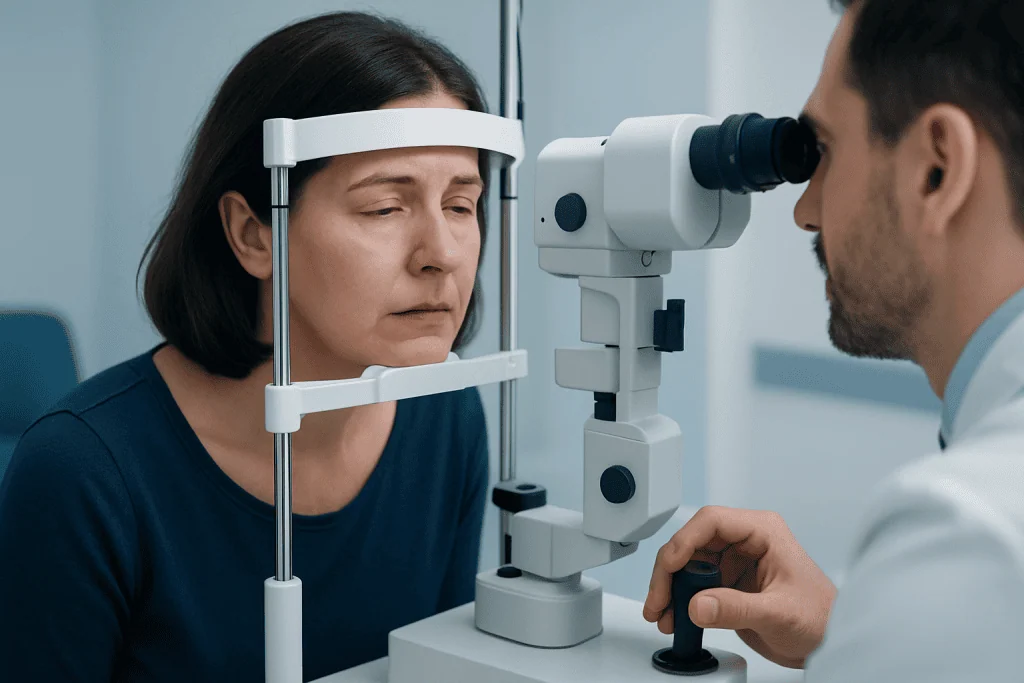
Testing commonly includes visual acuity measurements and refraction to check whether glasses or contact lens correction needs updating. The clinician may examine the eyelids, tear film, and cornea with a microscope called a slit lamp. Special dyes may be used to identify dry areas or small surface injuries that are not visible without examination.
Depending on the findings, the examination may include measuring eye pressure, checking the lens for cataract changes, and dilating the pupils to inspect the retina and optic nerve. People with diabetes may need regular dilated retinal examinations because diabetic eye disease can develop before noticeable visual symptoms occur. Blood pressure, blood glucose testing, or review by a primary care clinician may be advised when a systemic factor is suspected.
Treatment Options and Practical Self-Care
Treatment depends on the underlying cause. For mild dry-eye-related blur, preservative-free artificial tears may provide relief, particularly on waking. A clinician may also recommend lubricating ointment or gel at bedtime for selected patients, especially when overnight eye exposure is suspected. It is best to seek individual guidance before using medicated eye drops, as some redness-relief drops can worsen irritation with frequent use.
Simple habits can support eye comfort. Staying well hydrated, using a humidifier in a dry bedroom, avoiding direct airflow from fans or air conditioners, and taking regular screen breaks during the day may reduce dryness. Warm compresses and gentle eyelid hygiene can be useful when blocked oil glands or blepharitis are contributing, but they should be performed carefully and consistently as advised by an eye care professional.
Contact lens wearers should not sleep in lenses unless specifically instructed that their lenses are approved for overnight wear. Lenses should be removed if there is discomfort, redness, or persistent blur. Replacing lenses and storage cases as directed, washing hands before handling them, and never using tap water to rinse lenses can lower the risk of infection.
If testing identifies a refractive change, updated glasses or contact lenses may improve clarity. Other treatments can be considered for conditions such as significant dry eye, eyelid disease, corneal disorders, cataracts, or retinal disease. The appropriate approach is based on the diagnosis rather than on morning blurring alone.
When to Seek Medical Care
A routine eye appointment is appropriate when morning blurry vision happens repeatedly, lasts beyond a short period after waking, interferes with reading, driving, or work, or is becoming more frequent. An assessment is also sensible for people who have diabetes, a history of eye disease, previous eye surgery, regular contact lens use, or a strong family history of glaucoma or retinal disease.
Urgent medical care is needed for sudden or major loss of vision, new double vision, severe eye pain, marked redness, significant light sensitivity, nausea with eye pain, or an injury to the eye. A person should also seek urgent evaluation for flashing lights, a sudden shower of new floaters, or a dark curtain or shadow in the field of vision, as these may be signs of a retinal problem.
Blurred vision with facial drooping, trouble speaking, confusion, weakness, numbness, severe headache, or loss of balance requires emergency assessment, as these symptoms may indicate a neurological emergency. Prompt evaluation is the safest choice when visual symptoms are abrupt, unusual, or accompanied by other concerning changes.
Preparing for an Eye Appointment
Keeping a short record before an appointment can make the consultation more useful. Patients can note whether the blur affects one eye or both, the time it takes to clear, whether it occurs every morning, and whether blinking or eye drops help. Recording associated symptoms, such as dryness, discharge, pain, headache, halos, or light sensitivity, is also valuable.
Bringing current glasses, contact lens details, and a list of medicines and supplements can help the clinician identify contributing factors. If the patient has diabetes, recent blood glucose information and the date of the last retinal examination may be relevant. Patients should avoid driving themselves if their vision is currently unsafe or if their examination may involve pupil-dilating drops.
Acibadem International’s multidisciplinary specialists and JCI-accredited hospitals evaluate and treat eye symptoms, including persistent blurred vision, for international patients. A qualified eye care professional can explain the findings, rule out urgent causes, and develop an appropriate plan for ongoing eye health.
Frequently asked questions
Is blurry vision in the morning normal?
Brief blurring that clears soon after waking can be common, particularly with dry eyes or temporary tear-film changes. It should still be discussed with an eye care professional if it is recurrent, lasts a long time, worsens, or affects daily activities.
Why does my vision become clear after I blink?
Blinking spreads tears evenly across the cornea, creating a smoother optical surface for light to enter the eye. If vision improves after blinking, dry eye or tear-film instability may be contributing, although an examination is needed to confirm the cause.
Can sleeping with contact lenses cause blurry vision in the morning?
Yes. Sleeping in contact lenses can dry and irritate the eye surface and may reduce oxygen supply to the cornea, causing blur on waking. It also increases the risk of serious eye infection, so lenses should generally be removed before sleep unless an eye care professional has specifically advised otherwise.
Can diabetes cause blurry vision when waking up?
Changes in blood glucose can temporarily affect the eye’s lens and lead to fluctuating vision. Diabetes can also affect the retina over time, so people with diabetes should have regular eye examinations and report new or persistent changes in vision.
What eye drops can help morning blurry vision?
Preservative-free artificial tears are commonly used for mild dry-eye symptoms and may improve temporary blur related to dryness. A clinician can recommend the most suitable product and determine whether stronger treatment is needed for inflammation, eyelid disease, or another eye condition.
When is morning blurry vision an emergency?
Emergency care is important if blurred vision is sudden, severe, or accompanied by eye pain, redness, flashes, floaters, a curtain-like shadow, weakness, speech difficulty, or a severe headache. These symptoms may indicate an urgent eye or neurological condition that should be assessed without delay.
References
- American Academy of Ophthalmology
- National Eye Institute
- Mayo Clinic
- Centers for Disease Control and Prevention
- World Health Organization
This article is for general information only and is not a substitute for professional medical advice. Please consult a qualified doctor about your individual situation.
Explore treatments in Turkey — costs, top hospitals & a free quote
JCI-accredited · board-certified surgeons · reply within 24h
Add us as a Preferred Source to see more of our trusted health content across Google Search, AI Overviews and Discover.
Check your numbers in seconds
BMI, calories, due date, blood pressure and 30+ more clinical calculators — free, instant, doctor-reviewed ranges.

More from the Health Library



Related Specialists

Dr. Esra Sadık Ozmen
Pediatrics
Dr. Memnune Aladağ
Pediatrics
Prof. Dr. Hüsnü Görgen
Gynecology & Obstetrics
Dr. Göksel Aksu
Emergency Service