Rosacea and Ocular Rosacea: An Evidence-Based Guide for Patients

Rosacea commonly causes persistent central facial redness, flushing, visible small blood vessels, and sometimes acne-like bumps. Ocular rosacea may cause dry, gritty, red, burning, watery, or light-sensitive eyes and can occur with or without obvious facial symptoms.
Key Takeaways
- Rosacea commonly causes persistent central facial redness, flushing, visible small blood vessels, and sometimes acne-like bumps.
- Ocular rosacea may cause dry, gritty, red, burning, watery, or light-sensitive eyes and can occur with or without obvious facial symptoms.
- Triggers vary between individuals but may include sunlight, heat, alcohol, spicy foods, stress, and irritating skin products.
- Diagnosis is clinical and may involve both a dermatologist and an eye specialist when eye symptoms are present.
- Early assessment is important for eye pain, vision changes, marked light sensitivity, or symptoms that do not improve with gentle care.
Rosacea and ocular rosacea are long-term inflammatory conditions that can cause facial redness, visible blood vessels, acne-like bumps, and eye irritation. Although they cannot always be permanently cured, tailored skin care, trigger management, and medical treatment can usually control symptoms and help protect eye health.
Rosacea and Ocular Rosacea: An Overview
Rosacea and ocular rosacea are related chronic inflammatory conditions. Rosacea mainly affects the central face, including the cheeks, nose, chin, and forehead. Ocular rosacea affects the eyelids, eye surface, and surrounding tissues, leading to symptoms such as dryness, redness, burning, or a persistent gritty sensation.
Symptoms often come and go. Some people have brief episodes of flushing that gradually become more persistent, while others primarily develop small inflamed bumps or eye discomfort. Rosacea is not contagious, is not caused by poor hygiene, and is not simply acne, although some forms can resemble acne.
People of all skin tones can develop rosacea. In darker skin tones, redness may be less visible, while warmth, burning, swelling, bumps, or changes in skin texture may be more noticeable. A clinician can help identify the condition and distinguish it from acne, eczema, contact dermatitis, lupus, dry eye disease, or other skin and eye conditions.
How Skin and Eye Symptoms May Appear
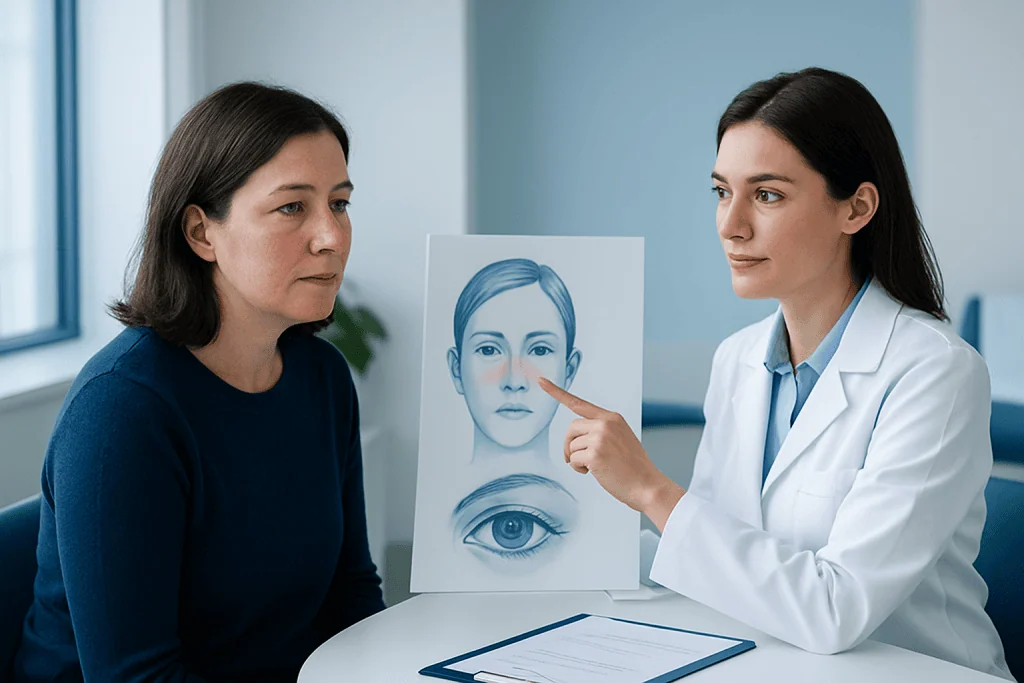
Facial rosacea does not look identical in every person. Common features include frequent flushing, lasting redness, visible fine blood vessels, stinging or burning, dry or rough-feeling skin, and acne-like papules or pustules. These bumps are not caused by blocked pores in the same way as typical acne, so acne products can sometimes worsen irritation.
Some people develop thickening of the skin, most often on the nose. This change usually develops gradually and is more commonly seen in men. It is treatable, and earlier assessment may help clinicians choose the most appropriate management approach.
Ocular rosacea can affect one or both eyes. Symptoms may include red or bloodshot eyes, dryness, tearing, burning, itching, blurred vision that improves with blinking, eyelid swelling, crusting at the lash line, recurrent styes, and sensitivity to light. The eyelid margins may become inflamed, a condition often linked with meibomian gland dysfunction, in which the oil glands of the eyelids do not work effectively.
Eye symptoms may precede visible facial changes, occur at the same time, or develop later. Because ongoing surface inflammation can occasionally affect the cornea, persistent eye symptoms deserve assessment by an eye care professional rather than self-treatment alone.
Why Rosacea Develops and What Can Trigger Flares
The exact cause of rosacea is not fully understood. Current evidence suggests that it results from a combination of altered immune activity, inflammation in the skin, changes in blood vessel reactivity, disruption of the skin barrier, and interactions with microorganisms normally found on the skin. Family history may also play a role.
Rosacea is not caused by a bacterial infection, and it cannot be passed from one person to another. Certain factors may aggravate symptoms in susceptible people, but they do not necessarily cause the condition. Identifying personal patterns can be more useful than following a long list of restrictions.
Commonly reported triggers include ultraviolet exposure, hot or cold weather, wind, hot drinks, alcohol, spicy foods, exercise, emotional stress, and overheating. Fragranced cosmetics, harsh cleansers, exfoliants, alcohol-based toners, and unprescribed topical steroid creams can also irritate sensitive facial skin.
For ocular rosacea, dry environments, screen use without regular blinking, contact lens discomfort, eye makeup residue, and eyelid inflammation may worsen symptoms. A simple symptom diary can help a person and their clinician identify whether particular foods, environments, products, or activities are associated with flares.
How Doctors Diagnose Rosacea and Ocular Rosacea
There is no single blood test that confirms rosacea. Diagnosis is usually based on a detailed history and examination of the skin, eyelids, and eyes. A dermatologist may ask about flushing, skin sensitivity, skincare products, possible triggers, and previous treatments. Photographs taken during flares can be helpful if symptoms are less obvious at the appointment.
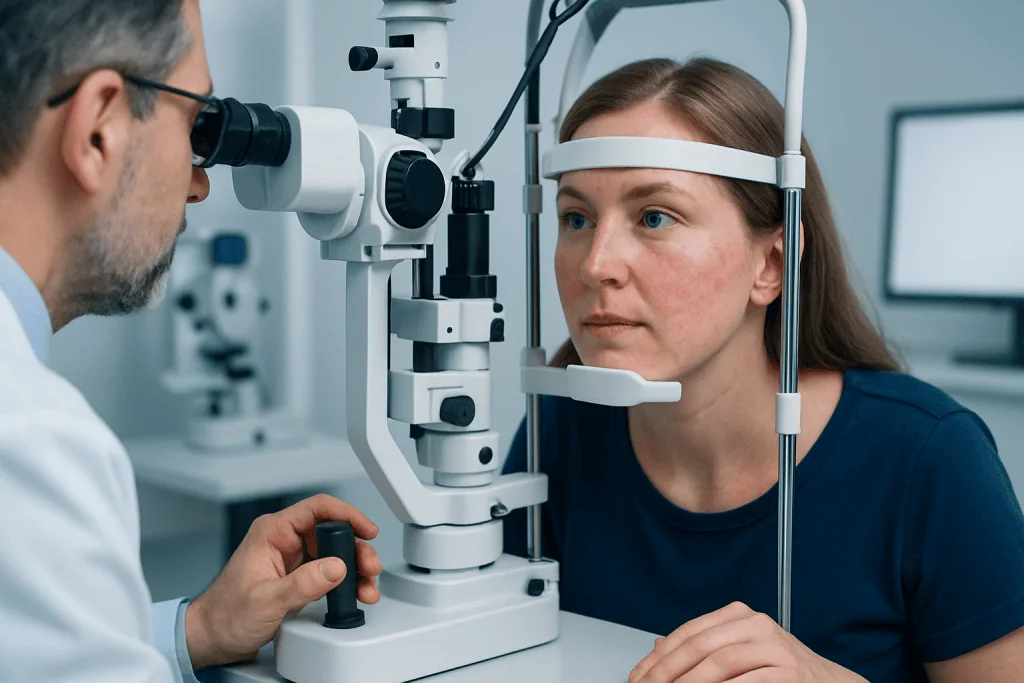
When eye symptoms are present, an ophthalmologist or optometrist may assess vision, the tear film, eyelid margins, oil glands, and the front surface of the eye. Special dyes and magnification can reveal dryness, inflammation, or small areas of corneal irritation that may not be visible without examination.
Clinicians may also consider other causes of facial redness or eye irritation. These include allergic or irritant contact dermatitis, seborrheic dermatitis, acne, perioral dermatitis, sun damage, autoimmune conditions, allergic conjunctivitis, infection, and non-rosacea dry eye disease. Correct diagnosis matters because treatments that help one condition may not be suitable for another.
It is useful to tell the clinician about all medicines, eye drops, supplements, skin treatments, and cosmetic procedures being used. In particular, topical steroid creams on the face should not be started or continued without medical guidance, as they can worsen rosacea-like eruptions in some people.
Treatment Options for Skin and Eye Symptoms
Treatment is individualized according to the symptoms present, their severity, and the impact on daily life. For facial redness and flushing, a clinician may recommend gentle skincare, sun protection, topical treatments, or medicines that temporarily reduce visible redness in selected patients. Persistent visible blood vessels may be managed with certain light- or laser-based procedures when appropriate.
For inflammatory bumps and pustules, prescription topical anti-inflammatory therapies are often used. Oral medications may be considered for more extensive or persistent inflammation. These medicines are selected for their anti-inflammatory effects in rosacea and should be taken exactly as prescribed, with follow-up to review benefit and possible side effects.
Ocular rosacea care may include regular warm compresses, gentle eyelid hygiene, lubricating eye drops recommended by an eye professional, and treatment for eyelid-margin inflammation. Depending on the findings, an ophthalmologist may prescribe anti-inflammatory or antimicrobial treatment. Not all over-the-counter redness-relief drops are appropriate, as some can cause rebound redness or further irritation.
More advanced thickening of nasal or facial skin can sometimes be treated with specialist procedures. Coordinated care is often helpful when both skin and eyes are affected. The goal is not only to reduce visible symptoms but also to improve comfort, protect the eye surface, and reduce the frequency of flares.
Daily Skin and Eye Care That May Help
A gentle, consistent routine can support medical treatment. Washing the face with lukewarm water and a mild, fragrance-free cleanser, then applying a simple moisturizer, may reduce dryness and stinging. Scrubs, cleansing brushes, peeling products, and strong astringents can damage the skin barrier and are best avoided unless a clinician specifically advises otherwise.
Daily broad-spectrum sunscreen is particularly important because ultraviolet exposure is a common trigger. A sunscreen formulated for sensitive skin may be easier to tolerate. Some people find mineral sunscreens containing zinc oxide or titanium dioxide less irritating, but the best choice is one that can be used regularly without discomfort.
For eye comfort, clean hands, regular breaks from screens, adequate blinking, and avoiding smoke or strong wind can be useful. Warm compresses may loosen eyelid debris and improve oil flow, but they should be comfortably warm rather than hot. Eyelids should be cleaned gently without rubbing the eyes.
- Introduce one new skincare or cosmetic product at a time.
- Choose fragrance-free, non-irritating products where possible.
- Keep a record of triggers and symptoms rather than avoiding foods or activities unnecessarily.
- Remove eye makeup carefully and replace eye cosmetics regularly.
- Ask an eye professional before using medicated drops or wearing contact lenses during an active eye flare.
When to Seek Medical Care
A person should arrange a medical appointment if facial redness, flushing, bumps, burning, or eye irritation is persistent, recurrent, or affecting confidence and comfort. Early evaluation can help establish a diagnosis, avoid ineffective or irritating treatments, and create a plan suited to the person’s symptoms and skin type.
Prompt eye assessment is recommended for persistent redness, pain, marked light sensitivity, reduced or changing vision, significant eyelid swelling, or the feeling that something is stuck in the eye. These symptoms can have causes other than ocular rosacea and should not be assumed to be minor dryness.
Urgent medical care is appropriate for sudden vision loss, severe eye pain, a serious eye injury, or a rapidly worsening red eye. These symptoms require timely evaluation because they may indicate an eye problem needing immediate treatment.
For international patients, Acibadem International’s multidisciplinary specialists and JCI-accredited hospitals can assess rosacea and ocular symptoms through dermatology and ophthalmology services when coordinated care is needed.
Frequently asked questions
Can rosacea and ocular rosacea be cured?
Rosacea is usually a long-term condition, so it may not have a permanent cure. However, many people achieve good control of skin and eye symptoms with appropriate treatment, gentle care, and trigger management. Symptoms may improve substantially even if occasional flares still occur.
Can ocular rosacea occur without facial rosacea?
Yes. Some people develop dry, irritated, red, or inflamed eyes before they notice facial flushing or other skin symptoms. Because these symptoms overlap with other eye conditions, an eye examination is important for an accurate diagnosis.
Is rosacea the same as acne?
No. Some forms of rosacea cause acne-like bumps, but rosacea has different underlying mechanisms and does not involve blackheads in the typical way acne does. Strong acne products may irritate rosacea-prone skin, so treatment should be selected with professional guidance.
Do spicy foods and alcohol always worsen rosacea?
No. These are common triggers for some people, but not everyone. Keeping a brief diary of symptoms and exposures can help identify individual triggers without unnecessarily restricting the diet.
What eye drops are safe for ocular rosacea?
The most suitable drops depend on the cause and severity of eye symptoms. Preservative-free lubricating drops may be recommended for some people, but medicated or redness-relief drops should be used only with advice from an eye professional. Eye drops do not replace assessment when pain, light sensitivity, or vision changes are present.
Can sunscreen make rosacea worse?
Some sunscreen formulations may sting sensitive skin, but sun protection is generally an important part of rosacea care. A fragrance-free sunscreen designed for sensitive skin may be better tolerated. Testing a small amount on an area of skin first can be helpful if a person has reacted to products previously.
References
- American Academy of Dermatology Association
- American Academy of Ophthalmology
- National Rosacea Society
- Mayo Clinic
- NHS
This article is for general information only and is not a substitute for professional medical advice. Please consult a qualified doctor about your individual situation.
Rosacea in Turkey — costs, top hospitals & a free quote
JCI-accredited · board-certified surgeons · reply within 24h
Add us as a Preferred Source to see more of our trusted health content across Google Search, AI Overviews and Discover.