Peak Flow Values Asthma: An Evidence-Based Guide for Patients

Peak flow monitoring measures peak expiratory flow, or the fastest speed of exhalation after a full breath in. A personal best peak flow, measured when asthma is well controlled, is the reference point for interpreting future readings.
Key Takeaways
- Peak flow monitoring measures peak expiratory flow, or the fastest speed of exhalation after a full breath in.
- A personal best peak flow, measured when asthma is well controlled, is the reference point for interpreting future readings.
- Many action plans use green, yellow, and red zones based on percentages of the personal best, but individual instructions may differ.
- A low peak flow can occur before obvious symptoms, while a normal reading does not always rule out an asthma flare-up.
- Correct technique and recording results at consistent times make peak flow monitoring more reliable.
Peak flow values in asthma show how quickly a person can blow air out of their lungs and can help detect narrowing of the airways. The most useful result is not a single “normal” number, but the person’s reading compared with their own established personal best and written asthma action plan.
Overview: What Peak Flow Values Mean in Asthma
Peak flow values in asthma measure peak expiratory flow (PEF): the fastest rate at which a person can force air out of the lungs after taking a full breath in. The measurement is obtained with a small handheld peak flow meter. Because asthma can narrow the airways in a variable way, peak flow readings may help a person and their clinician recognize changes in airflow over time.
A reading is usually expressed in litres per minute (L/min). Although meter charts may show predicted values based on age, height, and sex, these figures are only general reference estimates. For most people with asthma, the most meaningful comparison is with their personal best—the highest value consistently achieved when symptoms are well controlled and the person is following their usual treatment plan.
Peak flow monitoring is one part of asthma self-management, not a replacement for medical assessment. It can be particularly useful for people who have difficulty noticing early symptoms, have had severe flare-ups, have variable asthma, or are advised by their clinician to use a written asthma action plan. It is often more practical for children aged about 5 years and older and for adults who can perform the manoeuvre reliably.
Personal Best, Predicted Values, and Peak Flow Zones

A personal best peak flow is generally found during a period of good asthma control. A clinician may ask the person to measure peak flow twice daily for two to three weeks, as well as when symptoms occur. The highest reliable reading recorded during that period may be used as the personal best. It can change over time, so it should be reviewed after treatment changes, growth in children, or changes in overall health.
Many asthma action plans divide readings into zones calculated from the personal best. The exact instructions should always come from the treating clinician, but common ranges include:
- Green zone: 80% to 100% of personal best. This usually suggests asthma is under reasonable control.
- Yellow zone: 50% to 79% of personal best. This may indicate airway narrowing and the need to follow the action plan for worsening asthma.
- Red zone: below 50% of personal best. This can signal significant airway narrowing and requires urgent action according to the person’s plan, including prompt medical advice.
For example, a person with a personal best of 400 L/min would have a green-zone range of 320 to 400 L/min. A reading between 200 and 319 L/min would fall in the yellow zone, while a reading below 200 L/min would be in the red zone. These calculations are useful only when paired with symptoms and individualized clinical guidance.
How to Measure Peak Flow Correctly
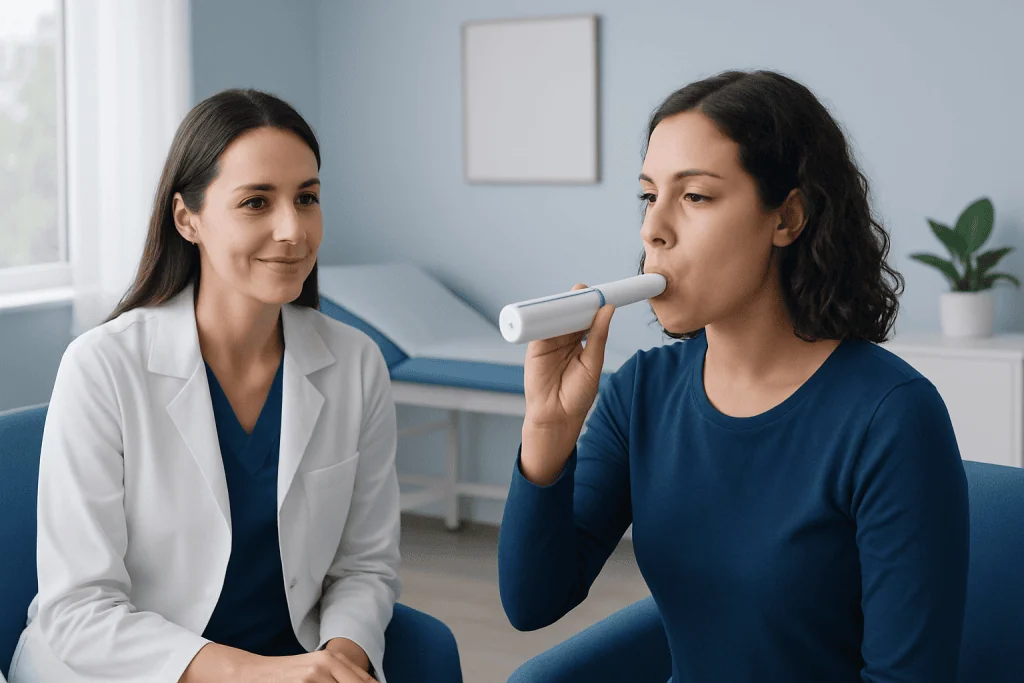
Good technique is essential because an incomplete breath in, a weak blow, poor mouth seal, coughing, or incorrect meter position can give an artificially low result. The same peak flow meter should ideally be used for ongoing monitoring, as readings can vary slightly between devices. The meter should be kept clean and used according to the manufacturer’s instructions.
To measure peak flow, the person should stand or sit upright, move the marker to the bottom of the scale, take as deep a breath as possible, seal their lips tightly around the mouthpiece, and blow out once as hard and as fast as they can. The blow should be short and forceful rather than slow and prolonged. The process is repeated three times, with the marker reset each time, and the highest of the three readings is recorded.
Measurements are often taken in the morning and evening, before using a reliever inhaler if this is safe and consistent with the person’s plan. Recording symptoms, possible triggers, medicines used, and the highest reading can reveal useful patterns. A clinician may recommend a paper diary, a phone app, or an action-plan chart.
How Peak Flow Monitoring Can Help Day to Day
Asthma symptoms can change across hours, days, and seasons. Peak flow monitoring may identify a decline in airflow before a person notices wheezing, cough, chest tightness, or shortness of breath. This can provide an opportunity to follow a clinician-approved action plan early rather than waiting for symptoms to become more disruptive.
Patterns may also help identify possible triggers. For instance, repeatedly lower morning values may suggest nighttime asthma symptoms. Lower readings during exercise, respiratory infections, pollen season, exposure to smoke, workplace irritants, or contact with pets may be worth discussing with a clinician. A peak flow diary cannot confirm a trigger by itself, but it can provide useful information for a clinical review.
Peak flow results should not be interpreted in isolation. Some people, especially those with severe asthma or reduced awareness of symptoms, may feel relatively well despite low readings. Others may feel breathless while their peak flow is near their usual value because of another health issue, anxiety, an upper-airway problem, or a different breathing pattern. Symptoms, reliever use, oxygen levels when measured clinically, and examination findings all matter.
Limits of Peak Flow Values and the Role of Testing
A peak flow meter is useful for monitoring but does not diagnose asthma on its own. Asthma diagnosis is based on a clinical history together with evidence of variable airflow limitation, often assessed through spirometry, bronchodilator testing, or other lung-function tests. A person with repeated cough, wheeze, chest tightness, or breathlessness should seek a medical assessment rather than relying only on home peak flow readings.
Peak flow is effort-dependent, meaning results depend partly on how forcefully the person blows. It measures the initial speed of exhalation rather than the full amount of air moved out of the lungs. Spirometry is more detailed and is commonly used in clinical settings to assess lung function. People who find it difficult to perform a reliable peak flow manoeuvre may need another monitoring approach.
People with asthma should ask their clinician whether routine peak flow monitoring is appropriate. It may be especially valuable after a recent exacerbation, during treatment adjustment, in occupational asthma assessment, or when symptoms and perceived control do not match. For others with stable, well-controlled asthma, symptom monitoring and regular review may be sufficient.
Using Results Within an Asthma Action Plan
A written asthma action plan gives personalized instructions for everyday treatment, worsening symptoms, and urgent situations. It may include the person’s personal best peak flow, zone boundaries, regular controller treatment, instructions for reliever medicine, and signs that indicate a need for urgent care. The plan should be reviewed regularly, particularly after an asthma attack or any change in treatment.
If a peak flow reading enters the yellow zone, the person should follow the specific steps set out in their action plan. This may include using prescribed quick-relief medicine and monitoring symptoms and readings more closely. If readings do not improve as expected, keep falling, or symptoms are concerning, medical advice is needed. People should not start, stop, or change long-term asthma medicines without guidance from a qualified healthcare professional.
Correct inhaler technique and regular use of prescribed controller treatment are important parts of preventing flare-ups. A clinician, nurse, or pharmacist can check technique, discuss trigger reduction, and help tailor an asthma plan. For people who need specialist assessment, Acibadem International’s multidisciplinary specialists and JCI-accredited hospitals diagnose and treat asthma for international patients.
When to Seek Medical Care
Prompt medical advice is appropriate when peak flow readings are repeatedly lower than usual, fall into the yellow zone despite following the person’s action plan, or are accompanied by increasing cough, wheeze, chest tightness, breathlessness, nighttime waking, or a growing need for reliever medication. A clinician can assess whether asthma treatment, inhaler technique, trigger management, or monitoring needs to be adjusted.
Emergency medical care is needed for severe breathing difficulty, trouble speaking in full sentences because of breathlessness, blue or grey lips or face, marked drowsiness or confusion, a rapidly worsening condition, or a peak flow reading in the red zone that does not respond as directed in the asthma action plan. A person should not drive themselves if severely short of breath; local emergency services should be contacted.
Even if a reading improves after reliever treatment, follow-up may be important after a significant flare-up. Asthma attacks can recur, and a review can help identify contributing factors and reduce future risk. Anyone uncertain about what their peak flow result means should contact their healthcare team for individualized advice.
Frequently asked questions
What is a normal peak flow value for asthma?
There is no single normal peak flow value that applies to every person with asthma. Values vary with height, age, sex, lung size, and technique. The most useful benchmark is usually the person’s own personal best peak flow measured when asthma is well controlled.
What peak flow number means an asthma attack?
A reading below 80% of a personal best can indicate worsening airflow, depending on the individual action plan. A value below 50% of personal best is commonly treated as a red-zone result and may indicate a serious flare-up. Symptoms and the response to prescribed reliever treatment are also important.
Why is my peak flow low but I do not feel short of breath?
Airway narrowing can sometimes develop before noticeable symptoms, particularly in people with reduced awareness of asthma symptoms. Technique errors can also produce a falsely low result. Recheck the measurement carefully and follow the written asthma action plan or contact a clinician if readings remain low.
Should peak flow be measured before or after an inhaler?
For regular monitoring, many clinicians recommend measuring at the same times each day and before reliever medicine when possible. This helps make readings more comparable over time. However, a person should never delay prescribed reliever treatment during concerning symptoms simply to obtain a measurement.
How often should someone with asthma check peak flow?
The recommended frequency depends on asthma severity, symptom pattern, and the person’s action plan. Some people measure twice daily during assessment or periods of instability, while others check only when symptoms worsen. A clinician can recommend a schedule that fits the individual situation.
Can a peak flow meter diagnose asthma?
No. A peak flow meter can show variable airflow and support asthma monitoring, but it cannot confirm asthma by itself. Diagnosis requires a clinical assessment and usually lung-function testing, such as spirometry, alongside the person’s symptom history.
References
- Global Initiative for Asthma
- National Heart, Lung, and Blood Institute
- American Lung Association
- Asthma + Lung UK
This article is for general information only and is not a substitute for professional medical advice. Please consult a qualified doctor about your individual situation.
Asthma in Turkey — costs, top hospitals & a free quote
JCI-accredited · board-certified surgeons · reply within 24h
Add us as a Preferred Source to see more of our trusted health content across Google Search, AI Overviews and Discover.

More from the Health Library

Dust Mite Allergy Remedies: A Complete Medical Overview

Placenta Accreta: An Evidence-Based Guide for Patients

Krill Oil — Explained by Medical Evidence, Not Myths

Contact Lenses: An Evidence-Based Guide for Patients

Bananas and Amlodipine: An Evidence-Based Guide for Patients