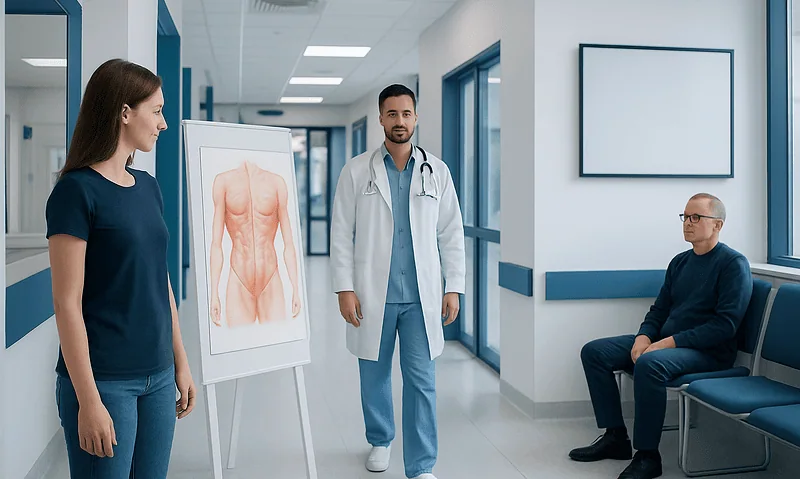
Direct Inguinal Hernia: An Evidence-Based Guide for Patients
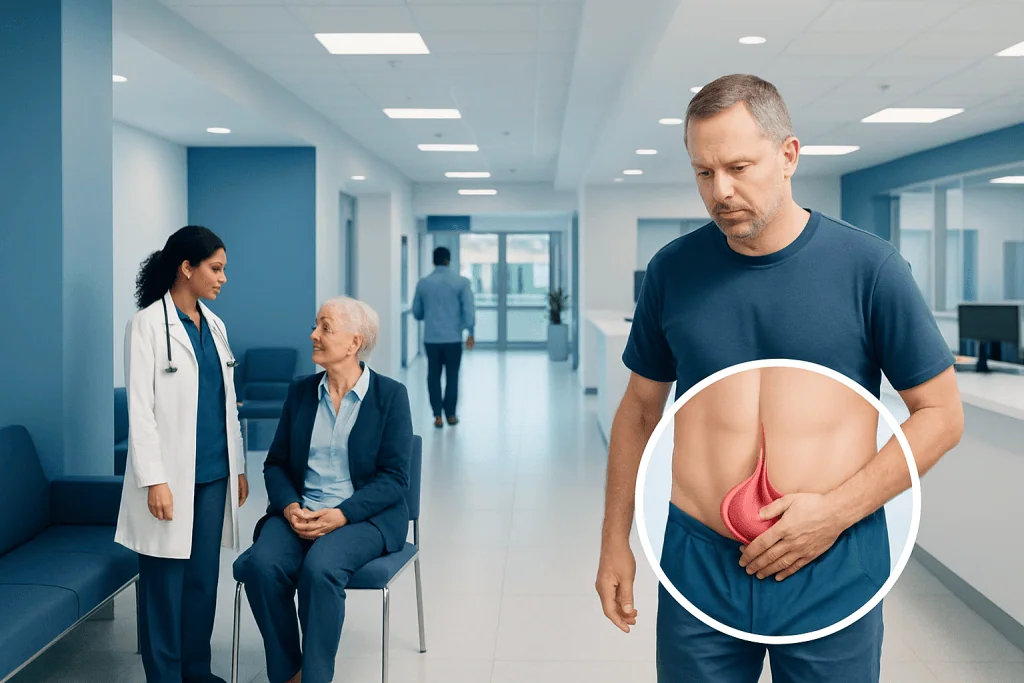
A direct inguinal hernia pushes through a weak area of the abdominal wall in the groin. It is more common in men and tends to occur later in adulthood as abdominal tissues weaken.
Key Takeaways
- A direct inguinal hernia pushes through a weak area of the abdominal wall in the groin.
- It is more common in men and tends to occur later in adulthood as abdominal tissues weaken.
- A visible or felt groin bulge, pressure and discomfort with activity are common symptoms.
- Physical examination is often enough for diagnosis, although ultrasound or other imaging may sometimes help.
- Surgery is the only treatment that repairs a hernia; watchful waiting may be appropriate for selected people with few symptoms.
- Sudden severe pain, vomiting or a bulge that cannot be pushed back requires urgent medical assessment.
A direct inguinal hernia occurs when tissue from inside the abdomen pushes through a weakened area of the lower abdominal wall, creating a bulge in the groin. It often develops gradually and may cause little discomfort at first, but medical assessment is important because hernias do not heal on their own.
What Is a Direct Inguinal Hernia?
A direct inguinal hernia is a type of groin hernia. It develops when fatty tissue or part of the intestine presses outward through a weak point in the lower abdominal wall near the inguinal canal. The inguinal canal is a natural passage in the groin that contains blood vessels and other structures.
The term direct describes the route the hernia takes. It pushes through an area called Hesselbach’s triangle, which lies on the inner, or medial, side of the inferior epigastric blood vessels. This differs from an indirect inguinal hernia, which follows the inguinal canal and is often related to an opening that was present from birth.
Direct inguinal hernias are usually acquired rather than congenital. In other words, they generally develop over time as the supporting connective tissues and muscles of the abdominal wall become less strong. They may be small and painless initially, but some gradually enlarge or become more noticeable during standing, coughing, lifting or straining.
How It May Feel: Symptoms and Everyday Clues
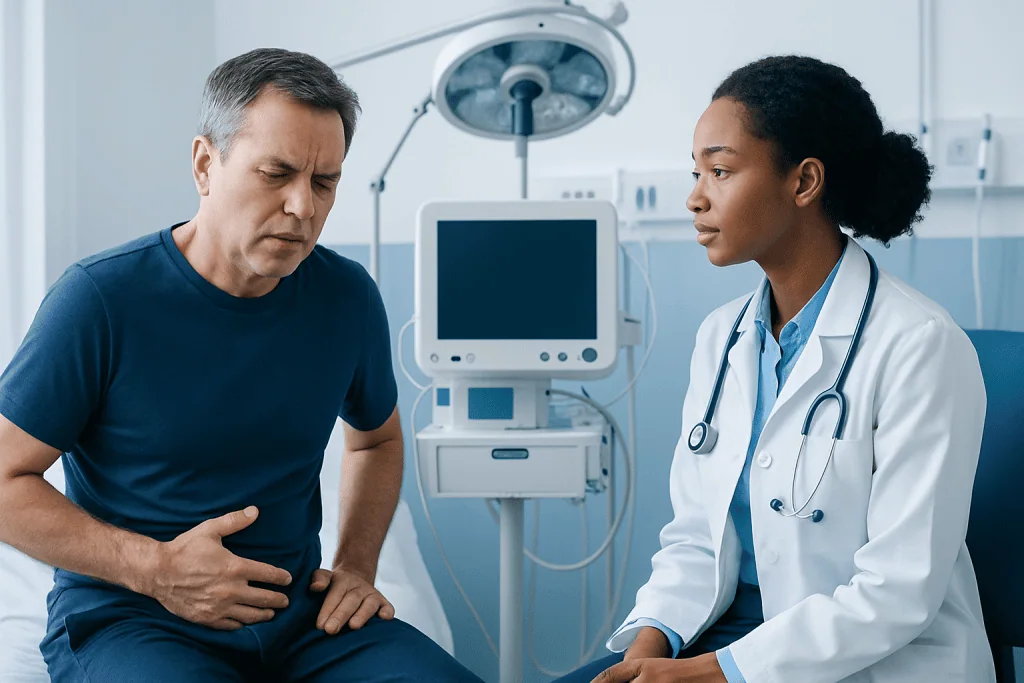
The most typical sign is a lump or swelling in one side of the groin. It may be easier to see when a person is standing, coughing, exercising or using the toilet, and it may reduce or disappear when lying down. Some people notice a dragging, burning, aching or pressure-like feeling rather than a distinct bulge.
Symptoms vary considerably. A direct inguinal hernia may cause mild discomfort during walking, lifting, prolonged standing or physical work. Others may have no pain and discover the hernia during a routine examination. The size of a bulge does not always predict how much discomfort a person will experience.
In men, swelling can sometimes extend toward the scrotum, although this is more commonly associated with indirect hernias. Symptoms such as fever, unexplained weight loss, blood in the stool or a persistent lump that does not change with position are not typical features of a straightforward hernia and should be assessed by a clinician.
- A bulge in the lower abdomen or groin
- Heaviness, pressure or discomfort in the groin
- Pain that worsens with coughing, lifting or straining
- A bulge that becomes less noticeable while lying down
- Reduced comfort during work, exercise or daily activities
Why Direct Hernias Develop and Who Is at Risk
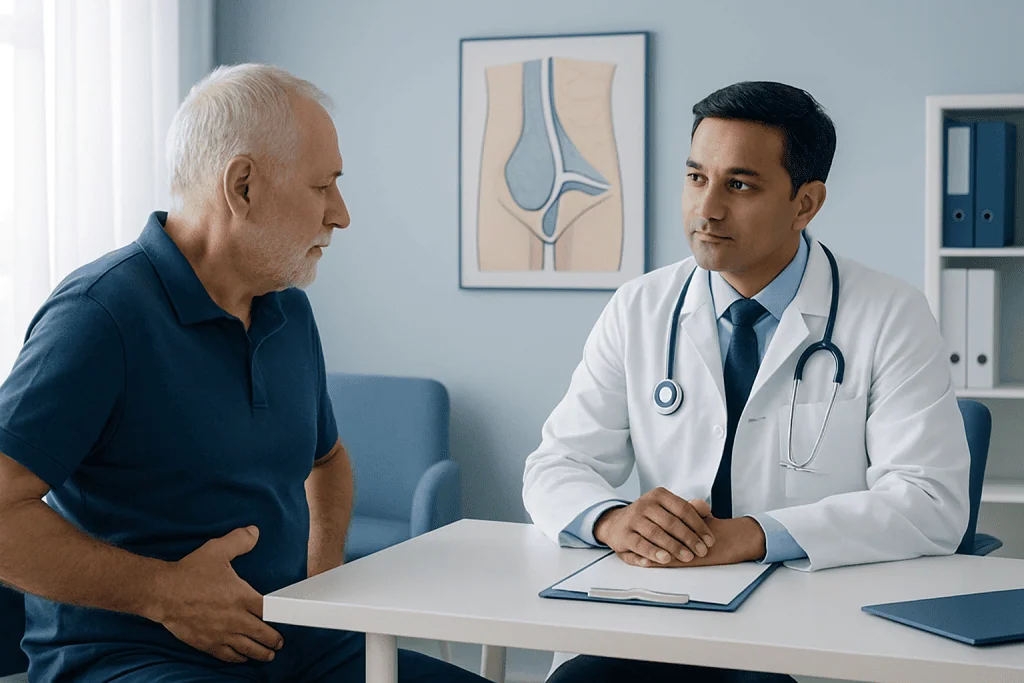
A direct inguinal hernia usually reflects a combination of abdominal-wall weakness and repeated pressure inside the abdomen. Aging is an important factor because connective tissue can lose strength over time. For this reason, direct hernias are more often diagnosed in middle-aged and older adults, particularly men.
Situations that repeatedly increase abdominal pressure may contribute to a hernia becoming apparent. These include chronic coughing, long-term constipation with straining, difficulty passing urine due to prostate enlargement, frequent heavy lifting and persistent vomiting. Pregnancy, excess body weight and fluid accumulation in the abdomen may also place additional strain on the abdominal wall.
Previous abdominal surgery, a family tendency toward hernias, smoking and health conditions that affect collagen or connective tissue may increase risk in some people. However, a hernia is not necessarily caused by one activity or one episode of lifting. Many develop gradually because of several factors acting over time.
It is useful to distinguish a direct inguinal hernia from other groin conditions, such as enlarged lymph nodes, muscle or tendon injuries, cysts and femoral hernias. A careful clinical evaluation helps identify the cause of a groin lump and guides the appropriate next steps.
How Doctors Diagnose a Direct Inguinal Hernia
Diagnosis commonly begins with a medical history and physical examination. A clinician may examine the groin while the patient is standing and ask them to cough or gently strain. This can make a hernia more noticeable. The clinician may also assess whether the bulge can be gently moved back into the abdomen, known as a reducible hernia.
For many people, an experienced clinician can diagnose an inguinal hernia through examination alone. Imaging is not always needed, but an ultrasound may be useful when the swelling is difficult to feel, symptoms are unclear, or another condition needs to be considered. Ultrasound does not use radiation and is often the first imaging test used for groin concerns.
Magnetic resonance imaging or computed tomography may occasionally be recommended when pain persists but examination and ultrasound are inconclusive, or when a more detailed view of the abdominal wall is necessary. Imaging can also help identify less common hernias or alternative sources of groin pain.
Doctors also look for signs of obstruction or compromised blood supply to herniated tissue. These complications are uncommon with many direct hernias, but they are important to recognize promptly because they require urgent treatment.
Treatment Options: Monitoring and Hernia Repair
A hernia does not close or repair itself. The only definitive treatment is surgery, which returns the protruding tissue to the abdomen and reinforces the weakened area. Whether surgery is recommended soon or can be planned electively depends on symptoms, the examination findings, the person’s general health and the type of hernia.
For some men with a small, reducible inguinal hernia that causes minimal or no discomfort, watchful waiting may be a reasonable option. This means monitoring symptoms and arranging follow-up rather than having immediate surgery. Many people who choose watchful waiting eventually decide on repair because symptoms increase or activities become more limited.
Inguinal hernia repair may be performed using an open incision in the groin or a minimally invasive laparoscopic approach through small abdominal incisions. In suitable cases, robotic-assisted techniques may also be used. Mesh is commonly used to strengthen the repair and lower the chance of recurrence, although the most suitable technique is individualized.
Surgeons consider factors such as whether the hernia is on one or both sides, whether it has returned after prior repair, prior abdominal operations, anesthesia considerations and personal preferences. A surgical consultation allows the benefits, limitations and possible risks of each approach to be discussed clearly. Acibadem International’s multidisciplinary specialists and JCI-accredited hospitals assess and treat hernia conditions for international patients.
Recovery, Prevention and Self-Care
After hernia repair, recovery plans differ according to the surgical method, the size and complexity of the hernia, and the individual’s health. Walking and gentle movement are often encouraged early to support circulation and confidence with daily activities. A surgeon provides tailored guidance about wound care, driving, returning to work and resuming exercise or heavy lifting.
Temporary soreness, bruising, swelling and fatigue can occur after surgery. These usually improve as healing progresses. Persistent or worsening pain, increasing redness, discharge from the wound, fever, difficulty urinating or significant swelling should be reported to the surgical team.
Although prevention is not always possible, measures that reduce strain on the abdominal wall may be helpful. These include treating a persistent cough, avoiding constipation through adequate fluids and dietary fiber, using safe lifting techniques, maintaining a weight that supports overall health and seeking care for ongoing urinary straining.
Before a planned repair, people should tell their healthcare team about medicines, allergies, smoking, previous operations and medical conditions. Stopping smoking where possible can support wound healing and reduce respiratory coughing. A clinician can provide practical support for smoking cessation and preoperative preparation.
When to Seek Medical Care
Anyone who notices a new groin lump, recurring groin discomfort or a bulge that appears during coughing or exertion should arrange a non-urgent medical appointment. Early assessment can confirm whether the problem is a hernia and help the person understand safe activity levels and treatment options.
Urgent medical care is needed if a hernia becomes suddenly painful, firm, tender or cannot be gently reduced when lying down. Other warning signs include nausea, vomiting, abdominal swelling, inability to pass stool or gas, fever, or skin over the bulge becoming red or dark. These symptoms may indicate that tissue is trapped in the hernia or that the bowel is obstructed.
People should avoid trying to force a painful or firm bulge back into place. They should seek emergency evaluation instead. Prompt treatment can protect bowel health and reduce the risk of serious complications.
Frequently asked questions
Is a direct inguinal hernia dangerous?
Many direct inguinal hernias are not immediately dangerous, especially when they are small, reducible and cause few symptoms. However, hernias can enlarge or become more uncomfortable over time, and a trapped hernia can require urgent treatment. A medical assessment is the safest way to determine the appropriate plan.
Can a direct inguinal hernia heal without surgery?
No. The weakness in the abdominal wall does not repair itself, and the hernia does not permanently disappear without surgery. Some people with minimal symptoms can safely monitor the condition with medical guidance, but this is not the same as the hernia healing.
What is the difference between direct and indirect inguinal hernias?
A direct hernia pushes through a weakened area of the abdominal wall in the groin and is usually acquired over time. An indirect hernia travels through the inguinal canal and may relate to an opening that did not fully close before birth. Both can produce a groin bulge and may be repaired using similar surgical principles.
Can exercise make a direct inguinal hernia worse?
Activities that increase abdominal pressure, including heavy lifting and intense straining, can make a bulge or discomfort more noticeable. Gentle activity may still be appropriate for many people, but the safest level of exercise depends on symptoms and medical advice. A clinician can recommend modifications while treatment decisions are being made.
How long does recovery after inguinal hernia surgery take?
Recovery varies based on the repair technique, the person's overall health and the nature of their work or activities. Many people gradually return to light daily tasks within days, while more strenuous exercise and lifting may need to wait longer. The operating surgeon's instructions should guide the timeline.
Should a groin hernia always be operated on immediately?
Not always. Elective surgery is commonly recommended when symptoms affect comfort or daily life, when the hernia is enlarging, or when clinical factors make repair advisable. For selected men with minimally symptomatic inguinal hernias, watchful waiting may be discussed; urgent surgery is needed if signs suggest trapping or bowel obstruction.
This article is for general information only and is not a substitute for professional medical advice. Please consult a qualified doctor about your individual situation.
Explore treatments in Turkey — costs, top hospitals & a free quote
JCI-accredited · board-certified surgeons · reply within 24h
Add us as a Preferred Source to see more of our trusted health content across Google Search, AI Overviews and Discover.

More from the Health Library

Sanctura: What Patients Need to Know

Gross Motor Skills — Explained by Medical Evidence, Not Myths

Glucagon: An Evidence-Based Guide for Patients

Osmotic Laxative: An Evidence-Based Guide for Patients

Asplenia: A Complete Medical Overview