Spotting After Ovulation: A Complete Clinical Guide for Patients

Light spotting after ovulation may occur with normal hormonal shifts, but it is not possible to confirm ovulation as the cause from bleeding alone. Pregnancy-related bleeding can occur around the time a period is expected, so a pregnancy test is important when pregnancy is possible.
Key Takeaways
- Light spotting after ovulation may occur with normal hormonal shifts, but it is not possible to confirm ovulation as the cause from bleeding alone.
- Pregnancy-related bleeding can occur around the time a period is expected, so a pregnancy test is important when pregnancy is possible.
- Bleeding after sex, persistent spotting, pelvic pain, unusual discharge, or fever should be assessed by a qualified clinician.
- Heavy bleeding, severe one-sided pelvic pain, dizziness, fainting, or a positive pregnancy test with pain or bleeding need urgent medical attention.
- Tracking bleeding, cycle dates, symptoms, medications, and pregnancy tests can make a medical visit more informative.
Spotting after ovulation means light vaginal bleeding that occurs after the egg is released and before the next period. It is often related to normal hormonal changes, but timing, pregnancy possibility, associated symptoms, and recurrence help determine whether medical assessment is needed.
Overview: what spotting after ovulation can mean
Spotting after ovulation is light vaginal bleeding that appears after the middle of a menstrual cycle and before the next period. It may look pink, red, rust-colored, or brown, and is usually much lighter than a menstrual flow. A brief episode can be harmless, particularly when there are no other symptoms, but it should not automatically be assumed to be “ovulation bleeding.”
Ovulation generally occurs about 12 to 16 days before the next period, rather than always on day 14. Because cycle timing can vary, bleeding that seems to occur after ovulation may instead be related to an approaching period, early pregnancy, hormonal contraception, or another gynecologic cause. Calendar tracking or an ovulation test can estimate timing, but neither can explain the cause of bleeding with certainty.
For many people, a single small amount of spotting resolves without treatment. Repeated bleeding between periods, bleeding after intercourse, or spotting accompanied by pain, discharge, fever, or pregnancy concerns deserves a clinical review. The aim of assessment is to identify common, treatable causes while also ruling out conditions that need prompt care.
How to recognize spotting and place it in the cycle
Spotting is generally defined as a small amount of blood noticed on toilet paper or underwear that does not require regular menstrual protection. Brown spotting commonly reflects older blood that has taken longer to leave the uterus or vagina. The color alone does not establish whether the cause is normal or concerning.
A useful distinction is between light breakthrough bleeding and a true period. A period usually becomes progressively heavier, lasts several days, and may involve the usual menstrual symptoms. In contrast, spotting may last hours to a few days and remain light. However, some early pregnancy losses, hormonal changes, and other conditions can initially resemble either pattern.
Cycle records can provide valuable context. It may help to note the first day of each period, days of spotting, amount and color of blood, pelvic symptoms, sexual activity, contraception, missed pills, recent emergency contraception, and results of any pregnancy tests. A clinician can use this pattern to decide whether examination, laboratory testing, or imaging is appropriate.
- Light, short-lived spotting without pain is often less urgent.
- Bleeding that recurs over several cycles should be discussed with a clinician.
- Any bleeding after menopause requires medical evaluation, even if it is very light.
Common causes after the fertile window

Hormonal fluctuation is a frequent explanation for spotting after ovulation. After an egg is released, progesterone normally rises to support the uterine lining. Small changes in estrogen or progesterone levels can sometimes lead to minor breakthrough bleeding. Stress, significant changes in weight or exercise, illness, and irregular ovulation may affect cycle hormones as well.
Hormonal contraception can also cause spotting, especially during the first few months after starting, stopping, changing, or inconsistently using a method. Combined pills, progestin-only pills, implants, injections, hormonal intrauterine devices, and emergency contraception can all alter bleeding patterns. A person should not stop prescribed contraception solely because of spotting without speaking with the clinician who prescribed it.
Pregnancy is another important consideration. Some people have light bleeding in very early pregnancy, but bleeding should never be used to diagnose “implantation bleeding,” as this term cannot reliably distinguish a normal pregnancy from other causes. If pregnancy is possible, taking a home pregnancy test on or after the day a period is due is often appropriate; testing may need to be repeated if the first result is negative and the period does not arrive.
Other causes include irritation or small tears after sexual intercourse, vaginal dryness, cervical ectropion, polyps, fibroids, endometriosis, and thyroid or other hormonal conditions. Less commonly, changes in the cervix or uterus need evaluation. Regular cervical screening remains important because it can detect cervical cell changes before symptoms develop.
Infection, pregnancy, and symptoms that change the picture
Vaginal or cervical infections can cause bleeding between periods, particularly after sex. Sexually transmitted infections such as chlamydia or gonorrhea may cause no symptoms, although some people develop unusual vaginal discharge, pelvic discomfort, pain during sex, burning with urination, or bleeding. Testing is straightforward, and prompt treatment can reduce complications and transmission.
When there is a possibility of pregnancy, light bleeding may occur for several reasons, including changes in the cervix, a pregnancy in the uterus, miscarriage, or ectopic pregnancy. An ectopic pregnancy develops outside the uterus, most often in a fallopian tube, and requires urgent medical attention. Its symptoms may include one-sided lower abdominal pain, worsening pelvic pain, shoulder-tip pain, weakness, dizziness, or fainting.
Pelvic inflammatory disease, which can result from untreated infection, may cause lower abdominal pain, fever, abnormal discharge, pain during sex, and irregular bleeding. These symptoms should not be managed with home remedies alone. A clinician can determine whether testing and antibiotics are needed.
Although most spotting is not caused by cancer, unexplained or persistent abnormal uterine bleeding should be assessed. This is especially important for people over age 45, those with risk factors for endometrial conditions, people with a history of abnormal cervical screening, and anyone who has bleeding after menopause.
How clinicians evaluate ongoing spotting
A clinician will usually begin by asking about menstrual history, pregnancy possibility, contraception, medications, recent changes in health, and associated symptoms. They may ask whether bleeding happens after sex, whether periods have become heavier or more irregular, and whether there are signs of infection. This information helps guide care and avoids unnecessary tests.
A urine or blood pregnancy test is often the first step for people of reproductive age with unexpected bleeding. Depending on the situation, clinicians may recommend testing for sexually transmitted infections, blood tests for anemia or thyroid function, or other hormonal testing. Testing is tailored to the individual; a single episode of mild spotting does not always require extensive investigations.
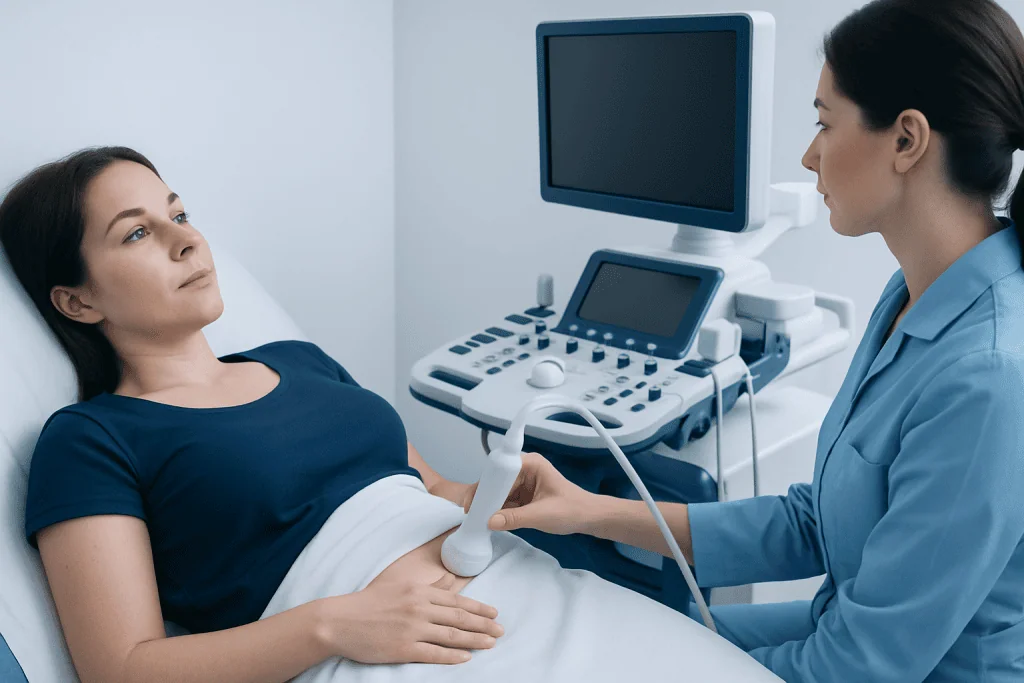
A pelvic examination may be advised to assess the vagina and cervix and to look for irritation, infection, polyps, or visible sources of bleeding. Pelvic ultrasound can assess the uterus, ovaries, fibroids, polyps, and the uterine lining. If symptoms persist or risk factors are present, further procedures such as hysteroscopy or endometrial sampling may be considered.
Accurate diagnosis is based on the full clinical picture rather than on bleeding color or cycle timing alone. Bringing a cycle log and a list of medicines, supplements, and contraceptives can support a focused discussion and an individualized plan.
Treatment and practical self-care
Treatment for spotting after ovulation depends on the cause. No treatment may be necessary when bleeding is brief, mild, and linked to a temporary hormonal change. If a contraceptive method is contributing, a clinician may recommend waiting for the body to adjust, checking adherence, or discussing a different option. The safest choice depends on the person’s health history and contraceptive needs.
Infections are treated with the appropriate medication after assessment and testing. Structural causes, such as polyps or fibroids, may be monitored or treated based on symptoms, size, fertility plans, anemia, and individual preferences. Management of thyroid disorders, ovulatory conditions, or endometriosis can also help improve irregular bleeding when these conditions are involved.
Until the cause is clear, it can be helpful to use pads or panty liners to monitor the amount of bleeding. Avoid vaginal douching, as it can disrupt normal vaginal bacteria and irritate tissue. Condoms can reduce the risk of sexually transmitted infections, and using lubrication during sex may reduce friction-related bleeding for people experiencing vaginal dryness.
There is no reliable home treatment that can confirm or safely treat the cause of abnormal bleeding. Herbal products and supplements can interact with medications or affect bleeding, so they should be discussed with a clinician. Acibadem International’s multidisciplinary specialists at JCI-accredited hospitals can assess abnormal bleeding and coordinate gynecologic care for international patients when needed.
When to seek medical care
Arrange a non-urgent medical appointment if spotting continues beyond a few days, returns in more than one cycle, occurs after sex, or is different from the usual pattern. Assessment is also appropriate for unusual discharge, pelvic discomfort, painful sex, missed periods, new bleeding while using contraception, or concern about a sexually transmitted infection.
Seek urgent medical care if there is heavy bleeding that soaks through pads rapidly, severe or increasing abdominal or pelvic pain, shoulder-tip pain, fever, fainting, marked dizziness, shortness of breath, or weakness. These symptoms can indicate substantial blood loss, infection, or a pregnancy-related emergency and should be evaluated promptly.
A positive pregnancy test together with vaginal bleeding or abdominal pain needs same-day medical advice, even when bleeding is light. Emergency evaluation is particularly important for one-sided pain, dizziness, collapse, or shoulder-tip pain because these may be warning signs of ectopic pregnancy.
People who are postmenopausal should contact a clinician about any vaginal bleeding or brown discharge. In this setting, even one episode requires assessment to identify the cause and ensure appropriate care.
Frequently asked questions
Is spotting after ovulation normal?
A small amount of short-lived spotting can occur because of hormonal changes and may not indicate a serious problem. However, bleeding alone cannot confirm that ovulation is the cause. Recurrent spotting or spotting with pain, discharge, or pregnancy possibility should be discussed with a clinician.
Can spotting after ovulation mean pregnancy?
It can occur in early pregnancy, but it is not a reliable sign of pregnancy or implantation. A home pregnancy test is the best initial way to check when pregnancy is possible, ideally on or after the expected period date. Any positive test with bleeding or pelvic pain should be assessed promptly.
How many days can spotting after ovulation last?
Brief spotting may last a few hours to a few days. If it continues, becomes heavier, returns repeatedly, or differs from a person's usual pattern, medical advice is recommended. Duration alone does not identify the cause.
Can birth control cause spotting after ovulation?
Yes. Hormonal contraception can cause breakthrough bleeding, particularly after starting a method, missing doses, changing formulations, or using emergency contraception. A clinician can review whether the method is being used correctly and whether an alternative may be suitable.
Why do I have spotting after ovulation and cramps?
Mild cramping can accompany normal hormonal changes, but cramps with spotting can also occur with infection, endometriosis, ovarian cysts, an approaching period, or pregnancy-related conditions. Severe, one-sided, or worsening pain requires urgent assessment, especially if pregnancy is possible.
Should I take a pregnancy test if I have spotting after ovulation?
A pregnancy test is sensible if there has been vaginal sex that could lead to pregnancy, even when contraception was used. Testing is most accurate from the expected period date onward, although repeat testing may be needed if the period remains absent. A healthcare professional can advise on timing if cycles are irregular.
References
- American College of Obstetricians and Gynecologists
- National Health Service
- Mayo Clinic
- Centers for Disease Control and Prevention
- World Health Organization
This article is for general information only and is not a substitute for professional medical advice. Please consult a qualified doctor about your individual situation.
IVF & fertility treatment in Turkey — success rates and costs
JCI-accredited · board-certified surgeons · reply within 24h
Add us as a Preferred Source to see more of our trusted health content across Google Search, AI Overviews and Discover.
Check your numbers in seconds
BMI, calories, due date, blood pressure and 30+ more clinical calculators — free, instant, doctor-reviewed ranges.