

How to Stretch Quadriceps Muscles? Causes, Explanations, and Next Steps

Quadriceps stretches should create mild tension in the front of the thigh, not sharp pain, pinching, or joint discomfort. The standing, side-lying, and half-kneeling quad stretches can be adapted to different balance and mobility needs.
Key Takeaways
- Quadriceps stretches should create mild tension in the front of the thigh, not sharp pain, pinching, or joint discomfort.
- The standing, side-lying, and half-kneeling quad stretches can be adapted to different balance and mobility needs.
- Tightness may follow prolonged sitting, cycling, running, strength training, or a sudden change in activity level.
- A warm-up, gradual training progression, and strength work for the hips and legs can support comfortable movement.
- Sudden severe thigh pain, swelling, bruising, inability to bear weight, or knee instability needs prompt medical assessment.
To stretch the quadriceps muscles, gently bend one knee, bring the heel toward the buttock, hold the ankle or use a strap, and keep the knees close together without forcing the movement. Mild quadriceps tightness is common after sitting, exercise, or increased activity, but persistent pain, weakness, bruising, or swelling should be assessed by a clinician.
How to Stretch Quadriceps Muscles Safely
To stretch the quadriceps muscles, begin with a gentle movement rather than pulling hard on the foot. In a standing position, hold a stable surface if needed, bend one knee, and bring the heel toward the buttock. Hold the ankle, pant leg, or a strap around the foot, while keeping the knees near each other and the standing leg softly bent. The person should feel a mild stretch along the front of the thigh.
It is usually helpful to keep the pelvis in a neutral position by lightly tightening the abdominal and buttock muscles. Avoid arching the lower back, twisting the knee outward, or forcing the heel all the way to the buttock. Breathe normally and hold a comfortable static stretch for about 20 to 30 seconds, then repeat on the other side. Two to four gentle repetitions per side can be reasonable for many people.
Quadriceps tightness is often harmless and temporary. It commonly occurs after long periods of sitting, a new walking or exercise routine, cycling, running, climbing stairs, or leg-strengthening activity. Stretching can improve the feeling of stiffness, but it should not be used to push through an injury or significant pain.
What the Quadriceps Muscles Do
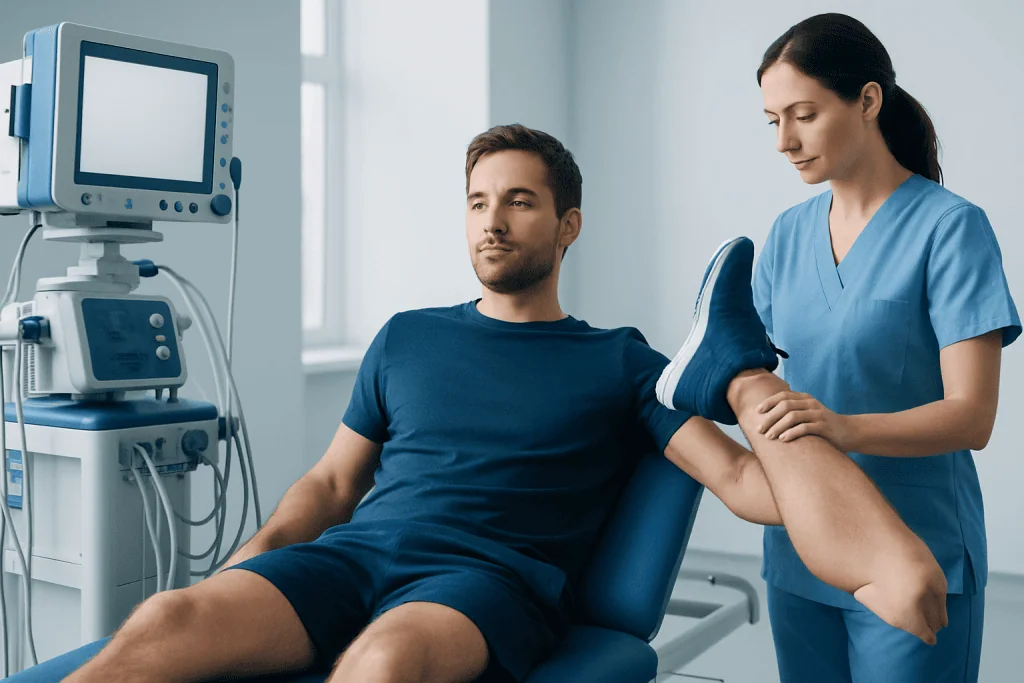
The quadriceps are a group of four muscles at the front of the thigh. They work together to straighten the knee and help control knee bending during walking, stair use, sitting down, squatting, and landing. One of these muscles, the rectus femoris, also crosses the hip joint and helps lift the thigh forward.
Because the quadriceps act across the knee, and one portion also acts across the hip, their flexibility can affect how the hips, knees, and lower back move during everyday activities. A person may notice a front-thigh pulling sensation when rising from a chair, kneeling, walking downhill, or performing lunges. Tightness alone does not necessarily mean there is muscle damage.
It is important to distinguish a normal stretching sensation from pain. A useful stretch usually feels like a gradual, manageable pull in the muscle. Sharp pain, burning, cramping, tingling, pain inside the knee joint, or pain that increases after the stretch may indicate that the technique needs adjustment or that a healthcare professional should be consulted.
Three Quadriceps Stretches to Try
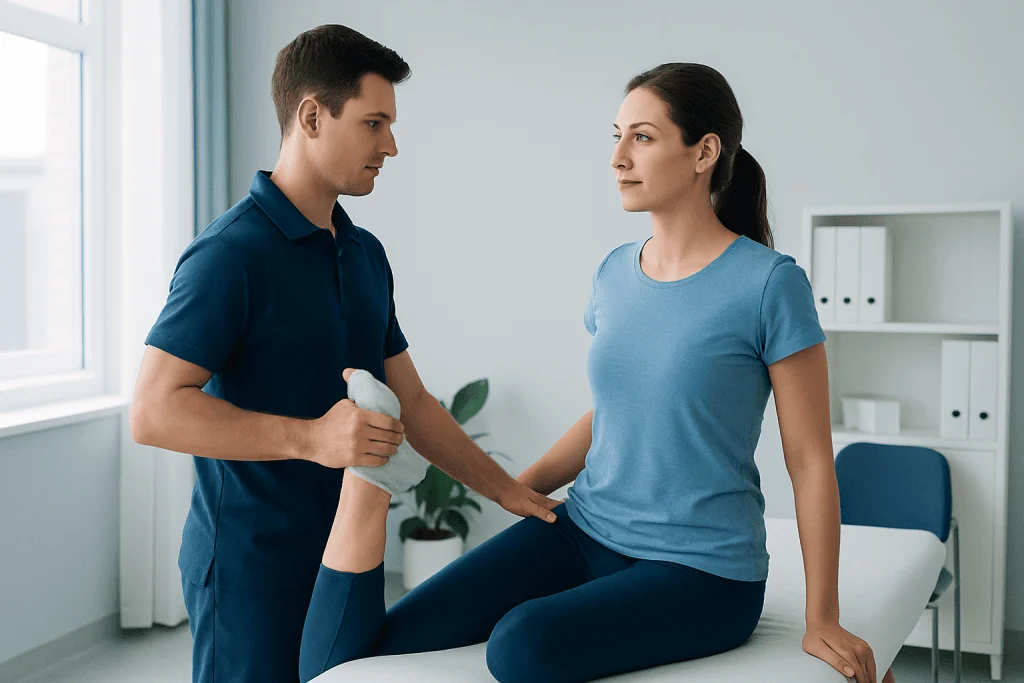
Standing quadriceps stretch: Stand near a wall, chair, or countertop for support. Shift weight onto one leg, bend the opposite knee, and bring the heel toward the buttock. Hold the ankle or use a towel or yoga strap if the foot is difficult to reach. Keep the thighs parallel as much as comfortably possible, gently bring the hip forward, and avoid pulling the knee far behind the body.
Side-lying quadriceps stretch: Lie on one side with the lower leg slightly bent for stability. Bend the upper knee and hold the ankle behind the body. This position can be a useful alternative for people who have difficulty balancing while standing. The head, spine, and pelvis should remain comfortably aligned rather than rolling backward to increase the stretch.
Half-kneeling quadriceps and hip-flexor stretch: Kneel on a soft surface with one foot forward and the other knee on the floor. Gently shift the body forward until a stretch is felt in the front of the hip and thigh of the kneeling leg. For a stronger quadriceps component, the rear foot may be elevated on a low support only if this is comfortable and the knee is not painful.
- Stretch after a short warm-up, such as easy walking or gentle cycling, when possible.
- Move slowly into the position and release slowly.
- Do not bounce, as bouncing can irritate a tight or sore muscle.
- Stop if there is sharp pain, knee pain, numbness, or a feeling that the leg may give way.
Why Quadriceps Muscles May Feel Tight or Sore
Muscle stiffness often reflects a temporary response to activity, posture, or fatigue. Sitting with the hips and knees bent for extended periods may leave the front of the hips and thighs feeling shortened or uncomfortable when standing. Exercise that repeatedly loads the quadriceps, including running, sprinting, cycling, football, hiking, squats, and stair climbing, may also lead to short-term muscle soreness.
A rapid increase in training volume, intensity, hills, speed work, or resistance can overload the muscle before it has adapted. Poor recovery, limited sleep, dehydration, and inadequate rest days can contribute to a sense of heaviness or tightness, although they are not the only explanations. Weakness or reduced control in the hip, gluteal, and trunk muscles may also change how the legs move during activity.
Sometimes symptoms are due to a quadriceps strain, which involves overstretching or tearing muscle fibers. A strain is more likely when pain begins suddenly during a sprint, kick, jump, or forceful change of direction. Other possible sources of front-thigh or knee-area discomfort include tendon irritation, kneecap-related pain, hip problems, or pain referred from the lower back. For this reason, persistent symptoms should not be assumed to be simple tightness.
Stretching as Part of Recovery and Exercise
Stretching may provide short-term relief from stiffness and help a person maintain comfortable range of motion. However, it is not necessary to stretch intensely before every activity, and it does not replace a gradual warm-up. Before sports or vigorous exercise, dynamic movements such as easy walking, leg swings within a comfortable range, bodyweight squats, or slow step-ups may better prepare the muscles for movement.
After exercise, gentle static stretches can be included if they feel beneficial. For delayed muscle soreness after an unfamiliar workout, light movement, adequate sleep, regular meals, and a gradual return to activity are often more useful than aggressive stretching. A sore muscle should not be stretched to the point of pain in an attempt to “work out” the discomfort.
Longer-term comfort typically depends on more than flexibility. Building strength in the quadriceps, hamstrings, calves, hips, and core can improve load tolerance. A physiotherapist may recommend tailored exercises if symptoms recur, particularly for runners, cyclists, people returning to sport, or those who notice pain during stairs, squatting, or walking.
When to Seek Medical Care
Most mild quadriceps tightness improves with relative rest, gentle movement, and a gradual return to usual activities. Medical review is advisable if pain lasts longer than a few weeks, repeatedly returns, limits work or daily movement, or does not improve despite reducing aggravating activity. An appointment can also be helpful when a person is unsure whether symptoms are coming from the thigh, hip, knee, or lower back.
Prompt assessment is important for sudden severe pain, a popping sensation at the time of injury, marked swelling, bruising, a visible change in the muscle shape, inability to walk or bear weight, or difficulty straightening the knee. Urgent medical care is also appropriate if one leg becomes noticeably swollen, red, warm, or tender without a clear muscular explanation, especially if this is accompanied by chest pain or shortness of breath.
A doctor will usually ask about the timing of symptoms, recent activity changes, previous injuries, and any associated back, hip, or knee symptoms. The examination may assess walking, muscle tenderness, strength, range of motion, knee stability, and signs of tendon injury. Imaging is not always needed, but ultrasound, X-ray, or MRI may be considered when there is concern for a significant muscle or tendon injury, fracture, or another underlying condition.
Prevention and Practical Next Steps
For people who experience recurring quadriceps tightness, the most effective next step is often to review recent activity changes. Increasing distance, speed, weights, or training frequency gradually gives the muscles time to adapt. Alternating demanding leg sessions with easier activity or rest can also reduce the chance of overload.
During desk work or travel, brief movement breaks can help reduce stiffness. Standing up, walking for a few minutes, gently bending and straightening the knees, and changing position regularly may be more practical than prolonged stretching. Supportive footwear and appropriate sport-specific equipment may also be relevant for active individuals.
A clinician or physiotherapist can provide individualized guidance when tightness is associated with pain, injury history, reduced mobility, or a specific sport goal. Acibadem International’s multidisciplinary specialists and JCI-accredited hospitals can assess muscle and joint concerns and coordinate rehabilitation planning for international patients when clinically appropriate.
Frequently asked questions
How often should quadriceps muscles be stretched?
Many people can stretch the quadriceps several days per week or after activity when they feel comfortable doing so. A gentle routine is generally more useful than occasional forceful stretching. Frequency should be reduced if stretching increases pain or soreness.
Should quadriceps stretching hurt?
No. The stretch should feel like mild to moderate tension in the front of the thigh, not sharp pain. Pain in the knee, hip, lower back, or groin is a reason to stop and adjust the position or seek professional advice.
Why do my quadriceps feel tight after sitting?
Sitting keeps the hips and knees bent and can leave the front of the thighs feeling stiff when a person stands up. Reduced movement, rather than a true shortening of the muscle, often contributes to this sensation. Short walking and movement breaks may help.
Is it better to stretch before or after exercise?
Before exercise, a gradual warm-up with active movements is often preferred over long static holds. Gentle static quadriceps stretching may be more comfortable after exercise or at a separate time of day. The best approach depends on the activity and the person's symptoms.
Can tight quadriceps cause knee pain?
Quadriceps tightness may contribute to altered movement around the hip and knee in some people, but it is not the only cause of knee pain. Knee symptoms can also relate to the kneecap, tendons, ligaments, cartilage, or surrounding muscles. Persistent or worsening knee pain should be evaluated.
What is the difference between quadriceps tightness and a strain?
Tightness usually develops gradually and feels like stiffness or reduced ease of movement. A strain often starts suddenly during activity and may involve sharp pain, weakness, swelling, bruising, or tenderness in a specific area. A suspected strain should not be aggressively stretched in the early stage.
References
- American Academy of Orthopaedic Surgeons
- American College of Sports Medicine
- National Institute of Arthritis and Musculoskeletal and Skin Diseases
- NHS
- Mayo Clinic
This article is for general information only and is not a substitute for professional medical advice. Please consult a qualified doctor about your individual situation.
Joint and spine care in Turkey — expert assessment & treatment
JCI-accredited · board-certified surgeons · reply within 24h
Add us as a Preferred Source to see more of our trusted health content across Google Search, AI Overviews and Discover.

More from the Health Library



Related Specialists

Prof. Dr. Melih Bozkurt
Neurosurgery
Dr. Mehmethan Turan
Pulmonary Medicine
Dr. Semra Kavas
Infectious Diseases & Clinical Microbiology
Dr. Mehmet Demir
Inpatient Clinic Physicians