Laser eye surgery vs Lens replacement: Which Is Right for You?
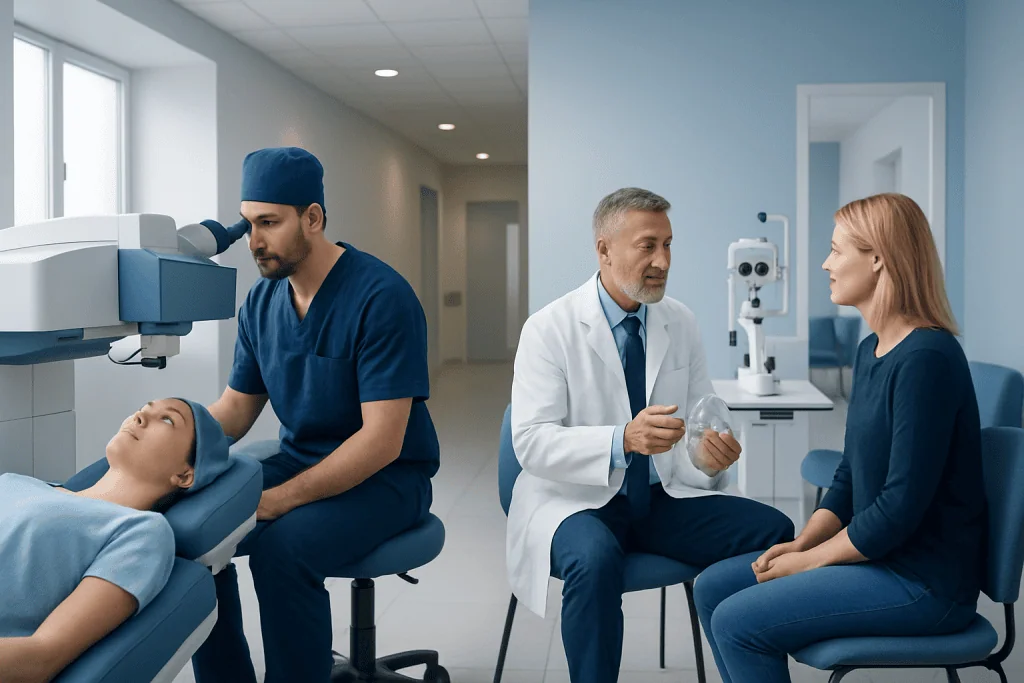
Laser eye surgery reshapes the cornea and is commonly considered for suitable adults with stable refractive errors. Lens replacement surgery replaces the eye’s natural lens and may be more appropriate when age-related lens changes or high prescriptions are present.
Key Takeaways
- Laser eye surgery reshapes the cornea and is commonly considered for suitable adults with stable refractive errors.
- Lens replacement surgery replaces the eye’s natural lens and may be more appropriate when age-related lens changes or high prescriptions are present.
- A detailed eye examination, including corneal and retinal assessment, is essential before either procedure.
- Both options can improve uncorrected vision, but neither guarantees complete freedom from glasses in every situation.
- Dry eye, glare, halos and the need for further correction are possible considerations with either approach.
- Urgent eye symptoms such as sudden vision loss, severe pain or flashes and floaters need prompt medical assessment.
Laser eye surgery and lens replacement can both reduce dependence on glasses or contact lenses, but they correct vision in different ways. Laser procedures reshape the cornea, while lens replacement removes the natural lens and inserts an artificial intraocular lens; the most suitable choice depends on the eye’s anatomy, prescription, age and visual goals.
Laser Eye Surgery vs Lens Replacement: The Main Difference
When comparing laser eye surgery vs lens replacement, the right option is usually determined by the part of the eye causing the focusing problem. Laser eye surgery changes the shape of the cornea, the clear front surface of the eye. Lens replacement surgery changes the natural lens inside the eye by removing it and placing an artificial intraocular lens in its position.
Laser treatment is often considered for adults with a stable short-sighted, long-sighted or astigmatic prescription and healthy corneas. Lens replacement, also called refractive lens exchange, may be considered for people whose natural lens is becoming less flexible with age, who have early lens clouding, or whose prescription and eye anatomy make corneal laser treatment less suitable.
Neither treatment is automatically better. A refractive ophthalmologist compares prescription strength, corneal thickness and shape, tear-film health, pupil size, lens clarity, retinal health, age and daily activities. The aim is to select an approach that offers a suitable balance of visual benefit and long-term eye safety.
How Each Procedure Corrects Vision
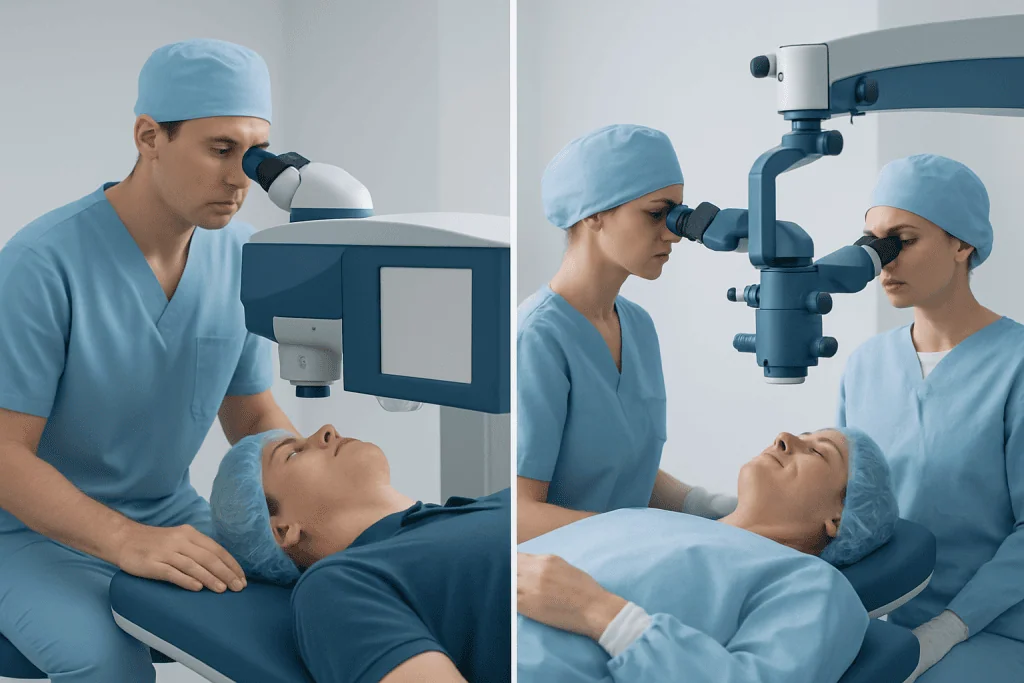
Laser eye surgery includes procedures such as LASIK, PRK and SMILE. These techniques use a laser to reshape the cornea so that light focuses more accurately on the retina. Depending on the procedure, the surgeon creates a thin corneal flap, removes surface cells, or makes a small opening before applying the planned laser correction.
Lens replacement surgery uses techniques similar to those used for cataract surgery. Through a small incision, the surgeon removes the natural lens and inserts an intraocular lens, often called an IOL. The implanted lens can be selected to address distance vision, astigmatism and, in some cases, near or intermediate vision needs.
A monofocal IOL is generally designed for one main distance, so reading or distance glasses may still be needed. Multifocal or extended-depth-of-focus lenses may reduce reliance on glasses across more than one range, although they may not suit every eye or visual preference. Some people notice halos or reduced contrast in low light with certain lens designs.
Lens replacement is permanent because the natural lens does not grow back. Laser corneal correction is also intended to be permanent, though the eye and visual needs can change over time, particularly as presbyopia develops with age.
Who May Be a Candidate?
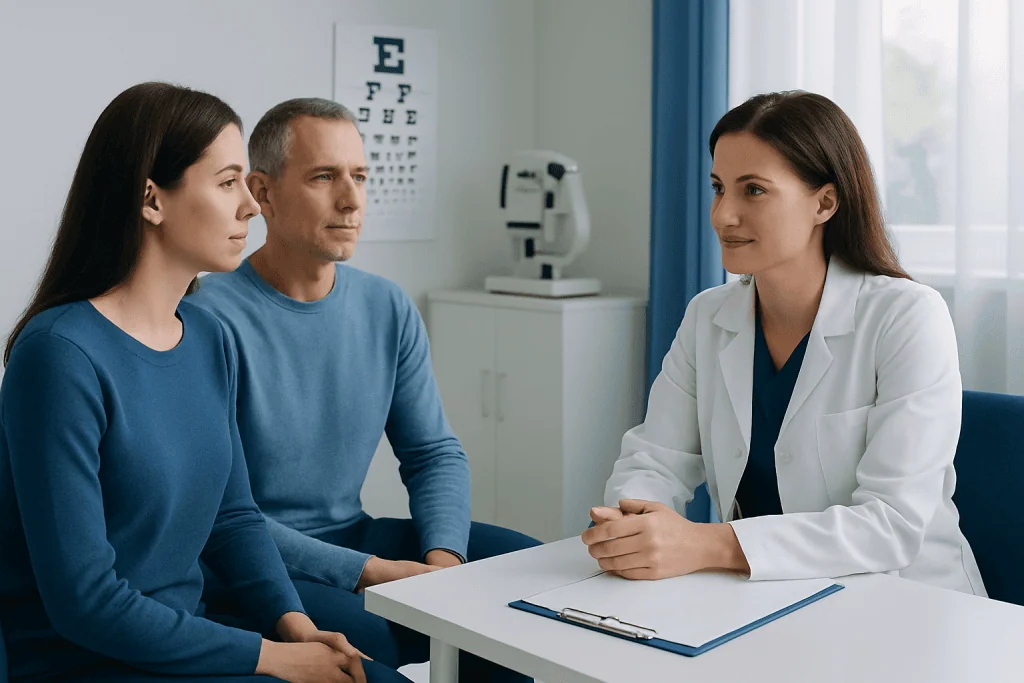
Laser eye surgery may be an option for adults whose prescription has been stable for a period of time and who have adequate corneal thickness, regular corneal shape and healthy eyes. It is commonly considered in younger and middle-aged adults who want to reduce dependence on glasses or contact lenses. A stable prescription does not on its own confirm suitability; detailed measurements are needed.
Lens replacement may be considered more often from middle age onward, particularly when reading vision is becoming difficult because of presbyopia. It can also be considered in selected people with higher levels of long-sightedness, short-sightedness or astigmatism, or when the cornea is not suitable for laser reshaping. It may be particularly relevant when early cataract-related lens changes are also present.
Some conditions can affect candidacy or require additional assessment. These include significant dry eye disease, keratoconus or other corneal disorders, uncontrolled glaucoma, active eye inflammation, advanced diabetic eye disease, retinal disease, pregnancy or breastfeeding, and certain autoimmune conditions. People with cataracts may need an individual discussion about whether cataract surgery rather than refractive surgery is the appropriate route.
Expectations also matter. A person who frequently drives at night, needs very fine detail for work, has a history of eye disease, or strongly wishes to avoid all glasses should discuss these priorities openly. The surgeon can explain what each option is realistically able to achieve.
What Happens Before, During and After Surgery?
Before either procedure, the patient has a comprehensive eye assessment. This may include refraction testing, corneal mapping and thickness measurement, tear-film evaluation, pupil assessment, measurement of eye length, lens examination, eye-pressure testing and a retinal examination. Contact lens wearers may be asked to stop wearing lenses for a period before measurements, because lenses can temporarily alter corneal shape.
Laser eye surgery is usually an outpatient procedure performed with numbing eye drops. The patient is awake and asked to focus on a target light while the laser treatment is delivered. The laser portion is brief, although total time in the procedure room is longer. A protective shield or contact lens may be used depending on the technique.
Lens replacement is also usually performed as an outpatient procedure using numbing drops, sometimes with additional medication to promote relaxation. The surgeon makes a very small incision, removes the natural lens with ultrasound energy and places the selected IOL. Usually, one eye is treated at a time, with timing for the other eye decided individually.
After either procedure, prescribed drops and follow-up visits help support healing and monitor vision. Patients should arrange transport home and follow individual instructions about rubbing the eyes, swimming, make-up, exercise and return to work or driving.
Recovery Timeline and Expected Visual Results
Recovery after laser eye surgery varies by technique. Vision after LASIK or SMILE often improves quickly, sometimes within days, although temporary blur, light sensitivity, glare and fluctuating vision can occur during early healing. Surface laser procedures such as PRK usually have a longer initial recovery because the corneal surface needs time to heal.
After lens replacement, vision often becomes clearer over the days and weeks after surgery, but adjustment can take longer. The brain may need time to adapt to a new optical system, especially with multifocal or extended-depth-of-focus lenses. Follow-up appointments check healing, eye pressure and the position of the implanted lens.
Both procedures may reduce the need for glasses, but glasses can still be useful for specific tasks. This is particularly true for close reading after a distance-focused correction, detailed computer work, dim-light activities or if a small remaining prescription is present. Age-related changes elsewhere in the eye, including retinal conditions, can also influence vision later in life.
Patients should avoid comparing recovery only by speed. The preferred treatment is based on long-term suitability, not simply the shortest healing period. A clinician can explain the expected recovery in relation to the exact procedure and the individual eye examination findings.
Benefits, Risks and Important Trade-Offs
The potential benefit of laser eye surgery is that it corrects refractive error without entering the eye or replacing the natural lens. It may provide good distance vision for appropriately selected patients and can reduce reliance on spectacles or contact lenses. However, it does not prevent presbyopia or future cataract development, so visual needs may change over time.
The potential benefit of lens replacement is that it can correct refractive error while also addressing the natural lens that will otherwise lose flexibility and may eventually develop cataract changes. Because the natural lens is removed, cataracts cannot form in that lens later. It is an intraocular operation, however, and therefore has a different risk profile from corneal laser treatment.
Possible side effects after either approach include dry eye symptoms, glare, halos, starbursts, temporary blur, undercorrection or overcorrection, and a need for glasses or an additional procedure. Less common but important complications can include infection, inflammation, elevated eye pressure and reduced quality of vision. With lens replacement, risks may also include retinal detachment in susceptible eyes, lens-position concerns and a later cloudy membrane behind the implant, which can often be treated with a laser procedure.
Careful screening lowers risk but cannot remove it completely. The most helpful decision is an informed one: the patient should understand the likely benefits, limitations, alternatives and potential complications before choosing surgery.
How to Decide Between the Options
A useful way to approach the decision is to begin with the eye examination rather than a preferred procedure. Laser surgery may be more suitable when the cornea is healthy and the main goal is correction of a stable refractive error. Lens replacement may be more suitable when lens-related changes are contributing to vision problems, when presbyopia is a major concern, or when corneal laser surgery is not advisable.
Patients can ask how their age, prescription and eye measurements affect each option; which lens type is being considered, if relevant; whether they may still need reading glasses; and how night driving, computer use or sports could be affected. They should also mention medications, previous eye surgery, dry eye symptoms and any family history of glaucoma or retinal detachment.
A second opinion can be valuable when options appear closely balanced or when a person has complex eye findings. At Acibadem International, multidisciplinary eye specialists in JCI-accredited hospitals assess and treat vision correction needs for international patients, with treatment recommendations based on individual examination findings.
When to Seek Medical Care
Anyone considering elective vision correction should arrange a full assessment with a qualified ophthalmologist rather than relying on prescription information alone. Regular eye examinations remain important after treatment, particularly for people with diabetes, glaucoma risk, a strong family history of eye disease or a high short-sighted prescription.
Urgent medical assessment is needed for sudden vision loss, severe eye pain, increasing redness, marked light sensitivity, a curtain or shadow across vision, or a sudden increase in flashes and floaters. These symptoms are not expected recovery signs and may indicate an eye problem requiring prompt care.
After surgery, patients should contact their treating eye team promptly if pain worsens, vision declines after initially improving, discharge develops, or prescribed drops cause a concerning reaction. Early advice can help ensure that healing is assessed appropriately.
Frequently asked questions
Is laser eye surgery or lens replacement better?
Neither is universally better. Laser eye surgery may suit people with healthy corneas and stable refractive errors, while lens replacement may be more appropriate when age-related lens changes, presbyopia or certain higher prescriptions are present. A detailed ophthalmology assessment is needed to compare safety and expected benefit.
Can lens replacement correct reading vision?
It can help address reading vision depending on the type of intraocular lens chosen and the person’s eye health. Some lens designs are intended to provide vision across more than one distance, but reading glasses may still be useful for detailed tasks. These lenses can also have visual trade-offs, such as halos in low light for some patients.
Does laser eye surgery prevent cataracts?
No. Laser eye surgery changes the cornea and does not remove or alter the natural lens, so cataracts can still develop later in life. Lens replacement removes the natural lens, meaning a cataract cannot develop in that lens afterward.
How long does recovery take after laser eye surgery or lens replacement?
Initial recovery may be relatively quick after some laser procedures and lens replacement, but stable vision can take days to weeks or longer depending on the technique and the individual eye. Surface laser procedures often require a longer early healing period than flap-based laser procedures. The treating surgeon provides specific guidance on return to work, driving and exercise.
Will glasses still be needed after surgery?
Possibly. Many people reduce their dependence on glasses, but some need them for reading, night driving, detailed work or tasks at a particular distance. The likelihood depends on the original prescription, age, healing response and, for lens replacement, the chosen lens type.
Is lens replacement the same as cataract surgery?
The surgical method is very similar: the natural lens is removed and an artificial intraocular lens is inserted. In cataract surgery, the main reason is to remove a cloudy lens that affects vision. In refractive lens replacement, the procedure is performed primarily to reduce dependence on glasses or contact lenses before a visually significant cataract is present.
References
- American Academy of Ophthalmology
- National Eye Institute
- Royal College of Ophthalmologists
- U.S. Food and Drug Administration
- European Society of Cataract and Refractive Surgeons
This article is for general information only and is not a substitute for professional medical advice. Please consult a qualified doctor about your individual situation.
Eye Surgery in Turkey — costs, top hospitals & a free quote
JCI-accredited · board-certified surgeons · reply within 24h
Add us as a Preferred Source to see more of our trusted health content across Google Search, AI Overviews and Discover.

Ophthalmology
Comprehensive eye care from laser vision correction to retina, cornea and cataract surgery.
75 specialists in this unit