Cataract surgery Risks & Side Effects Explained by Surgeons

Cataract surgery is generally safe, and most side effects, such as grittiness, watering, light sensitivity and blurry vision, are temporary and settle as the eye heals. Serious complications are uncommon. Contact your eye doctor promptly if you notice worsening vision, increasing pain, redness or new floaters or flashes after surgery.
Key Takeaways
- Most cataract surgery side effects, such as mild discomfort, blurred vision and light sensitivity, improve during early healing.
- Serious complications are uncommon but may include infection, retinal detachment, increased eye pressure or displacement of the artificial lens.
- A detailed eye examination helps the surgeon assess individual risks, lens options and expected visual outcomes.
- Using prescribed eye drops and attending follow-up visits are important parts of recovery.
- Sudden vision loss, severe pain, increasing redness or flashes and floaters require urgent assessment.
Has your vision started to look like you’re seeing the world through a smudged window? For most people, that’s the point where cataract surgery comes into the conversation. It’s a commonly performed procedure that replaces the eye’s cloudy natural lens with a clear artificial lens.
Most people recover well. Still, knowing what side effects to expect, which warning signs matter and how follow-up care works helps support safer healing and lets you make informed decisions about your own eyes.
Overview: What Are Cataract Surgery Risks?
Cataract surgery risks are generally low, and the procedure is widely used to restore clearer vision when a cataract interferes with daily life. A cataract develops when the eye’s natural lens becomes cloudy, causing blurred vision, glare, faded colours or difficulty seeing in dim light. During surgery, the cloudy lens is removed and replaced with an artificial intraocular lens.
Most people experience temporary effects rather than serious complications. Mild grittiness, watering, light sensitivity and fluctuating or blurry vision can occur during the first days or weeks as the eye heals. The surgeon reviews each person’s eye health, medicines and medical history to identify factors that may affect surgical planning or recovery.
For a broader explanation of the procedure, lens choices and preparation, see cataract surgery. This article focuses on how surgeons assess safety, what to expect during recovery and when symptoms need prompt medical attention.
How Cataract Surgery Works and Who May Be a Candidate
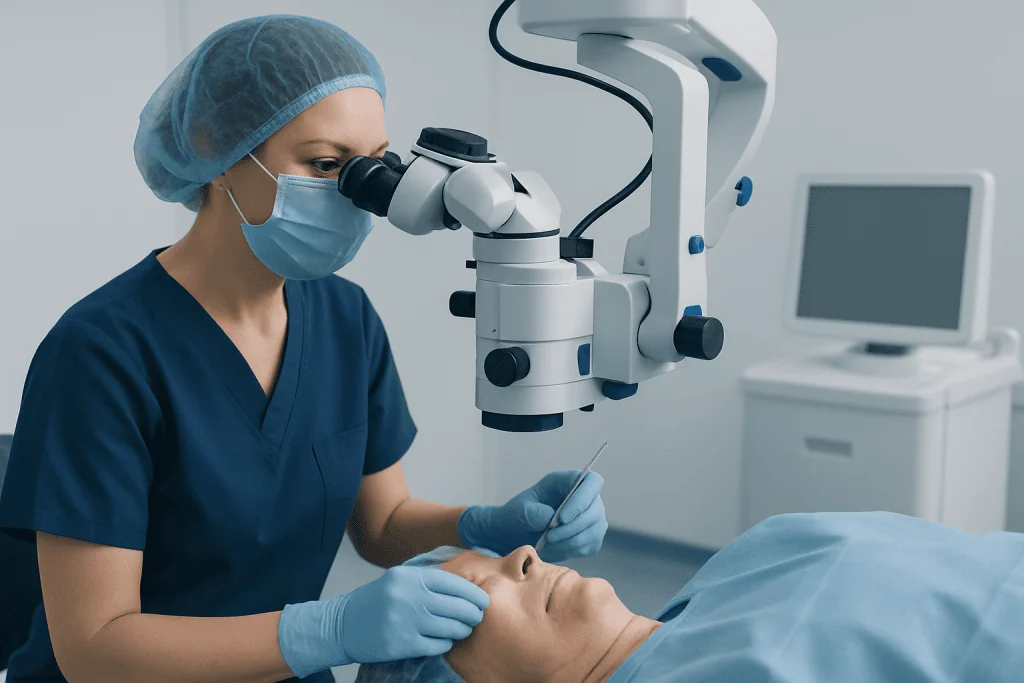
Cataract surgery is usually performed under local anaesthetic eye drops, often with medication to help the person feel relaxed. The surgeon makes a very small opening in the eye, breaks up the cloudy lens with ultrasound energy in a technique called phacoemulsification, and removes the lens material. A clear artificial intraocular lens, or IOL, is then placed in the lens capsule.
People may be considered for surgery when cataract-related vision changes affect reading, driving, work, hobbies or independence. The decision is based on symptoms and quality of life rather than on cataract appearance alone. Surgery may also be advised when a cataract makes it difficult to monitor or treat another eye condition.
Before surgery, an ophthalmologist measures the eye and checks the cornea, retina, optic nerve and eye pressure. Conditions such as glaucoma, diabetic eye disease, macular degeneration, severe dry eye or prior eye surgery do not always prevent cataract surgery, but they can influence expected results and the likelihood of additional care.
Tell your clinical team about your medications, allergies, any previous eye injuries and whether you take blood-thinning medicines. A surgeon or prescribing clinician can advise whether any medicines should be adjusted; patients should not stop prescribed medication without medical guidance.
What Happens During the Procedure

On the day of surgery, the eye is prepared with antiseptic solution and dilating drops. The patient is awake in most cases but should not feel pain. The surgical team monitors comfort throughout the procedure, and the operation commonly takes a short time, although the overall visit is longer because of preparation and recovery checks.
After removing the cataract, the surgeon inserts the selected IOL. Some lenses are designed mainly for distance vision, while others may help with near or intermediate tasks. No lens can guarantee complete freedom from glasses, and the most appropriate option depends on eye measurements, eye health, visual priorities and lifestyle.
The small incision often seals without stitches. A protective shield may be placed over the eye, and patients are usually able to return home the same day with written instructions and prescribed drops. Vision may be hazy at first because of dilation, surface irritation or normal early inflammation.
The procedure is carefully standardized, but no two eyes are the same. Surgeons may modify the approach when there is a dense cataract, a weak lens support system, a small pupil, prior corneal surgery or other anatomical considerations. Discussing these details beforehand supports realistic expectations.
Common Side Effects and the Expected Recovery Timeline
Mild redness, itching, watering, a feeling that something is in your eye, glare or sensitivity to light are all normal after cataract surgery. Vision may initially seem cloudy, bright or variable. These symptoms often settle as the eye surface heals and inflammation reduces, though the exact timeline varies between individuals.
Many people notice functional improvement within several days, while vision can continue to stabilize over the following weeks. If the second eye needs surgery, it is usually scheduled separately so that each eye can be assessed during recovery. The surgeon advises when activities such as driving, exercise, swimming and returning to work are appropriate.
Prescribed antibiotic and anti-inflammatory eye drops help reduce the risk of infection and control inflammation. Patients should wash their hands before using drops, avoid rubbing or pressing on the eye, and wear the protective shield as instructed, particularly while sleeping in the early period.
Some people later develop clouding of the capsule behind the artificial lens, often called posterior capsule opacification. This is not a new cataract and can usually be treated with a brief laser procedure if it affects vision. The eye team can determine whether this or another cause is responsible for any later change in sight.
Possible Cataract Surgery Complications
Serious complications are uncommon, but you deserve clear information before you consent. Possible problems include infection inside the eye, known as endophthalmitis; significant inflammation; bleeding; corneal swelling; raised or lowered eye pressure; retinal swelling; retinal detachment; or a tear in the lens capsule during surgery. Some complications can require additional treatment or, less commonly, further surgery.
An IOL can occasionally shift from its intended position, and refractive outcomes may not exactly match the planned result. This can leave a need for glasses or contact lenses, and in selected circumstances further correction may be considered. Pre-existing retinal or optic nerve disease may limit how much vision improves even when the cataract is successfully removed.
The risk profile can be higher for people with advanced cataracts, previous eye operations, severe short-sightedness, glaucoma, diabetes-related retinal disease, uveitis, corneal disease or injury to the eye. These factors do not necessarily make surgery unsuitable; rather, they help the surgeon tailor monitoring, treatment and expectations.
Ask about your own risk factors, the lens your surgeon plans to use and what vision you can realistically expect. A good conversation covers both sides: the clearer vision you are likely to gain, and the chance that other eye conditions limit the result.
Benefits, Self-Care and Protecting Eye Health
The main benefit of cataract surgery is improved clarity of vision when the cataract is the primary cause of visual difficulty. People may find it easier to read, recognize faces, perform daily tasks and manage glare. Better sight can also support confidence with mobility and other activities, although the degree of improvement differs from person to person.
During recovery, patients should use all drops exactly as directed and attend scheduled examinations even if the eye feels comfortable. They should avoid getting untreated water, soap or cosmetics directly into the eye while it heals, avoid heavy lifting or strenuous activity until cleared, and use sunglasses outdoors if light feels uncomfortable.
Long-term eye health remains important after surgery. Regular eye examinations can identify glaucoma, retinal conditions and other issues that may not cause early symptoms. Managing diabetes, avoiding smoking and protecting the eyes from ultraviolet light and injury can support overall eye health.
At Acibadem International, multidisciplinary eye specialists in JCI-accredited hospitals diagnose and treat cataracts and related eye conditions for international patients. Any treatment plan should be individualized after a comprehensive ophthalmic assessment.
When to Seek Medical Care
Patients should contact their eye surgeon promptly if discomfort, redness or blurred vision is not improving as expected. Follow-up appointments are designed to identify healing concerns early, so it is important not to miss them or to wait until the next planned visit if new symptoms develop.
Urgent medical assessment is needed for severe or worsening eye pain, sudden loss of vision, rapidly increasing redness, pus-like discharge, marked swelling, nausea with eye pain, or a curtain-like shadow in the field of vision. New flashes of light or a sudden increase in floaters can also signal a retinal problem and should be assessed without delay.
Don’t use eye drops that weren’t prescribed for you, and never share eye medicines with anyone else. If you’re unsure about a symptom, call your surgical team or an urgent eye-care service — that’s always the safest move. Early assessment can help distinguish expected healing effects from conditions that need treatment.
Frequently asked questions
Is cataract surgery safe?
Cataract surgery is generally considered safe and is commonly performed worldwide. However, no operation is risk-free, and the individual risk depends on eye health, medical history, cataract complexity and other factors. A preoperative assessment helps the surgeon explain the expected benefits and possible complications.
What are the most common side effects after cataract surgery?
Temporary blurred vision, mild soreness, itching, watering, redness and light sensitivity are common during early recovery. These usually improve as the eye heals. Persistent or worsening symptoms should be discussed with the eye surgeon.
How long does vision stay blurry after cataract surgery?
Some blurring is expected immediately after surgery and often begins to improve within days. Vision may continue to stabilize over several weeks, depending on the eye and the type of lens used. Corneal swelling, dry eye or pre-existing retinal conditions can affect the recovery timeline.
Can cataract surgery cause retinal detachment?
Retinal detachment is an uncommon but potentially serious complication after cataract surgery. The risk may be higher in people with severe short-sightedness, certain retinal conditions or a history of eye surgery or injury. Flashes, new floaters or a shadow or curtain across vision require urgent assessment.
Can a cataract come back after surgery?
The removed natural lens cannot grow back, so a true cataract does not return. However, the capsule holding the artificial lens can become cloudy months or years later. This can often be treated with a laser procedure if it causes troublesome vision changes.
When can someone drive after cataract surgery?
Driving should resume only when vision meets local legal requirements and the person feels comfortable and confident behind the wheel. This may be within days for some people, but others need longer. The surgeon can provide individualized advice at follow-up.
This article is for general information only and is not a substitute for professional medical advice. Please consult a qualified doctor about your individual situation.
Cataract Surgery in Turkey — costs, top hospitals & a free quote
7 JCI-accredited hospitals · board-certified surgeons · reply within 24h
Add us as a Preferred Source to see more of our trusted health content across Google Search, AI Overviews and Discover.

Medically reviewed by the Acıbadem International Medical Board — August 24, 2026
See our medical review board →
References (2)
- Cataract surgery — NHS — www.nhs.uk
- Cataract — MedlinePlus — medlineplus.gov
Ophthalmology
Comprehensive eye care from laser vision correction to retina, cornea and cataract surgery.
75 specialists in this unitOphthalmology Specialists at Acibadem





More from the Health Library

The Conjunctiva Protects the Eye and Often Gets Inflamed

Iluvien Is a Slow-Release Implant for Diabetic Macular Edema

Macular Degeneration Blurs Central Vision but Spares the Sides

Photophobia Means Light Sensitivity, Not Fear of Light

Vitreous Hemorrhage: Bleeding Inside the Eye Needs Prompt Review