Knee Surgeon: An Evidence-Based Patient Guide

A knee surgeon may recommend rehabilitation, medicines or injections before considering surgery. The most suitable surgeon has relevant experience with the patient’s specific knee condition and procedure.
Key Takeaways
- A knee surgeon may recommend rehabilitation, medicines or injections before considering surgery.
- The most suitable surgeon has relevant experience with the patient’s specific knee condition and procedure.
- Recovery varies considerably by procedure, overall health, rehabilitation participation and activity goals.
- Patients can ask about outcomes, complications, revision surgery and the team’s rehabilitation plan.
- Urgent assessment is important for a severely injured knee, infection warning signs or a locked knee.
A knee surgeon is an orthopedic specialist who evaluates knee pain, injuries, instability and arthritis, then recommends the least invasive effective treatment. Choosing a surgeon involves confirming relevant training, discussing treatment alternatives and understanding expected recovery, risks and follow-up care.
Overview: What Does a Knee Surgeon Do?
A knee surgeon is usually an orthopedic surgeon with expertise in diagnosing and treating conditions affecting the knee joint, including sports injuries, cartilage damage, ligament tears, meniscus injuries, kneecap instability and osteoarthritis. Some surgeons focus on sports medicine and minimally invasive arthroscopy, while others have additional experience in partial or total knee replacement. The appropriate specialist depends on the diagnosis, symptoms, age, activity goals and previous treatment.
Good knee care does not automatically mean surgery. A knee surgeon reviews the person’s medical history, symptoms, physical examination and imaging results to determine whether structured exercise, physiotherapy, weight management where relevant, pain-relieving strategies, bracing, injections or an operation is most appropriate. Surgery is generally considered when a clear structural problem causes persistent symptoms or loss of function despite suitable non-surgical treatment, or when urgent repair is needed.
Patients benefit from a shared decision-making discussion. This should cover the likely diagnosis, all reasonable options, the goals of treatment, expected rehabilitation, possible complications and what may happen without surgery. A second opinion can be reasonable when surgery is elective, the diagnosis is uncertain or several treatment paths are possible.
Conditions a Knee Surgeon Commonly Treats
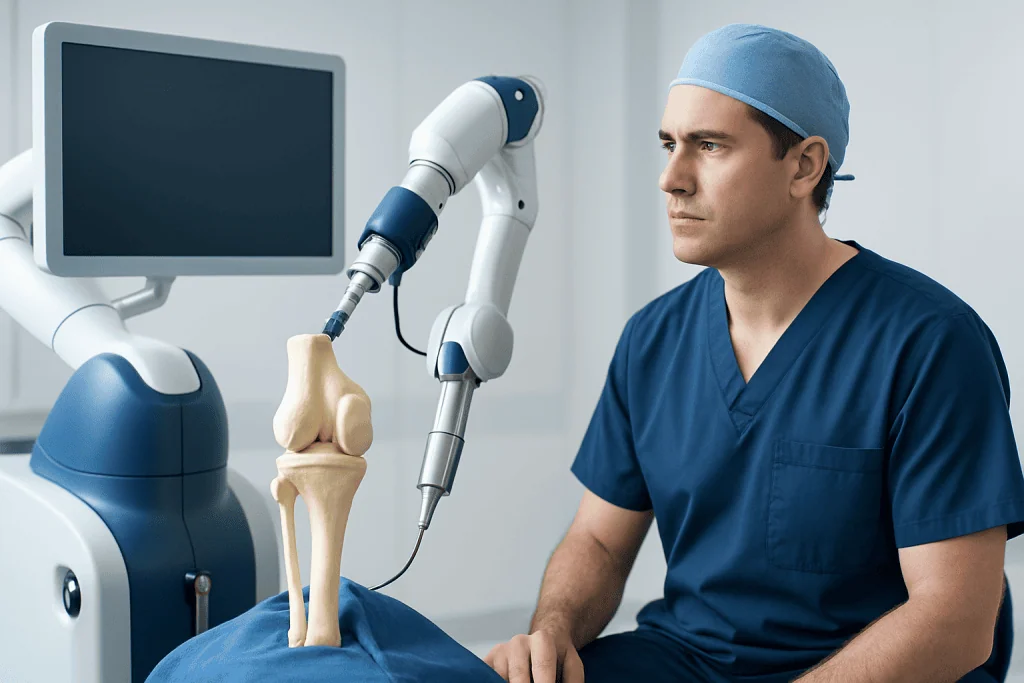
Knee symptoms can arise from a sudden injury, gradual wear and tear, inflammatory disease, referred pain from the hip or back, or less common medical causes. An orthopedic knee assessment helps identify the source rather than treating pain alone. Common conditions include anterior cruciate ligament (ACL) and other ligament injuries, meniscal tears, cartilage defects, patellar instability, tendon disorders, fractures and osteoarthritis.
For example, an ACL tear may cause a pop at the time of injury, swelling and a sensation that the knee gives way during pivoting activities. Not every ACL injury requires reconstruction; the decision depends on instability, associated injuries, activity demands and individual goals. People with long-standing pain, stiffness and reduced mobility may instead have knee osteoarthritis, in which joint cartilage changes over time.
A specialist also looks for problems that can change treatment planning, such as prior operations, malalignment of the leg, joint infection, inflammatory arthritis, osteoporosis, diabetes, circulation problems or medicines that affect bleeding. This wider review supports safer treatment and realistic recovery planning.
- Sports-related ligament, meniscus and cartilage injuries
- Early or advanced knee osteoarthritis
- Patellofemoral pain and kneecap dislocation or instability
- Knee fractures and post-traumatic arthritis
- Persistent symptoms after a previous knee operation
How Does a Knee Surgeon Diagnose Knee Problems?

Assessment begins with a focused history. The surgeon may ask when symptoms began, whether there was an injury, where pain is felt, whether the knee swells or locks, what activities are limited and which treatments have already been tried. Symptoms such as instability, clicking, catching or pain on stairs can provide useful diagnostic clues, but they need to be considered alongside examination findings.
During the physical examination, the clinician assesses walking, alignment, range of motion, swelling, tenderness, muscle strength and knee stability. Specific movements may test the ligaments, meniscus and kneecap. The hip, lower leg, back and circulation may also be checked because these areas can contribute to knee symptoms.
Imaging is selected according to the clinical question. Weight-bearing X-rays can show arthritis, alignment, fractures and joint-space narrowing. Magnetic resonance imaging (MRI) can help evaluate ligaments, menisci, cartilage and other soft tissues, particularly after injury. Imaging findings do not always explain pain or require surgery, so decisions should be based on the complete clinical picture rather than a scan alone.
How to Choose the Best Knee Surgeon?
The best knee surgeon is not a single universal choice; it is the clinician whose expertise, communication style and care setting fit the individual’s specific condition. A person with a complex ligament injury may benefit from a surgeon experienced in sports knee reconstruction, while someone with advanced arthritis may prefer a surgeon whose practice includes joint replacement. Board certification or equivalent recognized specialist credentials, orthopedic training and experience with the proposed procedure are sensible factors to consider.
During a consultation, patients can ask how often the surgeon treats their condition, whether non-surgical options remain appropriate, why a particular procedure is recommended and what alternatives exist. It is also helpful to ask who will be involved in care, including anesthesiologists, physiotherapists, nurses and rehabilitation professionals. Clear answers, time for questions and a plan that reflects the patient’s goals are important signs of patient-centered care.
Practical matters also matter. These include access to timely follow-up, the rehabilitation pathway, management of pain after surgery, communication when concerns arise and whether the hospital can support complex medical needs. It may be useful to take notes, bring a family member or ask for written information before making an elective decision.
Is There a Way to Check a Surgeon's Success Rate?
Success rates can be difficult to compare fairly because patients, diagnoses, surgical complexity and definitions of success differ. A simple percentage may not reflect outcomes for someone with previous surgery, multiple health conditions or a complex injury. Instead, patients can ask the surgeon how outcomes are measured for the proposed operation and which results are most relevant, such as pain relief, function, return to activity, complication rates or need for revision surgery.
It is reasonable to ask about the surgeon’s experience with the specific procedure, common complications, infection prevention processes and the likelihood of needing further treatment. Hospitals may participate in quality reporting, audits or joint-replacement registries, depending on the country and healthcare system. These data can provide useful context but should not be interpreted in isolation.
Patients should be cautious about relying solely on online ratings. Reviews can describe communication and access, but they cannot reliably establish clinical quality or predict an individual result. An informed decision combines credentials, relevant experience, transparent discussion, hospital safety standards and a personalized treatment plan.
Knee Surgery: Candidacy, Procedure and Recovery
A knee surgeon considers surgery when symptoms significantly affect daily life, work, sleep or desired activities and appropriate non-surgical care has not provided sufficient improvement. In some situations, surgery is more urgent, such as certain fractures, a tendon rupture, a locked knee caused by a displaced tear, or a knee infection requiring prompt treatment. Candidacy also depends on general health, smoking status, weight where relevant, ability to take part in rehabilitation and expectations of what surgery can achieve.
The exact procedure varies. Arthroscopy uses a small camera and specialized instruments through small incisions to inspect and treat selected problems inside the joint. Ligament reconstruction commonly uses a graft to create a new stabilizing ligament. Joint replacement removes damaged joint surfaces and replaces them with implants; it may involve part of the knee or the whole joint. For patients with severe arthritis affecting daily function, knee replacement surgery may be discussed after a comprehensive evaluation.
In broad terms, surgery involves preoperative assessment and anesthesia planning, preparation of the knee, the planned repair or reconstruction, wound closure and monitored recovery. Rehabilitation starts according to the procedure and surgeon’s instructions, sometimes on the day of surgery. Early recovery focuses on safe movement, swelling control, wound care, pain management and regaining motion. Return to work, driving, sport and full function can take weeks to months, while recovery after ligament reconstruction or joint replacement often continues for many months.
Potential benefits include less pain, greater stability, improved mobility and a return to valued activities. Risks vary by operation but can include infection, bleeding, blood clots, stiffness, persistent pain, nerve or blood-vessel injury, anesthesia-related problems, implant issues and a need for further surgery. A surgeon can explain the risks most relevant to the individual and the steps used to reduce them.
What Is the Hardest Knee Surgery to Recover From?
There is no single knee operation that is hardest for every person to recover from. Recovery depends on the procedure, the extent of injury or arthritis, whether other structures are repaired at the same time, previous surgery, age, muscle strength, overall health and access to rehabilitation. Operations that involve several ligaments, major fractures, complex revision joint replacement or infection treatment can require particularly long and demanding recovery.
For many patients, total knee replacement requires a substantial commitment to early movement, physiotherapy and gradual strength recovery. Combined ligament reconstructions can also be challenging because healing tissues must be protected while stiffness and muscle weakness are prevented. A surgeon and physiotherapist should provide a tailored plan that explains weight-bearing limits, exercises, activity progression and milestones.
Recovery should not be judged only by speed. A safe, consistent rehabilitation program and regular follow-up are more important than comparing progress with another person. Patients should tell their care team promptly about worsening pain, new swelling, wound concerns, fever, calf pain or shortness of breath.
When to Seek Medical Care
Medical assessment is advisable for knee pain or swelling that persists, recurs, limits normal activities, causes instability or does not improve with rest and appropriate self-care. A knee surgeon or other qualified clinician can help determine whether symptoms are caused by an injury, arthritis or another condition. Early review can be especially useful after a twisting injury, a direct blow to the knee or a sudden loss of function.
Urgent care is important if the knee appears deformed, a person cannot bear weight after an injury, the joint is rapidly swollen, the knee is locked and cannot straighten, or there is numbness, a cold foot or reduced circulation. Prompt medical evaluation is also needed for a hot, red, severely painful swollen joint, particularly when accompanied by fever or feeling unwell, as these can be signs of infection.
Acibadem International’s multidisciplinary specialists and JCI-accredited hospitals support international patients who need assessment and treatment for knee conditions, with surgical and rehabilitation planning coordinated around individual needs. A qualified orthopedic clinician can advise whether specialist referral, further testing or non-surgical care is the appropriate next step.
Frequently asked questions
Who is the best knee surgeon in Louisville, KY?
There is no single best knee surgeon for every patient in Louisville or any other location. The most suitable choice depends on the diagnosis and whether expertise is needed in sports injuries, arthroscopy, fracture care, complex revision surgery or knee replacement. Patients can compare recognized orthopedic credentials, experience with the specific procedure, hospital quality processes, communication and rehabilitation support.
Do all knee injuries need surgery?
No. Many knee injuries improve with activity modification, physiotherapy, strengthening, bracing and other non-surgical treatment. Surgery may be considered when there is ongoing instability, mechanical locking, a repairable injury, significant structural damage or persistent symptoms that do not respond to appropriate conservative care.
When should a person see a knee surgeon for knee pain?
A specialist review may help when pain, swelling, stiffness or instability persists and affects walking, work, sport or sleep. Assessment is also appropriate after a significant injury, especially if the knee gives way, locks, cannot fully move or remains swollen. Sudden deformity, inability to bear weight, a hot red joint or signs of poor circulation need urgent medical evaluation.
How long does recovery from knee surgery take?
Recovery time depends on the operation and the individual. Minor arthroscopic procedures may allow a faster return to daily activities, while ligament reconstruction and knee replacement commonly require rehabilitation over several months. The care team can provide a more specific timeline based on the procedure, healing progress and activity goals.
Can a knee surgeon help without performing an operation?
Yes. Knee surgeons routinely assess whether surgery is needed and may recommend non-surgical management first. This can include physiotherapy, strengthening, modifying activities, weight management when appropriate, pain-relief strategies, bracing or selected injections.
What questions should a patient ask before knee surgery?
Patients can ask about the diagnosis, expected benefits, alternatives to surgery, possible complications and what recovery will involve. It is also useful to ask how often the surgeon performs the procedure, what rehabilitation is needed, when normal activities may resume and how concerns will be managed after surgery.
References
- American Academy of Orthopaedic Surgeons
- National Institute for Health and Care Excellence
- OrthoInfo by the American Academy of Orthopaedic Surgeons
- Centers for Disease Control and Prevention
- World Health Organization
This article is for general information only and is not a substitute for professional medical advice. Please consult a qualified doctor about your individual situation.
Joint and spine care in Turkey — expert assessment & treatment
JCI-accredited · board-certified surgeons · reply within 24h
Add us as a Preferred Source to see more of our trusted health content across Google Search, AI Overviews and Discover.