Acoustic Tumor Treatment: How It Works, Results and What to Expect

An acoustic tumor, also called a vestibular schwannoma or acoustic neuroma, is usually noncancerous and slow growing. Not every tumor needs immediate intervention; small, stable tumors may be monitored with scans and hearing tests.
Key Takeaways
- An acoustic tumor, also called a vestibular schwannoma or acoustic neuroma, is usually noncancerous and slow growing.
- Not every tumor needs immediate intervention; small, stable tumors may be monitored with scans and hearing tests.
- Microsurgery can remove a tumor, while stereotactic radiosurgery aims to stop or slow its growth without an incision.
- Treatment planning balances tumor control with protection of hearing, facial movement, balance and quality of life.
- Recovery after surgery varies, with balance rehabilitation and follow-up hearing assessments often playing important roles.
Acoustic tumor treatment is individualized and may include regular monitoring, focused radiation or surgery. The best approach depends on the tumor’s size and growth, hearing and balance symptoms, overall health, and a person’s priorities for hearing and facial nerve function.
Overview: What Is Acoustic Tumor Treatment?
Acoustic tumor treatment is designed to control a growth on the vestibulocochlear nerve, which carries hearing and balance signals from the inner ear to the brain. These tumors are usually benign (noncancerous) vestibular schwannomas, also commonly called acoustic neuromas. Treatment may involve observation, stereotactic radiosurgery, microsurgery, or a carefully planned combination of these approaches.
The appropriate option depends on more than tumor size alone. Specialists consider whether the tumor is growing, its position near the brainstem, hearing level in both ears, balance symptoms, age, general health and personal treatment goals. A small tumor causing minimal symptoms may be followed safely, while a growing tumor or one affecting nearby structures may require active treatment.
Care commonly involves neuro-otology or ENT specialists, neurosurgeons, radiation oncologists, neuroradiologists, audiologists and rehabilitation professionals. This team-based approach helps make sure that treatment decisions address tumor control as well as hearing, facial nerve function and day-to-day wellbeing.
How Acoustic Tumor Treatment Works
Observation, sometimes called watchful waiting, is an active management plan rather than no care. It usually includes scheduled magnetic resonance imaging (MRI) scans, hearing tests and clinical reviews. Because many vestibular schwannomas grow slowly or remain stable, monitoring can avoid or delay treatment when the expected benefit of immediate intervention is limited.
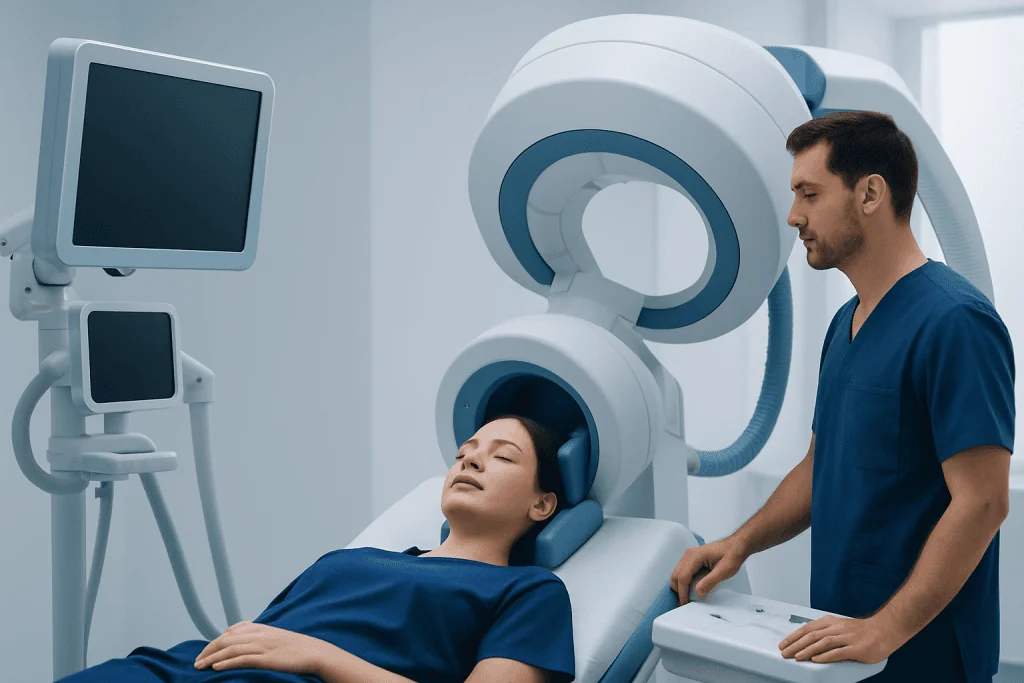
Stereotactic radiosurgery delivers precisely targeted radiation to the tumor, often in one session or in several carefully planned sessions. It does not remove the tumor immediately. Instead, the radiation damages tumor cells’ ability to divide, with the goal of stopping or slowing further growth over time. It is generally considered for selected small to medium tumors, especially when surgical removal is not preferred or carries greater risk.
Microsurgery removes all or part of the tumor through a carefully selected surgical route. The approach may be chosen to prioritize tumor access, preserve any useful hearing where possible, or protect surrounding nerves and structures. For larger tumors, surgery may be recommended to reduce pressure on the brainstem; in some situations, a planned partial removal followed by radiation or monitoring may offer the safest balance.
Before deciding on a procedure, the team reviews MRI findings, formal audiology results, facial nerve function and medical history. Related neurological conditions can also be assessed during this process, including brain tumors that require different evaluation and treatment pathways.
Who May Be a Candidate for Observation, Radiosurgery or Surgery?

People with a small tumor, little or no growth on serial imaging, manageable symptoms and no pressure on the brainstem may be candidates for observation. This can be especially appropriate when hearing is stable, when the person has medical conditions that increase procedural risk, or when treatment is unlikely to improve existing hearing or balance symptoms.
Radiosurgery may be suitable for people with small or medium vestibular schwannomas, documented growth, or symptoms that warrant tumor control without open surgery. It can also be considered after subtotal surgery if a small remaining tumor begins to grow. Tumor size, its relationship to the brainstem, prior radiation exposure and baseline hearing help determine whether this option is appropriate.
Surgery may be advised for a large tumor, compression of the brainstem, fluid buildup around the brain, progressive neurological symptoms, or a tumor that is unsuitable for radiation. It may also be selected by people who prefer removal after discussing the possible benefits and risks. The decision should be individualized; no one treatment approach is best for every acoustic tumor.
- Useful hearing in the affected ear and hearing in the other ear
- Size, location and growth pattern of the tumor
- Age, overall health and anesthesia considerations
- Facial numbness, weakness, balance difficulties or other neurological symptoms
- Personal priorities, including recovery time and follow-up needs
Acoustic Neuroma Surgery: Step by Step
When microsurgery is planned, the patient first undergoes a detailed preoperative assessment. This may include MRI, hearing testing, blood tests and review of medications. The surgical team explains the intended approach, which may be through the skull behind the ear or through the inner-ear area, depending on the tumor and hearing preservation goals.
During surgery, general anesthesia is used. The neurosurgeon and ear specialist work with high-magnification techniques and may use monitoring of the facial nerve, hearing pathways and other nerve functions. The surgeon carefully separates the tumor from nearby nerves and blood vessels. In some cases, leaving a small portion of tumor may be safer than attempting complete removal if it is tightly attached to the facial nerve or other critical structures.
After surgery, close observation is provided in a recovery area and sometimes an intensive care setting. Hospital stay length varies with the operation and individual recovery. Imaging and neurological checks help the team assess the early postoperative result, while audiology and balance reviews guide follow-up care.
For people considering a surgical route, brain tumor surgery information may help explain principles of neurosurgical planning and recovery. The treating team can clarify how vestibular schwannoma surgery differs from procedures for other types of brain tumors.
Benefits, Limitations and Possible Risks
The potential benefit of active treatment is tumor control. Surgery can reduce or remove the tumor, while radiosurgery aims to prevent future growth. Treatment may also relieve pressure on nearby structures when a tumor is large. However, neither procedure can guarantee preservation or restoration of hearing, and symptoms such as tinnitus or imbalance may not disappear immediately.
Microsurgery is a serious procedure because the tumor lies close to nerves that control facial movement, hearing, balance and sensation. Possible risks include hearing loss, facial weakness, altered facial sensation, dizziness, headache, cerebrospinal fluid leakage, infection, bleeding and, rarely, more serious neurological complications. The likelihood of particular effects varies according to tumor characteristics, surgical approach and individual health.
Radiosurgery avoids an incision and generally has a shorter initial recovery, but its effects occur gradually and it requires ongoing MRI monitoring. Possible delayed effects include worsening hearing, balance symptoms, facial numbness or weakness, or tumor swelling before it stabilizes. A small number of tumors continue to grow and may need further treatment.
Experienced teams discuss these outcomes in the context of each person’s scans and function before treatment. The aim is to support informed decision-making, including an understanding that preserving facial nerve function and long-term quality of life can be as important as achieving complete tumor removal.
Recovery Timeline and Daily Life After Treatment
Recovery differs substantially between observation, radiosurgery and microsurgery. With observation, most people continue usual activities while attending planned imaging and hearing appointments. After radiosurgery, many return to routine activities within days, although fatigue or temporary symptom changes can occur and tumor response is evaluated over months to years.
After microsurgery, the first days focus on pain control, wound care, mobility and monitoring of nerve function. Dizziness and unsteadiness are common because the brain needs time to adapt to changes in balance input from the treated side. Walking usually begins with assistance soon after surgery when it is medically safe, and balance improves gradually through normal activity and, when needed, vestibular rehabilitation.
Many people recover enough for routine home activities within several weeks, but fuller recovery may take months. Fatigue, headaches, imbalance and concentration difficulties can last longer in some individuals. Follow-up MRI scans are important after surgery or radiation because a remaining or recurrent tumor may require long-term surveillance.
Rehabilitation may include guided balance exercises, physical therapy and support for hearing changes. physical therapy and rehabilitation can help patients regain confidence with walking, turning, uneven ground and other daily movements. Hearing support, including audiology review and assistive devices where appropriate, may also improve communication and quality of life.
When to Seek Medical Care
A person should arrange a medical assessment for one-sided or gradually worsening hearing loss, persistent ringing in one ear, unexplained imbalance, recurrent dizziness, facial numbness or changes in facial movement. These symptoms are common in many ear and neurological conditions and do not necessarily mean an acoustic tumor is present, but they deserve appropriate evaluation.
Prompt medical attention is important for sudden hearing loss, new severe or rapidly worsening headache, significant difficulty walking, new weakness, confusion, double vision or other sudden neurological symptoms. Emergency services may be appropriate for sudden or severe symptoms, particularly if they are accompanied by changes in consciousness or speech.
People already diagnosed with a vestibular schwannoma should contact their care team if symptoms noticeably change or if scheduled MRI or hearing follow-up is missed. Acibadem International’s multidisciplinary specialists and JCI-accredited hospitals diagnose and treat vestibular schwannomas for international patients, with care plans tailored to clinical findings and individual needs.
Frequently asked questions
How long does it take to recover from an acoustic neuroma?
Recovery depends on the treatment used and the size and location of the tumor. After radiosurgery, many people resume usual activities within days, although MRI follow-up continues for years. After microsurgery, routine recovery often takes weeks, while balance, fatigue and other symptoms may continue improving over several months.
Is acoustic neuroma surgery serious?
Yes. Acoustic neuroma surgery is a major procedure because it is performed near the facial nerve, hearing and balance nerves, brainstem and important blood vessels. Careful preoperative planning, nerve monitoring and experienced multidisciplinary teams help manage risk, but patients should discuss possible complications and expected outcomes with their surgeon.
Can you walk after acoustic neuroma surgery?
Most people can walk after acoustic neuroma surgery, often starting with assistance during the early recovery period. Temporary dizziness and unsteadiness are common because balance signals from the treated side may change. Balance exercises and vestibular rehabilitation can help the brain adapt and improve stability over time.
Do you lose hearing after acoustic neuroma surgery?
Hearing may be reduced or lost after acoustic neuroma surgery, particularly when the tumor is large or hearing was already significantly affected. In selected cases with useful hearing, surgeons may use approaches intended to preserve it, but preservation cannot be guaranteed. Hearing testing before and after treatment helps guide rehabilitation and communication support.
Can an acoustic tumor be treated without surgery?
Yes. Some tumors can be monitored with regular MRI scans and hearing tests, particularly if they are small and stable. Others may be treated with stereotactic radiosurgery, which uses focused radiation to control growth without open surgery. The appropriate choice depends on the tumor and the person’s symptoms and overall health.
Is an acoustic neuroma cancer?
An acoustic neuroma, more accurately called a vestibular schwannoma, is usually benign and does not spread to distant parts of the body. Even so, it can cause important symptoms or press on nearby structures if it grows. Regular specialist follow-up is important to determine whether monitoring or active treatment is needed.
References
- National Institute on Deafness and Other Communication Disorders
- American Association of Neurological Surgeons
- Congress of Neurological Surgeons
- Mayo Clinic
- National Cancer Institute
This article is for general information only and is not a substitute for professional medical advice. Please consult a qualified doctor about your individual situation.
Oncology care in Turkey — second opinion and treatment plan
JCI-accredited · board-certified surgeons · reply within 24h
Add us as a Preferred Source to see more of our trusted health content across Google Search, AI Overviews and Discover.

More from the Health Library



Related Specialists

Dr. Münür Selçuk Kendir
Aesthetic Plastic & Reconstructive Surgery
Prof. Dr. Mehmet Akif Özdemir
Pediatrics
Prof. Dr. Soner Solmaz
Hematology
Dr. Nesibe Sönmez Demiryoğuran
Emergency Service