Robotic Thoracic Surgery: Procedure, Recovery and Results
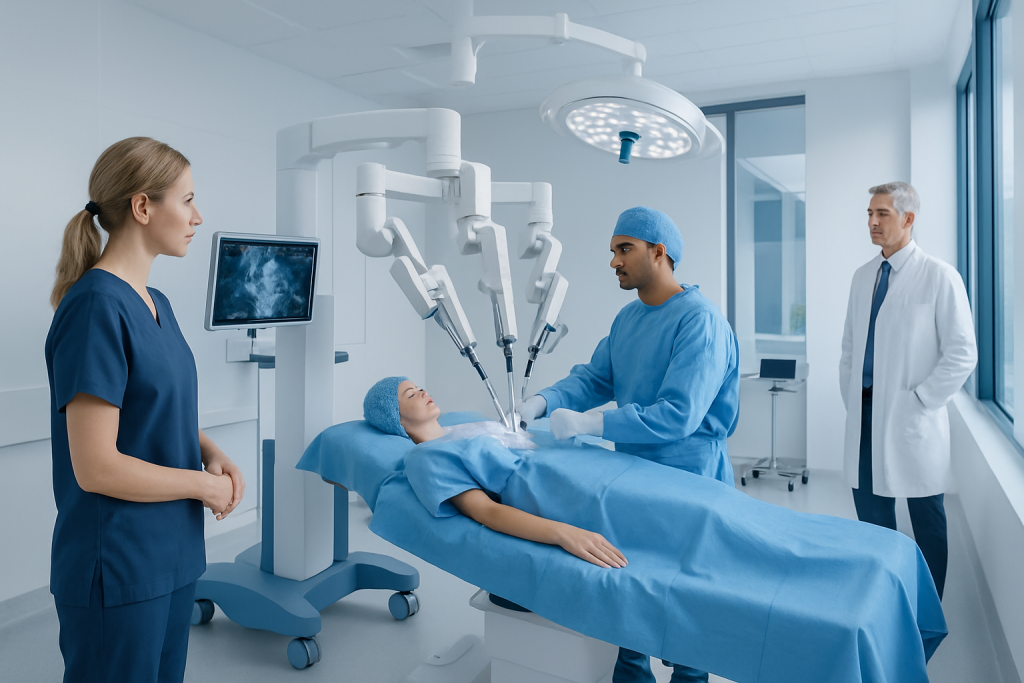
Robotic thoracic surgery is performed by a surgeon who controls robotic instruments from a nearby console; the system does not operate independently. It may be an option for selected lung, esophageal, mediastinal, pleural, diaphragmatic, and chest-wall conditions.
Key Takeaways
- Robotic thoracic surgery is performed by a surgeon who controls robotic instruments from a nearby console; the system does not operate independently.
- It may be an option for selected lung, esophageal, mediastinal, pleural, diaphragmatic, and chest-wall conditions.
- Recovery varies with the operation performed, underlying health, and whether lung tissue or other structures are removed.
- Possible complications include bleeding, infection, air leak, breathing problems, blood clots, and the need to convert to an open operation.
- Early walking, breathing exercises, pain control, and following activity restrictions support a safer recovery.
Robotic thoracic surgery is a minimally invasive approach for operations in the chest, including procedures involving the lungs, mediastinum, esophagus, diaphragm, and chest wall. It may reduce incision-related discomfort and shorten hospital recovery for selected patients, while still requiring careful surgical planning and follow-up.
Overview: What Is Robotic Thoracic Surgery?
Robotic thoracic surgery is a type of minimally invasive chest surgery. A thoracic surgeon uses a computer-guided robotic system to control small instruments and a high-definition camera through several small incisions between the ribs. The surgeon remains fully in control throughout the procedure; the robotic system does not make decisions or perform surgery on its own.
This approach can be used for selected operations involving the lungs, lining around the lungs, mediastinum (the area between the lungs), esophagus, diaphragm, and chest wall. For some people, it offers a less invasive alternative to thoracotomy, an operation performed through a larger incision with rib spreading. Whether robotic surgery is appropriate depends on the diagnosis, anatomy, extent of disease, and the surgical team’s assessment.
Robotic thoracic surgery is often discussed alongside video-assisted thoracoscopic surgery (VATS). Both use small incisions and a camera. The robotic platform may give the surgeon three-dimensional visualization and wristed instruments that can move in ways that may be helpful during precise dissection and reconstruction.
How It Works and Who May Be a Candidate
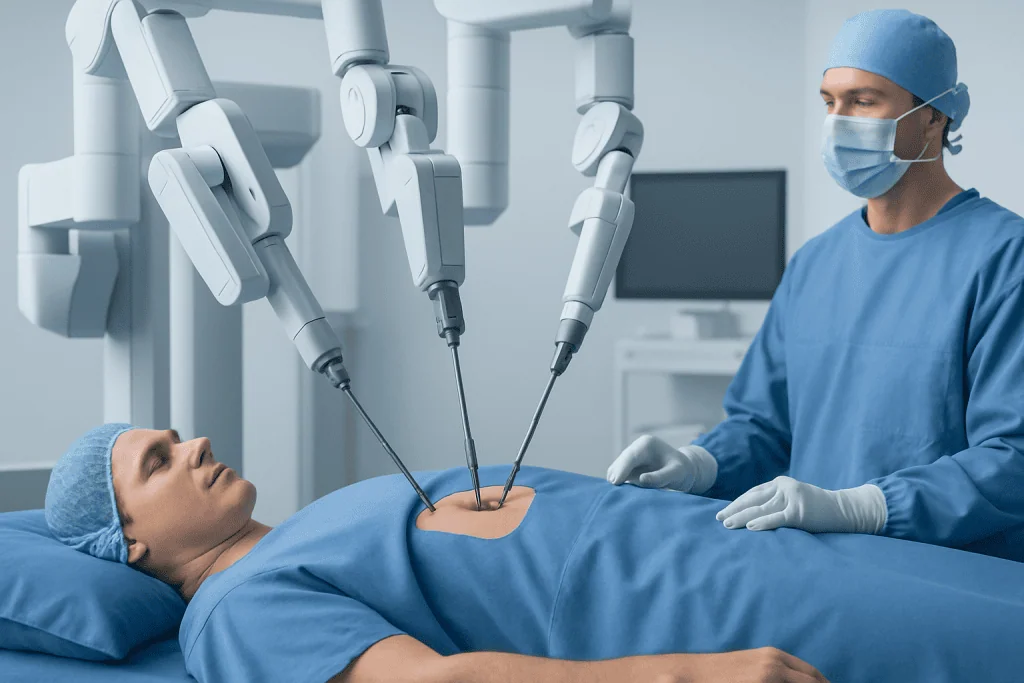
During robotic thoracic surgery, the surgeon sits at a console close to the operating table and moves hand controls that translate into precise movements of instruments inside the chest. An assistant at the patient’s side helps with positioning, instrument changes, and any immediate needs. The operation is performed under general anesthesia, so the patient is asleep and does not feel pain during the procedure.
Candidates may include people needing removal or biopsy of a lung nodule, a segment or lobe of lung, a mediastinal mass, a thymus gland lesion, part of the esophagus, or certain pleural and diaphragmatic conditions. It may also be used in selected cases of early-stage lung cancer, although cancer treatment decisions depend on tumor type, stage, lymph-node evaluation, lung function, and overall health.
Before recommending this approach, the team usually reviews imaging, pathology results if available, breathing tests, heart health, previous chest operations, medication use, and ability to tolerate anesthesia. Extensive scar tissue, major blood-vessel involvement, advanced disease, severe lung impairment, or an urgent complication may make another approach safer. The decision is individualized rather than based on a single test.
- Imaging may include chest CT, PET-CT, or other targeted scans.
- Assessment may include pulmonary function testing, blood tests, and cardiac evaluation when indicated.
- People who smoke are usually advised to stop before surgery, as this can lower respiratory risks and support healing.
Step by Step: What Happens During the Procedure

Preparation begins with anesthesia and careful positioning, commonly on the side for lung procedures. The anesthesiologist may use a specialized breathing tube that allows one lung to be temporarily deflated, creating working space while the other lung is ventilated. The surgical team then cleans and drapes the chest area.
The surgeon makes several small ports, usually between the ribs, for the camera and robotic instruments. Carbon dioxide may be used in some procedures to improve visibility. Guided by the camera’s magnified three-dimensional view, the surgeon performs the planned operation, such as removing a lesion, taking lymph-node samples, repairing tissue, or removing part of an organ.
At the end of surgery, one or more chest drains may be placed to remove air or fluid and help the lung re-expand. The incisions are closed and covered. If unexpected bleeding, difficult anatomy, or another safety concern arises, the team may convert to an open operation. Conversion is a safety decision, not a failure of care.
Procedure duration varies widely. A diagnostic or limited operation may take less time than a complex lung resection or esophageal procedure. The surgical team can explain the expected range for the individual operation and whether intensive monitoring is likely after surgery.
Benefits, Limitations and Robotic Thoracic Surgery Complications
For appropriately selected patients, possible benefits of robotic thoracic surgery include smaller incisions, less chest-wall trauma, reduced blood loss, shorter hospital stay, and earlier return to ordinary activities compared with open surgery. It can also provide detailed visualization in confined areas of the chest. However, outcomes depend on the specific operation, the person’s condition, and the experience of the surgical team.
The downside of robotic surgery is that it is not suitable for every diagnosis or every patient. It requires specialized equipment and trained staff, can take longer to set up in some cases, and may not offer meaningful advantages over VATS or open surgery for a particular procedure. Robotic thoracic surgery cost also varies considerably by country, hospital, insurance coverage, procedure complexity, tests, hospital stay, and any additional treatment needed; a personalized estimate should be requested from the treating center.
Robotic thoracic surgery complications are uncommon for many patients but remain possible with any chest operation. They may include bleeding, infection, pneumonia, a prolonged air leak, fluid around the lung, irregular heart rhythm, blood clots, nerve irritation, persistent pain or numbness, and reactions to anesthesia. Depending on the procedure, there may also be risks related to swallowing, voice changes, or reduced lung capacity.
Clear discussion of expected benefits, alternatives, and individualized risks is essential before surgery. For conditions requiring complex planning, input from thoracic surgery, pulmonology, oncology, radiology, anesthesia, rehabilitation, and nutrition specialists may be useful.
How Long Does It Take to Recover From Robotic Thoracic Surgery?
Robotic thoracic surgery recovery time depends primarily on what was done. Some people leave hospital within a few days after a limited procedure, while recovery after lung resection, esophageal surgery, or a more complex operation may require a longer admission and several weeks of gradual healing. The care team will provide a plan based on chest-drain output, pain control, breathing, mobility, and the ability to eat and drink safely.
At home, many people notice steady improvement over the first few weeks, but tiredness, soreness around the incisions, altered sensation, and reduced stamina can last longer. Returning to desk work may be possible earlier than returning to physically demanding work. Full recovery may take several weeks to a few months, especially after removal of lung tissue or a major esophageal operation.
Walking several times each day, using an incentive spirometer or other prescribed breathing exercises, coughing with support from a pillow, and taking pain medicine as directed can help recovery. Good pain control is important because it allows deeper breathing and movement. Patients should attend follow-up appointments, where the team checks wound healing, chest imaging when needed, pathology findings, and the next steps in treatment.
Acibadem International’s multidisciplinary specialists and JCI-accredited hospitals evaluate and treat thoracic conditions for international patients, with care plans tailored to the procedure and recovery needs.
What Not to Do After Thoracic Surgery
After thoracic surgery, patients should not ignore the discharge instructions given by their own surgical team. In general, they should avoid smoking and secondhand smoke, as these impair lung function and wound healing. They should also avoid strenuous exercise, heavy lifting, pushing, pulling, or driving until the surgeon says these activities are safe.
Patients should not stop prescribed medicines suddenly or use non-prescribed supplements without checking first, particularly if they take blood thinners, pain medicines, or medications that affect breathing. Alcohol should be avoided while taking opioid pain medicines or any medication that causes drowsiness. Incisions should be kept clean and dry according to instructions; soaking in a bath, pool, or hot tub is usually delayed until wounds have healed.
Long periods of immobility should be avoided. Gentle, frequent movement helps reduce the risk of blood clots and supports lung expansion, but activity should increase gradually. Patients should also avoid suppressing a productive cough; instead, they should use the breathing and coughing techniques taught by the hospital team.
- Do not lift heavy objects until cleared by the surgeon.
- Do not drive while taking sedating pain medication or while unable to turn comfortably.
- Do not miss follow-up visits, particularly when pathology results or additional treatment are being discussed.
What Is the Most Painful Thoracic Surgery?
There is no single operation that is always the most painful, because pain is personal and influenced by the type of procedure, incision, nerve sensitivity, complications, and prior health conditions. In general, open thoracotomy can cause more postoperative chest-wall pain than minimally invasive approaches because it uses a larger incision and may involve spreading the ribs.
Operations that involve extensive chest-wall reconstruction, multiple rib procedures, or major open surgery can also be associated with significant pain. Even small-incision surgery can cause soreness or burning sensations because instruments pass between the ribs, where nerves are located. Good pain management therefore remains important after robotic, VATS, and open thoracic procedures.
Care plans may include non-opioid medicines, short-term opioid medicines when appropriate, regional anesthesia techniques, and breathing and mobility support. Patients should tell the care team if pain prevents deep breathing, walking, sleeping, or eating. Persistent or worsening pain should be assessed rather than managed alone.
When to Seek Medical Care
Patients should contact their surgical team promptly for fever, increasing redness or drainage from an incision, worsening pain, persistent nausea or vomiting, new swelling in a leg, or a cough that is becoming more severe. These symptoms do not always indicate a serious problem, but timely assessment can help identify complications early.
Urgent medical care is needed for sudden or severe shortness of breath, chest pain that is new or worsening, coughing up a large amount of blood, fainting, confusion, blue or gray lips, or signs of a severe allergic reaction. People should follow the emergency advice given at discharge and seek local emergency services when symptoms are severe.
Follow-up also matters when recovery seems slower than expected. The care team can review breathing, pain, activity, nutrition, emotional wellbeing, and test results, and can coordinate further treatment such as oncology care, pulmonary rehabilitation, or additional imaging if needed.
Frequently asked questions
Is robotic thoracic surgery safer than open surgery?
Robotic thoracic surgery can be a safe option for carefully selected patients when performed by an experienced thoracic team. It may reduce the size of incisions and chest-wall injury, but it is not automatically safer for every condition. The safest approach depends on the planned operation, anatomy, disease extent, and overall health.
How long is the hospital stay after robotic thoracic surgery?
Hospital stay varies by procedure and recovery progress. A limited operation may involve a shorter stay, while lung resection, esophageal surgery, or complications may require more time in hospital. Chest-drain removal, breathing, mobility, pain control, and eating safely all influence discharge timing.
Will a chest tube be needed after robotic thoracic surgery?
Many people having lung or pleural surgery need a temporary chest tube after the operation. It removes air and fluid so the lung can re-expand and the surgical team can monitor healing. The tube is removed when drainage and air leak findings are satisfactory.
Can robotic thoracic surgery be used for lung cancer?
It can be used for selected people with lung cancer, especially when surgical removal is appropriate and technically feasible. The operation may involve removing a small part of the lung, a segment, or a lobe, often with lymph-node assessment. Cancer stage, tumor location, lung function, and other treatments needed determine the best plan.
What is the difference between robotic thoracic surgery and VATS?
Both robotic thoracic surgery and VATS use small chest incisions and a camera. Robotic surgery uses surgeon-controlled instruments with articulated joints and often three-dimensional imaging, while VATS uses conventional thoracoscopic instruments. Either may be appropriate depending on the procedure and surgical expertise.
When can someone exercise after robotic thoracic surgery?
Gentle walking is usually encouraged soon after surgery, but the pace and duration should increase gradually. Heavy lifting, vigorous exercise, swimming, and contact activities are normally delayed until the surgeon confirms that healing is adequate. Individual restrictions vary, particularly after lung or chest-wall procedures.
References
- American College of Surgeons
- Society of Thoracic Surgeons
- National Cancer Institute
- National Heart, Lung, and Blood Institute
- European Society of Thoracic Surgeons
This article is for general information only and is not a substitute for professional medical advice. Please consult a qualified doctor about your individual situation.
Robotic Thoracic Surgery in Turkey — costs, top hospitals & a free quote
JCI-accredited · board-certified surgeons · reply within 24h
Add us as a Preferred Source to see more of our trusted health content across Google Search, AI Overviews and Discover.

Robotic Surgery
Robot-assisted procedures across urology, gynecology and general surgery for greater precision and faster recovery.