Orthopedic Hinged Knee Brace: An Evidence-Based Patient Guide

Hinged braces use side supports to help control sideways knee movement and, in some designs, range of motion. They are commonly prescribed after ligament injuries, fractures, knee surgery, or episodes of knee instability.
Key Takeaways
- Hinged braces use side supports to help control sideways knee movement and, in some designs, range of motion.
- They are commonly prescribed after ligament injuries, fractures, knee surgery, or episodes of knee instability.
- A brace supports rehabilitation but does not replace an accurate diagnosis, physiotherapy, muscle strengthening, or activity modification.
- The right fit is essential; a brace that slides, pinches, causes numbness, or irritates the skin should be reviewed promptly.
- Wear time varies widely, from activity-only use to temporary full-time use after surgery, so individual instructions should take priority.
An orthopedic hinged knee brace is a supportive device designed to limit harmful knee movement while allowing controlled bending and straightening. It may help after ligament injury, surgery, or selected forms of knee instability, but the best brace and wearing schedule depend on the diagnosis, treatment stage, and clinician’s instructions.
Orthopedic Hinged Knee Brace: Overview
An orthopedic hinged knee brace is a brace with supportive bars, or hinges, running along the inner and outer sides of the knee. These hinges are intended to improve stability and guide knee movement. Depending on the design, they may allow free bending, limit bending or straightening to a prescribed angle, or temporarily keep the knee relatively still.
Clinicians may recommend a hinged brace after a knee injury, during recovery from surgery, or for people whose knee feels unstable during walking or sport. It can be helpful for some ligament injuries, including injuries involving the medial collateral ligament, and after procedures such as knee replacement surgery when a surgeon considers bracing appropriate. The device is one part of a broader treatment plan rather than a stand-alone cure.
Braces differ in rigidity, hinge design, length, straps, padding, and motion settings. A simple off-the-shelf brace may be suitable for short-term, low-level support in some situations. A rigid postoperative or custom-fitted brace is more often used when precise movement restriction or stronger protection is needed.
How a Hinged Knee Brace Works
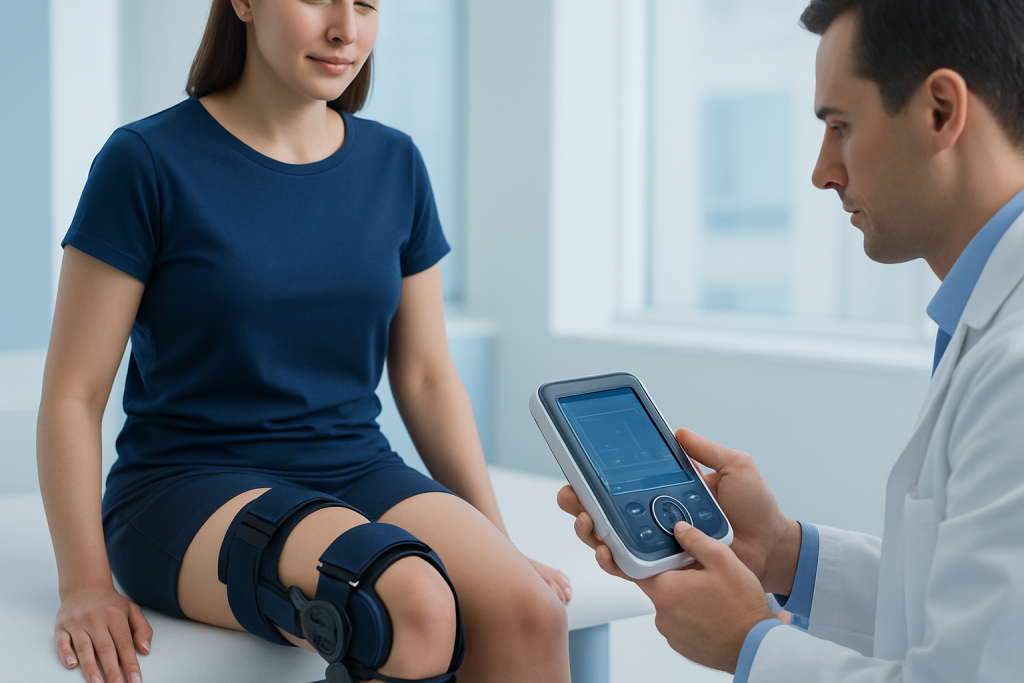
The knee depends on ligaments, muscles, cartilage, and joint surfaces working together. When a ligament is injured or the knee is recovering from a procedure, certain movements may feel unsteady or place excess stress on healing tissues. The side hinges of a brace are designed to resist excessive side-to-side motion and may reduce unwanted twisting forces during everyday movement.
Many medical hinged braces have adjustable range-of-motion stops. A clinician can set the brace to prevent the knee from bending beyond a particular point, prevent full straightening, or gradually allow more movement as recovery progresses. This can protect healing structures while avoiding prolonged unnecessary immobilization.
A brace does not hold the knee in perfect alignment in every circumstance, and it cannot repair a torn ligament or damaged cartilage by itself. Its effect is influenced by correct fitting, the underlying condition, the activity being performed, and whether the person follows a rehabilitation programme. Strengthening the thigh, hip, and core muscles is often important for restoring confidence and knee control.
Who May Be a Candidate for a Hinged Knee Brace?
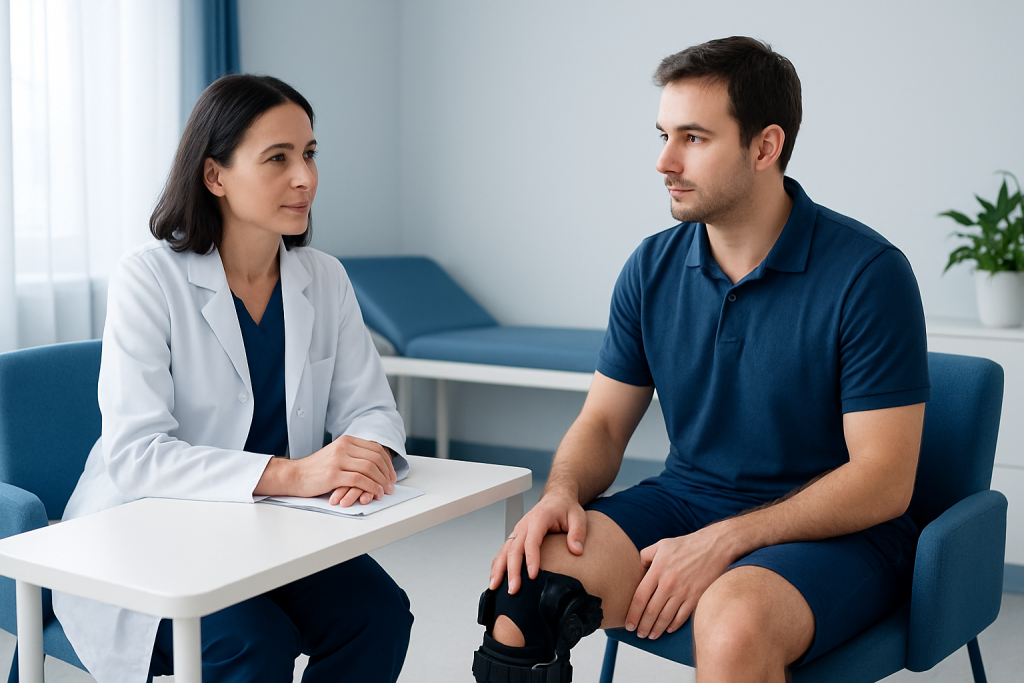
A clinician may consider an orthopedic hinged knee brace for a person with a recent ligament sprain or tear, a stable fracture requiring protected movement, recurrent knee instability, or recovery following an operation. It may also be used after some patellar dislocations or tendon and ligament repairs, although the specific brace settings and restrictions depend on the procedure.
People with anterior cruciate ligament tears may use a brace at selected stages of non-surgical care or after reconstruction, but recommendations vary. Research does not support routine bracing for every person with an ACL injury or after every reconstruction. The decision is individualized according to knee stability, activity goals, surgical technique, associated injuries, and the rehabilitation plan.
Before prescribing a brace, an orthopedic clinician usually assesses swelling, pain, joint movement, ability to bear weight, ligament stability, skin condition, circulation, and nerve function. Imaging such as X-ray or MRI may be needed when a fracture, significant ligament injury, meniscus injury, or other internal knee problem is suspected.
- Potential reasons for use include ligament injury, postoperative protection, or selected unstable knee conditions.
- People with significant swelling, fragile skin, reduced sensation, or circulation problems need careful fitting and monitoring.
- New inability to bear weight, marked deformity, or a locked knee requires medical assessment rather than self-treatment with a brace.
Fitting and Using a Hinged Knee Brace: Step by Step
When a brace is prescribed, a clinician, orthotist, physiotherapist, or trained healthcare professional should demonstrate how to use it. The person is usually advised to wear a thin, smooth layer of clothing beneath the brace unless told otherwise. The knee should be positioned as instructed, often with the leg straight or at a specified angle during fitting.
The hinges should sit level with the knee joint line, approximately beside the centre of the knee rather than too high or too low. Straps are secured firmly enough to prevent slipping but not so tightly that they cause pressure marks, tingling, coldness, or color changes in the foot. After standing and walking a few steps, the fit should be checked again because straps can shift.
For braces with movement settings, only the treating team should change the range-of-motion limits unless the patient has been specifically taught to do so. The care team may also give instructions about weight-bearing, crutches, stairs, driving, bathing, sleeping, and exercises. Following these instructions is particularly important after surgery or a significant injury.
Braces should be inspected regularly for loose straps, damaged hinges, worn padding, or sharp edges. Skin should be checked daily, especially in people with diabetes, reduced feeling in the legs, or a history of pressure injuries. Cleaning should follow the manufacturer’s instructions, and the brace should be allowed to dry fully before reuse.
Benefits, Limitations, and Recovery Timeline
The main potential benefit of a hinged brace is controlled support during a vulnerable stage of healing. It can help some people feel more secure while walking, protect a surgical repair from movements that are temporarily restricted, and provide a practical reminder to avoid activities that could aggravate the knee. It may also support a gradual return to movement when used alongside rehabilitation.
Recovery timelines vary considerably. A mild ligament sprain may need only a short period of support, while recovery after ligament reconstruction, fracture fixation, or complex knee surgery can involve weeks or months of staged rehabilitation. The brace may be unlocked gradually or discontinued as swelling improves, movement returns, muscles regain control, and the clinician confirms that the knee is progressing safely.
Bracing has limitations. It does not reliably prevent all reinjuries, does not substitute for a rehabilitation programme, and may provide false reassurance if a person returns to demanding activity too soon. Extended use without a clear reason can contribute to stiffness, reduced confidence in the knee, and weakening from underuse in some people.
For complex injuries or persistent symptoms, orthopedic assessment may be needed to discuss structured rehabilitation or surgical care such as ACL reconstruction surgery. Acibadem International’s multidisciplinary specialists and JCI-accredited hospitals can assess knee injuries and coordinate treatment and rehabilitation for international patients.
How Many Hours a Day Should You Wear a Hinged Knee Brace?
There is no single number of hours that is right for everyone. Some people are instructed to wear a hinged knee brace only during walking, exercise, work, or other activities that place stress on the knee. Others, particularly after surgery or a fracture, may need to wear it for most of the day and sometimes while sleeping for a limited period.
The prescribed schedule depends on the injury, surgery, brace settings, weight-bearing status, swelling, and stage of recovery. A person should follow the written instructions from their orthopedic team rather than using a general schedule found online. If instructions are unclear, the care team should be contacted before reducing wear time or changing the brace settings.
Unless advised otherwise, the brace is usually removed for skin checks and hygiene. It should also be removed promptly and assessed if it causes persistent pain, numbness, unusual swelling below the brace, or skin breakdown. A clinician can advise whether temporary breaks are appropriate for the individual situation.
Which Hinged Knee Brace Is the Best?
The best hinged knee brace is the one that matches the diagnosed condition and fits correctly. A rigid postoperative brace with adjustable motion controls may be appropriate after a repair or fracture, while a functional ligament brace may be considered for specific instability during activity. A soft sleeve with flexible hinges may be adequate for some people who need modest support, but it is not interchangeable with a medical immobilizing brace.
Brand name alone does not determine whether a brace is suitable. Key considerations include the degree of instability, the need to limit bending or straightening, leg shape, skin sensitivity, comfort, ability to apply the brace correctly, and compatibility with rehabilitation goals. A brace that is uncomfortable or repeatedly slips is unlikely to provide the intended support.
It is safest to seek advice from an orthopedic clinician or physiotherapist before buying a brace for a significant injury. A fitted brace is especially important after surgery, when a fracture is possible, or when the knee gives way repeatedly. Self-selecting a brace should not delay assessment of persistent pain, swelling, or instability.
Do Hinged Knee Braces Work?
Hinged knee braces can work as a temporary support and movement-control tool when they are used for an appropriate reason and fitted correctly. They may help protect healing tissues, reduce unwanted side-to-side movement, and improve a person’s sense of stability during selected activities. Their usefulness is most clear when they are part of an individualized plan directed by a clinician.
However, results are not the same for every condition. Evidence on functional bracing for sports-related ligament injuries and routine postoperative use is mixed, and many people recover well without prolonged bracing when guided rehabilitation is followed. The benefit depends on the injury pattern, timing, brace type, and the person’s adherence to exercise and activity restrictions.
A brace should therefore be viewed as an aid, not a replacement for diagnosis and treatment. Persistent mechanical symptoms, repeated giving way, a swollen knee, or difficulty returning to normal movement may need further evaluation. In some cases, treatment for associated conditions such as a meniscus tear may be considered as part of the overall care plan.
What Are the Risks of Using a Hinged Knee Brace?
Most people can use a properly fitted hinged knee brace safely, but problems can occur. Common issues include rubbing, pressure marks, itching, heat rash, and discomfort from straps or padding. A brace that is too tight may contribute to tingling, numbness, swelling, or changes in foot color or temperature, while a loose brace may slide and fail to provide reliable support.
Reduced knee movement can contribute to stiffness, especially if the brace is worn longer than advised. Relying on a brace instead of completing prescribed exercises may also slow the return of muscle strength and movement control. In rare situations, skin sores can develop, particularly in people with impaired sensation, circulation problems, or fragile skin.
To reduce risk, the brace should be fitted as directed, skin should be checked daily, and straps should be adjusted only within the instructions provided. The brace should not be used to continue activities that the care team has restricted. New or worsening symptoms should be discussed with a healthcare professional.
When to Seek Medical Care
Urgent medical assessment is appropriate after a knee injury if there is severe pain, obvious deformity, inability to bear weight, rapid major swelling, a cold or pale foot, loss of sensation, or a wound near the joint. These symptoms can indicate an injury requiring prompt evaluation and should not be managed by bracing alone.
A clinician should also be contacted if the knee repeatedly gives way, locks so it cannot fully bend or straighten, remains significantly swollen, or fails to improve as expected. After surgery, increasing redness, warmth, drainage, fever, calf swelling, chest pain, or shortness of breath need prompt medical advice, as these symptoms can have several causes that require assessment.
If a brace causes persistent pressure, blisters, numbness, worsening pain, or swelling below the device, it should be loosened or removed as appropriate and the treating team contacted for fitting advice. Early review can often correct a fit problem and help keep rehabilitation on track.
Frequently asked questions
Can a hinged knee brace be worn over clothing?
Many hinged knee braces can be worn over a thin, smooth layer of clothing, which may reduce rubbing and make the brace more comfortable. Bulky clothing can affect fit and cause the brace to slide. The fitting instructions from the clinician or manufacturer should be followed.
Should a hinged knee brace be tight?
The brace should feel secure enough that it does not slide during walking, but it should not feel painfully tight. Numbness, tingling, coldness, color changes in the foot, or deep pressure marks may mean it is too tight or poorly positioned. A healthcare professional can check the fit.
Can I sleep in a hinged knee brace?
Some people are told to sleep in a brace for a short period after surgery or an acute injury, especially when knee movement needs to be limited. Others should remove it at night. The treating clinician’s instructions should determine whether overnight use is necessary.
Can I exercise while wearing a hinged knee brace?
This depends on the diagnosis, recovery stage, and activity. A clinician or physiotherapist may recommend specific exercises while wearing the brace and others with it removed. High-impact activity, pivoting, or sport should not be resumed simply because the knee feels supported.
How do I know if my hinged knee brace fits correctly?
The hinges should align with the knee joint, and the brace should stay in place during gentle walking without pinching or rubbing. The foot should remain warm and normally colored, with no numbness or unusual swelling. A brace that slips, twists, or causes skin irritation should be refitted.
Does a hinged knee brace replace physiotherapy?
No. A hinged knee brace may help protect the knee during recovery, but physiotherapy addresses strength, flexibility, balance, gait, and safe return to activity. These elements are important for long-term knee function and reducing the chance of further injury.
References
- American Academy of Orthopaedic Surgeons
- OrthoInfo by the American Academy of Orthopaedic Surgeons
- American Physical Therapy Association
- National Institute for Health and Care Excellence
- Mayo Clinic
This article is for general information only and is not a substitute for professional medical advice. Please consult a qualified doctor about your individual situation.
Joint and spine care in Turkey — expert assessment & treatment
JCI-accredited · board-certified surgeons · reply within 24h
Add us as a Preferred Source to see more of our trusted health content across Google Search, AI Overviews and Discover.