Sta Mca Bypass Surgery: Procedure, Recovery and Results

STA-MCA bypass is a direct cerebral revascularization procedure that creates a new route for blood to reach the brain. It may be recommended for people with moyamoya disease or selected arterial blockages causing impaired brain blood flow.
Key Takeaways
- STA-MCA bypass is a direct cerebral revascularization procedure that creates a new route for blood to reach the brain.
- It may be recommended for people with moyamoya disease or selected arterial blockages causing impaired brain blood flow.
- Careful imaging and specialist assessment are essential because the operation is not appropriate for every type of stroke risk.
- Recovery commonly involves several days in hospital and gradual return to usual activities over weeks to months.
- The main goal is to reduce future ischemic events while preserving brain function, but surgery carries important neurological and surgical risks.
STA-MCA bypass surgery is a microsurgical procedure that connects a scalp artery to a brain artery, improving blood flow around a narrowed or blocked cerebral vessel. It is most often considered for carefully selected people with moyamoya disease or reduced blood flow affecting the middle cerebral artery (MCA), particularly when symptoms continue despite medical care.
Overview: What Is STA-MCA Bypass Surgery?
STA-MCA bypass surgery is a form of brain revascularization surgery. During the operation, a neurosurgeon connects the superficial temporal artery (STA), a blood vessel under the scalp, to a branch of the middle cerebral artery (MCA) on the surface of the brain. This creates an additional pathway for oxygen-rich blood to reach brain tissue.
The procedure is designed for selected patients whose brain circulation is reduced because an artery is severely narrowed or blocked. It is frequently used in people with moyamoya disease, a condition in which blood vessels at the base of the brain progressively narrow and fragile alternative vessels develop. The bypass may also be considered in other highly selected cerebrovascular conditions after detailed evaluation by a vascular neurology and neurosurgery team.
The aim is not to reverse an existing stroke. Instead, the aim is to improve blood delivery to vulnerable brain areas and lower the likelihood of further transient ischemic attacks (TIAs) or ischemic strokes. Decisions are individualized, based on symptoms, scan findings, blood-flow testing, overall health, and the anatomy of the blood vessels.
How the Bypass Works and Who May Be a Candidate
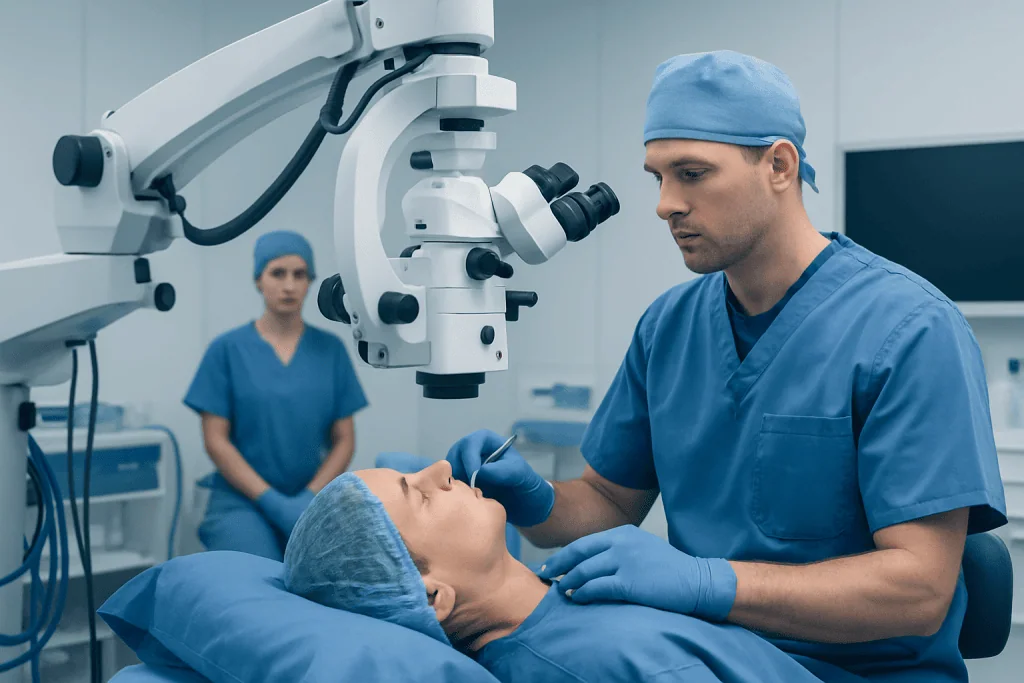
The STA normally supplies tissues of the scalp, while the MCA supplies a large area of the brain responsible for functions such as movement, sensation, speech, and attention. In an STA-MCA bypass, the surgeon redirects part of the STA circulation to a small cortical branch of the MCA. Blood can then travel through the new connection and supplement circulation beyond a narrowed artery.
Potential candidates may have recurrent TIAs, ischemic strokes, or reduced cerebral blood flow despite appropriate medical management. In moyamoya disease, surgery may be advised when imaging and blood-flow studies show that the brain is not receiving enough blood or has limited reserve. A specialist may also consider age, symptom pattern, prior strokes, medications, and whether a direct bypass is technically feasible.
Assessment often includes magnetic resonance imaging (MRI), magnetic resonance angiography or CT angiography, catheter angiography, and tests that measure cerebral perfusion or cerebrovascular reserve. These examinations help identify areas at risk and guide surgical planning. For more background on the underlying condition, patients can review moyamoya disease.
Not every person with an MCA blockage or a previous stroke needs bypass surgery. Many people benefit most from stroke prevention medicines, treatment of risk factors, or another intervention. The choice should be made by clinicians experienced in cerebrovascular disease and microsurgical revascularization.
STA-MCA Bypass Surgery Steps

Before surgery, the team reviews imaging, medications, allergies, and general fitness for anesthesia. Certain medicines may need to be adjusted, but patients should never stop antiplatelet, anticoagulant, blood-pressure, diabetes, or seizure medicines unless their treating team gives specific instructions. The scalp artery is mapped so that the surgeon can plan the incision and select an appropriate vessel segment.
The STA-MCA bypass procedure is performed under general anesthesia. The neurosurgeon makes an incision near the temple, carefully prepares a branch of the superficial temporal artery, and creates a small opening in the skull. Using an operating microscope and very fine sutures, the surgeon joins the donor artery to a small branch of the MCA on the brain surface. Blood flow through the connection is checked with specialized techniques before the skull opening and incision are closed.
STA-MCA bypass surgery time varies because vessel anatomy and surgical complexity differ between individuals. The operation commonly takes several hours, including anesthesia, positioning, vessel preparation, microsurgical connection, blood-flow checks, and closure. The team monitors blood pressure, breathing, and neurological status closely throughout the perioperative period.
After the procedure, the patient is usually cared for in an intensive care or high-dependency setting for close neurological and blood-pressure monitoring. The clinical team aims to support stable brain perfusion while watching for complications that need prompt treatment.
Benefits, Risks and What Results Mean
For an appropriately selected patient, the potential benefit of STA-MCA bypass is improved blood flow to brain tissue that has limited circulation. This may reduce recurrent ischemic symptoms and future stroke risk. In moyamoya disease, revascularization is an established strategy for reducing ischemic events in suitable patients, although the expected benefit varies according to age, disease pattern, prior symptoms, and the success of blood-flow improvement.
Like all brain operations, this surgery has risks. These can include stroke, bleeding, infection, seizures, wound problems, blood clots, anesthesia complications, and changes in speech, movement, sensation, vision, or thinking. A bypass can also narrow or clot, and some people may experience excessive blood flow to an area of the brain after surgery, known as hyperperfusion. The team monitors for these concerns and explains the individual risk profile before treatment.
What is the success rate of STA-MCA bypass surgery? There is no single success rate that applies to every patient or hospital. Technical bypass patency is generally high in experienced cerebrovascular centers, but technical patency alone does not fully describe a person’s outcome. The more meaningful measures are whether the bypass improves perfusion, whether ischemic symptoms decrease, and whether the person avoids later stroke, all of which depend on the underlying condition and individual health factors.
Follow-up imaging may be used to confirm blood flow through the graft and assess brain perfusion. Regular neurology and neurosurgery appointments remain important, as surgery is usually one part of ongoing stroke prevention and long-term care.
STA-MCA Bypass Recovery and Rehabilitation
STA-MCA bypass recovery begins with close observation in hospital. Many patients spend several days in the hospital, though the exact stay depends on neurological status, pain control, blood-pressure needs, and whether complications occur. Early care may include neurological checks, scans if needed, fluids, medication management, and gradual mobilization with help from the care team.
How painful is recovery from bypass surgery? Pain is usually related to the scalp incision, head positioning during surgery, and temporary swelling rather than pain within the brain itself. Some tenderness, headache, fatigue, and numbness around the incision can occur. The team can provide appropriate pain relief and will assess any severe, sudden, worsening, or unusual headache promptly because it may require investigation.
At home, patients are usually advised to rest, take prescribed medicines as directed, protect the incision, and increase walking and daily activity gradually. Heavy lifting, strenuous exercise, driving, and return to work should wait until the treating team confirms that it is safe. Rehabilitation may be recommended for people who have weakness, speech difficulty, balance problems, or cognitive changes related to a previous stroke or the procedure.
How long does it take to recover from moyamoya surgery? Initial wound healing often occurs over a few weeks, while fatigue and return to routine activities may take several weeks to a few months. Recovery can take longer when a person has had a recent stroke, needs rehabilitation, or has other medical conditions. Follow-up plans are individualized and often include repeat imaging to assess the bypass and the brain’s blood supply.
How Serious Is an MCA Stroke?
How serious is an MCA stroke? An MCA stroke can be serious because the middle cerebral artery supplies a large portion of one side of the brain. Symptoms may include sudden weakness or numbness of the face, arm, or leg, difficulty speaking or understanding language, vision changes, loss of balance, confusion, or neglect of one side of the body. The severity depends on the size and location of the affected area, how quickly treatment is provided, and the person’s overall health.
Some MCA strokes cause mild and temporary symptoms, while others can lead to lasting disability or be life-threatening. A TIA, sometimes called a “mini-stroke,” is also urgent because it can be a warning sign of a future stroke. New neurological symptoms should never be watched at home to see if they improve.
Emergency stroke care focuses on rapid assessment and, when appropriate, treatments to restore blood flow. Longer-term care may include rehabilitation, medicines, management of blood pressure and cholesterol, diabetes care, smoking cessation support, and treatment of the underlying blood-vessel condition. For general information about the condition, see stroke.
STA-MCA bypass is not an emergency treatment for an acute MCA stroke. It is a planned operation considered after specialist assessment of longer-term blood-flow needs and stroke risk.
When to Seek Medical Care
Emergency medical care is needed immediately for possible stroke symptoms. These include sudden facial drooping, weakness or numbness on one side, speech difficulty, confusion, sudden vision loss or double vision, severe loss of balance, or a sudden severe headache unlike usual headaches. Calling local emergency services is safer than driving to hospital, as rapid evaluation can be critical.
People already diagnosed with moyamoya disease, significant intracranial arterial narrowing, or a previous TIA or stroke should contact their treating clinician promptly if symptoms recur, change, or become more frequent. Symptoms such as brief episodes of weakness, speech disturbance, or visual changes still need urgent assessment even if they resolve.
After STA-MCA bypass surgery, patients should seek urgent medical advice for fever, increasing redness or drainage from the wound, worsening headache, repeated vomiting, seizures, new weakness, speech changes, confusion, chest pain, or shortness of breath. Follow-up appointments should be kept so the team can monitor healing, medicines, and bypass function.
Acibadem International’s multidisciplinary specialists and JCI-accredited hospitals evaluate and treat complex cerebrovascular conditions for international patients, including planned surgical revascularization when clinically appropriate.
Frequently asked questions
What is STA-MCA bypass surgery used for?
STA-MCA bypass surgery is used to improve blood supply to part of the brain when a major artery is severely narrowed or blocked. It is most commonly considered for selected people with moyamoya disease and, less commonly, other conditions causing impaired cerebral perfusion. A specialist team uses imaging and blood-flow studies to determine whether it is appropriate.
Is STA-MCA bypass an open brain surgery?
Yes. It is a microsurgical operation that involves making an opening in the skull to access a small artery on the brain surface. The procedure is performed under general anesthesia by surgeons with specialized cerebrovascular and microsurgical expertise.
How long is the hospital stay after STA-MCA bypass surgery?
Many patients stay in hospital for several days, including a period of close monitoring after surgery. The length of stay varies with the patient’s neurological condition, blood-pressure management, wound healing, and any complications. The treating team can give the most reliable estimate for an individual case.
Can a person have a stroke after STA-MCA bypass surgery?
Yes. Although the operation is intended to reduce future ischemic risk in selected patients, stroke is also a recognized complication around the time of surgery and can occur later for other reasons. Careful patient selection, surgical monitoring, medication management, and follow-up are important parts of reducing risk.
Will the bypass cure moyamoya disease?
A bypass does not remove the underlying tendency for arteries to narrow in moyamoya disease. However, it can provide an additional route for blood to reach the brain and may substantially improve circulation in the treated area. Ongoing neurological follow-up and imaging are still needed.
When can a patient return to work after STA-MCA bypass surgery?
Return to work depends on the type of work, energy level, neurological recovery, and whether rehabilitation is needed. Some people may return to lighter activities within weeks, while others need several months. The surgeon and rehabilitation team should clear return to work and driving individually.
References
- American Heart Association
- American Stroke Association
- National Institute of Neurological Disorders and Stroke
- European Stroke Organisation
- Mayo Clinic
This article is for general information only and is not a substitute for professional medical advice. Please consult a qualified doctor about your individual situation.
Hair transplant in Turkey — costs, graft counts & a free assessment
JCI-accredited · board-certified surgeons · reply within 24h
Add us as a Preferred Source to see more of our trusted health content across Google Search, AI Overviews and Discover.
Check your numbers in seconds
BMI, calories, due date, blood pressure and 30+ more clinical calculators — free, instant, doctor-reviewed ranges.

More from the Health Library


Related Specialists
Dr. Sirri Özkan
General Surgery
Dr. Morena Taşdemir
Emergency Service
Prof. Dr. Sinan Karaoğlu
Orthopedic Surgery & Traumatology
Dr. Mehtap Acar
Pediatrics