

Cancer of the Scalp Treatment: How It Works, Results and What to Expect
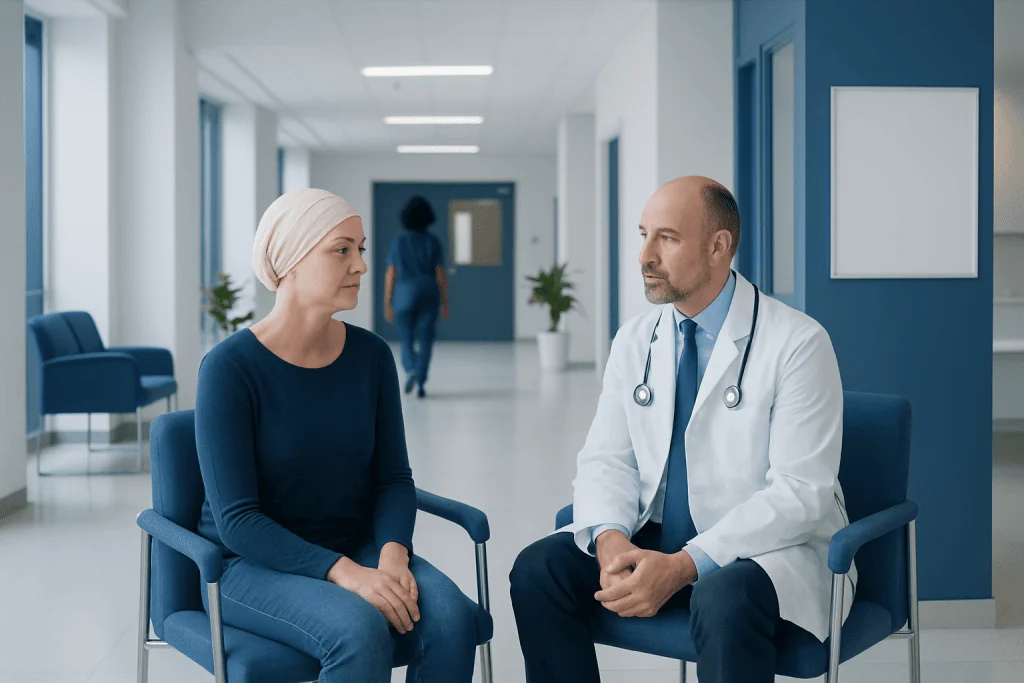
Scalp cancer is most often a form of skin cancer, such as basal cell carcinoma, squamous cell carcinoma, or melanoma. Treatment may involve standard excision, Mohs surgery, radiation therapy, medicines, or a combination of approaches.
Key Takeaways
- Scalp cancer is most often a form of skin cancer, such as basal cell carcinoma, squamous cell carcinoma, or melanoma.
- Treatment may involve standard excision, Mohs surgery, radiation therapy, medicines, or a combination of approaches.
- The scalp can be harder to inspect than other skin areas, so new or changing lesions should be checked promptly.
- Mohs surgery can preserve more healthy tissue while confirming that cancer has been removed at the edges.
- Recovery depends on the size and location of treatment, the repair needed, and whether further therapy is recommended.
Cancer of the scalp treatment is tailored to the type, size, depth, and spread of the tumor. Most scalp skin cancers can be treated effectively, particularly when found early, with surgery often providing the main treatment and additional therapies used when needed.
Overview: How Cancer of the Scalp Treatment Works
Cancer of the scalp treatment aims to remove or destroy cancer cells while preserving as much healthy skin, hair-bearing tissue, and function as possible. The right approach depends on the exact cancer type, its size and depth, whether it has high-risk features, its location on the scalp, and whether there is evidence that it has spread beyond the original site.
Many scalp cancers are non-melanoma skin cancers, especially basal cell carcinoma and squamous cell carcinoma. Melanoma is less common but can behave more aggressively and needs prompt specialist assessment. Treatment is planned after a biopsy confirms the diagnosis; clinicians may involve dermatology, surgical oncology, pathology, radiation oncology, medical oncology, and reconstructive surgery when appropriate.
Surgery is commonly the first treatment for a localized tumor. Depending on the situation, a doctor may recommend standard surgical excision or Mohs surgery, a tissue-sparing technique that checks the edges of removed tissue during the procedure. Radiation therapy and systemic medicines may be considered for cancers that are extensive, recurrent, cannot be fully removed surgically, or have spread.
Symptoms, Causes and Who May Be a Candidate for Treatment
A scalp cancer may appear as a sore that does not heal, a persistent scaly or crusted area, a new lump, a bleeding spot, or a mole that changes in size, shape, color, or sensation. It may be hidden by hair, which is one reason routine scalp checks by an individual, hairdresser, family member, or clinician can be helpful. Not every scalp change is cancer, but a persistent or changing lesion deserves professional review.
Long-term ultraviolet exposure is a major risk factor. Fair skin, a history of sunburns, increasing age, previous skin cancer, immune suppression, radiation exposure, and certain inherited conditions can also increase risk. People with thinning hair or bald areas may have more direct sun exposure to the scalp.
Most people with a confirmed, localized scalp skin cancer are candidates for curative local treatment. The care team considers the tumor’s pathology report, including its type and depth, along with the person’s general health, medicines, immune status, and personal priorities. A scalp lesion near critical structures, a recurrent cancer, or a large tumor may require coordinated care from more than one specialty.
Diagnosis and Staging of Scalp Cancer
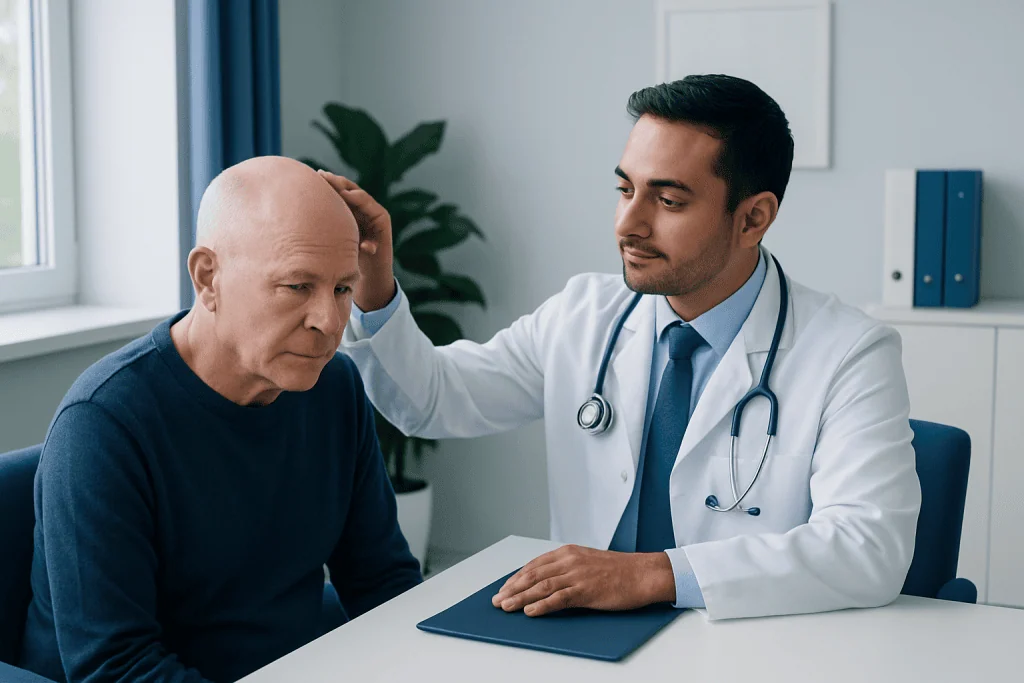
Diagnosis starts with a focused skin examination. A dermatologist may use dermoscopy, a handheld magnifying device with light, to assess a suspicious lesion. A biopsy is then performed to remove a small sample, or sometimes all of a small lesion, for examination by a pathologist. The pathology result identifies the cancer type and helps guide treatment.
What are the stages of scalp cancer? Staging is not identical for every type of skin cancer. Basal cell carcinoma is usually assessed by its local features rather than a commonly used numbered staging system. Squamous cell carcinoma and melanoma may be staged using factors such as tumor thickness or size, depth of invasion, ulceration, nerve involvement, lymph node involvement, and spread to distant organs.
For some higher-risk squamous cell cancers or melanomas, the doctor may recommend imaging or assessment of nearby lymph nodes. Melanoma staging may include discussion of a sentinel lymph node biopsy in selected cases. Staging helps estimate risk and determine whether local treatment alone is appropriate or whether further treatment and closer follow-up are needed.
Treatment Options and the Procedure Step by Step
Standard surgical excision removes the visible cancer along with a margin of normal-looking skin. The specimen is examined in a laboratory to confirm whether the margins are clear of cancer. On the scalp, the wound may be allowed to heal naturally, closed with stitches, or repaired with a skin graft or flap, depending on its size, location, and tension on surrounding skin.
Mohs surgery is often considered for selected cancers where preserving healthy tissue is especially important, where borders are unclear, or where a cancer has returned after treatment. After local anesthetic is given, the surgeon removes a thin layer of tissue and examines it under a microscope. If cancer cells are seen at an edge, another precisely targeted layer is removed. This process continues until the margins are clear, after which the wound is repaired or managed for healing.
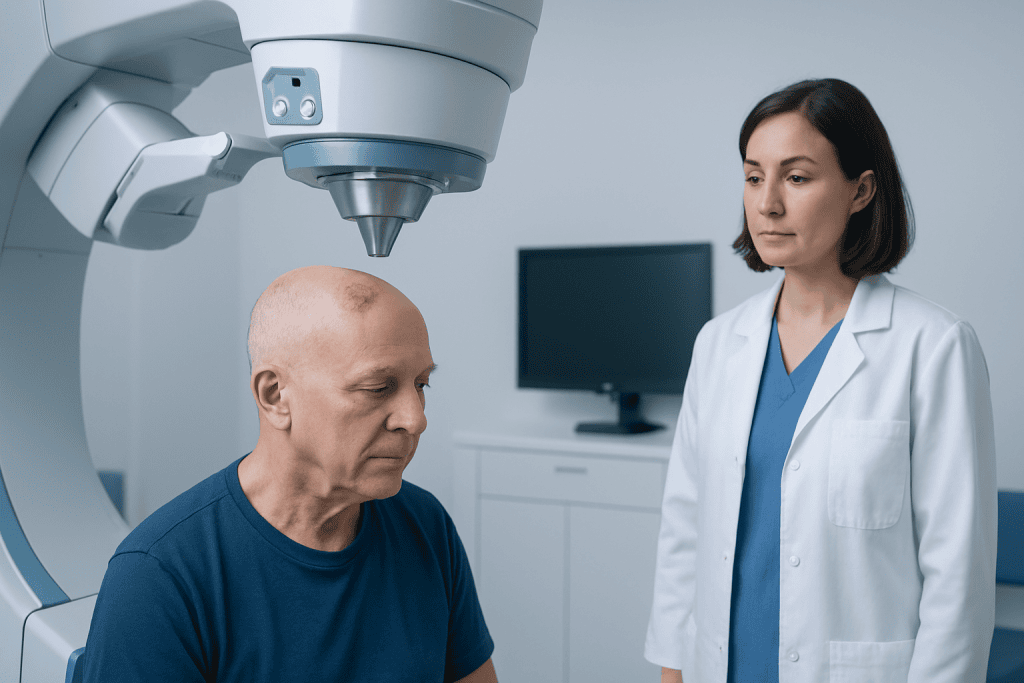
Radiation therapy can be an alternative for people who are not suitable for surgery or can be used after surgery in certain high-risk situations. Advanced basal cell carcinoma, squamous cell carcinoma, and melanoma may sometimes be treated with systemic therapies, such as immunotherapy, targeted therapy, or other medicines selected by oncology specialists. The treatment plan should be individualized after discussion of expected benefits, limitations, and possible side effects.
Care may also include evaluation for related conditions, including melanoma, when pathology or clinical features raise concern. For international patients, Acibadem International’s multidisciplinary specialists and JCI-accredited hospitals can coordinate diagnostic evaluation and treatment planning for scalp cancers.
Benefits, Risks and Recovery Timeline
The principal benefit of local treatment is removal or control of the cancer. Mohs surgery can offer the advantage of checking the surgical margins during the procedure and may preserve more healthy tissue than removing a wider margin at the outset. The best method depends on the cancer type and individual circumstances; no single approach is right for every scalp lesion.
Short-term effects after scalp surgery can include tenderness, swelling, bruising, bleeding, numbness, itching, and discomfort around the wound. Local anesthetic is used during Mohs surgery, so patients should not feel sharp pain during tissue removal, although they may feel pressure or pulling. Discomfort after the anesthetic wears off is often manageable with the pain-relief plan advised by the treating team.
Healing time varies. Small wounds may heal over several weeks, while larger repairs, grafts, or flaps can require longer follow-up. Stitches are commonly removed according to the repair location and surgeon’s instructions. Scars are expected after surgery, and hair may not fully regrow through scar tissue; however, reconstructive options may help optimize wound healing and appearance when needed.
Possible complications include infection, bleeding, delayed healing, wound separation, noticeable scarring, altered scalp sensation, graft or flap problems, and recurrence of cancer. These risks are influenced by the size and depth of the tumor, the repair method, smoking, diabetes, immune suppression, and use of blood-thinning medicines. A care team can explain the risks most relevant to the individual procedure.
How Curable Is Scalp Cancer?
How curable is scalp cancer? Many scalp skin cancers are highly treatable, particularly when they are diagnosed early and have not spread. Localized basal cell carcinoma and squamous cell carcinoma are often treated successfully with surgery or other local therapy. The outlook for melanoma also depends strongly on how early it is identified and how deeply it has grown into the skin.
The word “curable” cannot be applied equally to every case. Larger tumors, recurrent cancers, cancers involving nerves or lymph nodes, and cancers that have spread elsewhere require more complex treatment and may have a greater chance of returning. Even after successful treatment, people who have had one skin cancer have an increased likelihood of developing another, so regular follow-up and sun protection remain important.
Pathology findings, staging information, and the completeness of removal help the care team discuss outlook in a meaningful, individual way. Follow-up visits are used to examine the treated area, assess lymph nodes when relevant, and identify new suspicious lesions early.
Can Skin Cancer on the Scalp Go to the Brain?
Can skin cancer on the scalp go to the brain? Most skin cancers on the scalp remain confined to the skin and do not spread to the brain. However, some aggressive or advanced cancers can grow deeply into nearby tissue or spread through lymphatic channels or the bloodstream. Melanoma and advanced squamous cell carcinoma have a greater potential to spread than most basal cell carcinomas.
Spread to the brain is uncommon and is generally associated with advanced disease rather than an early localized scalp lesion. A doctor may recommend imaging when there are high-risk tumor features, known spread to lymph nodes or other organs, or symptoms that require investigation. New neurological symptoms, such as persistent severe headache, weakness, seizures, vision changes, or confusion, should be assessed urgently, although these symptoms have many possible causes.
Prompt diagnosis and appropriate treatment reduce the chance that a cancer will progress. People should avoid assuming that a scalp lesion is harmless simply because it is painless or hidden by hair; a professional examination is the reliable way to determine what it is.
Prevention, Self-care and When to Seek Medical Care
Sun protection helps lower the risk of future skin cancers. Useful measures include wearing a broad-brimmed hat, seeking shade when ultraviolet exposure is strong, and using broad-spectrum sunscreen on exposed scalp areas. Sunscreen should be reapplied as directed on the product label, particularly after sweating or swimming. Avoiding indoor tanning is also important.
After treatment, follow wound-care instructions closely. This may include keeping the area clean, changing dressings as advised, avoiding strenuous activities for a short period, and protecting the healing site from sun exposure. Patients should ask their clinician before stopping prescribed medicines or starting new creams, supplements, or pain medicines around the time of surgery.
When to seek medical care A person should arrange a medical assessment for a scalp lesion that persists, grows, bleeds, crusts repeatedly, changes color or shape, becomes painful, or does not heal. After a procedure, urgent clinical advice is appropriate for heavy or persistent bleeding, rapidly worsening redness or swelling, fever, pus-like drainage, increasing pain, or a wound that opens. Ongoing skin examinations are especially important for people with a previous skin cancer or other risk factors.
Frequently asked questions
How is cancer of the scalp treated?
Treatment depends on the cancer type, size, depth, location, and stage. Localized cancers are often treated with surgical excision or Mohs surgery, while radiation therapy or systemic medicines may be used for selected high-risk or advanced cases. A biopsy and pathology review guide the plan.
How painful is Mohs surgery on the scalp?
Mohs surgery is usually performed with local anesthetic, so sharp pain should be controlled during the procedure. People may feel pressure, movement, or pulling while tissue is removed and repaired. Mild to moderate soreness can occur after the anesthetic wears off, and the treating team will provide safe pain-management guidance.
Will hair grow back after scalp cancer surgery?
Hair can regrow if hair follicles are not permanently damaged. However, hair may not grow through scar tissue, a skin graft, or an area treated with radiation. The surgeon can discuss likely cosmetic effects and reconstruction options before treatment.
Is a scalp biopsy necessary for a suspicious spot?
A biopsy is usually needed to confirm whether a suspicious scalp lesion is cancer and to identify the specific type. It also provides information that helps determine the most suitable treatment. In some cases, a small lesion can be fully removed as part of the biopsy.
Can scalp cancer return after treatment?
Yes, a treated cancer can occasionally recur, particularly if it had high-risk features or was previously treated. New skin cancers can also develop elsewhere on the scalp or body. Regular follow-up, self-checks, and sun protection support early detection.
How long does recovery take after scalp cancer removal?
Recovery varies with the size of the wound and the repair method. Smaller procedures may heal within weeks, while larger excisions, grafts, or flap repairs can need a longer recovery period and more follow-up visits. The surgical team provides individualized activity and wound-care instructions.
References
- American Academy of Dermatology
- National Cancer Institute
- American Cancer Society
- National Comprehensive Cancer Network
- World Health Organization
This article is for general information only and is not a substitute for professional medical advice. Please consult a qualified doctor about your individual situation.
Hair transplant in Turkey — costs, graft counts & a free assessment
JCI-accredited · board-certified surgeons · reply within 24h
Add us as a Preferred Source to see more of our trusted health content across Google Search, AI Overviews and Discover.

More from the Health Library



Related Specialists
Assoc. Prof. Dr. Mehmet Salih Söylemez
Orthopedic Surgery & Traumatology
Dr. Bedirhan Kahraman
Emergency Service
Dr. M. Mümtaz Özarar
Breast Clinic Clinical Service
Dr. Mehtap Acar
Pediatrics