Brain Ablation: Procedure, Recovery and Results

Brain ablation is not one single operation; the technique and goal depend on the condition being treated. Laser interstitial thermal therapy (LITT) is a commonly used minimally invasive form of thermal brain ablation.
Key Takeaways
- Brain ablation is not one single operation; the technique and goal depend on the condition being treated.
- Laser interstitial thermal therapy (LITT) is a commonly used minimally invasive form of thermal brain ablation.
- Careful imaging, neurological assessment, and case selection are essential because treated brain tissue does not recover.
- Most patients begin gentle movement soon after surgery, while the length of bed rest and hospital stay varies by procedure and individual recovery.
- Potential benefits include treating a difficult-to-reach target through a small opening, but risks can include bleeding, swelling, infection, and changes in neurological function.
- Outcomes are measured differently for epilepsy and tumors, so a single success rate does not apply to all brain ablation procedures.
Brain ablation is a targeted neurosurgical procedure that destroys a small, carefully selected area of brain tissue using heat or other forms of energy. It may be considered for certain forms of drug-resistant epilepsy, brain tumors, or other localized brain conditions when a multidisciplinary team believes the expected benefits outweigh the risks.
Overview: What Is Brain Ablation?
Brain ablation is a procedure that deliberately destroys or disconnects a very small, precisely defined area of brain tissue. It may be used to treat a focal seizure source, a tumor, or another localized abnormality when medication alone is not effective or when standard open surgery may carry added risk. The treatment plan is individualized because the brain area involved strongly affects both the potential benefit and possible side effects.
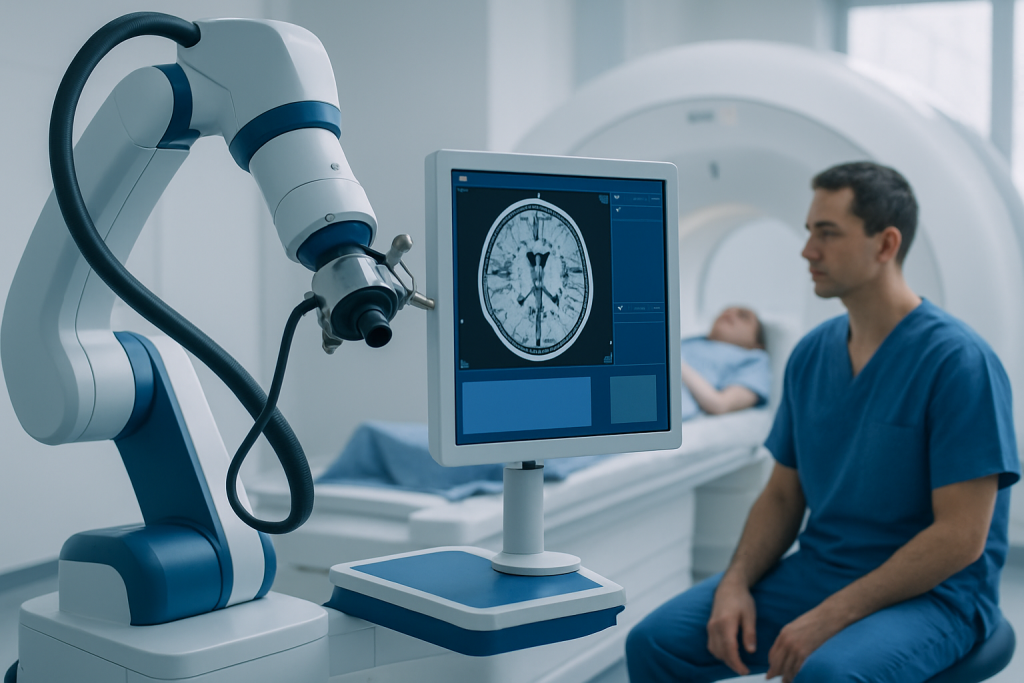
One widely used approach is laser interstitial thermal therapy, often called LITT or laser ablation brain surgery. A neurosurgeon places a thin laser probe through a small skull opening and uses MRI guidance to heat the selected tissue. Temperature-monitoring software helps the team limit treatment to the planned target while protecting nearby structures.
Brain ablation differs from radiation therapy, which uses high-energy radiation over time to damage abnormal cells, and from conventional craniotomy, which involves opening a larger section of the skull to reach the treatment area. It can be a less invasive option for selected patients, but it is still a major brain procedure requiring expert assessment and follow-up.
How Brain Ablation Works and Who May Be a Candidate
The aim of brain ablation is to treat tissue that is causing harm while preserving as much healthy brain function as possible. In epilepsy, the target may be the seizure-onset zone, such as part of the temporal lobe or a deep lesion associated with seizures. In oncology, the target may be a small brain tumor, recurrent tumor, or tissue change after prior treatment, depending on its location and other clinical factors.
Before recommending ablation, the care team reviews detailed MRI scans and, when appropriate, EEG recordings, functional testing, pathology findings, and prior treatments. For epilepsy, assessment may include prolonged video-EEG monitoring, neuropsychological testing, and imaging designed to identify where seizures begin. Patients being assessed for difficult-to-control seizures may also benefit from learning about epilepsy and the wider range of available treatments.
Potential candidates usually have a clearly identifiable treatment target that can be reached safely with the planned approach. Suitability may be affected by the target’s size, its closeness to areas controlling speech, movement, vision, memory, or sensation, a person’s general health, blood-thinning medicines, and the likely value of alternative treatments. A multidisciplinary discussion involving neurosurgery, neurology, neuroradiology, anesthesiology, oncology, and rehabilitation specialists is often important.
Brain Ablation Procedure: Step by Step

Preparation begins with preoperative imaging and planning. The patient may have blood tests, medication review, and instructions about eating, drinking, and medicines before anesthesia. Some seizure medicines are continued unless the treating clinician advises otherwise. The team uses scans to create a three-dimensional route to the target that avoids important blood vessels and functional brain regions whenever possible.
During laser ablation, the patient is usually under general anesthesia. The surgeon makes a small incision and creates a small opening in the skull, then inserts the laser catheter along the preplanned route. The procedure is typically performed with real-time MRI guidance. Controlled laser energy heats the target, and MRI temperature mapping allows the surgeon to watch the developing treatment zone.
After treatment, the probe is removed and the small incision is closed. Imaging is often performed immediately afterward to confirm the ablation area and check for complications. Other ablation approaches, such as radiofrequency ablation or stereotactic radiosurgery in selected situations, have different technical steps. The appropriate method depends on the diagnosis, anatomy, and treatment objective. Patients can discuss laser interstitial thermal therapy with a specialist when it is being considered for their condition.
Recovery Timeline After Brain Ablation
Recovery varies according to the treated area, the reason for ablation, the patient’s neurological condition before surgery, and whether complications occur. After the procedure, patients are monitored closely in a recovery unit or neurosurgical ward. The team checks alertness, speech, strength, sensation, vision, headache, nausea, and seizure activity. Some patients spend one night in hospital, while others need a longer stay.
In the first days, tiredness, headache, scalp tenderness, nausea, and temporary changes related to swelling around the treated area can occur. Clinicians may prescribe medicines to control pain, nausea, seizures, or inflammation. Follow-up imaging is often scheduled because the ablated tissue and surrounding swelling can change in appearance over the first weeks and months.
Many people return gradually to routine daily activities over days to weeks, but driving, work, exercise, travel, and lifting restrictions should follow the neurosurgeon’s specific advice. Recovery after ablation for epilepsy also includes ongoing seizure tracking and medication review; seizure medicines are not usually stopped suddenly after surgery. Rehabilitation, including physical therapy, occupational therapy, speech therapy, or neuropsychology support, may be recommended if there are changes in function.
How Long Is Bed Rest After an Ablation?
Bed rest after brain ablation is generally short and is determined by the surgeon and nursing team. Patients are commonly kept lying flat and monitored for several hours after the procedure, then encouraged to sit up and walk with assistance when they are alert and medically stable. Early, supervised movement can help reduce complications of prolonged bed rest.
The exact timing depends on anesthesia recovery, the catheter route, blood pressure, neurological examination findings, nausea, pain control, and imaging results. A person who has weakness, dizziness, or a complication may need more time in bed or more support when mobilizing. The treating team should provide individualized instructions before discharge.
At home, rest is important, but complete bed rest is usually not the goal unless specifically prescribed. Patients should balance short walks and gentle activity with sleep and recovery, avoid strenuous activity until cleared, and arrange help with daily tasks if needed during the first days after discharge.
What Is the Downside of an Ablation? Risks and Limitations
The main limitation of brain ablation is that it intentionally causes permanent change in brain tissue. Even with careful planning, the target may be close to areas that control important functions. The procedure may therefore carry a risk of temporary or lasting neurological effects, including weakness, numbness, balance problems, speech or language difficulties, visual changes, memory problems, or changes in thinking, depending on the treatment location.
General surgical risks include bleeding in or around the brain, infection, blood clots, reactions to anesthesia, leakage of cerebrospinal fluid, and the need for additional treatment. Swelling around the ablation zone can temporarily worsen symptoms or provoke seizures. In some cases, the treatment area may be incomplete, the condition may persist or return, or a later open operation, medication change, radiation treatment, or other therapy may still be needed.
Ablation may not be suitable for large, widespread, poorly defined, or functionally sensitive targets. Its less invasive nature can be an advantage, but it does not eliminate serious risks. Patients should ask their team what function is near the planned target, what alternatives are available, and what support would be offered if a new neurological symptom occurs.
- Benefits may include a smaller incision, a more direct route to deep targets, and potentially shorter physical recovery than open surgery for selected cases.
- Risks depend more on the target location and underlying condition than on the word “ablation” alone.
- Expected benefits should be weighed against the chance of incomplete treatment or effects on brain function.
What Are the Potential Side Effects of Laser Ablation Brain Surgery?
Potential side effects of laser ablation brain surgery include headache, scalp pain, nausea, fatigue, dizziness, and temporary confusion after anesthesia. Swelling near the treated area may cause symptoms such as weakness, speech difficulty, vision changes, memory problems, altered sensation, or seizures. Whether these effects are temporary or persistent depends on the location and extent of treatment, as well as the individual’s health.
Less common but serious complications can include bleeding, infection, stroke-like neurological deficits, brain swelling that requires treatment, or injury to nearby structures. A thermal injury outside the intended treatment zone is uncommon but possible, which is why real-time MRI temperature monitoring and careful trajectory planning are central to LITT procedures.
Patients should promptly report new or worsening headache, repeated vomiting, fever, increasing drowsiness, confusion, a seizure different from their usual pattern, new weakness, difficulty speaking, or vision loss. The neurosurgical team can explain which symptoms may be expected during healing and which require urgent assessment.
What Is the Success Rate of Ablation?
There is no single success rate for brain ablation because it treats different conditions and has different goals. For epilepsy, success may mean complete seizure freedom, fewer seizures, less severe seizures, improved quality of life, or reduced medication burden over time. For a brain tumor, success may mean local control of the treated lesion, symptom relief, obtaining tissue information in some procedures, or delaying the need for another intervention.
Results depend on the diagnosis, the exact brain area treated, whether the target is fully identified, its size and shape, prior operations or radiation, and how success is measured. In epilepsy, outcomes are generally strongest when tests consistently identify a well-defined seizure source that can be treated without unacceptable effects on function. Continued follow-up is essential because seizures or tumor activity can recur.
A specialist should discuss results using evidence most relevant to the person’s specific condition rather than relying on a general percentage. Acibadem International’s multidisciplinary specialists and JCI-accredited hospitals assess and treat complex neurological and neurosurgical conditions for international patients, including patients who may be considered for targeted procedures such as brain ablation.
When to Seek Medical Care
Anyone considering brain ablation should seek assessment from a qualified neurologist, neurosurgeon, or neuro-oncology team rather than assuming that a minimally invasive procedure is appropriate. A review is particularly important when seizures continue despite prescribed medication, a brain lesion is changing, symptoms are affecting daily life, or another clinician has suggested surgery.
After brain ablation, urgent medical care is needed for sudden weakness or numbness, facial drooping, difficulty speaking or understanding speech, loss of vision, severe or rapidly worsening headache, repeated vomiting, fever, seizure activity lasting longer than usual, repeated seizures without recovery between them, or reduced consciousness. These symptoms may have causes other than a complication, but they require prompt evaluation.
Routine follow-up remains important even when recovery feels smooth. Appointments allow the team to review incision healing, neurological symptoms, imaging, medications, rehabilitation needs, seizure diaries where relevant, and the next steps in a longer-term care plan.
Frequently asked questions
Is brain ablation the same as brain surgery?
Brain ablation is a type of brain surgery, although some ablation techniques use a small incision and a narrow probe rather than a larger open craniotomy. It is still a significant procedure because it intentionally treats tissue within the brain. Planning, anesthesia, monitoring, and recovery should be managed by an experienced specialist team.
Is laser ablation brain surgery painful?
Laser brain ablation is generally performed under general anesthesia, so the patient does not feel the procedure itself. Afterward, some people have headache, scalp tenderness, fatigue, or nausea, which can usually be managed with medicines and supportive care. The care team should be told about pain that is severe, worsening, or accompanied by neurological symptoms.
Can brain ablation cure epilepsy?
For some people with a clearly defined focal seizure source, ablation can lead to seizure freedom or a substantial reduction in seizures. However, it does not cure every type of epilepsy, and results vary according to the seizure source, testing findings, and brain area involved. Many patients continue anti-seizure medication initially and discuss any later changes with their neurologist.
How long does it take for the brain to heal after laser ablation?
Initial physical recovery may take days to weeks, while changes in the treated tissue and surrounding swelling may continue for weeks or months. The recovery of neurological symptoms, if they occur, is highly individual. Follow-up examinations and MRI scans help the team assess healing and response to treatment.
Can a brain tumor come back after ablation?
Yes. Ablation can control a treated tumor area in selected cases, but it may not prevent tumor activity in the treated site or elsewhere in the brain. The risk depends on the tumor type, biology, prior treatment, and completeness of local treatment. Ongoing imaging and oncology follow-up are therefore essential.
What should a patient ask before brain ablation?
Useful questions include why ablation is recommended, what area will be treated, which functions are near the target, and what alternatives are available. Patients can also ask about expected hospital stay, recovery restrictions, possible short- and long-term side effects, follow-up imaging, and how the team will evaluate whether treatment has worked. A clear discussion of personal goals and concerns supports informed decision-making.
References
- National Institute of Neurological Disorders and Stroke
- Epilepsy Foundation
- American Association of Neurological Surgeons
- National Cancer Institute
- Radiological Society of North America
This article is for general information only and is not a substitute for professional medical advice. Please consult a qualified doctor about your individual situation.
Oncology care in Turkey — second opinion and treatment plan
JCI-accredited · board-certified surgeons · reply within 24h
Add us as a Preferred Source to see more of our trusted health content across Google Search, AI Overviews and Discover.