Medical Treatment for Scoliosis Kyphosis: How It Works, Results and What to Expect
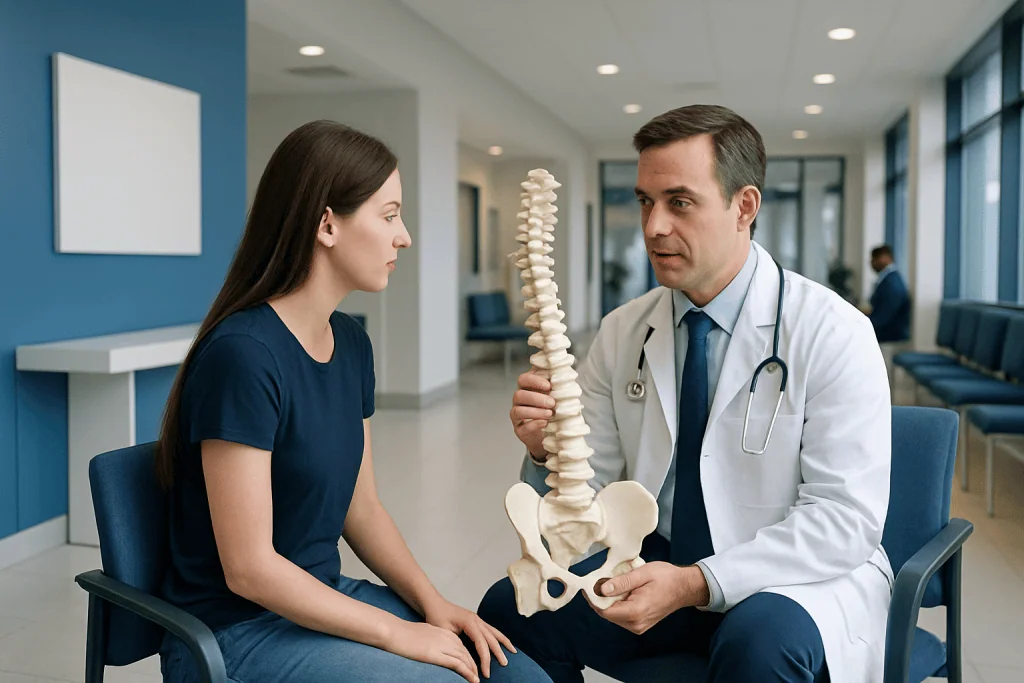
Scoliosis and kyphosis can occur separately or together, creating a combined spinal deformity that needs specialist assessment. Many people do not need surgery; monitoring, targeted exercise, bracing and symptom management may be appropriate.
Key Takeaways
- Scoliosis and kyphosis can occur separately or together, creating a combined spinal deformity that needs specialist assessment.
- Many people do not need surgery; monitoring, targeted exercise, bracing and symptom management may be appropriate.
- Surgery is generally considered for progressive, severe or disabling curves, or when nerve function, balance or breathing may be affected.
- Spinal fusion can improve alignment and stability, but recovery takes months and the final outcome varies by person.
- Adults can still benefit from scoliosis treatment, even though a mature spine usually cannot be fully reshaped without surgery.
Medical treatment for scoliosis kyphosis is tailored to the individual and may include observation, physiotherapy, pain management, bracing, or spinal surgery. The best approach depends on the spinal curve, remaining growth, symptoms, nerve involvement, overall health and how the condition affects daily life.
Overview: what medical treatment for scoliosis kyphosis involves
Medical treatment for scoliosis kyphosis begins with identifying the shape, cause and likely behavior of the spinal curve. Scoliosis is a sideways curvature of the spine, while kyphosis describes an excessive forward rounding of the upper back. A person may have one condition or both, and treatment is selected according to age, curve severity, symptoms, skeletal maturity and the effect on function.
For mild, stable curves, the safest plan may be regular review and practical support rather than an operation. When a curve is progressing, causing pain or imbalance, affecting nerve function, or is severe enough to threaten future function, care may include structured rehabilitation, bracing in selected growing children and adolescents, or surgery.
The goals are not always to produce a perfectly straight spine. More often, treatment aims to reduce progression, improve comfort and balance, protect neurological function, support breathing where relevant, and help the person remain active and independent.
Can you have kyphosis and scoliosis together?
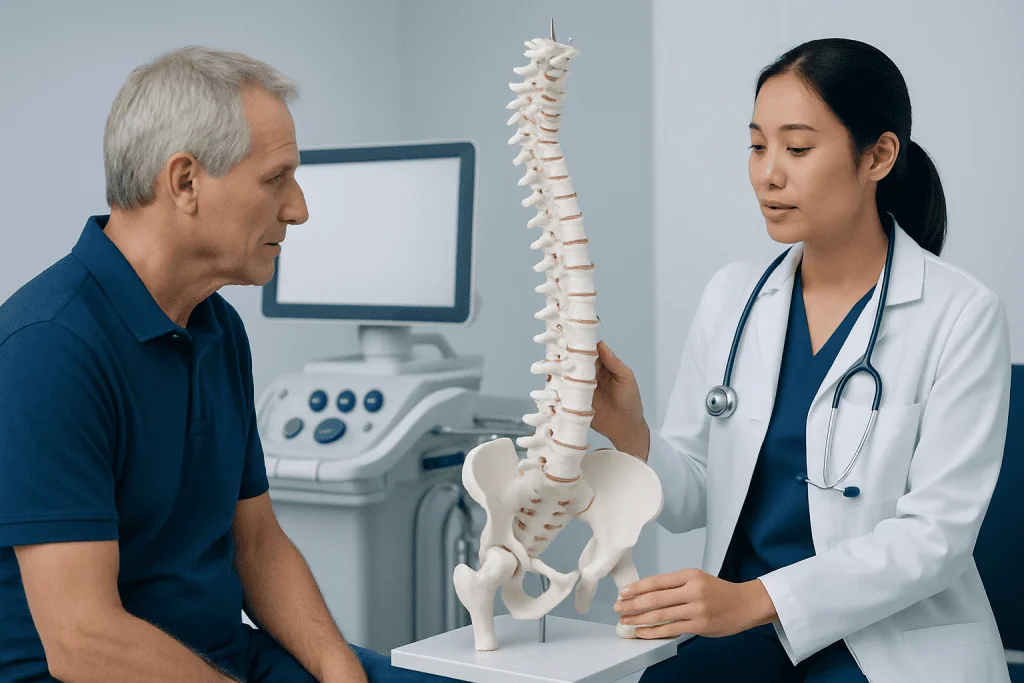
Yes. Kyphosis and scoliosis can occur together, a pattern often called kyphoscoliosis. In this situation, the spine curves both sideways and forward, sometimes with rotation of the vertebrae. The combined shape can be present from childhood, develop during growth, arise after spinal conditions or injuries, or occur with age-related disc and joint changes.
A combined curve may affect posture, shoulder or hip level, walking balance and back fatigue. In more substantial deformities, doctors may also assess breathing capacity because a marked change in chest shape can limit lung expansion. Most people with mild curves do not develop serious breathing problems, but appropriate assessment helps guide care.
Spine specialists use standing X-rays to measure the curves and evaluate overall alignment from the head to the pelvis. They may request MRI when symptoms suggest pressure on nerves or the spinal cord, such as weakness, numbness, coordination changes or changes in bladder or bowel control.
How treatment works: assessment, non-surgical care and candidacy
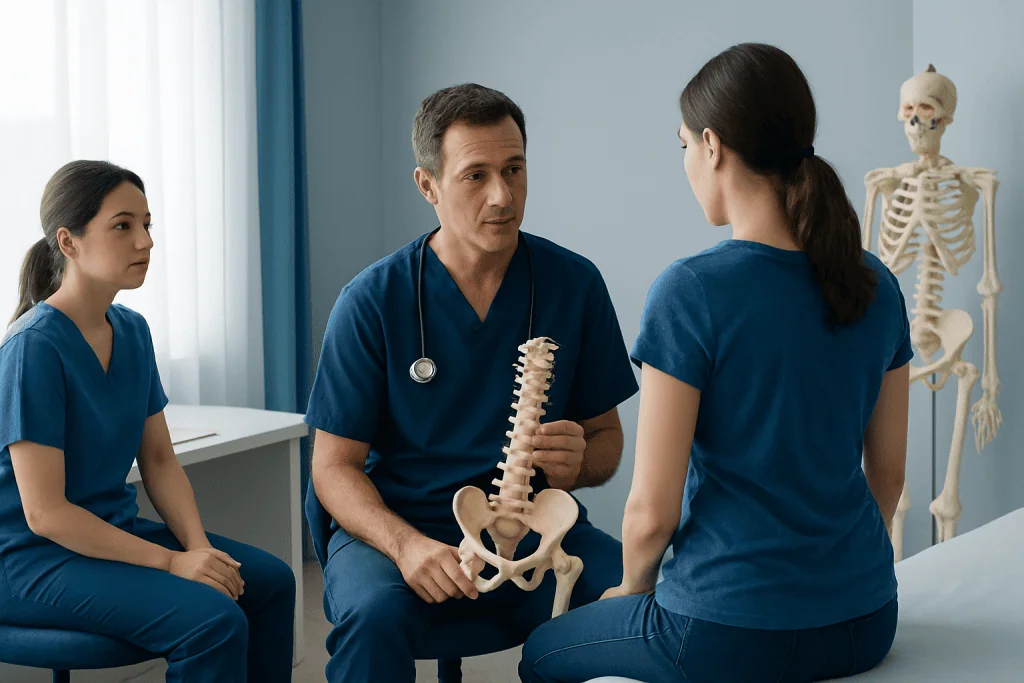
A specialist assessment typically includes a medical history, physical examination, neurological examination and standing spine X-rays. The clinician considers curve measurements, whether the curve is changing over time, bone maturity in children, pain pattern, mobility, balance, general health and personal goals. This information helps distinguish a curve that can be monitored from one that may require active treatment.
Non-surgical treatment may include education about movement and posture, a tailored physiotherapy programme, core and back-strengthening exercises, flexibility work, and strategies for managing daily activities. Pain medicines may be used when appropriate under a clinician’s guidance, especially for adults with arthritis or muscle strain around a spinal curve. These measures can improve symptoms and function, although they usually do not permanently correct a structural curve in a fully grown spine.
For some children and adolescents who are still growing, a brace may help reduce the chance that certain scoliosis curves will worsen. Bracing is prescribed individually and is not suitable for every type of kyphosis or scoliosis. It works best when worn as advised and monitored regularly by an experienced spine team.
- Observation may suit mild curves with low risk of progression.
- Rehabilitation may help pain, confidence, strength and daily function.
- Bracing may be considered for selected curves during growth.
- Surgery may be considered for severe, progressive, painful or neurologically concerning deformity.
Surgical treatment: how it works and what happens step by step
Spinal surgery is considered only after careful discussion of likely benefits, alternatives and risks. It may be recommended when a curve continues to progress despite non-surgical care, is severe, causes substantial pain or functional limitation, compromises balance, or is associated with nerve compression. Decisions are individualized; the X-ray measurement alone does not determine whether surgery is needed.
The most common operation for significant scoliosis or kyphosis is spinal fusion with instrumentation. During the procedure, the surgeon places screws, hooks or rods at selected levels of the spine to improve alignment and provide stability. Bone graft material is used to encourage the treated vertebrae to heal together into a solid segment over time. In some cases, additional procedures are needed to release stiff areas of the spine or relieve pressure on nerves.
Before surgery, the team may arrange blood tests, imaging, anaesthetic review and, where appropriate, assessments of heart or lung function. On the day of surgery, general anaesthesia is used. The operation length and the number of spinal levels treated vary considerably, particularly in complex kyphoscoliosis.
After surgery, close monitoring focuses on pain control, neurological status, breathing, circulation and early safe movement. The care team may include spine surgeons, anaesthetists, nurses, physiotherapists and rehabilitation specialists. Scoliosis surgery is planned around the individual curve pattern, health status and functional needs rather than as a one-size-fits-all procedure.
How serious is kyphosis surgery?
Kyphosis surgery is a major operation because it involves working near the spinal cord and nerves, correcting spinal alignment and allowing the spine to fuse over time. It can offer meaningful benefits for carefully selected people, including improved posture and balance, less pain in some cases, better ability to stand or walk, and prevention of further progression. However, it is not a minor procedure and should be undertaken after detailed evaluation by an experienced spinal deformity team.
Possible risks include bleeding, infection, blood clots, wound-healing problems, nerve injury, persistent pain, failure of the bones to fuse fully, implant-related problems and the need for additional surgery. Anaesthesia also carries risks, which depend partly on a person’s age and medical conditions. Modern planning, careful surgical techniques and postoperative monitoring aim to reduce these risks, but cannot eliminate them.
A surgeon should explain the expected correction, the parts of the spine likely to be fused, how mobility may change and what recovery may involve. Asking about alternatives to surgery, rehabilitation needs and realistic outcomes can help patients and families make an informed decision.
Recovery timeline, expected results and daily life
Recovery begins in hospital, where patients are supported to sit, stand and walk as soon as it is safe. The hospital stay varies according to the procedure, age, curve complexity, pain control and recovery progress. A rehabilitation plan usually includes walking, safe ways to move, breathing exercises where needed and gradual return to ordinary activities.
In the first weeks after surgery, fatigue and soreness are common. Activity is increased in stages, and follow-up appointments allow the team to check the wound, posture, neurological recovery and healing. Return to school, work, driving, exercise and heavier physical activities should follow the surgical team’s advice, as timing differs widely between patients and procedures.
Fusion develops gradually over months. While many people notice posture and balance changes earlier, full recovery and adaptation can take many months to a year or longer. A fused part of the spine no longer moves in the same way, but most people can return to a broad range of everyday activities once healing is complete.
Physical therapy and guided rehabilitation can help restore confidence, endurance and movement quality. For people whose symptoms are mainly related to pain and age-related wear, non-operative physical therapy may remain an important part of care before or after any procedure.
Is it too late to fix scoliosis as an adult?
No. It is not too late for an adult to seek assessment and treatment for scoliosis. Adult curves may have been present since adolescence or may develop later due to disc degeneration, arthritis, osteoporosis, previous surgery or other spinal changes. Treatment can reduce symptoms, improve function and address progression or nerve compression when needed.
In adults, exercises and rehabilitation can improve strength, mobility and pain management, but they do not usually reverse a structural curve. Surgery may improve alignment more substantially in selected adults, particularly when deformity causes disabling pain, loss of balance, progressive curvature or pressure on nerves. The decision requires careful consideration because adults may have other health conditions and age-related changes that affect risks and recovery.
Adults with new or worsening symptoms may benefit from evaluation for related conditions such as osteoporosis, especially after a low-impact fracture or unexplained loss of height. Treating bone health, maintaining appropriate activity and managing other medical conditions can support safer spine care.
How long does it take to fix kyphosis?
The time needed to address kyphosis depends on its cause and the chosen treatment. Postural kyphosis may improve gradually over weeks to months with supervised exercise, strengthening, flexibility work and changes in daily habits. Structural kyphosis, where the vertebrae themselves are shaped differently, is less likely to be fully corrected through exercise alone.
When bracing is appropriate for a growing child or adolescent, it may be used over a longer period and reviewed regularly as growth continues. The aim is commonly to limit worsening rather than to create immediate correction. The care team will monitor progress through examinations and X-rays while minimizing unnecessary radiation exposure.
After corrective surgery, visible alignment changes occur during the operation, but biological healing takes much longer. Early recovery takes weeks, functional recovery often continues for months, and spinal fusion may take up to a year or more. The treating team can provide a more personal timeline based on the type of kyphosis, procedure and recovery progress.
When to seek medical care
A medical review is appropriate for a noticeable change in posture, uneven shoulders or hips, a persistent rounded upper back, worsening back pain, or a curve that appears to be progressing. Children and teenagers should be assessed if a parent, teacher or clinician notices asymmetry during growth, as early review can help identify whether observation or bracing may be useful.
Prompt medical attention is important for new weakness, numbness, difficulty walking, loss of coordination, severe or rapidly worsening pain, fever with back pain, or changes in bladder or bowel control. These symptoms have several possible causes and need timely professional assessment.
Acibadem International’s multidisciplinary specialists and JCI-accredited hospitals evaluate and treat scoliosis and kyphosis for international patients. A spine consultation can help clarify the diagnosis, discuss non-surgical and surgical options, and create a plan suited to the person’s health and goals.
Frequently asked questions
What is the best medical treatment for scoliosis kyphosis?
The best treatment depends on the curve type, severity, age, growth remaining, symptoms and overall health. Options may include observation, physiotherapy, pain management, bracing for selected growing patients and surgery for certain severe or progressive curves. A spine specialist can recommend an individualized plan after examination and imaging.
Can exercise straighten scoliosis or kyphosis?
Exercise can improve strength, flexibility, posture awareness, pain and daily function. However, exercise alone usually cannot permanently straighten a structural scoliosis or kyphosis curve, particularly after skeletal maturity. It is often used as part of a broader treatment plan.
Does every person with kyphoscoliosis need surgery?
No. Many people with kyphoscoliosis are managed without surgery, especially if the curve is mild, stable and not causing major symptoms. Surgery is usually reserved for selected cases involving progression, substantial deformity, disabling symptoms, neurological concerns or impaired function.
What tests are used before scoliosis or kyphosis surgery?
Assessment commonly includes standing spinal X-rays and a detailed physical and neurological examination. MRI may be requested if there are signs of nerve or spinal cord involvement, while CT, blood tests and heart or lung assessments may be used when clinically appropriate. The exact tests depend on the individual and the planned operation.
Will spinal fusion limit movement permanently?
A spinal fusion stops movement in the treated spinal segments once they heal together. The effect on overall movement depends on how many levels are fused and where they are located. Many people retain good function for daily activities, but the surgeon should explain the expected changes before surgery.
Can scoliosis worsen in adulthood?
Some scoliosis curves can progress in adulthood, particularly larger curves or curves associated with degenerative changes in the spine. New pain, imbalance, loss of height, leg symptoms or noticeable postural changes should be assessed. Regular follow-up may be advised for curves with a higher risk of progression.
References
- Scoliosis Research Society
- American Academy of Orthopaedic Surgeons
- National Institute of Arthritis and Musculoskeletal and Skin Diseases
- NHS
- American Association of Neurological Surgeons
This article is for general information only and is not a substitute for professional medical advice. Please consult a qualified doctor about your individual situation.
Joint and spine care in Turkey — expert assessment & treatment
JCI-accredited · board-certified surgeons · reply within 24h
Add us as a Preferred Source to see more of our trusted health content across Google Search, AI Overviews and Discover.