Cochlear Implants: Who May Benefit and What to Expect
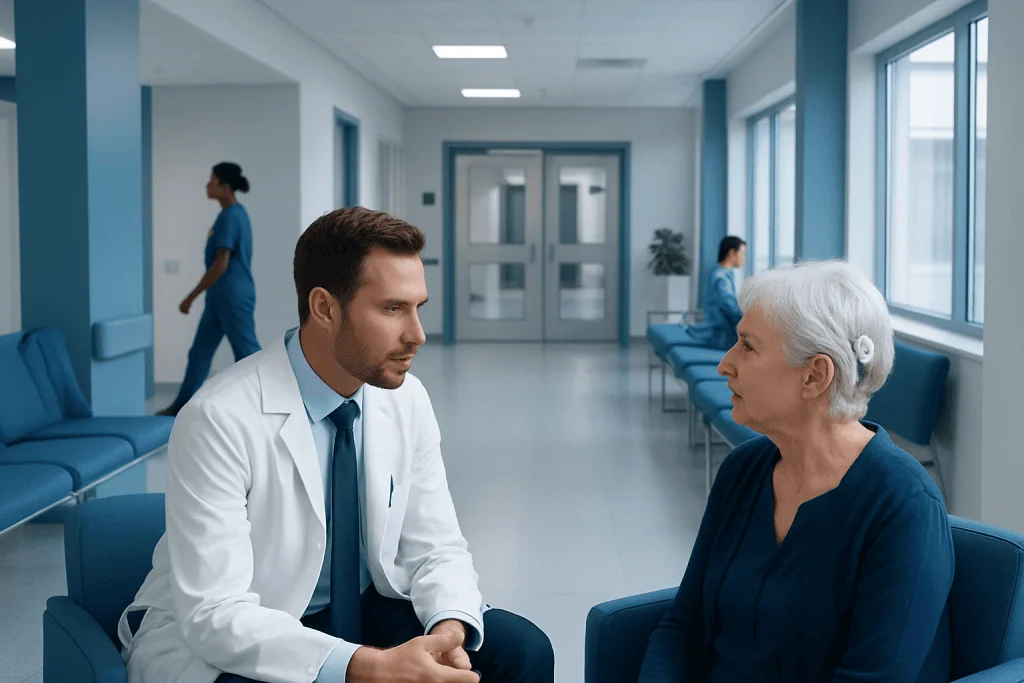
Cochlear implants do not restore natural hearing, but they can provide useful sound awareness and improve speech understanding for many eligible patients. They are mainly considered for severe to profound sensorineural hearing loss when well-fitted hearing aids provide limited benefit.
Key Takeaways
- Cochlear implants do not restore natural hearing, but they can provide useful sound awareness and improve speech understanding for many eligible patients.
- They are mainly considered for severe to profound sensorineural hearing loss when well-fitted hearing aids provide limited benefit.
- Evaluation includes hearing tests, imaging, medical assessment, and discussion with an audiologist and ENT surgeon.
- Surgery is usually followed by a healing period, device activation, repeated programming sessions, and hearing rehabilitation.
- Outcomes vary depending on age, duration of hearing loss, nerve health, communication history, and consistent device use.
- Early assessment is especially important for children because hearing access supports speech, language, and learning development.
Cochlear implants are electronic hearing devices that may help children and adults with severe to profound sensorineural hearing loss when hearing aids are not enough. Understanding candidacy, surgery, activation, and rehabilitation helps patients and families prepare with realistic expectations.
Overview
Cochlear implants are medical devices designed for people with significant hearing loss who receive little benefit from conventional hearing aids. Unlike hearing aids, which make sounds louder, a cochlear implant bypasses damaged sensory hair cells in the inner ear and directly stimulates the hearing nerve with electrical signals. The brain learns to interpret these signals as sound over time.
A cochlear implant has two main parts. The external part, worn behind the ear or on the head, includes a microphone, sound processor, and transmitter. The internal part is placed during surgery under the skin and into the cochlea, the spiral-shaped hearing organ in the inner ear. Together, these components convert sound into signals that can travel along the auditory nerve to the brain.
The goal is not to create normal hearing, but to improve access to sound. Many users gain better awareness of environmental sounds and improved understanding of speech, especially with practice and rehabilitation. Results vary widely, so careful evaluation and counseling are essential before deciding on implantation.
Who May Benefit from Cochlear Implants
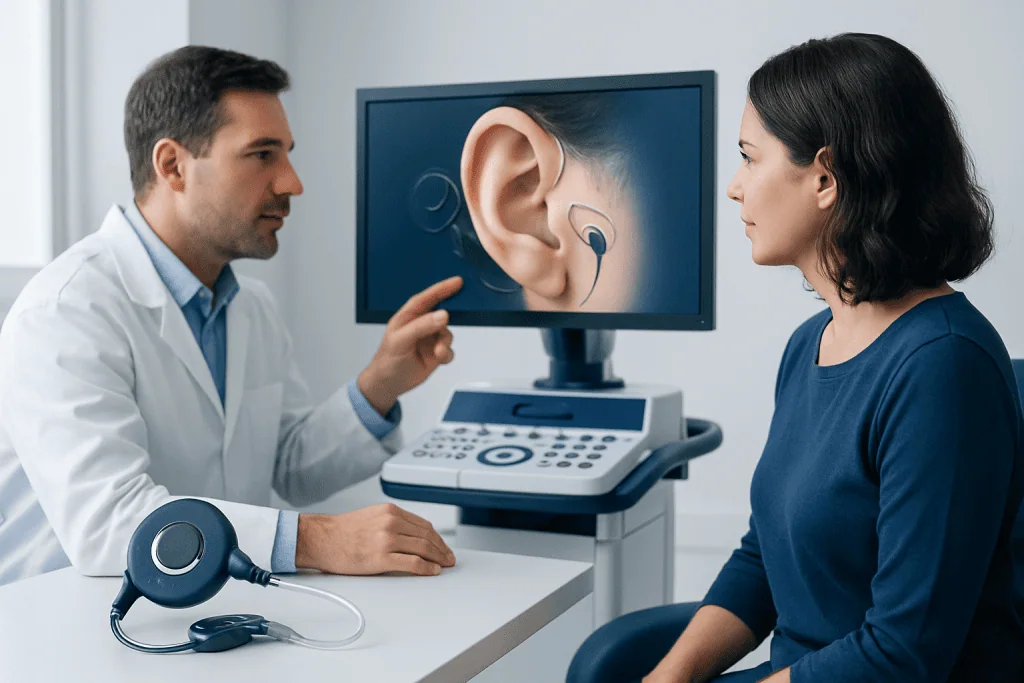
Cochlear implants may benefit children and adults with severe to profound sensorineural hearing loss in one or both ears. Sensorineural hearing loss usually occurs when inner ear hair cells are damaged or not functioning properly. In these cases, simply amplifying sound with a hearing aid may not make speech clear enough.
Adults may be considered if they struggle to understand speech even with appropriately fitted hearing aids. Some people can hear that someone is speaking but cannot understand words, particularly in group conversations, over the phone, or in background noise. Others may have one ear with very poor hearing and another ear with better hearing, and specialist evaluation can determine whether implantation may help in that situation.
Children may be candidates when hearing loss is severe enough to affect speech and language development, and hearing aids do not provide sufficient access to sound. Early identification and intervention are important because the brain’s hearing pathways develop rapidly in childhood. A pediatric cochlear implant evaluation usually includes the family, audiologists, ENT specialists, speech-language professionals, and other developmental experts.
Typical factors considered during candidacy assessment include:
- Degree and type of hearing loss
- Benefit from well-fitted hearing aids
- Speech and language development or communication needs
- Condition of the cochlea and auditory nerve
- General health and suitability for surgery
- Motivation, family support, and ability to attend follow-up rehabilitation
When Hearing Aids May Not Be Enough
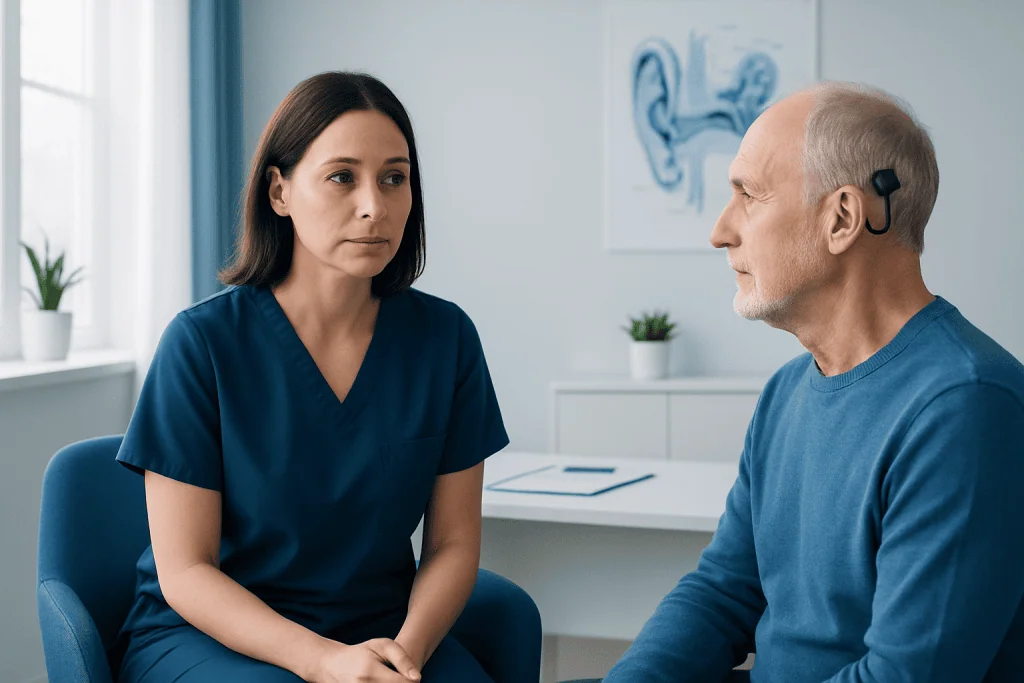
Hearing aids are often the first-line treatment for many types of hearing loss, and they help millions of people communicate more comfortably. However, in severe inner ear damage, making sound louder may not make it clearer. A person may hear amplified sounds as distorted, incomplete, or difficult to separate from background noise.
Signs that hearing aids may not be providing enough benefit include frequent requests for repetition, difficulty understanding speech without lip-reading, avoidance of social situations because of listening fatigue, and poor speech understanding despite consistent hearing aid use. In children, concerns may include delayed speech, inconsistent responses to sound, or limited progress with hearing aids.
A cochlear implant assessment does not automatically mean surgery will be recommended. Instead, it helps clarify whether hearing aids are optimized and whether another option may offer better access to speech. For some patients, improved hearing aid fitting, assistive listening devices, or communication therapy may be more appropriate than implantation.
Evaluation and Diagnosis Before Implantation
A cochlear implant evaluation is detailed because the device requires surgery, long-term follow-up, and rehabilitation. The process usually begins with a full hearing assessment by an audiologist. This may include pure-tone testing, speech understanding tests, hearing aid verification, and aided testing to measure how well the person performs while using hearing aids.
An ENT specialist or otologist evaluates the ear and overall medical history. Imaging tests such as MRI or CT may be used to examine the cochlea, auditory nerve, and nearby structures. These scans help identify anatomical factors that could affect surgery or outcomes, such as cochlear malformations, ossification after meningitis, or absence of the hearing nerve.
For children, the evaluation often includes speech and language assessment, developmental review, and discussion of educational support. For adults, counseling may focus on communication goals, work needs, phone use, music expectations, and listening environments. Vaccination status may also be reviewed because people with cochlear implants can have a slightly increased risk of certain infections, and doctors follow local guidelines for prevention.
Equally important is expectation-setting. A cochlear implant is not an instant cure. The brain must adapt to a new form of sound input, and users need regular programming appointments and listening practice to achieve the best possible benefit.
Cochlear Implant Surgery: What to Expect
Cochlear implant surgery is performed by a trained ear surgeon, usually under general anesthesia. The surgeon places the internal receiver under the skin behind the ear and inserts a thin electrode array into the cochlea. The exact surgical plan depends on the patient’s anatomy, hearing history, and whether one or both ears are being implanted.
The operation is commonly performed as a planned procedure, and many patients return home the same day or after a short hospital stay, depending on local practice and individual health needs. After surgery, there may be temporary soreness, swelling, pressure around the ear, or dizziness. The surgical team provides instructions for wound care, activity restrictions, and follow-up.
The external sound processor is not usually activated immediately. The incision needs time to heal before the first fitting, often called activation or switch-on. At that visit, an audiologist connects the external processor and begins programming the device. The first sounds may seem unusual, mechanical, soft, or unclear at the beginning, which is normal for many users.
As with any surgery, there are possible risks, such as infection, bleeding, dizziness, taste disturbance, tinnitus changes, facial nerve injury, device problems, or the need for revision surgery. These risks are uncommon but should be discussed clearly with the surgeon so the patient or family can make an informed decision.
Activation, Programming, and Hearing Rehabilitation
Activation is the beginning of hearing with the implant, not the end of treatment. During early programming sessions, the audiologist adjusts how electrical stimulation is delivered to different regions of the cochlea. These settings are called maps, and they are refined over time as the user becomes more comfortable and the brain adapts.
Adults often need structured listening practice to connect new sound patterns with meaning. At first, familiar voices may sound different, and background noise can be challenging. With consistent use, repeated adjustments, and auditory training, many users gradually improve their ability to detect sounds and understand speech.
Children need ongoing support from audiologists, speech-language therapists, teachers, and families. Rehabilitation may focus on listening skills, spoken language development, communication strategies, and classroom accommodations. The family’s involvement is especially important because children learn through daily listening opportunities.
Progress is individual. Some people notice useful changes within weeks, while others need months or longer to gain confidence. Factors that influence outcomes include how long the person has had hearing loss, whether they heard speech before losing hearing, age at implantation, auditory nerve function, consistent device use, and participation in rehabilitation.
Benefits, Limitations, and Daily Life with an Implant
Potential benefits of cochlear implants include improved awareness of everyday sounds, better understanding of speech in quiet settings, improved ability to communicate with family or colleagues, and increased independence in some listening situations. Some users can use the telephone more comfortably, while others continue to rely on visual cues, captioning, or assistive technology.
It is important to understand limitations. Cochlear implants do not restore natural hearing, and performance in noisy environments can remain difficult. Music may sound different from remembered natural hearing, and results are not identical for every person. Some users continue to benefit from a hearing aid in the other ear, a combination known as bimodal hearing, if recommended by the audiology team.
Daily life includes caring for the external processor, charging or changing batteries, keeping components dry when required, and attending follow-up appointments. Many modern processors have accessories that connect to phones, televisions, or remote microphones. Patients should also carry implant identification and ask their care team about MRI safety, airport security, sports precautions, and water use with specific device models.
Emotional adjustment is also part of the journey. Some people feel excited, while others feel tired or discouraged during the early learning period. Reassurance, realistic goals, and support from professionals and other implant users can make adaptation smoother.
When to See a Doctor
A person should consider an ENT or audiology consultation if hearing loss interferes with daily communication, work, education, safety, or social life despite hearing aids. Children should be assessed promptly if they do not respond consistently to sound, have delayed speech, fail newborn hearing screening, or show regression in communication skills.
People who already have a cochlear implant should contact their care team if they develop persistent pain, swelling, redness, fever, drainage from the incision area, sudden dizziness, facial weakness, a significant change in hearing performance, or device malfunction. These concerns do not always indicate a serious problem, but timely evaluation is important.
International patients may benefit from coordinated assessment when hearing tests, imaging, surgery, and rehabilitation planning are needed in one care pathway. Acibadem International’s multidisciplinary ENT, audiology, radiology, and rehabilitation specialists provide diagnosis and treatment for cochlear implant candidates in JCI-accredited hospitals, with individualized planning for follow-up care.
Frequently asked questions
Do cochlear implants restore normal hearing?
No. Cochlear implants provide a different type of sound signal that the brain must learn to interpret. Many people gain meaningful access to speech and environmental sounds, but results vary and hearing is not the same as natural hearing.
At what age can a child receive a cochlear implant?
Eligibility depends on the child’s hearing level, hearing aid benefit, medical findings, and local clinical guidelines. Early evaluation is important because access to sound supports speech and language development. A pediatric cochlear implant team can advise the family on timing and options.
Is cochlear implant surgery painful?
The surgery is performed under anesthesia, so the patient does not feel pain during the operation. Afterward, mild to moderate soreness or pressure around the ear can occur and is usually managed with the surgeon’s instructions. Any severe or worsening symptoms should be reported to the care team.
How long does it take to hear well after activation?
Some users notice helpful sound awareness quickly, but clear speech understanding usually develops gradually. The brain needs time and practice to adapt to the new signal. Regular programming and rehabilitation are key parts of the process.
Can someone with a cochlear implant have an MRI?
MRI may be possible with many cochlear implant models, but safety rules depend on the specific device and scanner strength. Patients should always inform radiology staff that they have an implant and carry their implant identification. The implant center can provide device-specific MRI guidance.
Will insurance or health systems cover cochlear implants?
Coverage varies by country, insurer, medical indication, and local policy. Patients should ask their implant center and insurance provider about required evaluations, documentation, and follow-up coverage. It is also important to clarify costs for the processor, accessories, mapping visits, and rehabilitation.
References
- World Health Organization
- American Academy of Otolaryngology-Head and Neck Surgery
- National Institute on Deafness and Other Communication Disorders
- British Cochlear Implant Group
- U.S. Food and Drug Administration
This article is for general information only and is not a substitute for professional medical advice. Please consult a qualified doctor about your individual situation.
Cochlear Implant in Turkey — costs, top hospitals & a free quote
JCI-accredited · board-certified surgeons · reply within 24h
Add us as a Preferred Source to see more of our trusted health content across Google Search, AI Overviews and Discover.

Otorhinolaryngology (ENT)
Care for ear, nose, throat and head-and-neck conditions, including hearing and balance disorders.
126 specialists in this unitRelated Treatments
Related Conditions
More from the Health Library


Related Specialists
Prof. Dr. Nazim Korkut
Otorhinolaryngology
Prof. Dr. Hasan M. Tanyeri
Ear Nose & Throat
Prof. Dr. Güler Berkiten
Otorhinolaryngology
Assoc. Prof. Dr. A. Erdem Kilavuz
Ear Nose & Throat