Lung Cancer Screening Guidelines Cms: How It Works, Results and What to Expect

CMS covers annual LDCT lung cancer screening for eligible Medicare beneficiaries aged 50 to 77 years. Eligibility is based on age, smoking history, current smoking status or time since quitting, and an informed shared decision-making visit.
Key Takeaways
- CMS covers annual LDCT lung cancer screening for eligible Medicare beneficiaries aged 50 to 77 years.
- Eligibility is based on age, smoking history, current smoking status or time since quitting, and an informed shared decision-making visit.
- LDCT is a quick, painless scan that uses less radiation than a standard diagnostic chest CT.
- Most screening findings are not cancer, but some results require follow-up imaging or further assessment.
- Lung cancer screening does not replace smoking cessation support, routine medical care, or evaluation of new symptoms.
CMS lung cancer screening guidelines support annual low-dose computed tomography (LDCT) for eligible Medicare beneficiaries aged 50 to 77 years who have a substantial smoking history and meet other coverage requirements. Screening is intended to find lung cancer before symptoms develop, when treatment may be more effective.
Overview: How CMS Lung Cancer Screening Guidelines Work
Lung cancer screening guidelines CMS describe when Medicare covers annual low-dose computed tomography (LDCT) to look for lung cancer in people at higher risk before they develop symptoms. The goal is not to diagnose every lung problem, but to identify potentially important lung nodules or early cancers at a stage when care may be more effective.
LDCT is a specialized chest scan that creates detailed images of the lungs using a lower radiation dose than a conventional diagnostic CT scan. It is different from a chest X-ray and is the recommended screening test for people who meet eligibility criteria. Screening should take place at an imaging facility that meets applicable CMS requirements and follows structured reporting and follow-up processes.
Medicare coverage rules may be updated over time. A person considering screening should confirm their current eligibility with their clinician, Medicare plan, or screening center, particularly if their smoking history is uncertain or their coverage is not traditional Medicare.
What Are the CMS Lung Cancer Screening Guidelines for 2026?
As of 2026, CMS covers annual LDCT lung cancer screening for Medicare beneficiaries who meet all applicable criteria. In general, this includes people aged 50 to 77 years who have no signs or symptoms of lung cancer, currently smoke or quit within the past 15 years, and have a smoking history of at least 20 pack-years.
A pack-year estimates cumulative cigarette exposure. It is calculated by multiplying the number of packs smoked per day by the number of years smoked. For example, smoking one pack a day for 20 years equals 20 pack-years; smoking two packs a day for 10 years also equals 20 pack-years. A clinician can help calculate this accurately.
Before the first covered screening, CMS requires a counseling and shared decision-making visit with a qualified clinician. This discussion addresses the potential benefits and limitations of screening, the chance of false-positive results and follow-up tests, radiation exposure, smoking cessation support when relevant, and the importance of yearly screening while a person remains eligible.
Screening is for people without symptoms. A new or persistent cough, coughing up blood, unexplained weight loss, chest pain, worsening breathlessness, or recurrent chest infections should be assessed clinically rather than handled as routine screening. Depending on the findings, the care team may arrange diagnostic imaging and refer to specialists experienced in lung cancer assessment.
What to Expect During Lung Cancer Screening?

Lung cancer screening begins with a review of medical history, smoking exposure, current symptoms, and prior chest imaging. The clinician or screening program confirms whether LDCT is appropriate and explains what the scan can and cannot show. People may be asked to bring information about earlier scans so the radiologist can compare images over time.
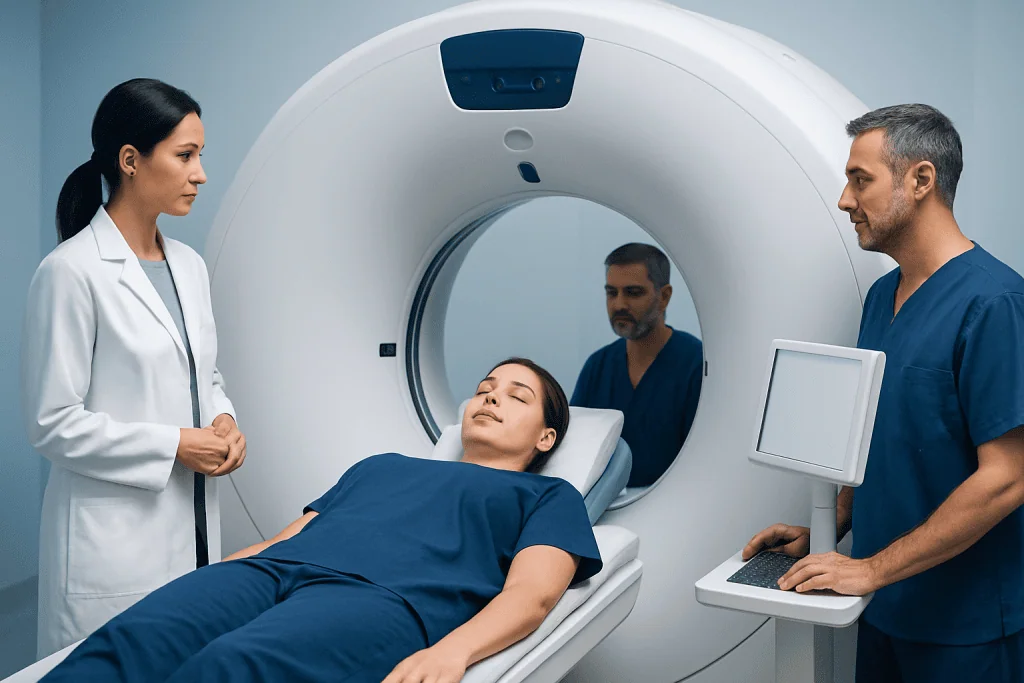
During the scan, the person changes into a gown if needed and removes metal objects near the chest. They lie flat on a padded table that moves through the CT scanner. The technologist usually asks them to hold their breath briefly while images are taken. The scan itself commonly takes only a few minutes, and contrast dye or injections are generally not needed for routine screening LDCT.
The procedure is painless, and sedation is not routinely required. People with anxiety about enclosed spaces can tell the screening team in advance; CT scanners are generally more open than MRI machines. Normal eating, drinking, driving, and daily activities can usually continue before and after the examination unless the clinical team gives different instructions.
LDCT is a screening test, not a final diagnosis. If a scan identifies a lung nodule, the next step may simply be a repeat scan after a defined interval. A radiologist and clinician use the nodule’s size, appearance, growth, and individual risk factors to decide whether observation, additional imaging, specialist review, or tissue testing is appropriate.
How Long Does It Take to Get Results Back From a Lung Cancer Screening?
The imaging portion of lung cancer screening is completed quickly, but the final report requires review by a radiologist. Many screening centers provide results within a few days, although timing can vary based on local workflows, the need to compare older scans, and whether the radiologist identifies a finding that requires additional review.
Results are commonly communicated by the ordering clinician, screening program, patient portal, letter, or phone call. A report may describe the result using a standardized system, such as Lung-RADS, which helps guide follow-up recommendations. A negative or low-risk result usually means annual screening should continue while the person remains eligible.
An abnormal result does not automatically mean cancer. Small nodules are common and may result from prior infection, inflammation, or other noncancerous causes. Some people are asked to repeat LDCT in several months, while others may need a diagnostic chest CT, PET-CT, or consultation with a pulmonary or thoracic specialist.
When more evaluation is needed, a multidisciplinary team may consider imaging findings alongside symptoms, medical history, and lung function. Further diagnostic procedures may include bronchoscopy or image-guided biopsy when clinically appropriate. The best next step depends on the individual finding rather than the screening result alone.
Benefits, Limits and Possible Risks of LDCT Screening
The central benefit of annual LDCT screening for eligible people is the possibility of detecting lung cancer earlier, before it causes symptoms. Earlier-stage disease may allow more treatment options, including surgery, focused radiation therapy, systemic treatment, or a combination of approaches. Screening also creates an opportunity to discuss smoking cessation and overall lung health.
At the same time, LDCT screening has limitations. It can identify nodules that are benign but still need follow-up, which may cause worry and lead to extra scans or procedures. Screening can also miss some cancers, and it may find slow-growing abnormalities that might never have caused harm but nevertheless require careful assessment.
LDCT uses a low radiation dose, but radiation exposure is not zero. The balance of possible benefit and potential harm is why screening is recommended for defined higher-risk groups rather than for everyone. Shared decision-making helps a person understand whether the test matches their health circumstances and preferences.
If cancer is diagnosed, treatment planning should be individualized by oncology, pulmonary medicine, thoracic surgery, radiology, and pathology specialists. Depending on stage and overall health, options may include lung cancer treatment designed around the person’s diagnosis and goals of care.
What Is the 5 Finger Test for Lung Cancer?
The “5 finger test” is not a validated medical test for lung cancer and is not part of CMS screening guidance. The phrase is sometimes used online to describe informal symptom checklists or hand-based demonstrations, but these cannot diagnose lung cancer or determine whether someone needs screening.
Lung cancer may cause no symptoms in its early stages, which is why LDCT screening is considered for people with defined smoking-related risk. Conversely, symptoms such as a persistent or changing cough, coughing up blood, unexplained fatigue, chest discomfort, hoarseness, repeated chest infections, or unexplained weight loss can have many possible causes and need proper medical evaluation.
A clinician may use a medical history, physical examination, imaging, and other tests to investigate concerning symptoms. People should avoid relying on online self-tests or visual checks of the hands, nails, or fingers to rule lung cancer in or out. A normal-looking hand does not exclude lung disease, and an unusual appearance does not confirm cancer.
After the Scan: Follow-Up, Prevention and Self-Care
After an uncomplicated LDCT scan, there is no recovery period. The person can return to usual activities immediately. The important next step is to receive and understand the result, keep copies of imaging reports when possible, and follow the recommended interval for annual screening or additional imaging.
For people who smoke, stopping smoking remains one of the most meaningful actions for reducing the risk of lung cancer and other smoking-related illnesses. Screening is beneficial for eligible people, but it does not make smoking safe. Clinicians can discuss behavioral counseling, nicotine replacement, and prescription options when appropriate.
Supporting lung health also includes staying physically active within personal ability, maintaining recommended vaccinations, avoiding secondhand smoke, and seeking care for persistent respiratory symptoms. These measures cannot replace screening for eligible individuals, but they contribute to overall respiratory and cardiovascular health.
Acibadem International’s multidisciplinary specialists and JCI-accredited hospitals support international patients who need lung assessment, diagnostic evaluation, and coordinated cancer care. A physician can help interpret screening findings and determine whether follow-up is needed.
When to Seek Medical Care
People who meet CMS eligibility criteria should arrange a discussion with a qualified clinician about annual LDCT screening, even if they feel well. It is also sensible to seek medical advice when there is uncertainty about smoking history, prior screening results, or the recommended timing of follow-up imaging.
Prompt medical assessment is important for symptoms that could reflect a lung condition, particularly coughing up blood, a cough that persists or changes, unexplained shortness of breath, chest pain, persistent hoarseness, repeated pneumonia, or unintentional weight loss. These symptoms do not necessarily mean cancer, but they should not be delayed or managed through a screening appointment alone.
Urgent care is appropriate for severe breathing difficulty, sudden or intense chest pain, fainting, blue or gray lips, or significant coughing of blood. Emergency services should be contacted according to local guidance when symptoms are severe or rapidly worsening.
Frequently asked questions
Is lung cancer screening covered by Medicare?
Medicare may cover annual low-dose CT lung cancer screening when a beneficiary meets CMS eligibility requirements. These generally include age, smoking history, current smoking status or quitting within the required period, absence of lung cancer symptoms, and a shared decision-making visit before the initial scan.
What is a pack-year smoking history?
A pack-year measures how much a person has smoked over time. It is calculated by multiplying packs smoked per day by years smoked; for example, one pack daily for 20 years equals 20 pack-years. A clinician can help calculate pack-years for people whose smoking pattern changed over time.
Do people need a referral for a low-dose CT lung screening?
Coverage and scheduling requirements vary by healthcare system and insurance plan. For Medicare screening coverage, the test is generally ordered by a qualified clinician after eligibility and shared decision-making requirements are addressed. The screening center can explain the documents it needs before the appointment.
Does a lung nodule on a screening scan mean cancer?
No. Many lung nodules are benign and can be related to old infections, inflammation, or other noncancerous causes. The radiologist’s recommendations depend on the nodule’s characteristics and whether it changes over time, and many findings only require repeat imaging.
How often should eligible people have lung cancer screening?
CMS coverage is for annual LDCT screening for people who continue to meet eligibility requirements. A clinician may recommend a different imaging schedule if the scan shows a nodule or another finding needing closer follow-up. Follow-up imaging after an abnormal result is not the same as routine annual screening.
Can a chest X-ray replace low-dose CT screening?
No. Chest X-rays are not the recommended screening method for lung cancer in eligible high-risk adults. Low-dose CT can detect smaller lung abnormalities and is the test used in current lung cancer screening recommendations.
References
- Centers for Medicare & Medicaid Services
- U.S. Preventive Services Task Force
- American Cancer Society
- American College of Radiology
- National Cancer Institute
This article is for general information only and is not a substitute for professional medical advice. Please consult a qualified doctor about your individual situation.
Lung Cancer in Turkey — costs, top hospitals & a free quote
JCI-accredited · board-certified surgeons · reply within 24h
Add us as a Preferred Source to see more of our trusted health content across Google Search, AI Overviews and Discover.

Medical Oncology Department
Medical treatment of cancer with chemotherapy, immunotherapy and targeted therapies under a multidisciplinary tumor board.
60 specialists in this unit