

Quick answer
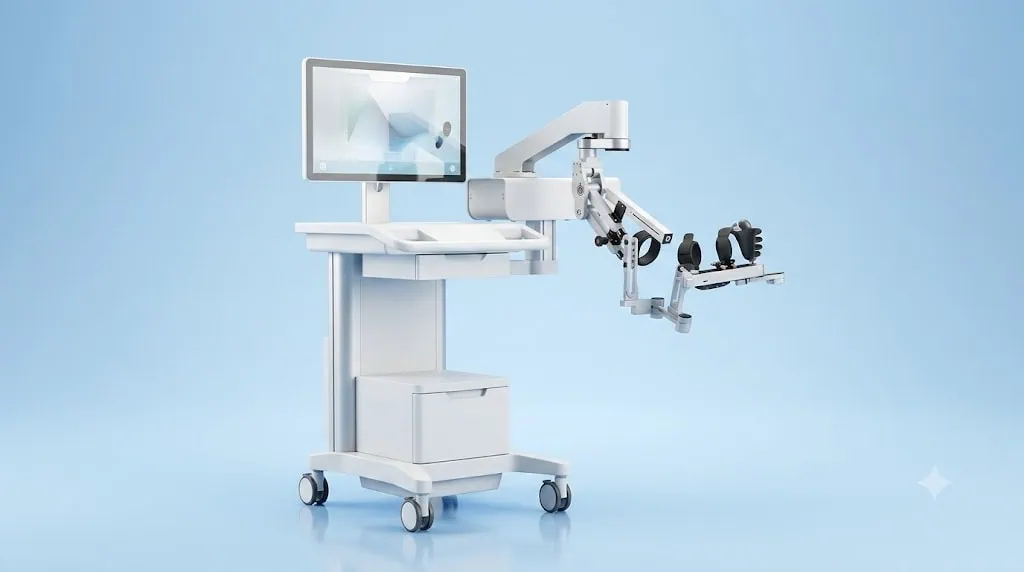
ArmeoSpring is a spring-supported arm exoskeleton that helps people with upper-limb weakness practise functional movements by reducing the effect of arm weight. At Acibadem in Turkey, it is used within supervised rehabilitation programmes to support guided, task-based exercise tailored to the patient’s abilities.
ArmeoSpring: Spring-Supported Arm Rehabilitation Technology
ArmeoSpring is an advanced upper-limb rehabilitation system designed to help people practise arm and hand movements after neurological injury, illness or reduced mobility. It uses a spring-supported arm exoskeleton to reduce the effect of the arm’s weight, making movement practice more achievable for patients with weakness, limited control or reduced endurance.
At Acibadem International, ArmeoSpring may be included in an individual rehabilitation programme planned by Physical Medicine and Rehabilitation specialists, physiotherapists and occupational therapists. The technology supports structured, repetitive and goal-oriented training while the rehabilitation team remains closely involved throughout each session.
For international patients, this approach can provide a well-coordinated pathway from clinical assessment to rehabilitation planning, treatment scheduling and follow-up guidance. Every programme is tailored to the patient’s diagnosis, functional abilities, goals and travel arrangements.
What Is ArmeoSpring?
ArmeoSpring is a non-invasive rehabilitation device for the shoulder, arm and hand. It consists of an adjustable mechanical arm support, often described as an exoskeleton, which is fitted around the patient’s upper limb while they sit comfortably during therapy.
The system provides adjustable spring assistance to counterbalance some of the arm’s weight. This can make it easier for a patient to initiate, continue and repeat movements that may otherwise be difficult. Rather than moving the arm for the patient, ArmeoSpring supports active participation and encourages the patient to use their own available movement.
During treatment, patients may complete computer-based tasks, games or daily-life movement exercises on a screen. These activities are designed to promote purposeful reaching, grasping, lifting, coordination and controlled arm movement. The rehabilitation professional adjusts the level of support and selects tasks appropriate for the patient’s progress.
ArmeoSpring is not a replacement for hands-on therapy, medical treatment or a comprehensive rehabilitation programme. It is a supportive technology that may be used alongside conventional physiotherapy, occupational therapy, speech and swallowing rehabilitation where needed, pain management and neurological care.
How ArmeoSpring Works
The main purpose of ArmeoSpring is to make meaningful upper-limb movement practice possible when arm weight, weakness or impaired coordination limits participation. The device is adjusted to fit the patient’s height, arm length, range of motion and treatment goals.
A spring mechanism provides carefully calibrated support. By reducing the physical effort required to hold the arm up against gravity, the system may help patients practise movements within a safe and achievable range. The amount of assistance can be modified as the patient gains strength, control and confidence.
Once positioned, the patient performs guided activities that appear on an interactive screen. These may involve reaching toward targets, moving objects, following visual cues or performing tasks that simulate aspects of daily living. The exercises can challenge different movement patterns, including shoulder elevation, elbow control, forearm rotation and hand positioning.
The system can provide feedback about movement quality and performance. This gives the rehabilitation team useful information for monitoring progress and adapting the therapy plan. Patients can also see their own results, which may help encourage engagement with regular rehabilitation practice.
A rehabilitation approach focused on active participation
Neurological rehabilitation often requires repeated, purposeful practice. ArmeoSpring supports this principle by allowing patients to perform many task-oriented repetitions in one session, at a level suited to their current abilities. The patient remains actively involved throughout the exercise rather than passively receiving movement.
Clinical goals may include improving comfort and confidence in moving the affected arm, increasing the range of motion used during therapy, building endurance, improving coordination and supporting greater independence in everyday activities. Outcomes vary according to the underlying condition, timing of rehabilitation, individual health status and commitment to the overall therapy programme.
Clinical Applications
ArmeoSpring may be considered for adults and, where clinically appropriate, selected younger patients who need upper-limb rehabilitation. It is commonly used in neurological rehabilitation settings, particularly where a person has difficulty lifting, reaching or controlling the arm independently.
| Clinical application | How ArmeoSpring may support rehabilitation | Typical therapy goals |
|---|---|---|
| Stroke rehabilitation | Supports active practice of the affected arm when weakness, altered coordination or reduced endurance makes movement difficult. | Reaching, controlled movement, use of the arm in daily activities and improved confidence. |
| Traumatic brain injury rehabilitation | Provides structured, visually guided tasks that can be adapted to motor control and cognitive rehabilitation needs. | Upper-limb coordination, attention during tasks and functional movement practice. |
| Spinal cord injury rehabilitation | May assist selected patients with practising available arm movement under specialist supervision. | Maintaining or improving functional movement, endurance and independence where possible. |
| Multiple sclerosis and other neurological conditions | Can be used for targeted practice when fatigue, weakness or motor control changes affect upper-limb function. | Movement efficiency, coordination, activity tolerance and participation in daily routines. |
| Upper-limb weakness after prolonged illness or immobilisation | Offers graded support for carefully selected patients recovering strength and confidence in movement. | Gentle active exercise, range-of-motion training and gradual return to function. |
| Complex rehabilitation programmes | Complements physiotherapy and occupational therapy within a multidisciplinary treatment plan. | Individual functional goals, home activity preparation and measurable rehabilitation progress. |
Not every person with an upper-limb condition will need or benefit from ArmeoSpring. A specialist assessment is essential to determine whether the technology is appropriate and to identify the safest rehabilitation approach. The care team considers factors such as diagnosis, muscle tone, pain, joint stability, skin condition, cognitive function, medical history and the patient’s ability to participate in therapy.
Conditions It May Help With
ArmeoSpring is most often associated with rehabilitation after stroke, particularly when a patient has weakness or reduced function on one side of the body. It may also be used in rehabilitation after traumatic brain injury, spinal cord injury and certain progressive or non-progressive neurological conditions.
In some cases, the technology may support rehabilitation for patients who have experienced reduced arm function after surgery, trauma, prolonged hospitalisation or other medical events. However, its use is always based on an individual clinical decision. The primary diagnosis, current stage of recovery and rehabilitation objectives guide the treatment plan.
Patients may have different symptoms and needs. Some may have difficulty raising the arm against gravity. Others may have reduced reach, poor movement control, fatigue, stiffness or lack of confidence in using the affected side. The system can be adjusted to accommodate these differences while the therapist supervises posture, movement technique and tolerance.
Benefits and Advantages for Patients
ArmeoSpring can make upper-limb practice more accessible for patients who cannot yet comfortably hold their arm up for extended periods. The spring-supported design helps reduce the effect of gravity without taking away the patient’s active role in movement.
Because exercises can be repeated in a structured and engaging way, the technology may help patients remain motivated during rehabilitation. Interactive activities can turn movement training into clear, achievable tasks, while real-time feedback may help patients understand their performance and progress.
| Patient benefit | What this can mean during rehabilitation |
|---|---|
| Adjustable arm-weight support | Patients may be able to practise movement earlier or more comfortably when lifting the arm against gravity is difficult. |
| Active, task-based exercise | Therapy focuses on purposeful movement rather than passive positioning alone. |
| Personalised challenge level | Therapists can adapt support, range and exercise difficulty to match the patient’s abilities and goals. |
| Visual feedback and interactive tasks | Patients can follow clear targets, stay engaged and see measurable elements of their training. |
| High-repetition practice | Structured sessions can support regular practice of key upper-limb movements under professional guidance. |
| Non-invasive treatment support | No surgical procedure is required to use the device; therapy is performed externally in a rehabilitation setting. |
| Integration with multidisciplinary care | ArmeoSpring can be combined with physiotherapy, occupational therapy and specialist medical rehabilitation planning. |
It is important to have realistic expectations. Rehabilitation progress is individual and may take time. ArmeoSpring is designed to support the recovery process, but it cannot guarantee restoration of arm function. Your care team will discuss achievable goals, expected therapy duration and any factors that may influence recovery.
What to Expect During an ArmeoSpring Session
Before treatment begins, a Physical Medicine and Rehabilitation specialist reviews your diagnosis, medical history, imaging or clinical reports where relevant, current medications and functional concerns. The team discusses your rehabilitation priorities, such as improving reach, using the arm during personal care or preparing for a return to work and daily activities.
A physiotherapist or occupational therapist then assesses posture, joint movement, muscle strength, tone, pain level, balance and ability to follow instructions. This helps determine whether ArmeoSpring is suitable and how the device should be set up.
During a session, you are usually seated in a stable, comfortable position. The therapist carefully adjusts the exoskeleton to your arm and checks that the support is correctly aligned. The amount of spring assistance is selected according to your needs. You may be asked to perform movements toward targets shown on a screen or complete interactive exercises designed around your treatment goals.
Your therapist remains present to guide movement quality, encourage correct posture, monitor fatigue and modify the activity if needed. Sessions are adapted as your condition changes. Some patients begin with more support and simpler tasks, then progress toward greater active movement and more challenging activities as appropriate.
After the session, the team may review what was achieved and explain how the work fits into your broader rehabilitation plan. You may also receive recommendations for safe exercises, positioning strategies or functional activities to practise between appointments, where appropriate.
Safety, Clinical Oversight and Accreditation
ArmeoSpring is used as part of professionally supervised rehabilitation. Patient safety begins with careful selection, individual setup and regular monitoring during treatment. The device should only be used by trained rehabilitation professionals who understand the patient’s diagnosis, movement limitations and medical precautions.
Before each programme, the team considers possible concerns such as pain, unstable fractures, severe joint restrictions, skin sensitivity, shoulder instability, uncontrolled medical conditions or other factors that may affect safe participation. If a patient experiences discomfort, unusual fatigue, dizziness, pain or any new symptom during therapy, the session can be paused and reassessed.
Acibadem International supports international patients through JCI-accredited hospital standards, multidisciplinary collaboration and a focus on quality and patient safety. Clinical decisions are made by the responsible medical team, based on current assessment and the patient’s individual care needs.
Technology is most effective when it is used thoughtfully. Our specialists combine advanced rehabilitation tools with clinical expertise, direct therapist support and a person-centred treatment plan. This ensures that the use of ArmeoSpring remains focused on safe, meaningful and realistic functional progress.
Why ArmeoSpring Matters for International Patients
Travelling for rehabilitation can feel complex, especially after a neurological event or during recovery from a serious illness or injury. International patients often need more than access to a rehabilitation device. They need a clear plan, coordinated appointments, understandable communication and continuity of care before and after travel.
At Acibadem International, the international patient team can help coordinate the process from the first medical review. You can share available reports, imaging and previous rehabilitation records for preliminary evaluation. A specialist can then advise whether an in-person assessment and an ArmeoSpring-supported programme may be suitable for your condition.
Language support helps patients and accompanying family members understand the proposed rehabilitation pathway, practical preparation and follow-up recommendations. Coordinators can also help organise appointments across relevant specialties, which may be important for patients who require neurological, orthopaedic, pain management or other medical input alongside rehabilitation.
For patients travelling from abroad, the rehabilitation plan is designed with clinical needs in mind. Depending on your condition, the team may discuss the recommended intensity of therapy, expected assessment requirements and the value of continuing rehabilitation after returning home. Clear medical documentation can support communication with your local doctor or therapist.
Frequently Asked Questions
Is ArmeoSpring safe?
ArmeoSpring is a non-invasive rehabilitation technology used under the supervision of trained professionals. Safety depends on appropriate patient selection, correct device adjustment and ongoing clinical monitoring. Your specialist will explain whether there are any specific precautions related to your diagnosis or current health status.
Does ArmeoSpring move my arm for me?
ArmeoSpring provides spring-based support to reduce the effect of arm weight. It is intended to encourage active movement by the patient. The level of support can be adjusted so that exercises remain achievable while still promoting participation and effort.
How long does an ArmeoSpring rehabilitation programme take?
The duration and frequency of therapy vary from person to person. They depend on the diagnosis, stage of recovery, rehabilitation goals, tolerance for exercise and the wider treatment plan. Your specialist and rehabilitation team will recommend an individual programme after assessment.
Will insurance cover ArmeoSpring rehabilitation?
Coverage depends on your insurance policy and the terms of your individual plan. You may share your insurer information with the international patient team, who can help review available options and provide clear information before treatment is arranged.
How do I get started?
You can submit a consultation request and share your available medical reports. A specialist will review the information and advise whether ArmeoSpring may have a role in your rehabilitation plan. If an in-person assessment is recommended, the international patient team can help coordinate the next steps in your preferred language.
Related Medical Units
Available at these Hospitals
















Related Treatments
Speak with our medical team
Find out how this technology could support your diagnosis or treatment.