Varicose Veins
Varicose Veins are enlarged, twisted veins often in the legs. Learn symptoms, causes, diagnosis, treatment options and when to seek care.
Quick answer
Varicose veins are enlarged, twisted veins—usually in the legs—caused by weakened valves that allow blood to pool, leading to visible bulging, heaviness, swelling, or discomfort. Treatment depends on symptoms and vein severity, and at Acibadem in Turkey it may include evaluation by vascular specialists, lifestyle guidance, compression therapy, and minimally invasive procedures to close or remove affected veins.
Varicose veins are enlarged, twisted veins that develop when vein valves do not move blood efficiently back toward the heart, most often in the legs. They are common and often manageable, but medical assessment is important when symptoms, skin changes, swelling or complications appear.
Overview
Varicose veins are enlarged, bulging and often twisted veins that are visible under the skin. They most commonly affect the legs and feet because blood in these veins must travel upward against gravity to return to the heart. Healthy veins contain one-way valves that help keep blood moving in the right direction. When these valves become weak or damaged, blood can pool in the vein, causing it to stretch and become varicose.
Varicose veins are part of a broader condition called chronic venous disease or chronic venous insufficiency. For some people, they are mainly a cosmetic concern. For others, they cause aching, heaviness, swelling, itching, skin irritation or changes around the ankles. In more advanced cases, poor venous circulation can contribute to inflammation, skin thickening or venous ulcers.
Although varicose veins are usually not life-threatening, they should not be ignored when symptoms are persistent or worsening. A vascular specialist can assess whether the problem is limited to surface veins or whether deeper vein circulation is affected. Early evaluation can help relieve symptoms, prevent progression and guide safe treatment choices.
Symptoms
The most obvious sign of varicose veins is a visible, enlarged vein that may look blue, purple, rope-like or twisted beneath the skin. These veins often appear on the calves, inner legs, behind the knees or around the ankles. Smaller red or blue web-like vessels, often called spider veins, may occur with or without larger varicose veins.
Symptoms can vary from mild discomfort to daily limitations. Many people notice symptoms more after long periods of standing or sitting, and some feel better after walking, elevating the legs or wearing compression stockings. Common symptoms include:
- Aching, throbbing, burning or a heavy feeling in the legs
- Swelling in the lower legs, ankles or feet, especially later in the day
- Itching, tingling or skin sensitivity over or near affected veins
- Muscle cramps, restless legs or discomfort at night
- Skin discoloration, dryness, eczema-like irritation or thickening near the ankles
Complications are less common but important to recognize. A varicose vein close to the skin may bleed after a minor injury. Inflammation of a surface vein can cause redness, tenderness and a firm cord-like area. Long-standing venous pressure can also contribute to slow-healing wounds, known as venous leg ulcers, usually near the ankle.
Causes & Risk Factors
Varicose veins develop when vein walls and valves weaken. In the legs, one-way valves normally open to let blood move upward and then close to stop it from flowing backward. If the valves do not close properly, blood refluxes downward and pools in the vein. Over time, the increased pressure stretches the vein and makes it bulge.
Several factors can increase the chance of developing varicose veins. Family history is one of the strongest influences, because vein wall and valve strength can be inherited. Age also matters, as valves may wear down over time. Hormonal changes during pregnancy, menstrual cycles or menopause can relax vein walls, while pregnancy also increases blood volume and pressure on pelvic and leg veins.
Other risk factors include excess body weight, a job or lifestyle involving prolonged standing or sitting, reduced physical activity, previous leg injury, previous deep vein thrombosis and conditions that increase pressure inside the abdomen. Varicose veins can affect women and men. They may also recur after treatment if underlying venous disease progresses or new veins become incompetent.
Not every visible vein is dangerous, and not every leg pain is caused by varicose veins. However, risk factors and symptoms help doctors decide who needs further assessment, especially when swelling, skin changes or a history of blood clots is present.
Diagnosis
Diagnosis usually begins with a medical history and physical examination. The doctor asks about symptoms, duration, family history, pregnancies, previous blood clots, medications, occupation and any skin changes or wounds. The legs are often examined while standing, because varicose veins may become more visible when the veins are under pressure.
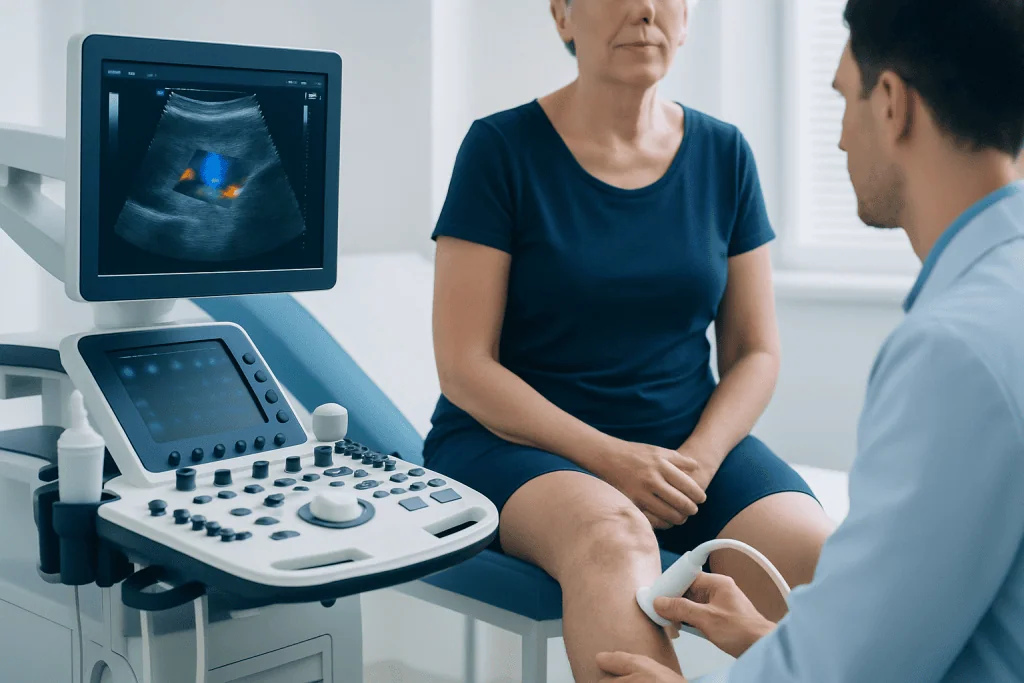
The main test used to evaluate varicose veins is duplex ultrasound. This non-invasive scan combines traditional ultrasound imaging with Doppler assessment of blood flow. It can show whether valves are leaking, which veins are affected, whether blood is flowing in the correct direction and whether there is evidence of blockage or clot in deeper veins.
Duplex ultrasound is important because the visible vein on the skin may not be the source of the problem. Treatment planning often depends on identifying the underlying reflux pattern in the great saphenous vein, small saphenous vein, perforator veins or other branches. Accurate mapping helps the specialist choose an appropriate treatment and reduce the risk of unnecessary procedures.
Additional tests are not needed for most people. In more complex cases, such as recurrent varicose veins, previous deep vein thrombosis, pelvic vein disease or leg ulcers, the specialist may request further vascular imaging. The goal is to understand the circulation fully before recommending any intervention.
Treatment Options
Treatment for varicose veins depends on symptoms, ultrasound findings, general health, skin condition and personal goals. The right approach is decided by a qualified vascular specialist after assessment. Treatment may aim to relieve discomfort, reduce swelling, improve skin health, treat ulcers, prevent complications or address visible veins.
Conservative treatment often starts with lifestyle and supportive measures. Regular walking and calf-muscle activity help move blood upward through the legs. Leg elevation can reduce swelling after long periods of standing or sitting. Weight management, avoiding prolonged immobility and taking movement breaks during travel or work may also help. Medical-grade compression stockings can reduce symptoms for some people, but they should be correctly fitted and used under professional guidance, especially in people with arterial disease or diabetes.
Minimally invasive procedures are commonly used when refluxing veins cause significant symptoms or complications. These may include endovenous thermal ablation, non-thermal vein closure techniques, ultrasound-guided foam sclerotherapy or surface sclerotherapy for smaller veins. These treatments are designed to close or remove the faulty vein from circulation so blood can reroute through healthier veins. They are usually planned using ultrasound guidance and performed by trained specialists.
Surgery may be considered in selected cases, especially when anatomy, vein size, recurrence or other factors make minimally invasive options less suitable. Surgical approaches may include removing or tying off affected veins through small incisions. If skin inflammation or venous ulcers are present, wound care, compression, treatment of underlying reflux and follow-up are important parts of management. Patients should discuss benefits, limitations, recovery expectations and possible risks with their doctor before any procedure.
Living With / Prognosis
Many people live well with varicose veins, especially when symptoms are mild and circulation is monitored appropriately. Simple daily habits can reduce discomfort: walking regularly, flexing the ankles when sitting, avoiding long periods without movement, elevating the legs when resting and wearing prescribed compression stockings if recommended. Comfortable footwear and avoiding tight clothing around the waist or legs may also support venous return.
Varicose veins may progress over time, particularly when risk factors remain. Some people develop increasing swelling, skin irritation or ankle discoloration. Others have stable veins for years. Because venous disease is often chronic, follow-up is important if symptoms change, new veins appear or previous treatment areas become painful or swollen.
After treatment, many patients experience improvement in heaviness, aching and swelling, but new varicose veins can develop later. This does not necessarily mean the original treatment failed; it may reflect ongoing valve weakness in other veins. Maintaining an active lifestyle, following specialist advice and attending recommended reviews can help protect long-term leg health.
For international patients who need evaluation or treatment, Acibadem International’s multidisciplinary vascular specialists and JCI-accredited hospitals provide diagnosis and care for varicose veins within a coordinated medical setting. Any decision about treatment should always be based on individual examination and imaging results.
When to See a Doctor
A doctor should be consulted if varicose veins cause pain, heaviness, swelling, itching, skin irritation or daily discomfort. Medical advice is also recommended when veins are rapidly worsening, when one leg is much more swollen than the other, or when symptoms do not improve with basic self-care measures. Early assessment can identify venous reflux and help prevent skin complications.
Prompt medical attention is needed for warning signs that may suggest inflammation, bleeding, clotting or advanced venous disease. These include sudden leg swelling, severe calf pain, redness and warmth along a vein, a hard tender vein, unexplained shortness of breath, chest pain, bleeding from a varicose vein or a sore near the ankle that does not heal. Emergency care is appropriate for symptoms suggestive of a blood clot traveling to the lungs, such as sudden breathlessness or chest pain.
People with diabetes, peripheral artery disease, immune suppression, previous deep vein thrombosis or active leg wounds should seek professional advice before using compression stockings or attempting self-treatment. Varicose veins are treatable, and a specialist assessment can clarify the safest options for each person.
Frequently asked questions
What are varicose veins?
Varicose veins are enlarged, twisted veins caused by weak or damaged valves that allow blood to pool. They most often appear in the legs because leg veins work against gravity. They may be painless or may cause aching, heaviness, swelling and skin changes.
Are varicose veins dangerous?
Varicose veins are often not dangerous, but they can become medically important if they cause persistent symptoms, swelling, skin inflammation, bleeding or ulcers. They may also be confused with other circulation problems. A doctor can determine whether further testing or treatment is needed.
Can varicose veins go away on their own?
Established varicose veins usually do not disappear permanently without treatment. Symptoms may improve with walking, leg elevation, weight management and compression therapy when appropriate. If the underlying valve problem is significant, a specialist may recommend a procedure to close or remove the faulty vein.
How are varicose veins diagnosed?
Diagnosis usually includes a medical history, leg examination and duplex ultrasound. Ultrasound shows how blood flows through the veins and whether valves are leaking. This information helps the vascular specialist plan treatment safely and accurately.
What is the best treatment for varicose veins?
There is no single best treatment for everyone. Options include lifestyle measures, compression stockings, minimally invasive vein closure procedures, sclerotherapy and surgery in selected cases. The right treatment depends on symptoms, ultrasound findings, vein anatomy and overall health, and should be decided by a specialist.
Do varicose veins come back after treatment?
Varicose veins can recur or new veins can develop after treatment because venous valve weakness may affect more than one area over time. Good treatment planning and follow-up can reduce this risk. Staying active and following medical advice may help support long-term results.
When should someone seek urgent care for varicose veins?
Urgent care is needed if there is sudden leg swelling, severe pain, redness and warmth, bleeding from a vein, or a non-healing wound near the ankle. Sudden shortness of breath or chest pain requires emergency medical attention. These symptoms may indicate a complication that needs prompt evaluation.
References
- National Institute for Health and Care Excellence
- Society for Vascular Surgery
- European Society for Vascular Surgery
- American Heart Association
- Mayo Clinic
This article is for general information only and is not a substitute for professional medical advice. Please consult a qualified doctor about your individual situation.
Doctors Who Treat This Condition
Prof. Dr. Ahmet Tulga Ulus
Cardiovascular Surgery
Prof. Dr. Ahmet Ümit Güllü
Cardiovascular Surgery
Prof. Dr. Bülent Kisacikoğlu
Cardiovascular Surgery
Prof. Dr. Cem Alhan
Cardiovascular Surgery
Prof. Dr. Ersin Erek
Cardiovascular Surgery
Prof. Dr. Eyüp Murat Ökten
Cardiovascular Surgery
Prof. Dr. Fuat Bilgen
Cardiovascular Surgery
Prof. Dr. Hayati Özkan
Cardiovascular Surgery
Prof. Dr. Mehmet Özkan
Cardiovascular Surgery
Prof. Dr. Rıza Türköz
Cardiovascular Surgery
Prof. Dr. Tayyar Sarioğlu
Cardiovascular Surgery