Age-Related Macular Degeneration: Central Vision Loss and Care

Age-related macular degeneration affects central vision, making reading, recognizing faces, and detailed tasks more difficult. Dry AMD is more common and usually progresses gradually, while wet AMD can cause faster vision changes and needs prompt medical care.
Key Takeaways
- Age-related macular degeneration affects central vision, making reading, recognizing faces, and detailed tasks more difficult.
- Dry AMD is more common and usually progresses gradually, while wet AMD can cause faster vision changes and needs prompt medical care.
- Symptoms may include blurred central vision, distortion of straight lines, dark or empty spots, and difficulty seeing in low light.
- Diagnosis usually involves a dilated eye exam, retinal imaging, and tests such as optical coherence tomography.
- Treatment depends on the type and stage of AMD and may include lifestyle changes, nutritional supplements, injections, laser-based care, and low-vision support.
- People over 50, smokers, and those with a family history of AMD should have regular eye examinations.
Age-related macular degeneration is a common eye condition that affects the macula, the part of the retina responsible for sharp central vision. Early diagnosis, regular monitoring, and appropriate treatment can help many people protect remaining vision and maintain independence.
Overview
Age-related macular degeneration, often called AMD, is a condition that affects the macula, the small central area of the retina at the back of the eye. The macula allows a person to see fine detail, read, drive, recognize faces, use a phone, and perform tasks that require sharp central vision. AMD does not usually cause complete blindness because side, or peripheral, vision is typically preserved, but it can significantly affect daily activities.
AMD is most often seen in adults over the age of 50. It may affect one eye or both eyes, and its course can vary from person to person. Some people have mild changes for many years, while others experience more noticeable visual difficulty. Regular eye examinations are important because early AMD may not cause obvious symptoms.
There are two main forms: dry AMD and wet AMD. Dry AMD is more common and usually develops slowly as the macula gradually changes with age. Wet AMD is less common but can progress more quickly because abnormal blood vessels grow under the retina and may leak fluid or blood. Identifying which type is present helps guide treatment and monitoring.
Symptoms and How Vision Changes
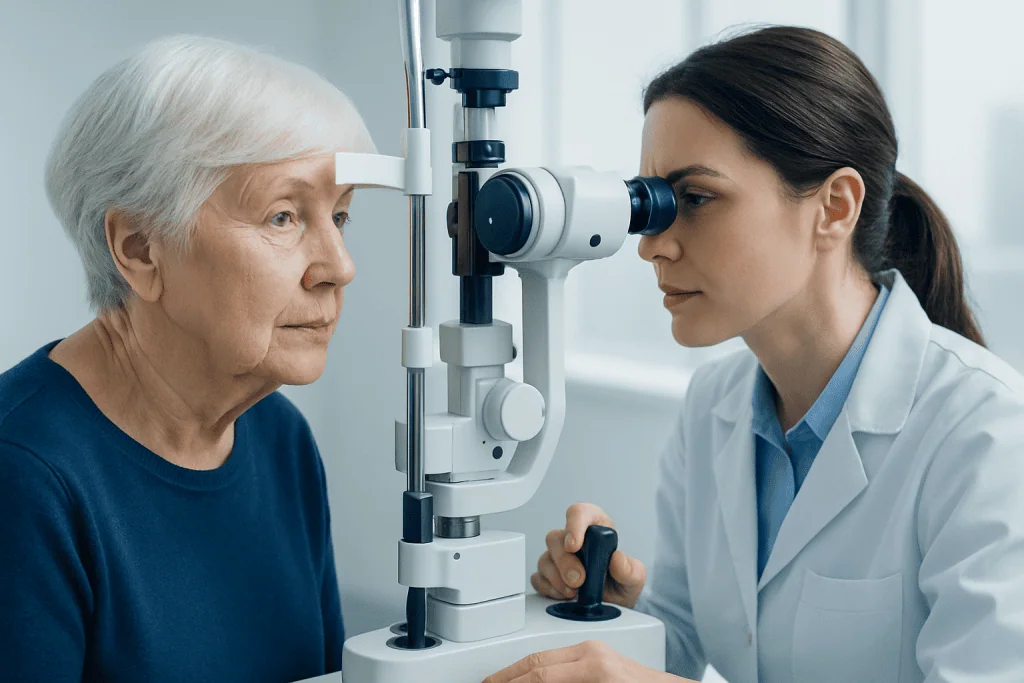
In the early stages, age-related macular degeneration may cause no symptoms. A person may pass a routine vision chart test and still have early retinal changes that only an eye specialist can see during a dilated examination. As AMD progresses, central vision may become blurry, dim, distorted, or less reliable.
Common symptoms include difficulty reading small print, needing brighter light for close work, reduced contrast sensitivity, trouble recognizing faces, and a blurred or dark area in the center of vision. Straight lines, such as door frames, tiles, or text lines, may appear wavy or bent. This distortion can be an important sign of wet AMD and should be assessed promptly.
AMD usually does not affect peripheral vision. For example, a person may still see objects to the side while having trouble seeing what they are looking at directly. Because the brain can sometimes compensate when one eye is more affected than the other, changes may be noticed only when each eye is checked separately.
- Blurred or fuzzy central vision
- Wavy or distorted straight lines
- A dark, gray, or empty spot in the center of vision
- Difficulty reading or seeing in dim light
- Colors appearing less bright
- Needing more time to adjust between bright and dark environments
Types of Age-Related Macular Degeneration

Dry AMD, also called non-neovascular AMD, is the most common type. It is associated with the buildup of drusen, which are small yellow deposits under the retina, and with gradual thinning or damage of retinal cells. Dry AMD can be early, intermediate, or advanced. In advanced dry AMD, an area of retinal cell loss called geographic atrophy may develop, causing more noticeable central vision loss.
Wet AMD, also called neovascular AMD, occurs when fragile abnormal blood vessels grow beneath the macula. These vessels may leak fluid or blood, leading to swelling, scarring, and sudden or rapidly worsening central vision changes. Wet AMD can develop in a person who previously had dry AMD, which is why ongoing monitoring is important even when symptoms are mild.
The distinction between dry and wet AMD matters because treatment options differ. Wet AMD often responds to medicines injected into the eye that target vascular endothelial growth factor, a protein involved in abnormal blood vessel growth. Dry AMD treatment focuses on risk reduction, nutritional support in selected patients, monitoring, and low-vision strategies, although newer treatments may be appropriate for some forms of advanced dry AMD.
Causes and Risk Factors
AMD develops through a combination of aging, genetic susceptibility, environmental influences, and changes in the retina over time. The macula has a high demand for oxygen and nutrients, and with age, the support tissues beneath the retina may become less efficient. This can contribute to drusen formation, inflammation, oxidative stress, and damage to light-sensitive cells.
Age is the strongest risk factor, but it is not the only one. Family history increases risk, suggesting an inherited component. Smoking is one of the most important modifiable risk factors and is associated with both the development and progression of AMD. Cardiovascular health, blood pressure, diet quality, body weight, and long-term sun exposure may also play a role.
Risk factors for age-related macular degeneration include:
- Being over 50 years of age
- Having a parent or sibling with AMD
- Smoking or significant past tobacco exposure
- High blood pressure or cardiovascular disease
- A diet low in leafy green vegetables, fruits, and fish
- Obesity or low physical activity
- Light-colored eyes and fair skin in some populations
Having risk factors does not mean a person will definitely develop AMD, and people without obvious risk factors can still be affected. The practical goal is to identify risks that can be changed, such as smoking and cardiovascular health, while ensuring regular eye care for early detection.
Diagnosis and Monitoring
Diagnosis begins with a comprehensive eye examination by an ophthalmologist or qualified eye care professional. The exam usually includes visual acuity testing, pupil dilation, and careful inspection of the retina and macula. The doctor looks for drusen, pigment changes, bleeding, swelling, or signs of atrophy.
Optical coherence tomography, commonly called OCT, is a key imaging test for AMD. It creates detailed cross-sectional images of the retina and can show fluid, swelling, thinning, or structural changes in the macula. Fundus photography may be used to document the appearance of the retina over time. In some cases, fluorescein angiography or other retinal imaging tests help identify leaking blood vessels in wet AMD.
People with AMD may be asked to monitor their vision at home using an Amsler grid, a simple square grid that helps detect distortion or missing areas in central vision. Each eye should be checked separately, while wearing reading glasses if normally used. Any new waviness, blank spot, or sudden change should be reported to an eye doctor without delay.
Follow-up frequency depends on the stage and type of AMD. Early dry AMD may require periodic monitoring, while wet AMD or advanced disease usually needs closer follow-up. Regular visits allow treatment plans to be adjusted and help detect changes before major vision loss occurs.
Treatment Options
Treatment for age-related macular degeneration depends on whether the condition is dry or wet, how advanced it is, and how vision is affected. The aim is to slow progression, treat active disease when possible, preserve useful vision, and support daily functioning. A personalized plan may include medical treatment, lifestyle measures, visual aids, and rehabilitation.
For wet AMD, the main treatment is usually intravitreal anti-VEGF therapy. These medicines are injected into the eye after numbing drops and antiseptic preparation. They help reduce abnormal blood vessel leakage and may stabilize or improve vision in many patients. Several injections are commonly needed over time, and the schedule is determined by retinal findings and response to treatment.
Other treatments may occasionally be considered, such as laser-based therapies, depending on the location and type of abnormal vessels. For dry AMD, selected patients with intermediate AMD may benefit from specific eye vitamin formulations based on large clinical studies. These supplements are not appropriate for everyone and should be discussed with an eye doctor, especially for people who smoke or have other medical conditions.
Low-vision care is an important part of treatment when vision loss affects everyday life. Magnifiers, high-contrast reading materials, brighter task lighting, electronic reading devices, screen enlargement, audio tools, and orientation support can make daily tasks easier. Vision rehabilitation specialists can help patients adapt safely and confidently.
Prevention and Self-Care
Not all cases of AMD can be prevented, but several healthy habits may lower risk or help slow progression. Stopping smoking is one of the most important steps. People who smoke should ask a doctor about evidence-based support, because quitting benefits both eye health and overall health.
A heart-healthy lifestyle also supports the small blood vessels and tissues of the eye. This includes managing blood pressure and cholesterol, staying physically active as medically appropriate, and maintaining a balanced diet. Foods often recommended for eye health include leafy green vegetables, colorful fruits and vegetables, legumes, nuts, and fish rich in omega-3 fatty acids. Supplements should not replace a varied diet and should be used only when recommended by a clinician.
Protecting the eyes from intense sunlight with quality sunglasses and a brimmed hat may be helpful for general eye comfort and long-term eye care. Good lighting at home, reducing glare, using larger print, and organizing frequently used items can also improve safety and independence. People with AMD should continue routine medical care for diabetes, hypertension, and cardiovascular conditions, as general health and eye health are closely connected.
Self-monitoring is especially important. Checking vision one eye at a time and noting changes in reading, distortion, or central blind spots can help detect worsening disease. A sudden change should not be dismissed as normal aging, because timely treatment may be important, particularly in wet AMD.
When to See a Doctor
Adults over 50 should have regular eye examinations, especially if they have a family history of AMD, smoke, or notice changes in central vision. An eye doctor can determine the appropriate examination schedule based on retinal findings and individual risk. People already diagnosed with AMD should keep follow-up appointments even if their vision feels stable.
Prompt medical attention is recommended if a person notices sudden blurring, wavy lines, a new dark spot in the center of vision, or rapid difficulty reading or recognizing faces. These changes may indicate wet AMD or another retinal condition that needs evaluation. Checking each eye separately can help reveal changes that might otherwise be missed.
Care for AMD may involve ophthalmologists, retina specialists, optometrists, low-vision therapists, and primary care doctors. Near the end of the care journey or when seeking a second opinion, international patients may consider centers such as Acibadem International, where multidisciplinary specialists and JCI-accredited hospitals diagnose and treat retinal conditions including AMD. The most important step is to seek qualified medical assessment and follow an individualized plan.
Frequently asked questions
Can age-related macular degeneration cause total blindness?
AMD usually affects central vision rather than peripheral vision, so it typically does not cause complete blindness. However, advanced AMD can make reading, driving, recognizing faces, and detailed tasks very difficult. Early diagnosis and appropriate management can help protect remaining vision.
What is the difference between dry AMD and wet AMD?
Dry AMD is more common and usually progresses gradually, often with drusen and thinning of retinal tissues. Wet AMD is caused by abnormal blood vessels that leak fluid or blood under the macula and can lead to faster vision changes. Wet AMD often requires prompt treatment with eye injections.
Are eye injections for wet AMD painful?
Most patients describe intravitreal injections as uncomfortable rather than painful because the eye is numbed before the procedure. The eye may feel scratchy or irritated for a short time afterward. Any severe pain, marked redness, or sudden vision loss after an injection should be reported to the treating doctor immediately.
Do vitamins cure macular degeneration?
Vitamins do not cure AMD or restore lost vision. Specific supplement formulas may help reduce the risk of progression in some people with intermediate or advanced AMD, but they are not recommended for every stage or every patient. An eye doctor should advise whether supplements are appropriate.
Can lifestyle changes help after AMD is diagnosed?
Yes, lifestyle changes can be useful even after diagnosis. Stopping smoking, eating a balanced diet, managing blood pressure, staying active, and attending regular eye appointments may support eye health and reduce avoidable risks. These measures work best as part of a medical plan.
How often should someone with AMD have an eye exam?
The schedule depends on the type and stage of AMD, symptoms, and treatment needs. Early or stable dry AMD may require periodic monitoring, while wet AMD usually needs more frequent visits. The treating ophthalmologist or retina specialist will recommend the safest follow-up interval.
This article is for general information only and is not a substitute for professional medical advice. Please consult a qualified doctor about your individual situation.
Macular Degeneration in Turkey — costs, top hospitals & a free quote
JCI-accredited · board-certified surgeons · reply within 24h
Add us as a Preferred Source to see more of our trusted health content across Google Search, AI Overviews and Discover.
Check your numbers in seconds
BMI, calories, due date, blood pressure and 30+ more clinical calculators — free, instant, doctor-reviewed ranges.

Related Treatments
More from the Health Library

Amblyopia Surgery: When Is an Operation Considered for Lazy Eye?

Laser Eye Surgery: What It Treats and How It Works

Inherited Eye Diseases: When Genetic Testing Can Help Families

Cataract Surgery in One Eye or Both: How Doctors Decide

Eye Care for Older Adults: Common Vision Changes After 60