

Peri-Implantitis: Inflammation Around Dental Implants Explained

Peri-implantitis affects the soft tissue and bone around a dental implant, while peri-implant mucositis involves gum inflammation without bone loss. Common signs include bleeding when cleaning, swollen gums, bad taste, pus, gum recession or a feeling that the implant is loose.
Key Takeaways
- Peri-implantitis affects the soft tissue and bone around a dental implant, while peri-implant mucositis involves gum inflammation without bone loss.
- Common signs include bleeding when cleaning, swollen gums, bad taste, pus, gum recession or a feeling that the implant is loose.
- Risk factors include plaque buildup, smoking, previous gum disease, uncontrolled diabetes, poor implant maintenance and certain bite or prosthetic problems.
- Diagnosis usually includes a dental examination, gentle probing, X-rays and assessment of the implant restoration.
- Treatment may involve professional cleaning, antiseptic measures, correction of implant prosthetic issues, antibiotics in selected cases and surgical treatment when bone loss is present.
- Regular dental follow-up and careful home care are essential to help protect dental implants over the long term.
Peri-implantitis is inflammation around a dental implant that can affect the gums and supporting bone. With early diagnosis, professional care and good daily hygiene, many implant-related problems can be managed effectively.
Overview
Peri-implantitis is an inflammatory condition that develops in the tissues surrounding a dental implant. Dental implants are designed to act as artificial tooth roots, and they can be a reliable solution for replacing missing teeth. However, like natural teeth, implants need healthy gums, stable bone and consistent maintenance to function well over time.
The condition usually starts when bacterial plaque builds up around the implant crown, abutment or gumline. In the early stage, inflammation may affect only the soft gum tissue. This is called peri-implant mucositis and is often reversible with prompt professional care and improved cleaning. When inflammation progresses and leads to loss of supporting bone around the implant, it is called peri-implantitis.
Peri-implantitis is not simply a normal part of having implants. It is a disease process that should be assessed by a dentist, periodontist or implant specialist. Early detection is important because bone loss around an implant can make treatment more complex. The goal of care is to control infection and inflammation, preserve healthy tissue and maintain implant stability whenever possible.
Symptoms and Warning Signs
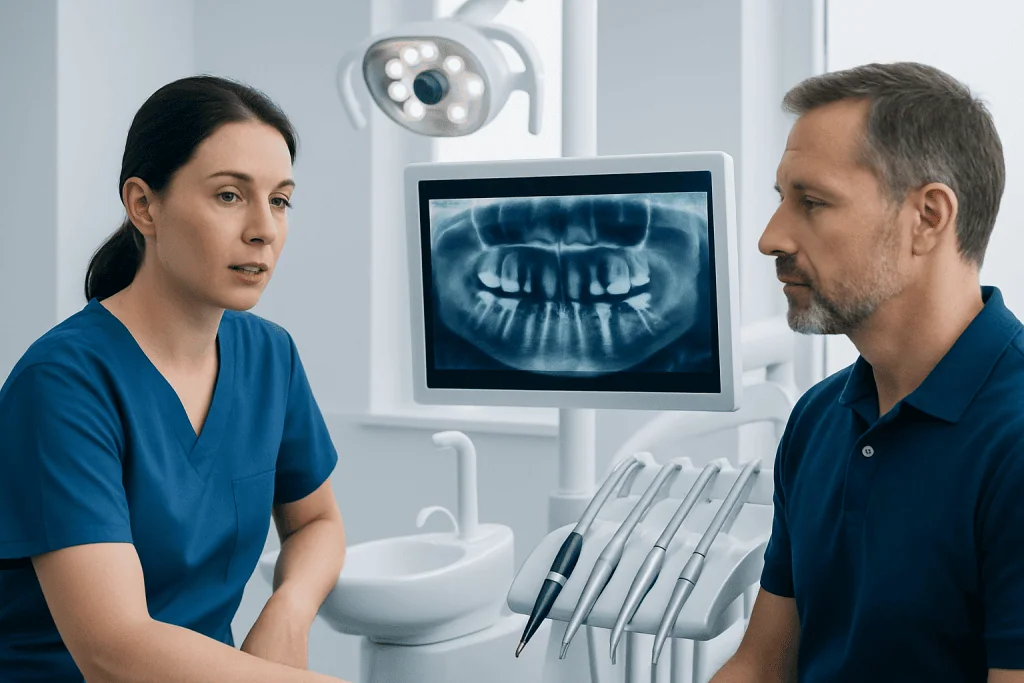
Peri-implantitis may develop slowly, and some people notice very little discomfort at first. Pain is not always present, which is why regular implant check-ups are important even when the implant feels normal. A person may first notice bleeding when brushing, flossing or using interdental brushes around the implant.
Common signs include red or swollen gums around the implant, tenderness, bleeding on gentle cleaning, bad breath or an unpleasant taste. In some cases, there may be pus, gum recession that makes the implant look longer, or food trapping around the implant crown. As the condition advances, the implant may feel loose or uncomfortable when chewing.
Possible warning signs of peri-implant disease include:
- Bleeding or swelling around an implant
- Pus or discharge from the gumline
- Persistent bad taste or bad breath
- Gum recession or exposed implant threads
- Increasing difficulty cleaning around the implant
- Changes in bite, chewing comfort or implant stability
These symptoms do not always mean that an implant is failing, but they should not be ignored. A dental professional can determine whether the problem is peri-implant mucositis, peri-implantitis, a loose screw, excess cement, bite overload or another issue that needs attention.
Causes and Risk Factors
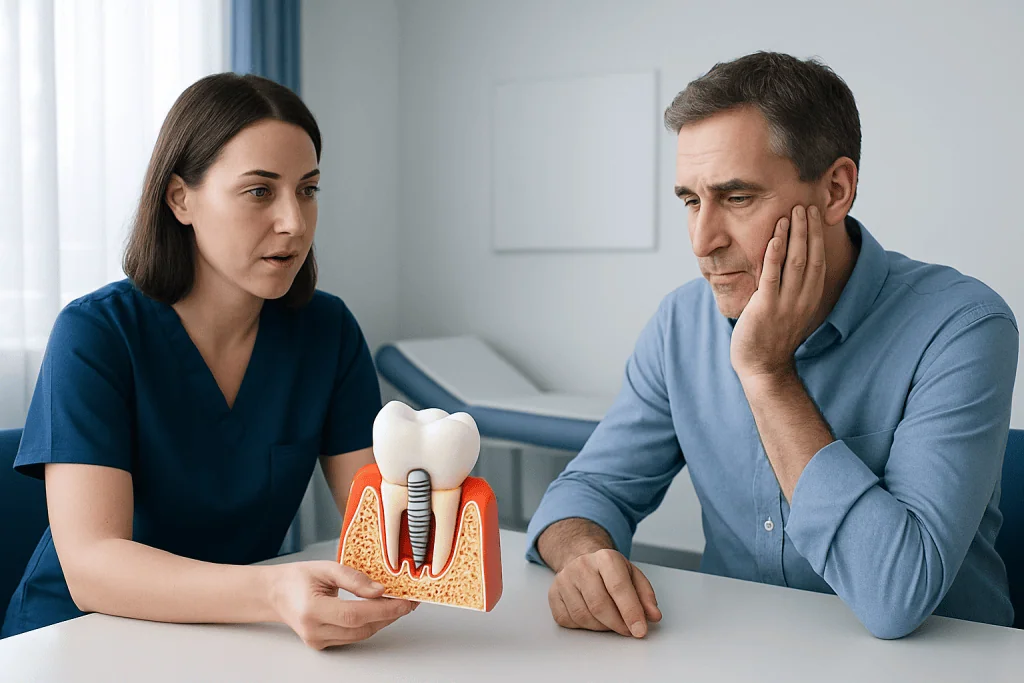
The main cause of peri-implantitis is the accumulation of bacterial biofilm around the implant. Biofilm is a sticky layer of bacteria that forms on teeth, restorations and implant surfaces. If it is not removed effectively, it can trigger an inflammatory response in the gum tissue and eventually contribute to bone loss around the implant.
Several factors can increase the risk. A history of periodontal disease is one of the most important, because people who have lost teeth due to gum disease may be more prone to inflammation around implants. Smoking can impair healing and reduce the body’s ability to control infection. Poorly controlled diabetes, certain immune conditions and some medications that affect healing may also influence risk.
Local implant-related factors may play a role as well. These include difficulty cleaning around the implant, excess dental cement under the gum, a poorly fitting crown or bridge, insufficient keratinized gum tissue, or an implant position that makes plaque control difficult. Heavy biting forces, teeth grinding or an unstable bite may contribute to complications in some patients, especially if combined with inflammation.
Peri-implantitis is usually multifactorial, meaning more than one factor is often involved. For this reason, treatment is not only about cleaning the implant surface; it also includes identifying why inflammation developed and correcting modifiable risks where possible.
Diagnosis
Diagnosis begins with a detailed dental history and clinical examination. The dentist will ask about symptoms, oral hygiene routines, smoking, medical conditions, medications and previous gum disease. They will also review when the implant was placed, whether it has been maintained regularly and whether there have been any changes in the implant crown or bite.
During the examination, the gum tissue around the implant is assessed for redness, swelling, bleeding, pus, recession and pocket depth. Gentle probing around implants is an accepted part of monitoring when performed carefully with appropriate instruments. The dentist may compare current findings with earlier records to detect changes over time.
Dental X-rays are commonly used to evaluate bone levels around the implant. In some cases, three-dimensional imaging may be recommended when more detail is needed for treatment planning, especially if surgery is being considered. The implant crown or bridge may also be checked for loose components, excess cement, overhangs or design features that make cleaning difficult.
It is important to distinguish peri-implant mucositis from peri-implantitis. Mucositis involves soft tissue inflammation without progressive bone loss, while peri-implantitis includes bone loss beyond expected remodeling. This distinction helps guide treatment and gives a clearer understanding of the outlook.
Treatment Options
Treatment depends on the severity of inflammation, the amount of bone loss, implant stability and the underlying causes. In early disease, professional cleaning and improved plaque control may be enough to resolve gum inflammation. The dentist or hygienist may remove plaque and calculus from around the implant using instruments and techniques designed for implant surfaces.
Non-surgical treatment may include mechanical debridement, antiseptic rinses or gels, polishing of accessible surfaces and detailed home-care instruction. In selected cases, antibiotics may be considered, but they are not a substitute for thorough cleaning and correction of local factors. If there is excess cement, a loose prosthetic component or a crown contour that traps plaque, these issues may need to be corrected.
When peri-implantitis has caused deeper pockets or significant bone loss, surgical treatment may be recommended. Surgery allows the clinician to access and clean the implant surface more thoroughly. Depending on the defect pattern and implant condition, treatment may involve tissue reshaping, regenerative procedures using bone grafting materials, or other techniques to improve the environment around the implant.
If an implant has lost substantial support or is mobile, removal may sometimes be the safest option. This does not mean a person has no future treatment choices. After healing and evaluation of the bone and soft tissues, replacement options may include another implant, a bridge or a removable prosthesis, depending on the individual situation.
Prevention and Daily Self-Care
Prevention focuses on keeping the implant and surrounding gums as clean and healthy as possible. Dental implants do not decay like natural teeth, but the tissues around them can become inflamed. A consistent home-care routine is essential, especially around the gumline and under implant bridges where plaque can collect.
Most people with implants need a combination of cleaning tools. These may include a soft toothbrush or electric toothbrush, interdental brushes, floss designed for implants, water flossers or special threaders for bridges. The best tools depend on the shape of the implant crown, the gum contours and the space between teeth. A dental professional can demonstrate the safest and most effective technique.
Professional maintenance is equally important. Routine implant check-ups allow the dental team to monitor gum health, clean areas that are difficult to reach at home, check the bite and compare X-rays when needed. The recommended maintenance interval varies according to risk, but people with previous gum disease, smoking history or early signs of inflammation may need more frequent visits.
Lifestyle and medical factors also matter. Stopping smoking, managing diabetes well, treating gum disease in the rest of the mouth and wearing a night guard if recommended for grinding can help reduce risk. Prevention is most effective when it is personalized to the patient’s oral health history and implant design.
When to See a Dentist
A dentist should be consulted if there is bleeding, swelling, pus, persistent bad taste, gum recession or discomfort around a dental implant. It is also important to seek care if the implant crown feels loose, food is suddenly getting trapped, or chewing feels different. Early assessment can often identify problems before they become more difficult to manage.
People with dental implants should not wait for pain before booking an appointment. Peri-implantitis can progress with minimal discomfort, and routine monitoring is one of the best ways to protect implant health. Patients with a history of periodontitis, diabetes, smoking or multiple implants should be especially careful about regular follow-up.
A qualified dentist, periodontist or oral surgeon can determine whether the implant has mucositis, peri-implantitis or a mechanical complication. For international patients, Acibadem International’s multidisciplinary dental and oral surgery teams in JCI-accredited hospitals can assess and treat implant-related conditions as part of coordinated care.
Frequently asked questions
Is peri-implantitis the same as gum disease?
Peri-implantitis is similar to gum disease because both involve bacterial plaque and inflammation of supporting tissues. The difference is that peri-implantitis occurs around dental implants, while periodontitis affects natural teeth. The tissues around implants have different anatomy, so diagnosis and treatment require implant-specific expertise.
Can peri-implantitis be cured?
Peri-implant mucositis, the early soft tissue stage, is often reversible with professional cleaning and better daily hygiene. Peri-implantitis with bone loss can usually be managed, but the lost bone may not always fully return. Treatment aims to stop progression, control inflammation and preserve the implant when possible.
Does peri-implantitis always mean the implant will fail?
No. Many implants with inflammation can be treated, especially when the condition is found early and the implant remains stable. The outlook depends on the amount of bone loss, implant position, hygiene access, medical risk factors and response to treatment.
Is peri-implantitis painful?
It may cause tenderness or discomfort, but pain is not always present. Some people only notice bleeding during brushing or a change in the gum shape. Because symptoms can be subtle, regular dental maintenance is important for anyone with implants.
Can antibiotics treat peri-implantitis?
Antibiotics may be used in selected cases, but they are not usually enough on their own. The bacterial biofilm and deposits around the implant must be professionally removed, and contributing factors such as excess cement or poor crown contours may need correction. A dentist will decide whether antibiotics are appropriate based on the clinical findings.
How can someone clean around a dental implant properly?
Cleaning usually includes brushing twice daily and using tools that reach between the implant and nearby teeth or under implant bridges. Interdental brushes, implant-safe floss, threaders or water flossers may be recommended depending on the design of the restoration. The dental team should demonstrate the technique because the best method varies from person to person.
References
- World Health Organization
- European Federation of Periodontology
- American Academy of Periodontology
- International Team for Implantology
- Cochrane Oral Health
This article is for general information only and is not a substitute for professional medical advice. Please consult a qualified doctor about your individual situation.
Dental Implants in Turkey — costs, top hospitals & a free quote
JCI-accredited · board-certified surgeons · reply within 24h
Add us as a Preferred Source to see more of our trusted health content across Google Search, AI Overviews and Discover.

Dental & Oral Health
Full-scope dental care from implants and aesthetics to oral and maxillofacial surgery.
158 specialists in this unitRelated Treatments
More from the Health Library



Related Specialists

Assoc. Prof. Dr. Ferit Bayram
Oral & Dental Health
Dt. Alara Naz Kenir
Oral & Dental Health
Dt. Gonca Katmer
Oral & Dental HealthDt. Doğa Baysal
Oral & Dental Health