Microneedling Radiofrequency
Microneedling radiofrequency is a minimally invasive dermatology treatment that uses tiny needles to deliver controlled radiofrequency heat beneath the skin surface. This triggers the body to produce new collagen and elastin, which…
Quick answer
Microneedling radiofrequency is a non-surgical skin treatment in which fine needles deliver radiofrequency heat into the deeper skin layer to stimulate collagen production. It is commonly used for acne scars, fine lines, enlarged pores, and mild skin laxity. Sessions use numbing cream, take roughly an hour, and recovery is usually a few days.
What is microneedling radiofrequency?
Microneedling radiofrequency is a non-surgical skin treatment that combines two established techniques. Microneedling uses a device with many very fine, sterile needles that create tiny, controlled punctures in the skin. Radiofrequency (RF) is a form of electrical energy that produces gentle heat in tissue. In microneedling radiofrequency, the needles deliver this heat directly into the deeper layer of the skin, called the dermis, while largely sparing the surface layer, called the epidermis.
The purpose of this controlled injury and heating is to trigger the body’s natural wound-healing response. Over the following weeks, the skin produces new collagen and elastin. Collagen is the protein that gives skin its structure and firmness; elastin is the protein that allows skin to stretch and return to its shape. As these proteins are rebuilt, the skin’s texture and firmness may gradually improve.
Dermatologists most often use microneedling radiofrequency for the following concerns:
- Acne scars, especially shallow and rolling (soft, indented) scars
- Fine lines and mild wrinkles
- Mild to moderate skin laxity (looseness), for example along the jawline, neck, or cheeks
- Enlarged pores and uneven skin texture
- Stretch marks in some cases
- Excessive sweating of the underarms (hyperhidrosis) with certain devices, although this is a more specialized use
In many hospital settings, including Acibadem, this procedure is managed within the Dermatology department. The treatment is considered a minimally invasive cosmetic procedure, meaning it involves small punctures rather than incisions and does not require surgery.
Who is a candidate for microneedling radiofrequency?
People often ask who needs microneedling radiofrequency. Strictly speaking, no one “needs” it in a medical sense; it is an elective procedure chosen to address a cosmetic concern or, in some cases, a condition such as scarring that affects quality of life. A specialist decides suitability after examining the skin and reviewing your medical history.
You may be considered a suitable candidate if you:
- Are an adult with acne scars, mild skin laxity, fine lines, or textural irregularities
- Are in generally good health with no active skin infection in the treatment area
- Have realistic expectations about gradual, moderate improvement rather than dramatic change
- Are able to protect your skin from the sun during the healing period
One advantage often mentioned by dermatologists is that, because the heat is delivered beneath the surface, microneedling radiofrequency can often be used on a wider range of skin tones than some laser treatments. Even so, the risk of pigment changes still exists and is discussed further below.
Microneedling radiofrequency is generally not suitable, or requires extra caution, in the following situations:
- Active acne with inflamed pimples, cold sores (herpes simplex), or any skin infection in the area
- A history of keloids or hypertrophic scars (raised, overgrown scars), because new injury may trigger more scarring
- Pregnancy or breastfeeding, since safety has not been established
- Implanted electronic devices such as a pacemaker or defibrillator, because radiofrequency energy may interfere with them
- Metal implants or fillers in the treatment area, depending on the device and your doctor’s assessment
- Use of isotretinoin (a strong oral acne medication) within recent months, as healing may be impaired
- Bleeding disorders or use of blood-thinning medications, which may increase bruising
- Uncontrolled diabetes or other conditions that slow wound healing
- Autoimmune skin conditions such as active psoriasis, eczema, or lupus in the treatment area
Your doctor will weigh these factors and may recommend an alternative treatment if the risks outweigh the likely benefit.
How the microneedling radiofrequency procedure works
The microneedling radiofrequency procedure is usually performed in an outpatient clinic room rather than an operating theater. The steps below describe a typical session, although details vary between devices and clinics.
Before the session
- Your skin is cleansed to remove makeup, oils, and bacteria.
- A numbing cream (topical anesthetic) is applied and left in place, often for 30 to 60 minutes, so the skin is less sensitive.
- The numbing cream is removed and the skin is cleaned again with an antiseptic.
- Photographs are often taken so that changes can be compared later.
During the session
- The practitioner selects settings such as needle depth, energy level, and pulse duration based on the area being treated and your skin’s thickness. Deeper settings are often used for scars; shallower settings for fine lines or thin skin.
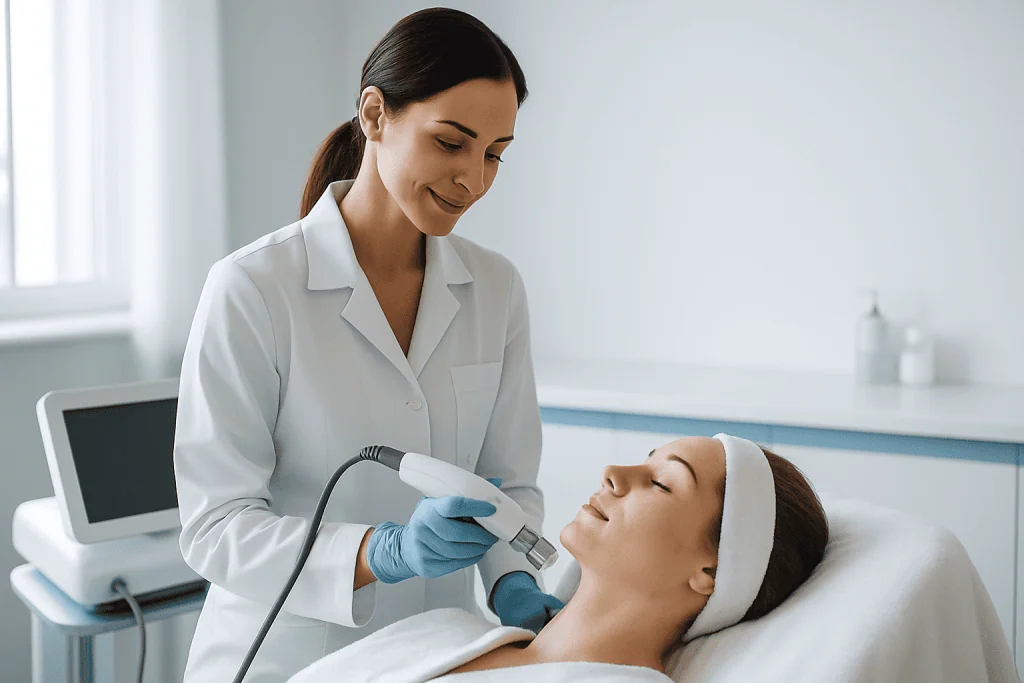
- A handpiece with a grid of fine needles is pressed against the skin. The needles enter to a preset depth and release a short pulse of radiofrequency energy.
- The handpiece is lifted and moved to the next spot until the whole area is covered, sometimes in more than one pass.
- Most people describe a sensation of pressure, prickling, and warmth. Some areas, such as the forehead or near bone, may feel more intense.
- Active treatment time is often 20 to 45 minutes, depending on the size of the area; including numbing, the visit may last 60 to 90 minutes.
After the session
- A soothing gel or cooling mask may be applied to reduce heat and redness.
- The practitioner gives written aftercare instructions and explains what is normal and what is not.
- You can usually go home immediately and do not need someone to drive you, since only local numbing is used.
A single treatment is rarely enough. Doctors typically recommend a series of three to four sessions spaced about four to six weeks apart, followed by occasional maintenance sessions if desired.
Preparation for microneedling radiofrequency
Good preparation helps reduce complications and supports healing. Your doctor will give instructions specific to you, but the following are commonly advised:
- Attend a consultation first. This includes a skin examination, a review of your medical history and medications, and a discussion of what the treatment can and cannot realistically achieve.
- Avoid sun exposure and tanning for about two weeks before treatment. Treating sunburned or recently tanned skin increases the risk of pigment changes.
- Pause certain skincare products. Retinoids (vitamin A creams), exfoliating acids, and other irritating products are often stopped several days before the session.
- Discuss medications and supplements. Blood-thinning medicines, aspirin, some anti-inflammatory drugs, and supplements such as fish oil or vitamin E may increase bruising. Never stop a prescribed medication without your prescribing doctor’s approval.
- Mention a history of cold sores. Your doctor may prescribe an antiviral medication to take before and after treatment, since the procedure can trigger an outbreak.
- Arrive with clean skin and no makeup on the day of the procedure.
- Plan your schedule. Many people prefer to book treatment when they have a few days without important social or professional events, in case redness or swelling is more visible than expected.
Recovery and aftercare after microneedling radiofrequency
Microneedling radiofrequency recovery time is typically short compared with surgical procedures, but the skin does need time to heal. The following timeline reflects what many patients experience; your own recovery may be faster or slower.
- First 24 hours: The skin often looks red and feels warm and tight, similar to a moderate sunburn. Mild swelling is common, particularly around the eyes and cheeks. Tiny pinpoint marks or slight spotting of blood may be visible at the needle sites.
- Days 2 to 4: Redness usually fades to pink. Small crusts or a fine grid pattern may appear where the needles entered. Some people notice mild dryness, flaking, or roughness.
- Days 4 to 7: In many cases the skin looks close to normal, and makeup can typically be worn once any crusting has resolved and your practitioner confirms it is safe.
- Weeks 2 to 12: Collagen remodeling happens gradually, so visible improvement often develops slowly over several weeks to months rather than immediately.
Most people return to work and normal daily activities within one to three days. Aftercare instructions commonly include the following:
- Keep the skin clean using a gentle, fragrance-free cleanser and lukewarm water; avoid scrubbing.
- Apply the moisturizer or barrier cream recommended by your practitioner to keep the skin hydrated.
- Avoid makeup, active skincare ingredients (retinoids, acids, vitamin C serums), and exfoliation for the period your doctor advises, often several days.
- Use a broad-spectrum sunscreen daily and avoid direct sun exposure for several weeks. New collagen and healing skin are especially vulnerable to pigment changes.
- Skip strenuous exercise, saunas, steam rooms, hot baths, and swimming pools for a few days, as heat and sweat can irritate the skin and increase infection risk.
- Do not pick at flaking skin or crusts, since this can lead to scarring or pigment changes.
- Sleep with your head slightly raised for the first night or two if swelling is a concern.
Microneedling radiofrequency risks and side effects
Understanding microneedling radiofrequency risks and benefits is essential before agreeing to treatment. The procedure has a generally favorable safety record when performed by trained professionals with appropriate devices, but no procedure is free of risk.
Common, usually temporary side effects
- Redness, warmth, and swelling for one to several days
- Pinpoint bleeding or bruising at needle sites
- Dryness, flaking, or a grid-like pattern on the skin
- Temporary sensitivity or a tingling sensation
- A short-term flare of acne in some people
Less common but more significant risks
- Infection: Bacterial infection can occur if the skin barrier is broken and not cared for properly, or if equipment is not sterile.
- Herpes reactivation: Cold sores may flare in people who carry the virus.
- Post-inflammatory hyperpigmentation: Darkening of the treated skin, more likely in darker skin tones or after sun exposure. It usually fades over months but can persist.
- Hypopigmentation: Lightening of the skin, which is rarer and may be longer lasting.
- Burns or blisters: Excessive energy, incorrect technique, or needles that do not fully insulate the surface can cause thermal injury.
- Scarring: Uncommon, but possible, especially in people prone to keloids or when aftercare is not followed.
- Track marks: Persistent grid-like marks where the needles entered, which usually fade but can occasionally last longer.
- Fat loss or contour irregularity: Rare, but overly aggressive heating in thin areas of the face may affect the underlying fat layer.
- Allergic or irritant reaction to numbing cream or aftercare products.
Choosing a qualified dermatologist or appropriately trained clinician, disclosing your full medical history, and following aftercare instructions are the main ways to reduce these risks.
Results and outlook
Published studies and clinical experience suggest that microneedling radiofrequency can produce moderate improvement in acne scarring, skin texture, and mild laxity for many patients. Results are generally described as gradual and natural-looking rather than dramatic. The strongest evidence exists for atrophic acne scars (scars that sit below the skin surface), where the treatment is widely regarded as one of several effective options.
Several points help set realistic expectations:
- Improvement typically becomes noticeable after the second or third session and continues for several months as collagen matures.
- Results vary from person to person depending on age, skin quality, scar type, device settings, and the number of sessions.
- The treatment does not stop the natural aging process. Maintenance sessions, often once or twice a year, may be suggested to preserve results.
- Deep, ice-pick acne scars, significant sagging, or deep wrinkles often respond less well and may need other or combined approaches, such as surgical scar revision, fillers, or laser resurfacing.
- Some people see little change despite proper treatment, and this possibility should be part of the informed-consent discussion.
Long-term outcomes for laxity are less well studied than those for scarring, and your doctor should be open about the limits of the current evidence.
Cost considerations
Because microneedling radiofrequency is almost always considered a cosmetic procedure, it is usually not covered by health insurance, although coverage for scar treatment can occasionally be considered depending on the insurer and circumstances. The total cost is influenced by several factors rather than a single fixed figure:
- Number of sessions: A full course typically involves several treatments, and pricing is often per session or per package.
- Size of the treatment area: Treating the full face and neck generally costs more than a small area such as the cheeks alone.
- Device and consumables: Each session uses a single-use sterile needle cartridge, and different device platforms have different operating costs.
- Practitioner expertise and setting: Treatment by a dermatologist in a hospital-based clinic may be priced differently from treatment in a standalone aesthetic clinic.
- Anesthesia and add-ons: Numbing cream is usually included, but combined treatments (for example, topical serums or other energy-based procedures) add to the cost.
- Follow-up care: Review visits, prescribed aftercare products, and possible maintenance sessions should be factored in.
No hospital stay is required, which keeps overall costs lower than surgical alternatives. Ask for a written breakdown before starting a treatment course so you understand what is included.
Frequently asked questions
Does microneedling radiofrequency hurt?
Most people describe the microneedling radiofrequency procedure as uncomfortable rather than painful, thanks to the numbing cream applied beforehand. Sensations of pressure, prickling, and heat are common, and certain areas such as the forehead, jawline, or upper lip may feel more intense. Tell your practitioner if discomfort becomes difficult to tolerate, as settings or numbing can often be adjusted.
How long is microneedling radiofrequency recovery time?
Microneedling radiofrequency recovery time is usually brief. Redness and swelling often settle within one to three days, and most people return to work quickly. Mild flaking or a faint grid pattern can persist for up to a week in some cases. Full results take longer, because the collagen response continues for several weeks to months after each session.
Who needs microneedling radiofrequency, and who should avoid it?
The treatment is chosen, not needed, and is generally considered for adults with acne scars, fine lines, enlarged pores, or mild skin laxity. It should be avoided in pregnancy, with active skin infection, in people with a pacemaker or similar device, in those prone to keloid scars, and during or shortly after isotretinoin treatment. A dermatologist can advise whether it fits your situation.
What are the main microneedling radiofrequency risks and benefits?
The potential benefits include gradual improvement in skin texture, scar depth, and firmness with minimal downtime and suitability for many skin tones. The main risks are temporary redness and swelling, and less commonly infection, pigment changes, burns, or scarring. Weighing these depends on your skin type, health history, and how much the concern affects you.
How many sessions of microneedling radiofrequency are needed?
Most treatment plans involve three to four sessions spaced about four to six weeks apart. The exact number depends on the condition being treated, its severity, and how your skin responds. Some people choose maintenance sessions once or twice a year, although this is optional and should be based on your doctor’s assessment.
Is microneedling radiofrequency safe for darker skin tones?
Because the heat is delivered below the surface rather than absorbed by pigment in the skin, microneedling radiofrequency is often considered safer for darker skin than many lasers. The risk of post-inflammatory hyperpigmentation still exists, however, so conservative settings, strict sun protection, and an experienced practitioner are important.
Can microneedling radiofrequency be combined with other treatments?
Yes, dermatologists sometimes combine it with treatments such as topical growth-factor serums, chemical peels, fillers, or laser procedures, usually at separate visits. Combining treatments may improve outcomes for some scar types but can also increase irritation or downtime, so any combination should be planned by a qualified specialist.
When to see a doctor
Consider a consultation with a dermatologist if acne scars, uneven texture, or skin laxity affect your confidence or daily life and you want to understand the range of options, including microneedling radiofrequency and alternatives. A specialist can also assess whether skin changes you are concerned about are cosmetic or signal an underlying condition that needs medical treatment first.
After a microneedling radiofrequency session, contact your treating clinic or a doctor promptly if you notice any of the following:
- Redness, swelling, or pain that worsens after the second day instead of improving
- Yellow or green discharge, pus-filled spots, or crusting that spreads, which may indicate infection
- Fever or chills
- Blisters, open sores, or areas that look burned
- Clusters of small painful blisters suggesting a cold-sore outbreak
- Patches of skin that become noticeably darker or lighter than the surrounding area
- A rash, hives, or swelling of the lips or eyelids that could indicate an allergic reaction
Seek urgent medical care if you develop difficulty breathing, swelling of the face or throat, a rapidly spreading area of hot red skin, or a high fever, as these may signal a serious infection or a severe allergic reaction requiring immediate treatment.
Preparation
- Attend a consultation to review your skin, medical history, and medications. Avoid sun exposure and tanning for about two weeks, and stop retinoids and exfoliating products several days before as advised. Tell your doctor about blood thinners, isotretinoin use, pacemakers, or a history of cold sores or keloid scars. Arrive with clean skin and no makeup.
Aftercare
- Cleanse gently, moisturize with recommended products, and avoid makeup and active skincare ingredients for the period your practitioner advises. Use broad-spectrum sunscreen daily and avoid direct sun for several weeks. Skip strenuous exercise, saunas, and swimming for a few days, and do not pick at flaking skin or crusts.
Medically reviewed by the Acıbadem International Medical Board — September 13, 2026
See our medical review board →
Update history
- PublishedSeptember 13, 2026
- Medical review approvedSeptember 13, 2026
- Last content updateSeptember 13, 2026
References3
Doctors Performing This Treatment

Dr. Asiye Nesrin Atay
Dermatology
Dr. İlayda Uysal
Dermatology
Prof. Dr. Emel Güngör
Dermatology
Dr. Züleyha Özgen
Dermatology
Dr. Serpil Pırmıt
Dermatology
Dr. Melda Koyuncu
Dermatology
Asst. Prof. Dr. Özlem Aptı Sengkıoun
Dermatology
Dr. Şenay Ağırgöl
Dermatology
Dr. Belma Bayraktar
Dermatology
Dr. Ayşenur Şam Sarı
Dermatology
Assoc. Prof. Dr. Özlem Karabudak Abuaf
Dermatology
Dr. Ecem Ertürk
Dermatology
Dr. Name Cemşitoğlu
DermatologyMedical Units
Available at These Hospitals