Tonsillitis: Sore Throat, Recurrent Infections, and When Surgery Is Considered

Tonsillitis can be caused by viruses or bacteria; not every sore throat needs antibiotics. A throat examination and, when appropriate, a rapid strep test or throat culture help guide treatment.
Key Takeaways
- Tonsillitis can be caused by viruses or bacteria; not every sore throat needs antibiotics.
- A throat examination and, when appropriate, a rapid strep test or throat culture help guide treatment.
- Supportive care such as fluids, rest, pain relief, and salt-water gargles may ease symptoms.
- Recurrent tonsillitis, sleep-disordered breathing, abscess, or significant complications may lead a doctor to discuss tonsillectomy.
- Urgent medical attention is needed for breathing difficulty, drooling, severe one-sided throat pain, dehydration, or worsening symptoms.
Tonsillitis is inflammation of the tonsils, most often caused by viral or bacterial infections, and it can lead to sore throat, fever, swollen glands, and painful swallowing. Most cases improve with supportive care or antibiotics when needed, while surgery may be considered for selected patients with frequent or complicated infections.
Overview
Tonsillitis is inflammation of the tonsils, the two oval-shaped pads of immune tissue located at the back of the throat. The tonsils help the body recognize germs that enter through the mouth and nose, especially in childhood. Because of this role, they can become infected or inflamed, causing a sore throat and other symptoms.
Tonsillitis may be acute, meaning it comes on suddenly and lasts for a short time, or recurrent, meaning it happens repeatedly. Some people also develop chronic tonsillitis, in which throat discomfort, enlarged tonsils, bad breath, or tonsil debris persist over time. The condition is common in children and teenagers, but adults can also be affected.
Most episodes are caused by viruses and improve with rest and symptom relief. Bacterial tonsillitis, especially infection with group A Streptococcus, may require antibiotics to reduce symptoms, prevent spread, and lower the risk of complications. A careful medical assessment helps distinguish between these causes and choose the safest treatment approach.
Symptoms of Tonsillitis
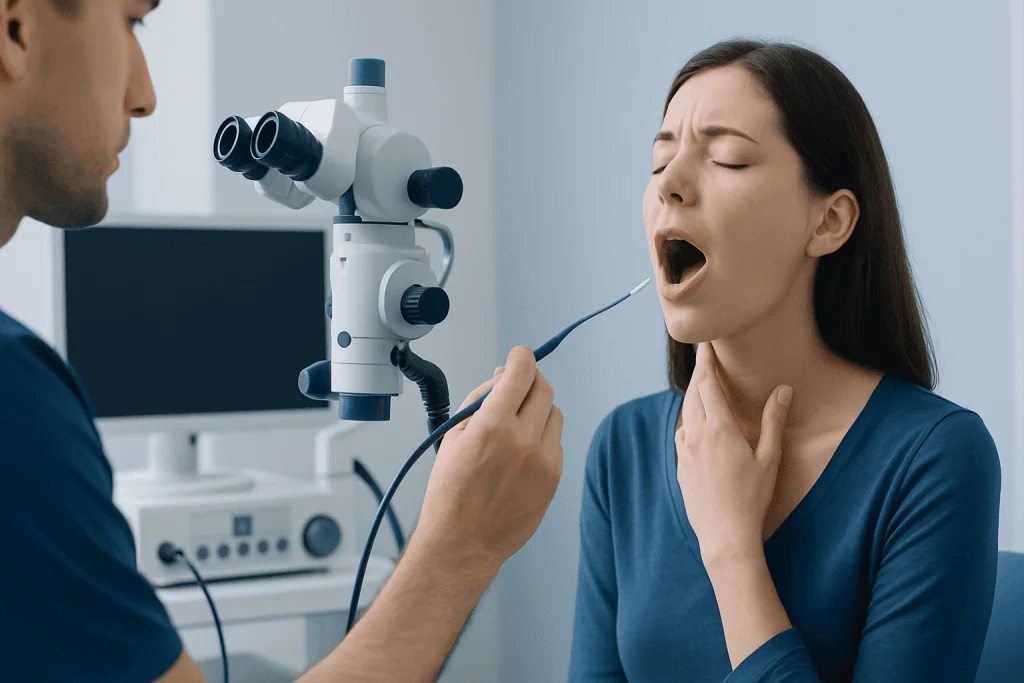
The most common symptom of tonsillitis is a sore throat, often with pain during swallowing. The tonsils may look red and swollen, and there may be white or yellow patches on their surface. Many people also notice tender lymph nodes in the neck, fever, headache, fatigue, or a change in voice quality.
Children may describe throat pain less clearly and may instead refuse food, drool because swallowing hurts, become unusually tired, or complain of stomach pain. Younger children can also develop irritability, poor sleep, or vomiting. These symptoms do not always mean the infection is bacterial, which is why examination and testing may be needed.
Common signs and symptoms include:
- Sore throat and painful swallowing
- Red, enlarged tonsils, sometimes with patches or pus
- Fever or chills
- Swollen, tender glands in the neck
- Bad breath, especially with tonsil debris or chronic inflammation
- Ear pain due to shared nerve pathways, even without an ear infection
Some symptoms suggest a more significant problem, such as a peritonsillar abscess, which is a collection of pus near the tonsil. Severe one-sided throat pain, difficulty opening the mouth, muffled voice, drooling, or the uvula appearing pushed to one side should be assessed promptly by a doctor.
Causes and Risk Factors

Tonsillitis is usually infectious. Viruses are the most frequent cause and may include the viruses responsible for colds, influenza, adenovirus, or infectious mononucleosis. Viral tonsillitis often occurs with cough, runny nose, hoarseness, or conjunctivitis, although symptoms can overlap with bacterial infection.
Bacterial tonsillitis is commonly associated with group A Streptococcus, often called strep throat. Strep infection is more likely when there is sudden throat pain, fever, swollen neck glands, and absence of cough, but these clues are not perfect. Testing is often used because unnecessary antibiotics do not help viral infections and may cause side effects or contribute to antibiotic resistance.
Risk factors include close contact with someone who has a throat infection, crowded settings such as schools or dormitories, and age, as tonsillitis is especially common in school-aged children. Exposure to tobacco smoke or air pollution may irritate the throat and make symptoms feel worse. People with weakened immune systems may be more prone to infections or may need closer medical follow-up.
Tonsils can also trap small particles and bacteria in tiny crevices called crypts. In some people, this contributes to tonsil stones, bad breath, or chronic irritation. Tonsil stones alone are not always a reason for surgery, but persistent symptoms should be discussed with an ENT specialist.
Diagnosis
Diagnosis begins with a medical history and physical examination. A doctor will ask about the duration of symptoms, fever, cough, contact with sick individuals, previous throat infections, allergies, medications, and any breathing or swallowing difficulty. The throat, tonsils, ears, nose, neck glands, and sometimes breathing pattern are evaluated.
If bacterial infection is suspected, a rapid antigen test for group A Streptococcus may be performed using a throat swab. Results are usually available quickly, and a throat culture may be used when confirmation is needed, particularly in children and adolescents. Testing helps ensure antibiotics are prescribed when they are likely to be useful.
Additional tests are not always necessary. However, if infectious mononucleosis is suspected, blood tests may be considered. If complications such as an abscess are suspected, an ENT evaluation and, in selected cases, imaging may be recommended to assess the area around the tonsil and nearby tissues.
It is important not to rely on tonsil appearance alone. White patches, redness, and swelling can occur with both viral and bacterial illnesses. A structured assessment helps avoid overtreatment while ensuring that patients who do need antibiotics or urgent care receive it.
Treatment Options
Treatment depends on the cause, severity, age of the patient, and whether complications are present. For many viral infections, supportive care is the main treatment. This may include rest, adequate fluids, soft foods, humidified air, warm salt-water gargles for older children and adults, and appropriate pain or fever relief as advised by a healthcare professional.
When group A Streptococcus or another treatable bacterial cause is confirmed or strongly suspected, antibiotics may be prescribed. It is important to take antibiotics exactly as directed and complete the course unless a doctor advises otherwise. Symptoms often begin to improve within a few days, but follow-up is needed if fever, pain, or swallowing problems continue or worsen.
Some patients develop a peritonsillar abscess, which may require drainage in addition to antibiotics. This situation is usually managed by an ENT specialist or in an urgent care setting because swelling can affect swallowing and, rarely, the airway. Recurrent abscesses may lead to a discussion about tonsil removal.
Home remedies should be used safely. Honey may soothe cough or throat irritation in children over one year and adults, but it should never be given to infants under one year. Aspirin should not be used in children or teenagers unless specifically advised by a doctor because of the risk of serious complications.
Recurrent Tonsillitis and When Surgery Is Considered
Tonsillectomy is the surgical removal of the tonsils. It is not needed for most people with occasional tonsillitis, but it may be considered when infections are frequent, severe, well-documented, and affecting daily life. Doctors look at the number of episodes over time, symptom severity, missed school or work, antibiotic use, test results, and whether complications have occurred.
Surgery may also be discussed for problems beyond infection. Enlarged tonsils can contribute to snoring, obstructive sleep-disordered breathing, or difficulty swallowing in some patients, especially children. In these cases, an ENT specialist may assess sleep symptoms, tonsil size, nasal obstruction, growth, behavior, and daytime fatigue.
Common reasons a specialist may consider tonsillectomy include:
- Repeated, documented episodes of tonsillitis that meet accepted clinical criteria
- Recurrent or complicated peritonsillar abscess
- Obstructive sleep-disordered breathing related to enlarged tonsils
- Persistent tonsil problems that significantly affect quality of life despite appropriate care
- Concern for unusual tonsil enlargement or asymmetry that needs specialist evaluation
Like any operation, tonsillectomy has potential risks, including pain during recovery, dehydration from reduced intake, bleeding, anesthesia-related risks, and temporary changes in taste or voice. The decision is individualized, balancing expected benefit with surgical risks and recovery needs. Patients and families should have a clear discussion with the surgeon about preparation, pain control, diet, activity limits, and signs that require urgent attention after surgery.
Prevention and Self-Care
Not all tonsillitis can be prevented, but simple hygiene measures reduce the spread of viruses and bacteria. Regular handwashing, avoiding close contact with people who are actively ill, covering coughs and sneezes, and not sharing cups or utensils can help. Toothbrushes should be replaced after a confirmed strep infection once antibiotic treatment has begun, according to a doctor’s advice.
During an episode, comfort-focused care can make recovery easier. Cool or warm fluids, soups, smoothies, and soft foods may be better tolerated than spicy or acidic foods. Adequate hydration is especially important for children, older adults, and anyone with fever. Rest supports recovery, and returning to school, work, or group activities should follow medical advice, particularly when strep throat is diagnosed.
People with recurrent sore throats may benefit from keeping a symptom diary. Recording dates, fever, test results, antibiotic use, missed school or work, and whether tonsil patches or swollen glands were present can help the doctor evaluate patterns. This documentation is also useful if surgery is later considered.
Self-care should not replace medical evaluation when symptoms are severe or prolonged. Persistent fever, worsening throat pain, signs of dehydration, or repeated infections deserve professional assessment to confirm the diagnosis and rule out complications or other conditions.
When to See a Doctor
A doctor should be consulted when a sore throat is severe, lasts longer than a few days, occurs with high or persistent fever, or is accompanied by swollen tender neck glands and no cough. Children should be assessed if they refuse fluids, appear unusually sleepy, have breathing difficulty, or show signs of dehydration such as very little urination, dry mouth, or no tears when crying.
Urgent medical care is needed for difficulty breathing, drooling, inability to swallow saliva, severe one-sided throat pain, neck swelling, trouble opening the mouth, a muffled “hot potato” voice, or symptoms that rapidly worsen. These signs can indicate significant swelling or an abscess that needs prompt treatment.
Patients with repeated tonsillitis, suspected sleep-disordered breathing, or persistent tonsil enlargement should consider an ENT evaluation. A specialist can review infection history, examine the tonsils and airway, recommend testing when appropriate, and discuss whether observation, medical treatment, or surgery is the best option.
Acibadem International’s multidisciplinary specialists and JCI-accredited hospitals provide diagnosis and treatment for ENT conditions, including recurrent tonsillitis, for international patients. As with any health concern, the most appropriate plan should be based on an individual consultation with a qualified physician.
Frequently asked questions
Is tonsillitis the same as strep throat?
No. Tonsillitis means the tonsils are inflamed, while strep throat is a specific bacterial infection caused by group A Streptococcus. Strep can cause tonsillitis, but many tonsillitis cases are viral and do not need antibiotics.
How long does tonsillitis usually last?
Many viral cases improve within several days with supportive care, although throat discomfort can sometimes last longer. Bacterial tonsillitis usually improves after appropriate antibiotics, but treatment should be completed as prescribed. If symptoms worsen or do not improve, medical reassessment is recommended.
When are antibiotics needed for tonsillitis?
Antibiotics are used when a bacterial cause, especially group A Streptococcus, is confirmed or strongly suspected by a doctor. They do not help viral infections and should not be taken without medical advice. Testing with a throat swab can help guide this decision.
Can adults get recurrent tonsillitis?
Yes, adults can have recurrent tonsillitis, although it is often more common in children and teenagers. Adults with repeated infections should be evaluated for documented bacterial infections, chronic tonsil problems, reflux, allergies, smoking-related irritation, or other causes of throat symptoms.
Does removing the tonsils weaken the immune system?
The tonsils are part of the immune system, especially in early life, but the body has many other immune tissues that continue to protect against infection. Tonsillectomy is considered only when the expected benefits outweigh the risks. A specialist can explain how this applies to the individual patient.
What is recovery like after tonsillectomy?
Recovery commonly involves throat pain, ear pain, and reduced appetite for several days, and careful hydration is important. Patients receive specific instructions about pain relief, diet, activity, and when to seek urgent help. Bleeding after tonsillectomy is uncommon but important to report immediately.
References
- American Academy of Otolaryngology–Head and Neck Surgery
- Centers for Disease Control and Prevention
- National Institute for Health and Care Excellence
- Mayo Clinic
- World Health Organization
This article is for general information only and is not a substitute for professional medical advice. Please consult a qualified doctor about your individual situation.
Explore treatments in Turkey — costs, top hospitals & a free quote
JCI-accredited · board-certified surgeons · reply within 24h
Add us as a Preferred Source to see more of our trusted health content across Google Search, AI Overviews and Discover.

Related Treatments
Related Conditions
More from the Health Library



Related Specialists

Prof. Dr. Nazim Korkut
Otorhinolaryngology
Prof. Dr. Hasan M. Tanyeri
Ear Nose & Throat
Prof. Dr. Güler Berkiten
Otorhinolaryngology
Assoc. Prof. Dr. A. Erdem Kilavuz
Ear Nose & Throat