Robotic Surgery: How It Works, Benefits, and Safety Considerations

Robotic surgery is performed by a surgeon, not by an autonomous robot. The system translates the surgeon’s hand movements into precise instrument movements inside the body.
Key Takeaways
- Robotic surgery is performed by a surgeon, not by an autonomous robot.
- The system translates the surgeon’s hand movements into precise instrument movements inside the body.
- Potential benefits include smaller incisions, less blood loss, reduced pain, and shorter hospital stays for appropriate procedures.
- Safety depends on the patient’s health, the type of operation, the surgical team’s experience, and hospital protocols.
- Patients should ask about alternatives, expected benefits, risks, recovery time, and the surgeon’s experience with the specific procedure.
Robotic surgery is a form of minimally invasive surgery in which a trained surgeon controls robotic instruments from a console. It can offer smaller incisions, precise movements, and faster recovery for selected patients, but it is not the best option for every condition.
Overview
Robotic surgery, also called robot-assisted surgery, is an advanced surgical technique that allows doctors to perform many operations through small incisions using specialized robotic instruments. The word robotic can sound as if a machine is operating on its own, but this is not the case. The surgeon remains in full control throughout the procedure and makes every movement.
In a typical robotic procedure, the surgeon sits at a console near the operating table and views the surgical area in high-definition, three-dimensional detail. Hand and foot controls at the console guide robotic arms that hold tiny surgical instruments and a camera. The system filters small hand tremors and can allow very precise movements in narrow or delicate areas of the body.
Robotic surgery is one type of minimally invasive surgery. It may be used in urology, gynecology, general surgery, thoracic surgery, colorectal surgery, bariatric surgery, head and neck surgery, and some cardiac or pediatric procedures. Whether it is appropriate depends on the diagnosis, the patient’s general health, the complexity of the surgery, and the experience of the surgical team.
How Robotic Surgery Works
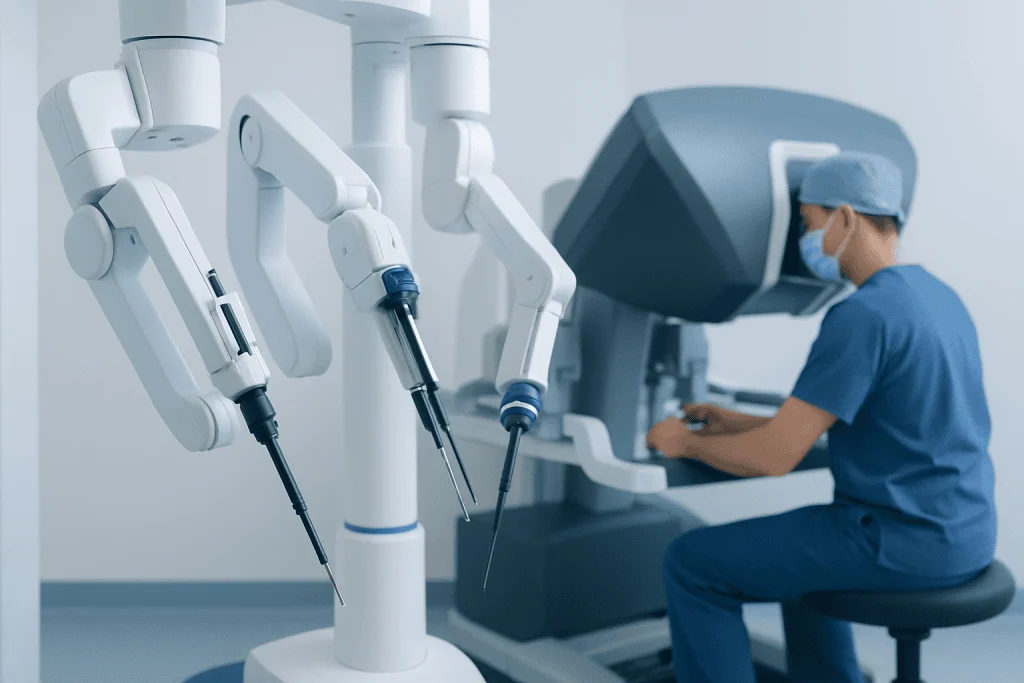
During robotic surgery, the patient is positioned on the operating table and receives anesthesia, usually general anesthesia. The surgical team makes small incisions, often called ports, and places a camera and narrow instruments through these openings. The robotic arms are then connected to the ports, and the surgeon controls the instruments from the console.
The camera provides a magnified, three-dimensional view that can help the surgeon identify blood vessels, nerves, tissues, and organs more clearly. The robotic instruments have wrist-like joints that can bend and rotate more than standard straight laparoscopic instruments. This can be helpful for suturing, removing tissue, or working in confined spaces such as the pelvis.
The system does not replace the surgeon’s judgment. It is a tool that responds to the surgeon’s movements in real time. A bedside assistant, nurses, and anesthesia professionals remain with the patient throughout the operation. The team monitors vital signs, instrument placement, equipment function, and the progress of the procedure.
Some operations may begin robotically and then be completed with conventional laparoscopy or open surgery if the surgeon decides that is safer. This change is called conversion and is not considered a failure. It is a planned safety option used when visibility, bleeding, scar tissue, anatomy, or other factors make a different approach more appropriate.
Procedures That May Use Robotic Assistance

Robot-assisted techniques are used for many procedures, but availability and suitability vary by hospital and specialist. Common examples include prostate surgery, kidney surgery, hysterectomy, myomectomy, endometriosis surgery, hernia repair, gallbladder surgery, colorectal surgery, weight-loss surgery, and some lung or chest procedures. In selected cases, robotic assistance may also be used in reconstructive operations that require delicate suturing.
Robotic surgery is often considered when precision and access are important. For example, the technology may help surgeons work around nerves and blood vessels, operate deep in the pelvis, or perform complex suturing through small incisions. However, for some conditions, conventional laparoscopic surgery, open surgery, endoscopic treatment, or non-surgical care may be equally effective or more appropriate.
A patient’s individual circumstances matter. Previous abdominal surgery, severe heart or lung disease, obesity, active infection, advanced cancer, bleeding risk, pregnancy, or unusual anatomy can influence the surgical plan. The surgeon should explain why a robotic approach is recommended and how it compares with other available methods.
Potential Benefits
For appropriately selected patients, robotic surgery may offer several advantages related to its minimally invasive approach. Smaller incisions can mean less trauma to the body wall compared with many open procedures. This may contribute to less postoperative pain, reduced need for pain medication, smaller scars, and a shorter hospital stay.
Robotic systems may also support surgical precision. The stable camera view, magnification, tremor filtering, and flexible instruments can help surgeons perform fine movements. In some procedures, this may reduce blood loss or make reconstruction and suturing easier. The benefits depend strongly on the type of surgery and the surgeon’s experience.
Recovery can be faster after some robot-assisted procedures, but it is not instant. Patients still need time for the body to heal, and internal tissues may take weeks to recover even when the skin incisions are small. Activity restrictions, wound care, medication instructions, and follow-up appointments remain important.
It is helpful for patients to think of robotic surgery as one possible technique rather than a guarantee of a better outcome. The best operation is the one that is safest and most effective for the person’s diagnosis, anatomy, and overall health. A careful discussion with the surgical team can clarify which benefits are realistic in each case.
Safety Considerations and Possible Risks
All surgery has risks, whether it is robotic, laparoscopic, endoscopic, or open. Possible risks include bleeding, infection, injury to nearby organs or tissues, blood clots, anesthesia-related problems, pain, scarring, and the need for additional treatment. The specific risks depend on the operation being performed and the patient’s medical history.
Robotic surgery also involves technology-related considerations. Equipment problems are uncommon in well-managed operating rooms, but teams are trained to respond if an instrument, camera, or system component does not function as expected. Hospitals use checklists, equipment testing, sterile protocols, and emergency plans to support patient safety.
The experience of the surgical team is an important safety factor. Patients may wish to ask how often the surgeon performs the specific robot-assisted procedure, what outcomes are expected, and how complications are managed. It is reasonable to ask whether the procedure could be done safely by another method if robotic surgery is not possible on the day of surgery.
Safety also includes informed consent. Before agreeing to surgery, patients should understand the reason for the procedure, available alternatives, expected recovery, possible complications, and the signs that require urgent medical attention after discharge. A good surgical consultation gives patients time to ask questions and make a confident decision.
Before Surgery and Recovery
Preparation usually begins with a medical evaluation. This may include blood tests, imaging, electrocardiography, anesthesia assessment, medication review, and instructions about eating or drinking before surgery. Patients should tell their doctor about all prescription medicines, over-the-counter products, supplements, allergies, previous reactions to anesthesia, and any history of blood clots or bleeding problems.
Some medications, especially blood thinners, diabetes medicines, or immune-suppressing treatments, may need special planning. Patients should never stop or change these medicines without medical advice. Smoking cessation, nutrition support, gentle physical activity, and good control of chronic conditions such as diabetes or high blood pressure can help improve surgical readiness.
After robotic surgery, recovery varies widely. Some patients go home the same day, while others need one or more nights in the hospital. Pain is usually managed with a tailored plan, and patients may be encouraged to walk early to support circulation and bowel function. The team will provide instructions on wound care, bathing, diet, driving, lifting, sexual activity, and return to work.
Patients should contact their healthcare team if they develop fever, increasing pain, worsening redness or drainage from an incision, shortness of breath, chest pain, leg swelling, persistent vomiting, difficulty urinating, heavy bleeding, or any symptom their discharge instructions identify as urgent. Early communication helps the team address concerns promptly.
Choosing a Surgical Center and When to Talk to a Doctor
Patients considering robotic surgery should seek a consultation with a qualified specialist who treats their specific condition. The conversation should cover diagnosis, treatment goals, why robotic surgery is being considered, and what other options exist. In some cases, watchful waiting, medication, physical therapy, endoscopy, radiation therapy, or a different surgical approach may be suitable.
Useful questions include: What are the expected benefits for this exact procedure? What are the main risks? How many similar operations has the surgeon performed? What is the expected hospital stay? What limitations will apply after surgery? What happens if the operation cannot be completed robotically? Clear answers can help patients compare choices realistically.
For international patients, coordination is also important. Medical records, imaging, travel timing, postoperative follow-up, and communication with doctors at home should be planned before treatment. Acibadem International’s multidisciplinary specialists and JCI-accredited hospitals diagnose and treat many conditions using robotic and other advanced surgical approaches for international patients, with care plans based on individual assessment.
Frequently asked questions
Does the robot perform the surgery by itself?
No. Robotic surgery is controlled by a trained surgeon at all times. The robotic system follows the surgeon’s hand and foot movements and does not make independent decisions.
Is robotic surgery always safer than open surgery?
Not always. Robotic surgery can be very helpful for selected procedures and patients, but safety depends on the condition, the patient’s health, and the surgical team’s experience. For some operations, open or conventional laparoscopic surgery may be the better choice.
Will recovery be faster after robotic surgery?
Recovery may be faster for some patients because robotic surgery often uses smaller incisions than open surgery. However, internal healing still takes time, and recovery depends on the type of procedure, anesthesia, complications, and overall health.
Are the scars smaller with robotic surgery?
Robotic surgery usually uses several small incisions rather than one large incision. This often results in smaller scars, although scar appearance varies by skin type, wound healing, infection risk, and the exact surgical technique.
Can every patient have robotic surgery?
No. Some patients are not good candidates because of the location or stage of disease, previous operations, scar tissue, medical conditions, or anesthesia risks. A surgeon must evaluate each person individually before recommending the best approach.
What should patients ask before choosing robotic surgery?
Patients should ask why robotic surgery is recommended, what alternatives are available, and what risks apply to their case. They should also ask about the surgeon’s experience with that procedure, expected recovery time, and what follow-up care will be needed.
References
- World Health Organization
- American College of Surgeons
- Society of American Gastrointestinal and Endoscopic Surgeons
- American Urological Association
- Royal College of Surgeons of England
This article is for general information only and is not a substitute for professional medical advice. Please consult a qualified doctor about your individual situation.
Explore treatments in Turkey — costs, top hospitals & a free quote
JCI-accredited · board-certified surgeons · reply within 24h
Add us as a Preferred Source to see more of our trusted health content across Google Search, AI Overviews and Discover.