

Kidney Stones After Bariatric Surgery: Causes, Prevention, and Warning Signs

Kidney stone risk may increase after some bariatric procedures, especially operations that affect absorption, such as gastric bypass. Common contributors include low urine volume, higher oxalate absorption, low urinary citrate, and changes in diet after surgery.
Key Takeaways
- Kidney stone risk may increase after some bariatric procedures, especially operations that affect absorption, such as gastric bypass.
- Common contributors include low urine volume, higher oxalate absorption, low urinary citrate, and changes in diet after surgery.
- Daily fluid intake, calcium taken with meals, moderated oxalate intake, and regular follow-up are central to prevention.
- Severe flank pain, blood in the urine, fever, vomiting, or difficulty passing urine should be assessed promptly.
- Patients with a previous history of stones should discuss individualized prevention testing before and after bariatric surgery.
Kidney stones after bariatric surgery can occur because weight loss surgery changes fluid intake, digestion, and the way certain minerals are absorbed. With the right nutrition plan, hydration habits, and medical follow-up, many patients can reduce their risk and recognize warning signs early.
Overview
Kidney stones are hard deposits that form when minerals and salts in the urine become concentrated and crystallize. After weight loss surgery, some people have a higher chance of developing stones because their eating patterns, fluid intake, and intestinal absorption change. This does not mean kidney stones are inevitable; it means prevention should be part of long-term bariatric care.
The risk varies by procedure. Operations that cause more malabsorption, particularly gastric bypass procedures, are more strongly associated with stones than purely restrictive procedures. People considering gastric bypass surgery or other metabolic operations should receive counseling about nutrition, hydration, and follow-up testing as part of informed surgical planning.
Kidney stones after bariatric surgery are most often calcium oxalate stones. Oxalate is a natural compound found in many foods and also produced by the body. When more oxalate is absorbed from the intestine and excreted in the urine, it can bind with calcium in the urinary tract and form crystals, especially if urine volume is low.
Why Bariatric Surgery Can Increase Kidney Stone Risk

The main mechanism is called enteric hyperoxaluria, meaning increased oxalate absorption from the gut. Normally, calcium in the intestine binds to oxalate so it leaves the body in the stool. After some bariatric procedures, unabsorbed fat can bind calcium instead, leaving more free oxalate available to be absorbed into the bloodstream and then filtered into the urine by the kidneys.
Low urine volume is another major factor. After bariatric surgery, the stomach pouch or sleeve is smaller, so patients may sip smaller amounts and feel full quickly. If fluid intake does not keep up with body needs, urine becomes more concentrated, making it easier for crystals to form.
Urine chemistry can also change. Some patients develop lower levels of citrate in the urine; citrate helps prevent calcium stones by binding calcium and reducing crystal growth. Higher urinary oxalate, lower urine citrate, and concentrated urine together create conditions that favor stone formation.
Symptoms and Warning Signs
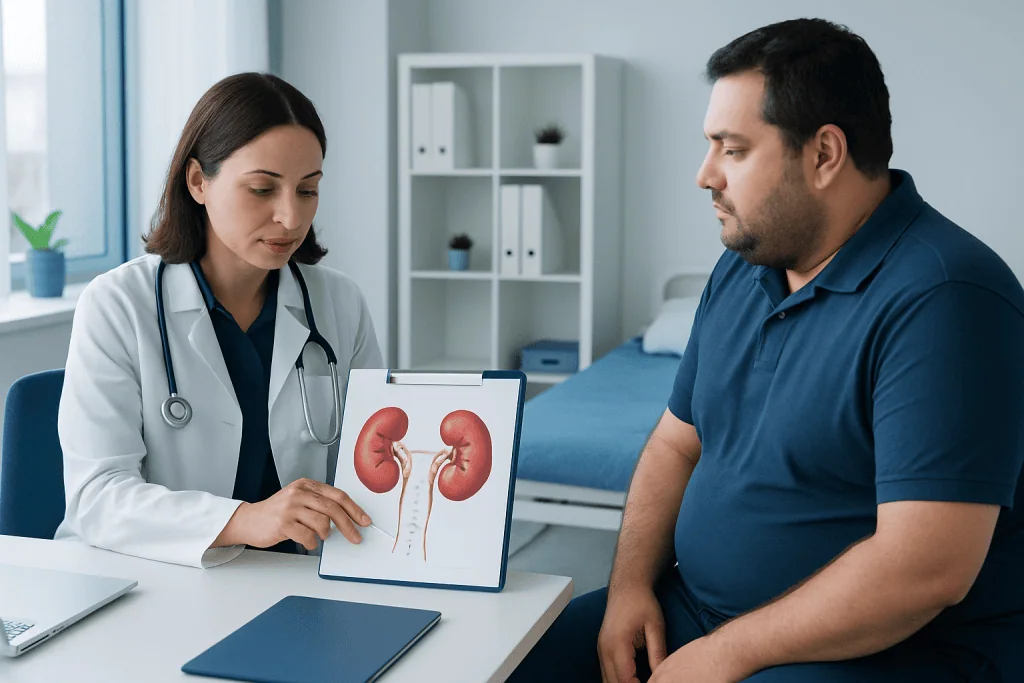
Kidney stones may cause no symptoms while they remain in the kidney. Symptoms usually begin when a stone moves into the ureter, the narrow tube that drains urine from the kidney to the bladder. Pain can be intense, but the pattern and severity vary depending on the stone size and location.
Common symptoms include:
- Sharp pain in the side, back, lower abdomen, or groin
- Pain that comes in waves or changes position
- Blood in the urine, which may look pink, red, brown, or may be found only on testing
- Nausea or vomiting
- Burning during urination, urgency, or frequent urination if the stone is near the bladder
Some warning signs require prompt medical evaluation. Fever, chills, persistent vomiting, inability to drink fluids, severe uncontrolled pain, reduced urine output, or symptoms in a person with one kidney can indicate a higher-risk situation. These signs are especially important after bariatric surgery because dehydration can develop more easily.
Who Is at Higher Risk?
Not every bariatric patient has the same risk. People with a personal or family history of kidney stones, recurrent urinary tract infections, gout, chronic diarrhea, inflammatory bowel disease, or pre-existing kidney disease may be more vulnerable. A history of stones before surgery is one of the strongest reasons to plan individualized prevention.
Procedure type also matters. Malabsorptive and mixed procedures tend to create a higher risk of oxalate-related stones than restrictive procedures. For example, the risk profile after bariatric surgery depends on whether the operation primarily reduces stomach size, changes intestinal absorption, or does both.
Dietary patterns after surgery can contribute as well. Low fluid intake, frequent high-oxalate foods, excessive sodium, high amounts of animal protein, and not taking recommended calcium as directed may all increase risk. Rapid weight loss and changes in supplements or meal tolerance can also affect urine chemistry, which is why follow-up with the bariatric team is important.
Diagnosis and Monitoring
Diagnosis begins with symptoms, medical history, medication and supplement review, and physical examination. Clinicians will ask about the type of bariatric procedure, fluid intake, bowel habits, previous stones, and any fever or urinary symptoms. Urine testing can detect blood, infection, crystals, and pH changes.
Imaging is often used to locate the stone and assess whether it is blocking urine flow. A low-dose CT scan is commonly used in adults when the diagnosis is uncertain or symptoms are severe, while ultrasound may be preferred in certain situations, such as pregnancy or when reducing radiation exposure is important. Blood tests may assess kidney function, infection markers, and mineral levels.
For patients with recurrent stones or high risk after bariatric surgery, a 24-hour urine collection may be recommended. This test measures urine volume, oxalate, calcium, citrate, sodium, uric acid, and other factors. The results help clinicians tailor prevention rather than relying on general advice alone.
Treatment Options
Treatment depends on stone size, location, symptoms, infection risk, and kidney function. Small stones may pass with supportive care, pain control, anti-nausea treatment if needed, and careful hydration. Patients should not force excessive fluids during severe pain or vomiting; medical guidance is safer, especially for those who may dehydrate quickly after weight loss surgery.
If a stone is unlikely to pass, is causing persistent obstruction, or is associated with infection, a urologist may recommend a procedure. Options can include ureteroscopy, shock wave lithotripsy, temporary ureteral stenting, or percutaneous stone removal for larger or more complex stones. The choice depends on the individual case and imaging findings.
Long-term treatment focuses on preventing recurrence. This may involve adjusting calcium supplementation timing, reviewing vitamin C use, modifying sodium or oxalate intake, treating low urinary citrate, and monitoring kidney function. Bariatric and urology teams may work together because the best plan must protect both weight loss outcomes and kidney health.
Prevention and Self-care After Weight Loss Surgery
Hydration is the foundation of kidney stone prevention. Many patients need to sip fluids consistently throughout the day because drinking large volumes at once is not comfortable after surgery. The goal is usually pale urine and steady urine output, but exact fluid targets should be personalized, especially for people with heart, kidney, or liver conditions.
Nutrition strategies can reduce oxalate absorption without compromising bariatric goals. Patients should avoid very low calcium intake unless specifically directed by a doctor, because calcium taken with meals can bind oxalate in the intestine. Common higher-oxalate foods include spinach, rhubarb, beet greens, almonds, cashews, peanuts, bran, and some dark chocolate; these do not always need to be eliminated, but portions and frequency may need adjustment.
Helpful prevention habits often include:
- Taking prescribed calcium supplements with meals or snacks, as directed by the bariatric team
- Limiting excess salt, which can increase calcium in the urine
- Keeping animal protein portions appropriate rather than excessive
- Avoiding dehydration during travel, exercise, hot weather, or illness
- Discussing vitamin C supplements with a clinician, because high intake can increase oxalate in some people
- Attending scheduled follow-up after procedures such as sleeve gastrectomy or gastric bypass
Patients should not start or stop supplements on their own after bariatric surgery. Calcium type, iron timing, vitamin D, citrate therapy, and other supplements may need coordination to support bone health, prevent deficiencies, and reduce stone risk at the same time.
When to See a Doctor
A doctor should be consulted if a bariatric patient develops flank pain, blood in the urine, urinary burning, recurrent nausea, or symptoms suggesting dehydration. Early evaluation can confirm whether a stone is present and whether there is any blockage or infection. Patients with a previous kidney stone should also ask about preventive urine testing even when they feel well.
Urgent care is appropriate for fever or chills with urinary symptoms, severe pain that does not improve, repeated vomiting, inability to keep fluids down, faintness, pregnancy, a single kidney, or reduced urination. These situations may require imaging, intravenous fluids, antibiotics if infection is present, or a urologic procedure to relieve obstruction.
For international patients, Acibadem International provides coordinated evaluation through multidisciplinary specialists in JCI-accredited hospitals, including bariatric, nephrology, nutrition, and urology teams. This type of coordinated follow-up can be helpful after gastric sleeve surgery or other weight loss procedures when kidney stone prevention needs to be integrated with long-term metabolic care.
Frequently asked questions
Are kidney stones common after bariatric surgery?
Kidney stones can occur after bariatric surgery, but the risk depends on the procedure and the person’s history. The risk is generally higher after procedures that affect intestinal absorption, especially gastric bypass, than after purely restrictive operations. Good hydration, nutrition planning, and follow-up can lower the chance of recurrence.
Why does gastric bypass increase oxalate kidney stones?
Gastric bypass can change fat and calcium absorption in the intestine. When calcium binds to unabsorbed fat, more oxalate remains free and can be absorbed into the bloodstream, then passed into the urine. Higher urinary oxalate can combine with calcium and form calcium oxalate stones.
Should bariatric patients avoid all high-oxalate foods?
Most patients do not need to eliminate every high-oxalate food, but they may need to limit frequent large portions. The safest plan is individualized and should preserve balanced nutrition after surgery. Taking recommended calcium with meals can help reduce oxalate absorption.
How much water should someone drink to prevent stones after weight loss surgery?
Fluid needs vary by body size, procedure, activity level, climate, and medical conditions. Many bariatric patients are advised to sip fluids regularly throughout the day rather than drink large amounts at once. A clinician can provide a safe target, especially for patients with kidney, heart, or liver disease.
Can calcium supplements cause kidney stones after bariatric surgery?
Calcium supplements should not be stopped without medical advice. In bariatric patients, calcium taken with meals can actually help bind oxalate in the gut and reduce oxalate absorption. The type, timing, and dose should be guided by the bariatric team.
What symptoms mean a kidney stone may be urgent?
Fever, chills, severe pain, repeated vomiting, inability to drink, reduced urination, or blood in the urine should be assessed promptly. These symptoms may suggest infection, obstruction, or dehydration. Prompt care is especially important after bariatric surgery because fluid intake can be limited.
References
- American Urological Association
- European Association of Urology
- National Institute of Diabetes and Digestive and Kidney Diseases
- American Society for Metabolic and Bariatric Surgery
- Mayo Clinic
This article is for general information only and is not a substitute for professional medical advice. Please consult a qualified doctor about your individual situation.
Bariatric Surgery in Turkey — costs, top hospitals & a free quote
JCI-accredited · board-certified surgeons · reply within 24h
Add us as a Preferred Source to see more of our trusted health content across Google Search, AI Overviews and Discover.

Bariatric & Metabolic Surgery
Surgical and endoscopic treatments for obesity and metabolic conditions.
Related Treatments
Related Conditions
More from the Health Library



Related Specialists

Prof. Dr. Tayfun Karahasanoğlu
General Surgery
Prof. Dr. Güralp Onur Ceyhan
General Surgery
Prof. Dr. Volkan Özben
General Surgery
Assoc. Prof. Dr. Halil Kara
General Surgery