Types of Joints in the Body Explained

Joints are the places where bones meet and are classified mainly by structure and movement. Fibrous, cartilaginous, and synovial joints each have different levels of flexibility and function.
Key Takeaways
- Joints are the places where bones meet and are classified mainly by structure and movement.
- Fibrous, cartilaginous, and synovial joints each have different levels of flexibility and function.
- Synovial joints allow the widest range of motion and are the most commonly affected by injury and arthritis.
- Good posture, safe activity, and healthy body weight can help protect joints over time.
- Persistent pain, swelling, stiffness, or loss of function should be assessed by a qualified doctor.
Types of joints in the body are classified by how bones connect and how much movement they allow. Understanding these joint types helps explain everyday movement, common joint pain, and when medical evaluation is useful.
Overview
Joints are the connections between bones that make movement possible and help the body stay stable. When people ask about the types of joints in the body, they are usually referring to how these connections are built and how much they can move.
Broadly, joints are grouped into three main structural types: fibrous joints, cartilaginous joints, and synovial joints. Some joints are designed mainly for protection and support, while others are built for smooth motion. This balance between stability and movement is one of the body’s most important design features.
In clinical practice, joint health matters because pain, stiffness, swelling, and reduced mobility can affect daily life. A clear understanding of joint types can make it easier to understand symptoms and treatment options if a joint problem develops.
Fibrous Joints
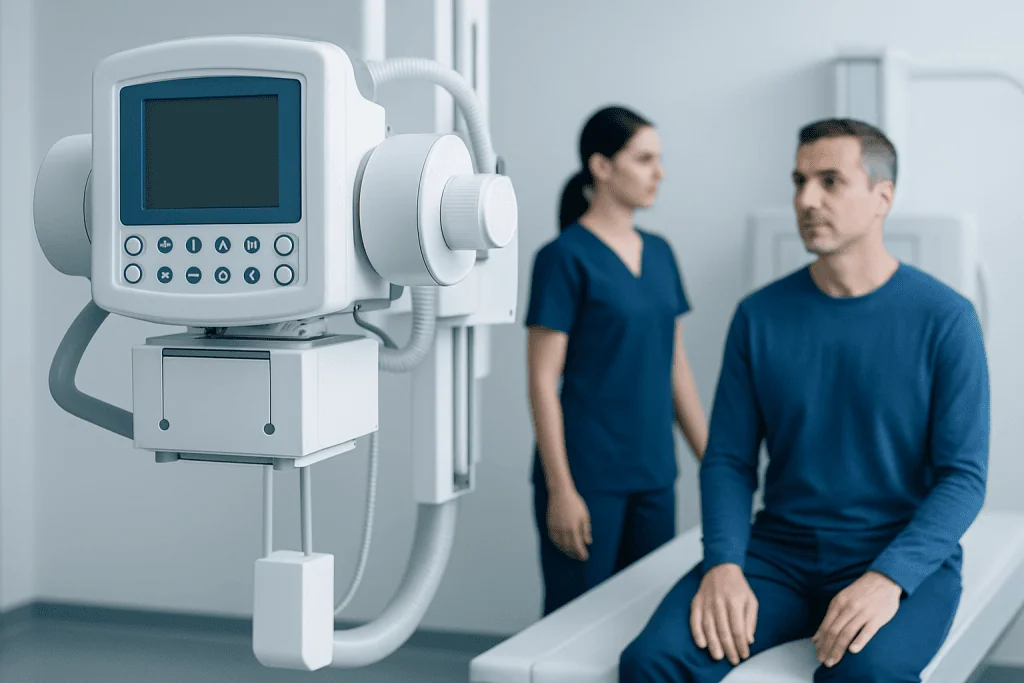
Fibrous joints are held together by dense connective tissue, so they allow little or no movement. Their main role is stability. Many fibrous joints are found where a strong, fixed connection is useful, such as in parts of the skull.
Examples include the sutures between the bones of the skull and the connection between the tibia and fibula near the lower leg. These joints are important because they help protect organs, maintain body shape, and keep certain bones aligned.
Although fibrous joints do not move much, they can still be affected by injury or inflammation in nearby tissues. When pain seems to come from a “fixed” area, a doctor may look at the surrounding ligaments, muscles, and bones as well as the joint itself.
Cartilaginous Joints

Cartilaginous joints are joined by cartilage, which provides some cushioning and limited movement. They sit between the fully fixed fibrous joints and the highly mobile synovial joints. Their design allows the body to remain stable while still moving enough for function.
Examples include the joints between the vertebrae in the spine and the pubic symphysis in the pelvis. These joints are especially useful in areas that need both support and small amounts of flexibility, such as during walking, bending, and childbirth.
Because they move less than synovial joints, cartilaginous joints are often thought of as “quiet” joints. However, degeneration, disc problems, or stress in nearby structures can still cause pain or stiffness, especially in the spine.
Synovial Joints
Synovial joints are the most mobile joints in the body and the ones most people think of first. They have a fluid-filled joint cavity that helps the surfaces glide smoothly against each other. This structure allows a wide range of movement with relatively low friction.
Common examples include the shoulder, elbow, wrist, hip, knee, ankle, and the joints of the fingers and toes. These joints are essential for activities such as reaching, walking, gripping, and turning.
Synovial joints can be further described by the movements they allow, such as hinge, ball-and-socket, pivot, saddle, plane, and condyloid joints. This classification helps explain why the knee bends mainly in one direction, while the shoulder can move in many directions but may be less stable.
How Joints Are Classified by Movement
Joints are often described not only by structure but also by the amount of movement they allow. In this approach, joints may be classified as immovable, slightly movable, or freely movable. This is a practical way to understand how different joints support body function.
Immovable joints, such as skull sutures, help protect the brain. Slightly movable joints, such as those in the spine and pelvis, provide a useful balance of support and flexibility. Freely movable joints, such as the shoulder and knee, make most day-to-day movement possible.
This movement-based view is helpful because it shows that not every joint is meant to move a lot. A healthy body depends on having the right amount of movement in the right place, not maximum mobility everywhere.
Common Joint Problems
Different joint types can develop different problems. Synovial joints are more likely to experience sprains, dislocations, cartilage wear, and arthritis because they move frequently and bear stress. Cartilaginous joints may be affected by degeneration or strain, especially in the spine.
General symptoms of joint problems can include pain, swelling, stiffness, reduced range of motion, clicking, or a feeling of instability. In some cases, symptoms are caused by inflammation in the joint lining, while in others they come from tendons, ligaments, or muscles around the joint.
Conditions such as osteoarthritis, rheumatoid arthritis, gout, bursitis, and injury-related inflammation may affect one or more joints. If a doctor suspects a structural problem, they may recommend imaging, blood tests, or a physical examination to identify the cause.
Diagnosis
Diagnosis usually begins with a medical history and physical examination. A doctor may ask where the pain is located, what makes it better or worse, whether stiffness is present in the morning, and whether there has been an injury or infection.
Depending on the symptoms, tests may include X-rays, ultrasound, MRI, or laboratory studies. These tools help assess bone alignment, cartilage, soft tissue, inflammation, and other changes that may affect joint function. In some cases, joint fluid analysis is also useful.
The specific type of joint involved can guide the evaluation. For example, pain in a synovial joint may point toward arthritis or injury, while spinal symptoms may suggest issues related to cartilaginous joints or surrounding structures. At Acibadem International, multidisciplinary specialists and JCI-accredited hospitals diagnose and treat joint conditions for international patients.
Treatment Options
Treatment depends on the joint type and the underlying cause of symptoms. Many joint problems are first managed with rest, activity modification, cold or heat, physiotherapy, and medications recommended by a doctor. The goal is usually to reduce pain, preserve movement, and support long-term function.
For some conditions, targeted procedures may be needed. These may include joint injections, arthroscopic treatment, fracture care, or surgery when the joint is severely damaged or unstable. In spine-related problems, care may involve specialized evaluation and, when appropriate, joint replacement surgery or arthroscopy depending on the diagnosis and joint involved.
Rehabilitation is often an important part of recovery. Guided exercises can improve strength, flexibility, balance, and confidence in movement. When pain is related to inflammatory arthritis or complex joint disease, specialist care may be helpful, and some patients benefit from orthopedic consultation or physical medicine and rehabilitation services.
Prevention & Self-care
Healthy joints benefit from regular movement, balanced muscle strength, and attention to body mechanics. Low-impact activities such as walking, swimming, or cycling may help maintain mobility without excessive strain. Warm-up routines and gradual increases in activity can also reduce the chance of injury.
Maintaining a healthy body weight can reduce stress on weight-bearing joints such as the knees, hips, and ankles. Good posture, proper footwear, and ergonomic adjustments at work or home may further support joint comfort. People with repetitive tasks often do better when they vary movement and take short breaks.
Self-care also includes noticing early warning signs. Mild stiffness after inactivity may be common, but ongoing swelling, repeated locking, or joint instability should not be ignored. A doctor can help identify whether symptoms are due to overuse, inflammation, or a structural problem.
When to See a Doctor
Medical advice is appropriate when joint pain lasts more than a short time, keeps returning, or interferes with sleep, work, or daily activities. A doctor should also evaluate joints that are swollen, warm, red, deformed, or difficult to move.
Sudden severe pain after an injury, an inability to bear weight, or a joint that appears out of place may need urgent assessment. Fever, unexplained weight loss, or several painful joints at once can also suggest a condition that needs prompt medical review.
Early evaluation can help protect joint function and make treatment simpler. Even when symptoms seem mild, a qualified doctor can determine whether the issue is related to a joint, a tendon, a ligament, or another nearby structure.
Frequently asked questions
What are the main types of joints in the body?
The main structural types are fibrous joints, cartilaginous joints, and synovial joints. They differ in how the bones are connected and how much movement they allow. This classification helps explain both function and common joint problems.
Which joint type allows the most movement?
Synovial joints allow the most movement. They include major joints such as the shoulder, hip, knee, elbow, and wrist. Their fluid-filled structure helps surfaces move smoothly against each other.
Are joints classified by movement as well as structure?
Yes. Joints may also be described as immovable, slightly movable, or freely movable. This movement-based view is useful because it shows how different joints are adapted for protection, support, or flexibility.
Why do synovial joints get injured more often?
Synovial joints move often and often bear load, so they are more exposed to sprains, dislocations, wear, and arthritis. Their mobility is useful, but it also makes them more vulnerable to stress. Good technique, strength, and flexibility can help lower risk.
Can pain in a joint come from something other than the joint itself?
Yes. Pain may come from muscles, tendons, ligaments, bursae, or nerves near the joint. A doctor can help identify the true source, especially when symptoms are persistent or unclear.
What self-care helps keep joints healthy?
Regular low-impact exercise, maintaining a healthy weight, good posture, and proper footwear can all support joint health. It also helps to avoid sudden increases in activity and to seek advice if pain or swelling persists.
References
- National Institute of Arthritis and Musculoskeletal and Skin Diseases
- Mayo Clinic
- Merck Manual Professional Edition
- American Academy of Orthopaedic Surgeons
- Cleveland Clinic
This article is for general information only and is not a substitute for professional medical advice. Please consult a qualified doctor about your individual situation.
Joint and spine care in Turkey — expert assessment & treatment
JCI-accredited · board-certified surgeons · reply within 24h
Add us as a Preferred Source to see more of our trusted health content across Google Search, AI Overviews and Discover.