What Is a Diagnostic Test? A Patient Guide to Lab and Imaging Results

A diagnostic test can include blood work, urine tests, imaging scans, heart tests, biopsies, and other medical exams. Doctors use test results together with symptoms, medical history, and physical examination findings.
Key Takeaways
- A diagnostic test can include blood work, urine tests, imaging scans, heart tests, biopsies, and other medical exams.
- Doctors use test results together with symptoms, medical history, and physical examination findings.
- A normal or abnormal result does not always give a final answer on its own.
- Preparation, timing, and current medicines can affect some test results.
- Patients should ask what the test is for, how to prepare, and what the results may mean.
A diagnostic test is a medical tool used to detect, confirm, rule out, or monitor a health condition. Understanding how lab and imaging tests work can help patients feel more prepared, informed, and confident when discussing results with their doctor.
Overview: What is a diagnostic test?
A diagnostic test is any medical test used to help identify, confirm, rule out, or monitor a health condition. These tests give doctors more information about how the body is working. A diagnostic test may be ordered when a person has symptoms, when a screening test shows something unusual, or when a known condition needs follow-up.
Diagnostic tests include many different types of examinations. Common examples are blood tests, urine tests, X-rays, ultrasound scans, CT scans, MRI scans, heart tracing tests such as ECG, and tissue sampling such as a biopsy. Each test answers a different question, so the best choice depends on the person’s symptoms, age, medical history, and overall health.
It is important to remember that a test result is only one part of diagnosis. Doctors usually consider several pieces of information together, including symptoms, physical examination findings, family history, and sometimes repeat testing. This is why one abnormal result does not always mean disease, and one normal result does not always completely rule it out.
Why doctors order diagnostic tests
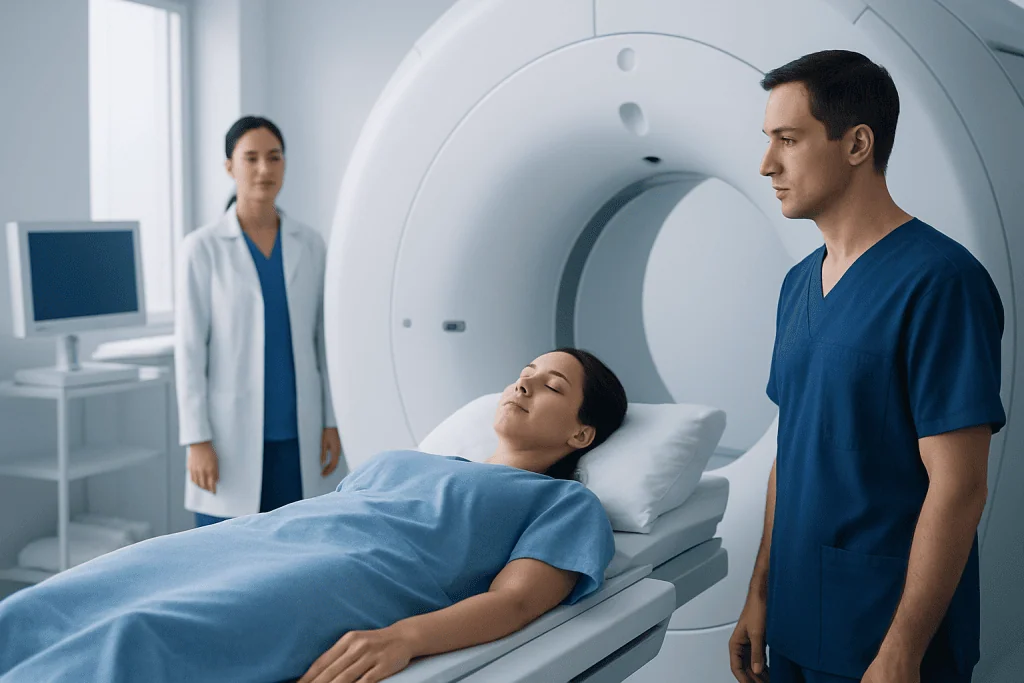
Doctors order diagnostic tests for several reasons. One reason is to investigate symptoms such as pain, fever, shortness of breath, fatigue, weight loss, dizziness, or changes in bowel or bladder habits. A test may help narrow down possible causes and guide the next steps in care.
Tests are also used to confirm a suspected diagnosis. For example, a blood test may support a hormonal or infectious diagnosis, while an imaging scan may show inflammation, injury, a blockage, or a growth. In other situations, tests are used to monitor a condition that has already been diagnosed, such as checking blood sugar, kidney function, thyroid levels, or seeing how a treatment is working over time.
Another common reason is to help plan treatment safely. Before surgery, medications, or procedures, a doctor may request lab work or imaging to better understand a patient’s baseline health. Tests can also be used to look for complications, assess severity, or decide whether referral to a specialist is needed.
Types of diagnostic tests: labs, imaging, and more

Laboratory tests analyze samples from the body, most often blood, urine, stool, saliva, or tissue. Blood tests can measure cell counts, inflammation markers, electrolytes, hormones, blood sugar, liver function, kidney function, and signs of infection. Urine tests may help detect urinary tract problems, kidney issues, diabetes, or dehydration. Some lab tests are simple and routine, while others are specialized and may take longer to process.
Imaging tests create pictures of the inside of the body. X-rays are often used for bones and the chest. Ultrasound uses sound waves and is commonly used for pregnancy, abdominal organs, blood flow, and soft tissues. CT scans provide detailed cross-sectional images and can be useful in emergencies or complex conditions. MRI uses magnetic fields to create very detailed images of soft tissues, joints, the brain, spine, and internal organs. In some cases, a doctor may recommend advanced MRI scanning or CT scanning to better clarify a diagnosis.
Other diagnostic tests measure function rather than structure. These include ECG for heart rhythm, breathing tests for lung function, endoscopy to look inside the digestive tract, and nerve studies to assess the nervous system. A biopsy is another important diagnostic tool because it allows a pathologist to examine tissue under a microscope, which can be essential when evaluating inflammation, infection, or possible cancer.
- Lab tests: blood, urine, stool, tissue, and swab samples
- Imaging tests: X-ray, ultrasound, mammography, CT, MRI
- Functional tests: ECG, pulmonary function tests, stress tests
- Procedural tests: endoscopy, colonoscopy, biopsy
How to prepare for a diagnostic test
Preparation depends on the type of diagnostic test. Some tests require no preparation, while others may involve fasting, drinking extra water, avoiding certain foods, or temporarily adjusting medicines under medical guidance. For example, some blood tests are most accurate after fasting, and some imaging exams may require contrast material or a full bladder.
Before the test, patients should tell the healthcare team about all medicines, vitamins, supplements, allergies, pregnancy, implants, or chronic conditions. This is especially important before scans that use contrast dye, sedation, or radiation. If a person has kidney disease, claustrophobia, diabetes, or a history of reactions to contrast, the care team may need to plan the test differently.
It is often helpful to ask practical questions in advance. Patients may want to know how long the test takes, whether it is painful, whether they can drive afterward, and when results will be available. Bringing previous reports can also be useful, since comparing older and newer tests may help doctors understand whether a finding is stable, improving, or new.
Understanding lab and imaging results
Many patients feel anxious when they see test numbers, medical terms, or phrases such as “abnormal” or “borderline.” In most cases, results need medical interpretation in context. A reference range on a lab report shows what is typical for many healthy people, but a result slightly outside that range may not always be significant. Age, sex, hydration, medicines, recent illness, exercise, and even the time of day can influence some values.
Imaging reports can also be difficult to read without explanation. Radiology reports often describe observations first and then provide an impression, which is the radiologist’s summary of the most important findings. Terms such as “mild,” “small,” “possible,” or “nonspecific” are common and do not necessarily mean serious disease. Sometimes a scan finds an incidental finding, which is an unexpected change that may be harmless but worth discussing with a doctor.
Results may be normal, abnormal, inconclusive, or need confirmation. In some cases, doctors repeat a test to confirm accuracy or to see whether a change is temporary. If the first test does not answer the clinical question, another approach may be needed, such as targeted ultrasound or laboratory follow-up. What matters most is how the result fits with the patient’s symptoms and overall evaluation.
Limits of diagnostic tests and why follow-up matters
No diagnostic test is perfect. Tests can sometimes produce false-positive results, meaning the test suggests a problem that is not actually present. They can also produce false-negative results, meaning a condition is missed. For this reason, doctors do not rely on one result alone when the clinical picture suggests something different.
Timing matters as well. A test done very early in an illness may look normal even though symptoms are beginning. In other cases, a test may be affected by recent treatment, dehydration, menstruation, infection, or food intake. This is one reason follow-up appointments are important: they give patients a chance to review the meaning of the result and decide whether more testing is needed.
Sometimes the next step is watchful waiting, especially if findings are minor and symptoms are improving. In other cases, prompt treatment or specialist referral is appropriate. Multidisciplinary teams may be involved when a result affects several organ systems. Near the end of the diagnostic journey, some patients may benefit from coordinated services such as comprehensive check-up evaluation. Acibadem International’s multidisciplinary specialists and JCI-accredited hospitals also diagnose and treat complex conditions for international patients.
How patients can take an active role
Patients do not need to understand every technical detail to participate actively in their care. A few clear questions can make appointments more productive. It often helps to ask: What is this test looking for? How should the patient prepare? What are the possible results? What happens next if the test is normal, unclear, or abnormal?
Keeping personal health records can also be useful. Patients may wish to save copies of blood work, scan reports, pathology reports, medicine lists, and discharge summaries. This is especially helpful for long-term conditions, second opinions, or care across different clinics and countries. Tracking symptoms alongside test dates can help show patterns that are not obvious from a single visit.
Patients should also know when to seek timely medical advice instead of waiting for routine follow-up. New chest pain, trouble breathing, severe headache, weakness, confusion, heavy bleeding, or other rapidly worsening symptoms need prompt medical attention, even if recent test results were reassuring. Tests are valuable tools, but they work best when combined with good communication between the patient and the healthcare team.
Frequently asked questions
What is the difference between a screening test and a diagnostic test?
A screening test looks for possible disease before a person has symptoms or when risk is higher. A diagnostic test is used to investigate symptoms, confirm a suspicion, or clarify an abnormal screening result. In practice, one often leads to the other.
Does an abnormal test result always mean something serious?
No. Some abnormal results are mild, temporary, or unrelated to serious illness. Test results need to be interpreted alongside symptoms, medical history, examination findings, and sometimes repeat testing.
Why would a doctor repeat the same test?
A doctor may repeat a test to confirm accuracy, check for changes over time, or see whether treatment is working. Repeat testing can also help when the first result is borderline or does not match the patient’s symptoms.
How long does it take to get diagnostic test results?
Timing depends on the test. Some results, such as routine blood work or X-rays, may be available quickly, while specialized lab tests, MRI interpretation, or biopsy reports may take longer. The healthcare team can usually give an estimated timeframe.
Can medicines affect diagnostic test results?
Yes. Prescription medicines, over-the-counter drugs, vitamins, and supplements can affect some blood tests and imaging studies. Patients should tell their doctor about everything they take and should not stop medicines unless a clinician advises it.
What should a patient ask before having a diagnostic test?
Useful questions include what the test is for, how to prepare, whether it has risks, when results will be ready, and what the next steps might be. Asking whether alternatives are available can also help patients make informed decisions.
References
- World Health Organization
- National Institutes of Health
- MedlinePlus
- Radiological Society of North America
- American College of Radiology
This article is for general information only and is not a substitute for professional medical advice. Please consult a qualified doctor about your individual situation.
Explore treatments in Turkey — costs, top hospitals & a free quote
JCI-accredited · board-certified surgeons · reply within 24h
Add us as a Preferred Source to see more of our trusted health content across Google Search, AI Overviews and Discover.

More from the Health Library



Related Specialists

Prof. Dr. Ercan Karaarslan
Radiology
Prof. Dr. Bora Peynircioğlu
Interventional Radiology
Prof. Dr. Koray Güven
Interventional Radiology
Assoc. Prof. Dr. Deniz Can Aliş
Radiology