Thyroid Nodules: Causes, Ultrasound Findings, and Biopsy Decisions

Most thyroid nodules are benign and may not cause symptoms. Ultrasound is the main test used to assess a thyroid nodule’s size and features.
Key Takeaways
- Most thyroid nodules are benign and may not cause symptoms.
- Ultrasound is the main test used to assess a thyroid nodule’s size and features.
- Fine-needle aspiration biopsy is usually recommended only for selected nodules based on size and ultrasound appearance.
- Blood tests, imaging, and biopsy results together guide the next steps.
- Many thyroid nodules only require regular follow-up rather than immediate treatment.
Thyroid nodules are common growths in the thyroid gland, and most are not cancerous. Careful evaluation with ultrasound, thyroid function tests, and sometimes biopsy helps doctors decide which nodules can be monitored and which need treatment.
Overview of Thyroid Nodules
Thyroid nodules are solid or fluid-filled lumps that develop within the thyroid gland, a small butterfly-shaped gland at the front of the neck. They are very common and are often found during a routine physical exam or an imaging test done for another reason. In many cases, a person does not know a nodule is present until a doctor feels it or an ultrasound identifies it.
Most thyroid nodules are benign, which means they are not cancer. Some are simple cysts filled with fluid, while others are solid growths made from thyroid tissue. A smaller number may be associated with inflammation, overgrowth of normal thyroid cells, or, less commonly, thyroid cancer. Because the possibilities are varied, evaluation focuses on identifying the few nodules that need closer attention.
Doctors do not make decisions based on size alone. The nodule’s appearance on ultrasound, whether it causes symptoms, and whether the thyroid is making too much or too little hormone all help shape the plan. This step-by-step approach helps avoid unnecessary procedures while still identifying nodules that require biopsy or treatment.
Symptoms and Possible Effects
Many thyroid nodules cause no symptoms at all. They may be too small to see or feel and often do not affect thyroid hormone production. When symptoms do happen, they may include a visible lump in the neck, a sense of fullness, mild discomfort, or awareness of pressure when swallowing.
Larger nodules can sometimes press on nearby structures. This may lead to trouble swallowing, a cough, hoarseness, or a sensation of tightness in the throat. These symptoms do not automatically mean cancer is present; even benign nodules can cause pressure-related symptoms if they become large enough.
Some nodules produce thyroid hormone independently of the rest of the gland. These are sometimes called “hot” or overactive nodules and may lead to symptoms of hyperthyroidism, such as palpitations, nervousness, heat intolerance, trembling, or unexplained weight loss. In other cases, the thyroid gland may be enlarged or inflamed because of conditions such as Hashimoto’s thyroiditis, which can coexist with nodules and affect hormone levels.
Causes and Risk Factors

Thyroid nodules can form for several reasons. Common causes include overgrowth of normal thyroid tissue, degeneration within the gland, fluid-filled cysts, inflammation, and benign tumors called adenomas. Less commonly, a nodule may represent a cancerous growth. Even when the word “nodule” sounds concerning, it is important to remember that benign causes are much more common than malignant ones.
Several factors can increase the chance of developing thyroid nodules. These include increasing age, female sex, a family history of thyroid disease, and iodine deficiency in some regions. Previous radiation exposure to the head, neck, or chest, especially in childhood, is another important risk factor that doctors ask about during assessment.
The likelihood that a nodule is cancerous does not depend on one factor alone. Doctors look at the whole clinical picture, including age, family history of thyroid cancer, rapid growth, voice changes, swollen lymph nodes, and ultrasound features. People with known thyroid disorders, such as goiter, may also be more likely to have multiple nodules, which still requires individual evaluation of each suspicious area.
How Thyroid Nodules Are Diagnosed
The evaluation usually begins with a medical history and physical examination. A doctor may ask when the lump was noticed, whether it has changed, and whether there are symptoms such as swallowing difficulty, hoarseness, or signs of overactive thyroid function. The neck is examined for the size of the thyroid, the number of nodules, and any enlarged lymph nodes.
Blood tests are commonly used to measure thyroid-stimulating hormone (TSH) and sometimes other thyroid hormones. These tests show whether the gland is functioning normally, underactive, or overactive. If TSH is low, a thyroid scan may be recommended to see whether the nodule is producing excess hormone. Overactive nodules are less likely to be cancerous than nonfunctioning ones.
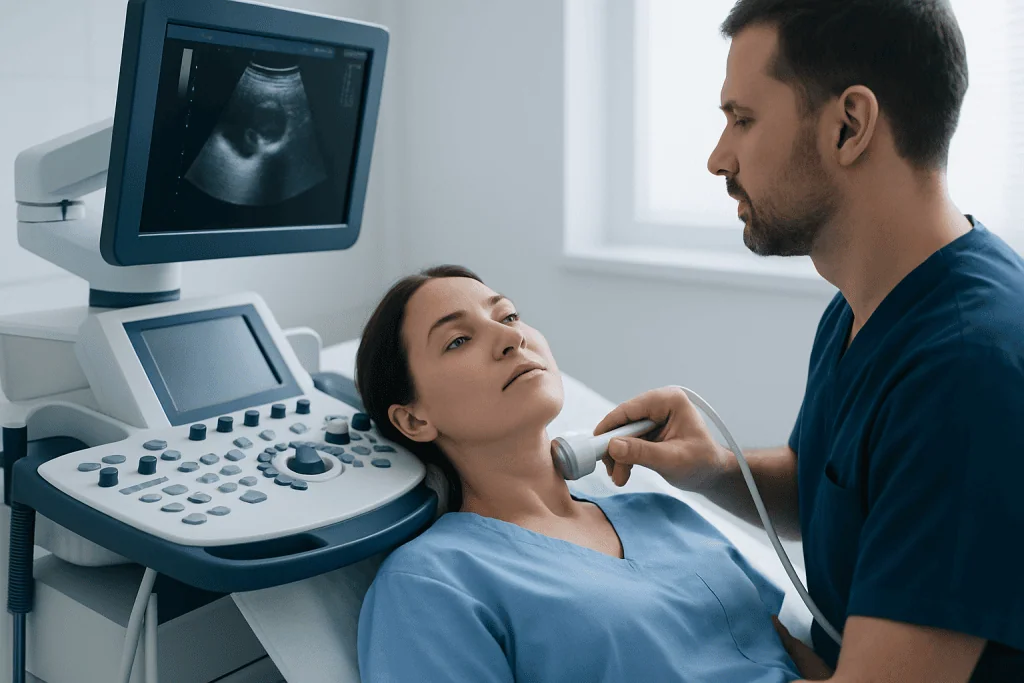
The most important imaging test is thyroid ultrasound. Ultrasound helps determine the nodule’s exact size, whether it is solid or cystic, whether it has calcifications, and whether the borders look smooth or irregular. It also allows assessment of nearby lymph nodes and helps guide a biopsy if one is needed.
When ultrasound and blood tests suggest that a nodule needs tissue sampling, doctors usually perform fine-needle aspiration biopsy. This involves placing a thin needle into the nodule to collect cells for examination under a microscope. It is a commonly used, minimally invasive test that provides important information about whether the nodule is benign, suspicious, or indeterminate.
Ultrasound Findings and Biopsy Decisions
Ultrasound is central to decision-making because it helps sort nodules into lower-risk and higher-risk patterns. Features that may raise concern include a solid composition, marked hypoechogenicity, irregular or lobulated margins, tiny calcifications, a taller-than-wide shape, or suspicious lymph nodes nearby. By contrast, nodules that are mostly cystic or spongiform and have smooth borders are often lower risk.
Biopsy is not recommended for every thyroid nodule. Doctors use ultrasound-based risk patterns together with the nodule’s size to decide whether a fine-needle aspiration is appropriate. A small nodule with very low-risk features may simply be monitored with repeat ultrasound, while a nodule with more suspicious features may be biopsied at a smaller size.
Biopsy results are commonly reported in categories such as benign, malignant, suspicious, nondiagnostic, or indeterminate. A benign result often means the nodule can be followed with periodic ultrasound. A nondiagnostic result may mean there were not enough cells to analyze, so the biopsy may need to be repeated. Indeterminate results can require further testing or referral to a specialist to discuss options.
This careful approach helps avoid overtreatment while still identifying nodules that need closer management. For some people, additional imaging, repeat biopsy, or consultation about thyroid surgery may be appropriate, especially if the nodule is growing, causing pressure symptoms, or has concerning pathology findings.
Treatment Options and Follow-Up
Treatment depends on the cause of the nodule, biopsy results, symptoms, and thyroid hormone status. Many benign nodules do not need immediate treatment and can be monitored with regular follow-up appointments and repeat ultrasound. Stable nodules without concerning features may simply be watched over time.
If a nodule is large or causes swallowing problems, visible neck swelling, discomfort, or voice-related symptoms, treatment may be considered even if the nodule is benign. Cystic nodules may sometimes be drained, although they can recur. Overactive nodules may require treatment aimed at controlling excess hormone production and managing symptoms.
Surgery may be recommended for nodules that are cancerous, suspicious for cancer, repeatedly nondiagnostic, very large, or causing compressive symptoms. The exact operation depends on the size, location, and number of nodules and whether disease affects one side or the whole gland. In some cases, the entire thyroid is removed; in others, only one lobe is taken out.
Near the end of the care pathway, some patients benefit from a multidisciplinary review involving endocrinology, radiology, pathology, and surgery. Acibadem International’s multidisciplinary specialists in JCI-accredited hospitals diagnose and treat thyroid conditions for international patients when advanced assessment or treatment planning is needed.
Self-Care, Monitoring, and Prevention
There is no guaranteed way to prevent all thyroid nodules, because many develop as part of common thyroid changes over time. Still, maintaining general thyroid health is helpful. This includes following a balanced diet, using iodine appropriately as advised in the local setting, and keeping regular medical appointments if there is a history of thyroid disease.
People who have been diagnosed with a benign thyroid nodule should keep scheduled follow-up visits. Repeat ultrasound is important because it helps doctors identify growth or changes in structure. Growth alone does not always mean cancer, but change over time can affect whether another biopsy or a different treatment plan is needed.
It is also helpful to report new symptoms promptly. These may include increasing neck swelling, worsening hoarseness, pressure with swallowing, or symptoms of high or low thyroid hormone levels. Avoiding unnecessary worry is important, but so is staying engaged in follow-up so that any change is assessed in a timely way.
- Take thyroid medication exactly as prescribed if a doctor recommends it.
- Attend repeat blood tests and ultrasound appointments as planned.
- Tell a doctor about any family history of thyroid cancer or prior radiation exposure.
- Seek medical advice before using supplements marketed for “thyroid support.”
When to See a Doctor
A person should see a doctor if they notice a new lump in the neck, persistent hoarseness, trouble swallowing, or a feeling of pressure in the throat. Medical review is also important if there are symptoms of thyroid hormone imbalance, such as palpitations, unexplained weight changes, unusual sweating, fatigue, or intolerance to heat or cold.
Urgent evaluation may be needed if neck swelling increases quickly, breathing becomes difficult, or there is significant pain, although these situations are less common. A history of childhood radiation exposure, a strong family history of thyroid cancer, or enlarged lymph nodes in the neck are also reasons for timely specialist assessment.
In general, thyroid nodules are best assessed without delay but without panic. Most turn out to be benign, and modern evaluation methods allow doctors to identify which nodules can be safely observed and which need biopsy or treatment. A qualified endocrinologist, radiologist, or thyroid surgeon can guide the next steps based on the full clinical picture.
Frequently asked questions
Are thyroid nodules usually cancerous?
No. Most thyroid nodules are benign and do not represent thyroid cancer. The purpose of evaluation is to identify the smaller group of nodules that have suspicious features and need biopsy or closer follow-up.
What does a thyroid ultrasound show?
A thyroid ultrasound shows the size, number, and structure of nodules in the thyroid gland. It can help doctors see whether a nodule is solid or cystic and whether it has features that make biopsy more or less appropriate.
When is a thyroid biopsy needed?
A thyroid biopsy is usually considered when a nodule reaches a certain size and has ultrasound features that suggest higher risk. Not every nodule needs biopsy, and many can be safely monitored with repeat ultrasound.
Is fine-needle aspiration painful?
Fine-needle aspiration is generally well tolerated and uses a very thin needle to collect cells from the nodule. Most people feel only mild discomfort, and the procedure is usually done without major recovery time.
Can a benign thyroid nodule become cancer later?
A benign biopsy result is reassuring, but doctors may still recommend periodic follow-up because nodules can change over time. Most benign nodules remain benign, but repeat imaging helps ensure that any new concerning features are recognized early.
Do thyroid nodules affect thyroid hormone levels?
Many thyroid nodules do not affect hormone levels at all. Some nodules can produce excess thyroid hormone, while others may occur in thyroid conditions that reduce normal hormone function, so blood tests are an important part of evaluation.
References
- American Thyroid Association
- National Institute of Diabetes and Digestive and Kidney Diseases
- British Thyroid Association
- National Comprehensive Cancer Network
- American Association of Clinical Endocrinology
This article is for general information only and is not a substitute for professional medical advice. Please consult a qualified doctor about your individual situation.
Ultrasound in Turkey — costs, top hospitals & a free quote
JCI-accredited · board-certified surgeons · reply within 24h
Add us as a Preferred Source to see more of our trusted health content across Google Search, AI Overviews and Discover.

Check-up & Preventive Medicine
Comprehensive health screenings designed for early detection and prevention.
3 specialists in this unit