What Is an OD in Eye Care? How Eye Doctors and Optometrists Differ

OD means Doctor of Optometry, a licensed eye care professional. Optometrists examine eyes, prescribe glasses or contact lenses, and manage many common eye conditions.
Key Takeaways
- OD means Doctor of Optometry, a licensed eye care professional.
- Optometrists examine eyes, prescribe glasses or contact lenses, and manage many common eye conditions.
- Ophthalmologists are medical doctors who can perform eye surgery and treat more complex eye disease.
- Opticians fit and dispense glasses and contact lenses but do not diagnose eye disease.
- The right eye care professional depends on whether a person needs a routine exam, medical treatment, or surgery.
In eye care, OD stands for Doctor of Optometry. Understanding what an OD does, and how optometrists differ from ophthalmologists and opticians, can help patients choose the right professional for routine vision care and eye concerns.
Overview: What does OD mean in eye care?
OD in eye care stands for Doctor of Optometry. An optometrist is a licensed healthcare professional trained to examine the eyes, test vision, prescribe glasses and contact lenses, and diagnose and manage many common eye conditions. They play a central role in routine eye care for both children and adults.
Many people use the term “eye doctor” for different professionals, which can be confusing. In everyday practice, eye care may involve an optometrist, an ophthalmologist, or an optician. Each has a different level of training and a different scope of practice.
An OD is often the first professional a person sees for blurred vision, headaches related to eye strain, difficulty reading, or routine screening. If a more complex condition is suspected, the optometrist may refer the patient to an ophthalmologist, especially when surgery or advanced medical treatment is needed.
What does an optometrist do?
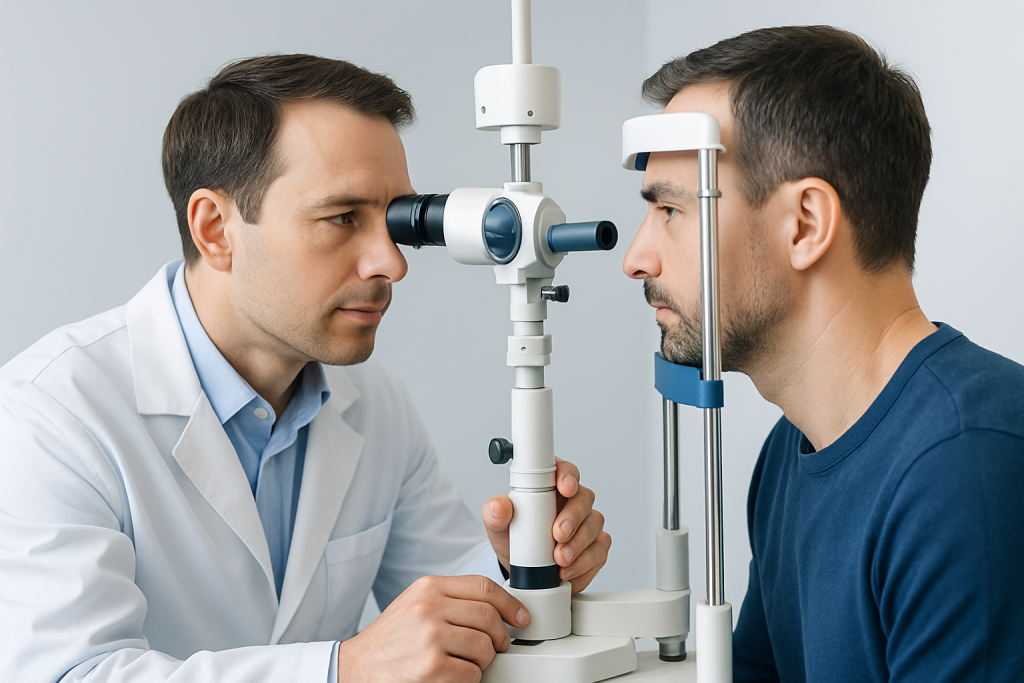
Optometrists provide primary vision care. They perform comprehensive eye exams, measure visual acuity, check how the eyes focus and work together, and prescribe corrective lenses. They can also assess whether a person may benefit from contact lenses or updated glasses.
In many healthcare systems, optometrists also diagnose and manage a range of non-surgical eye conditions. These may include dry eye, eye allergies, some infections, minor injuries, and changes in vision related to aging. They may monitor refractive problems such as astigmatism and age-related near-vision changes that may need presbyopia treatment.
During an eye exam, an OD may evaluate eye pressure, the front of the eye, the retina, and the optic nerve. If findings suggest cataracts, glaucoma, retinal disease, or another condition needing specialist medical or surgical care, the optometrist may arrange referral and ongoing co-management.
- Routine eye examinations
- Vision testing and refraction
- Prescription of glasses and contact lenses
- Screening for eye disease
- Management of many common, non-surgical eye problems
How is an optometrist different from an ophthalmologist and an optician?

The main difference is training and scope of practice. An optometrist (OD) is trained in vision care and the diagnosis and management of many eye conditions, but is not a medical doctor. An ophthalmologist is a physician, typically holding an MD or equivalent degree, with specialized training in medical and surgical eye care.
Ophthalmologists can diagnose and treat all types of eye disease, prescribe medication, and perform surgery. For example, they may manage cataracts, retinal disorders, corneal disease, or complex neurologic eye problems. In some cases, a patient who starts with an optometrist may later be referred for procedures such as cataract surgery or advanced assessment in neuro-ophthalmology.
An optician has a different role from both. Opticians are trained to fit, adjust, and dispense glasses or contact lenses based on a prescription written by an optometrist or ophthalmologist. They do not diagnose eye disease, perform medical eye exams, or prescribe treatment.
These roles often complement one another. A person may see an optometrist for routine exams, an optician for fitting eyewear, and an ophthalmologist for surgery or treatment of more serious eye disease.
When should someone see an OD?
An OD is a good starting point for routine preventive care and most common vision concerns. This includes blurred distance vision, trouble reading, eye strain while using screens, changes in prescription, and regular monitoring for people who wear glasses or contacts.
Children often benefit from eye exams as part of overall developmental care. An optometrist can check for refractive errors, focusing problems, and signs that may suggest conditions such as lazy eye. Adults with diabetes, high blood pressure, or a family history of eye disease may also need regular visits to help detect early changes before symptoms appear.
People should also consider an eye exam if they have dry, irritated, or red eyes; frequent headaches associated with visual tasks; trouble driving at night; or difficulty with reading or computer work. In many situations, an optometrist can evaluate the problem directly and advise whether specialist referral is necessary.
What happens during an eye exam with an optometrist?
A comprehensive eye exam usually begins with a discussion of symptoms, general health, medications, and family history. This information helps the optometrist understand possible risk factors for eye disease and determine which tests are most useful.
The exam often includes visual acuity testing, refraction to determine glasses or contact lens prescription, assessment of eye movement and alignment, and evaluation of the pupils. The optometrist may also examine the front and back of the eye using specialized instruments and may measure eye pressure as part of glaucoma screening.
Depending on age, symptoms, and findings, additional tests may be recommended. These may include retinal imaging, visual field testing, or tests focused on the cornea, tear film, or optic nerve. If a retinal circulation problem or vascular change is suspected, a specialist may later use investigations such as eye angiography.
After the exam, the patient is usually given a clear explanation of the results. This may include a vision prescription, advice on follow-up, treatment for a common problem, or referral if the findings suggest a more complex eye condition.
Common eye problems an OD may identify or manage
Optometrists commonly diagnose refractive errors such as nearsightedness, farsightedness, astigmatism, and age-related near-vision changes. These are among the most frequent reasons people seek eye care, and they are often managed with glasses, contact lenses, or discussion of other correction options.
An OD may also identify common eye surface and eyelid problems such as dry eye, blepharitis, allergies, or inflammation. Some infections or irritations, including forms of conjunctivitis, can be assessed and managed in optometric practice depending on local regulations and the severity of symptoms.
Just as important, optometrists help detect signs of diseases that may not cause symptoms in the early stages. These can include glaucoma, cataracts, diabetic eye disease, and retinal changes. Early detection can support timely referral and treatment, helping protect long-term vision.
In some patients, the optometrist may also notice findings that suggest a broader medical issue, such as diabetes, hypertension, autoimmune disease, or neurologic conditions. This is one reason routine eye examinations can be valuable even when vision seems normal.
When is an ophthalmologist the better choice?
Although an OD can manage many eye concerns, some situations call for direct care from an ophthalmologist. These include sudden vision loss, flashes and floaters with a curtain-like shadow, significant eye injury, severe eye pain, rapidly worsening redness, or symptoms suggesting retinal detachment, acute glaucoma, or a serious infection.
An ophthalmologist is also the appropriate specialist when surgery may be needed. This may include treatment for cataracts, retinal disease, corneal disease, eyelid reconstruction, or certain pediatric and neurologic eye disorders. Ongoing management of complex conditions such as advanced diabetic retinopathy or macular disease may also involve ophthalmology-led care.
For many patients, care is shared. An optometrist may perform routine monitoring before or after specialist treatment, while the ophthalmologist handles surgery or complex medical decisions. This team-based approach can make eye care more coordinated and convenient.
Near the end of the care pathway, some patients may seek treatment at specialist centers. Acibadem International’s multidisciplinary eye specialists in JCI-accredited hospitals diagnose and treat a wide range of eye conditions for international patients, especially when advanced imaging, specialist review, or surgery is required.
How to choose the right eye care professional
Choosing the right provider depends on the reason for the visit. For routine vision checks, glasses prescriptions, contact lens assessments, and many common eye complaints, an optometrist is often the best first step. For surgery, serious disease, or urgent eye symptoms, an ophthalmologist is usually more appropriate.
It can also help to ask practical questions before booking. Patients may want to know whether the clinic offers comprehensive medical eye exams, pediatric services, imaging, or referral pathways to surgical specialists. This can be especially helpful for people with diabetes, a strong family history of glaucoma, or existing eye disease.
Regular eye care is an important part of overall health. Even when symptoms are mild, a professional exam can identify whether the issue is simply a refractive change or something that needs closer attention. If there is uncertainty, starting with an OD is often a sensible and reassuring option.
Frequently asked questions
What does OD mean after an eye doctor’s name?
OD stands for Doctor of Optometry. It means the professional is trained and licensed to perform eye exams, prescribe corrective lenses, and diagnose and manage many common eye conditions.
Is an OD a real doctor?
An OD is a licensed healthcare professional with advanced training in optometry. However, an optometrist is not a medical doctor like an ophthalmologist, who has medical and surgical training.
Should someone see an optometrist or an ophthalmologist first?
For routine eye exams, blurred vision, glasses prescriptions, and many common eye complaints, an optometrist is often the right first step. If symptoms are severe, sudden, or suggest a serious eye problem, an ophthalmologist may be the better choice.
Can an optometrist diagnose eye disease?
Yes, optometrists can diagnose many eye conditions and monitor eye health. They can also recognize signs of more serious disease and refer patients to an ophthalmologist when advanced treatment or surgery is needed.
What is the difference between an optometrist and an optician?
An optometrist examines the eyes, tests vision, and prescribes glasses or contact lenses. An optician fits and dispenses those lenses based on a prescription, but does not diagnose eye disease or perform medical eye exams.
How often should adults have an eye exam?
The ideal schedule depends on age, symptoms, vision needs, and medical history. Many adults benefit from regular eye exams, especially if they wear corrective lenses, have diabetes, or have a family history of eye disease.
References
- American Optometric Association
- American Academy of Ophthalmology
- National Eye Institute
- NHS
- Centers for Disease Control and Prevention
This article is for general information only and is not a substitute for professional medical advice. Please consult a qualified doctor about your individual situation.
Explore treatments in Turkey — costs, top hospitals & a free quote
JCI-accredited · board-certified surgeons · reply within 24h
Add us as a Preferred Source to see more of our trusted health content across Google Search, AI Overviews and Discover.
Check your numbers in seconds
BMI, calories, due date, blood pressure and 30+ more clinical calculators — free, instant, doctor-reviewed ranges.