

What Are Dental Implants? How They Work and Who They Help
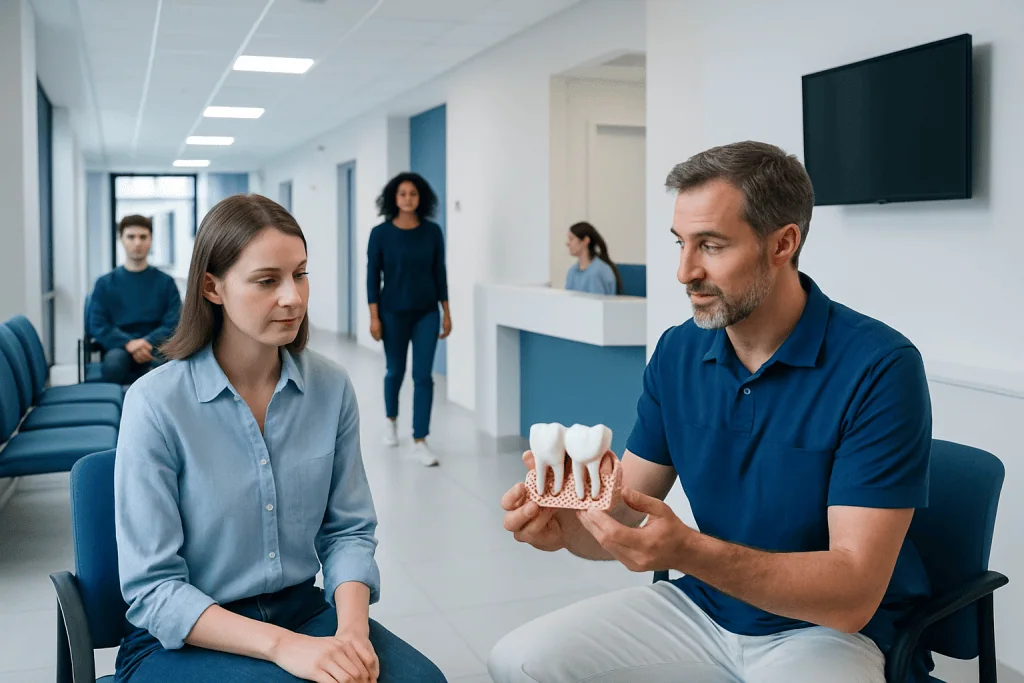
Dental implants replace the root of a missing tooth and support a custom-made replacement tooth. They work by bonding with the jawbone in a process called osseointegration.
Key Takeaways
- Dental implants replace the root of a missing tooth and support a custom-made replacement tooth.
- They work by bonding with the jawbone in a process called osseointegration.
- Many healthy adults are candidates, but gum health, bone quantity, and overall medical history matter.
- Treatment may involve imaging, planning, implant placement, healing time, and attachment of the final restoration.
- Good oral hygiene, regular dental visits, and avoiding tobacco help implants last longer.
Dental implants are small titanium or ceramic posts placed in the jawbone to replace missing tooth roots and support crowns, bridges, or full-arch teeth. They can offer a stable, long-lasting way to restore chewing, speech, comfort, and appearance for many adults.
Overview: What Are Dental Implants?
Dental implants are artificial tooth roots that are placed into the jawbone to support replacement teeth. In most cases, an implant is made of biocompatible titanium, though some patients may be offered ceramic materials in selected situations. Once healed, the implant can hold a crown for one missing tooth, a bridge for several teeth, or a full-arch prosthesis when many teeth are missing.
A complete implant restoration usually has three main parts: the implant post placed in the bone, the abutment that connects the implant to the visible tooth, and the final restoration such as a crown, bridge, or denture. Because the implant is anchored in the jaw, it can feel more stable than removable options and may help a person chew and speak more comfortably.
Dental implants are used to restore both function and appearance. They can help prevent nearby teeth from shifting into an empty space and may also support the bone in the area by providing stimulation during chewing. For many people, implants are an important option within modern implant dentistry when one or more teeth are missing.
How Dental Implants Work
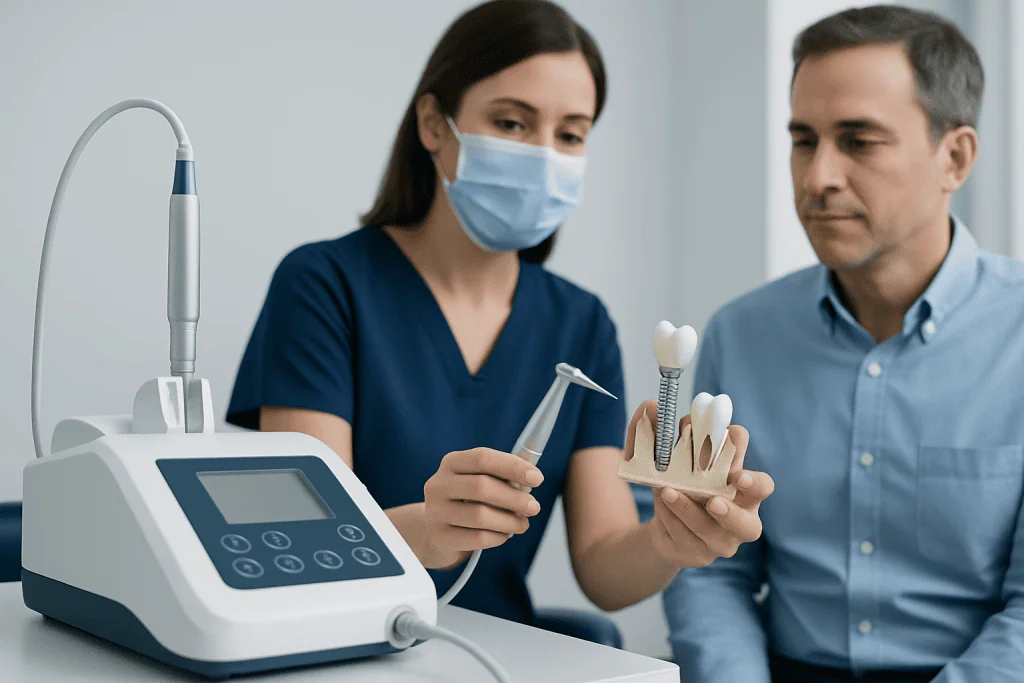
The key process behind dental implants is called osseointegration. After the implant is placed into the jaw, the surrounding bone gradually heals and bonds to the implant surface. This creates a firm foundation that can support a replacement tooth in a way that resembles a natural tooth root.
Healing takes time and varies from person to person. Some patients receive an implant and then wait several weeks or months before the final tooth is attached, while others may be candidates for earlier restoration depending on bone quality, implant stability, and treatment goals. The dentist or oral surgeon plans this timing carefully to protect the long-term result.
Implants can be used in different ways depending on how many teeth are missing. Common options include:
- A single implant with one crown for one missing tooth
- Two or more implants supporting a bridge for several missing teeth
- Multiple implants supporting a full arch of teeth, such as All-on-4 full-arch restoration or All-on-6 treatment in selected patients
Because treatment is tailored to the individual, imaging, bite analysis, gum health, and the amount of available bone all play a role in deciding which implant approach is most suitable.
Who Dental Implants May Help

Dental implants may help adults who have lost one tooth, several teeth, or all teeth in the upper or lower jaw. Tooth loss can happen for many reasons, including decay, gum disease, trauma, failed root canal treatment, or congenital absence of teeth. Implants can often improve everyday activities such as chewing firmer foods, speaking clearly, and smiling with confidence.
People who struggle with loose dentures may also benefit from implants. Implant-supported dentures or fixed full-arch restorations can provide more stability than removable dentures alone. This may reduce movement during eating or talking and, for some patients, increase comfort.
However, implants are not automatically right for everyone. Candidacy depends on several factors, including healthy gums, adequate bone volume, good oral hygiene habits, and a medical history that supports healing. Conditions affecting the mouth, such as advanced bleeding gums and gum inflammation, often need treatment before implant placement to improve the chance of success.
Age by itself is usually not the main issue; overall growth and health are more important. Most implants are placed after the jaw has finished growing, so they are generally considered for adults rather than younger children or teens.
Causes of Tooth Loss and Factors That Affect Eligibility
The most common reasons people need implants are untreated tooth decay, periodontal disease, injury, and tooth fractures. Sometimes a tooth cannot be saved even with restorative care, while in other cases a tooth may already be missing for many years. When a tooth has been absent for a long time, the jawbone in that area may shrink, which can influence the treatment plan.
Several factors can affect whether implants are recommended and how predictable healing may be. These include smoking or other tobacco use, uncontrolled diabetes, certain medications that affect bone turnover, previous radiation therapy to the jaws, and poor oral hygiene. Nighttime teeth grinding may also place extra stress on restorations, so the dental team may evaluate for bruxism and suggest protective measures if needed.
Bone quantity and gum condition are especially important. If there is not enough bone to support an implant, a patient may need preparation before or during implant surgery. In some cases, this includes dental bone grafting to build a stronger foundation for the implant.
Even when risk factors are present, they do not always rule out treatment. Instead, they usually mean more careful assessment, planning, and follow-up are needed to choose the safest and most effective option.
Diagnosis and Treatment Planning
Planning for dental implants begins with a detailed dental examination. The dentist reviews the patient’s symptoms, medical history, medicines, smoking status, and goals for treatment. The mouth is examined for gum health, bite alignment, tooth spacing, and the condition of nearby teeth.
Imaging is an essential part of planning. Dental X-rays and often three-dimensional scans help the clinician measure the height and width of the jawbone and locate important structures such as the sinus or nerves. These images also help determine the best implant position and angle for function and appearance.
Sometimes other dental treatment is needed first. This may include professional cleaning, treatment of gum disease, repair of decay, extraction of damaged teeth, or management of infection. If a tooth can still be saved, the team may discuss options such as endodontic treatment before deciding on extraction and implant replacement.
Comprehensive planning often involves several professionals, especially for complex cases. General dentists, prosthodontists, periodontists, oral and maxillofacial surgeons, and radiologists may all contribute to the final plan. This team approach helps match the restoration to the patient’s anatomy, bite, and long-term oral health needs.
Treatment Options and What the Procedure Involves
Dental implant treatment is usually done in stages. First, the implant is placed into the jawbone under local anesthesia, and in some cases sedation may be used depending on the procedure and patient preference. After placement, the gum is allowed to heal while the implant bonds with the bone. Later, the abutment and the final crown, bridge, or denture are attached.
Some patients can receive immediate temporary teeth on the same day, while others need a longer healing period before the visible tooth is placed. The best timing depends on the stability of the implant, the quality of the surrounding bone, whether an extraction was done at the same time, and the type of restoration planned. The dental team will explain whether an immediate or delayed approach is more appropriate.
There are alternatives to implants, and discussing them is part of informed decision-making. These may include a removable denture or a fixed dental bridge. Each option has advantages, limitations, maintenance needs, and cost considerations, so the right choice depends on the person’s oral health and preferences.
After surgery, mild swelling, tenderness, or bruising can occur for a short time. Patients are usually advised to follow soft-food instructions, keep the area clean, and attend follow-up visits so healing can be checked. Good aftercare supports comfort and helps reduce the risk of complications.
Benefits, Risks, and Long-Term Care
Dental implants can offer important benefits. They can improve biting efficiency, support clearer speech, and create a natural-looking replacement for missing teeth. Unlike traditional bridges, an implant-supported single crown usually does not require reshaping adjacent healthy teeth. Implants may also help maintain jawbone in the area because they transmit chewing forces into the bone.
Like any medical or dental procedure, implants also involve possible risks. These can include infection, delayed healing, implant loosening or failure to bond with the bone, gum recession, bite problems, or injury to nearby structures such as nerves or sinuses in rare cases. Careful planning and follow-up help reduce these risks, but no procedure is risk-free.
Long-term success depends heavily on daily care. Patients need thorough brushing, cleaning between teeth or around implant restorations, and regular professional checkups. Implant surfaces can collect plaque just like natural teeth, so gum inflammation around an implant must be treated early.
Routine maintenance is part of ongoing general dentistry care. Dentists may recommend periodic X-rays, professional cleaning methods suitable for implants, and a night guard if grinding is a concern. Consistent care can help implants remain healthy and functional for many years.
Prevention, Self-Care, and When to See a Dentist
The best way to reduce the need for tooth replacement is to protect natural teeth and gums. Daily brushing with fluoride toothpaste, cleaning between the teeth, limiting frequent sugary foods and drinks, and keeping regular dental appointments can lower the risk of decay and gum disease. Avoiding tobacco is especially important because smoking affects both oral health and healing.
For people who already have implants, self-care remains essential. Implant restorations should be cleaned carefully every day, and any changes such as bleeding, bad taste, swelling, looseness, or discomfort should not be ignored. A well-fitting bite and healthy surrounding gums are key parts of implant maintenance.
A person should see a dentist if they have a missing tooth, a loose denture, difficulty chewing, or concerns about whether an implant is possible. Prompt assessment is also important after dental trauma or when there are signs of infection, such as persistent swelling or pain. Earlier evaluation may allow more treatment choices and can help preserve bone.
Patients who want specialist assessment can benefit from a center that offers coordinated dental and surgical care. Acibadem International’s multidisciplinary specialists and JCI-accredited hospitals diagnose and treat dental implant cases for international patients, with planning based on individual needs and oral health findings.
Frequently asked questions
Are dental implants permanent?
Dental implants are designed to be a long-term tooth replacement option, but they are not guaranteed to last forever. Their lifespan depends on bone support, gum health, oral hygiene, bite forces, and regular professional care.
Is getting a dental implant painful?
The procedure is usually done with local anesthesia, so the area is numbed during treatment. Some soreness, swelling, or bruising afterward is common, but this is often manageable and tends to improve within a few days.
How long does dental implant treatment take?
Treatment time varies widely depending on the number of implants, healing speed, and whether extractions or bone grafting are needed. Some cases are completed over a few months, while more complex plans can take longer.
Can older adults get dental implants?
Yes, many older adults are suitable candidates for dental implants. The decision is based more on overall health, bone support, medications, and gum condition than on age alone.
What if there is not enough bone for an implant?
If the jawbone is too thin or too low in volume, a dentist may discuss procedures that build up the area before or during implant placement. In some situations, alternative tooth replacement methods may be more appropriate.
How do dental implants compare with dentures?
Dental implants are fixed in the jaw and usually feel more stable than removable dentures. Dentures may still be a good option for some people, especially when surgery is not desired or not medically suitable.
References
- American Dental Association
- National Institute of Dental and Craniofacial Research
- Mayo Clinic
- National Health Service
- European Association for Osseointegration
This article is for general information only and is not a substitute for professional medical advice. Please consult a qualified doctor about your individual situation.
Dental Implants in Turkey — costs, top hospitals & a free quote
JCI-accredited · board-certified surgeons · reply within 24h
Add us as a Preferred Source to see more of our trusted health content across Google Search, AI Overviews and Discover.

Dental & Oral Health
Full-scope dental care from implants and aesthetics to oral and maxillofacial surgery.
158 specialists in this unitRelated Treatments
More from the Health Library



Related Specialists

Assoc. Prof. Dr. Ferit Bayram
Oral & Dental Health
Assoc. Prof. Dr. Yeliz Çavuşoğlu Yüce
Oral & Dental Health
Assoc. Prof. Dr. Mutlu Keskin
Oral & Dental Health
Prof. Dr. Ülkü Noyan
Oral & Dental Health