Types of Cancer: How Cancers Are Named and Classified

Cancers are usually named for the organ or tissue where they start, even if they spread elsewhere. The main cancer groups include carcinomas, sarcomas, leukemias, lymphomas, myelomas, melanomas, and brain or spinal cord tumors.
Key Takeaways
- Cancers are usually named for the organ or tissue where they start, even if they spread elsewhere.
- The main cancer groups include carcinomas, sarcomas, leukemias, lymphomas, myelomas, melanomas, and brain or spinal cord tumors.
- Classification also includes grade, stage, and increasingly the tumor’s molecular or genetic features.
- Accurate diagnosis often requires imaging, biopsy, and laboratory testing.
- Cancer naming and classification guide treatment choices and help predict likely behavior.
Types of cancer are classified by the tissue or organ where they begin, the kind of cells involved, and how far the disease has spread. Understanding these names and categories helps patients make sense of test results, staging, and treatment planning.
Overview: What Are the Types of Cancer?
Cancer is not a single disease. The term describes a large group of conditions in which abnormal cells grow in an uncontrolled way, invade nearby tissue, or spread to other parts of the body. Because cancers can begin in almost any organ or tissue, doctors use a structured system to name and classify them.
In general, cancers are named for the place where they start and the type of cell they come from. For example, a cancer that begins in the lung is called lung cancer, even if it later spreads to the liver or bones. If that same lung cancer is found in the liver, it is still considered lung cancer that has metastasized, not liver cancer.
Classification gives useful details beyond the cancer’s name. It may include the tumor’s cell type, grade, stage, and molecular features. Together, these details help explain how the cancer may behave and which treatments are most likely to help.
How Cancers Are Named
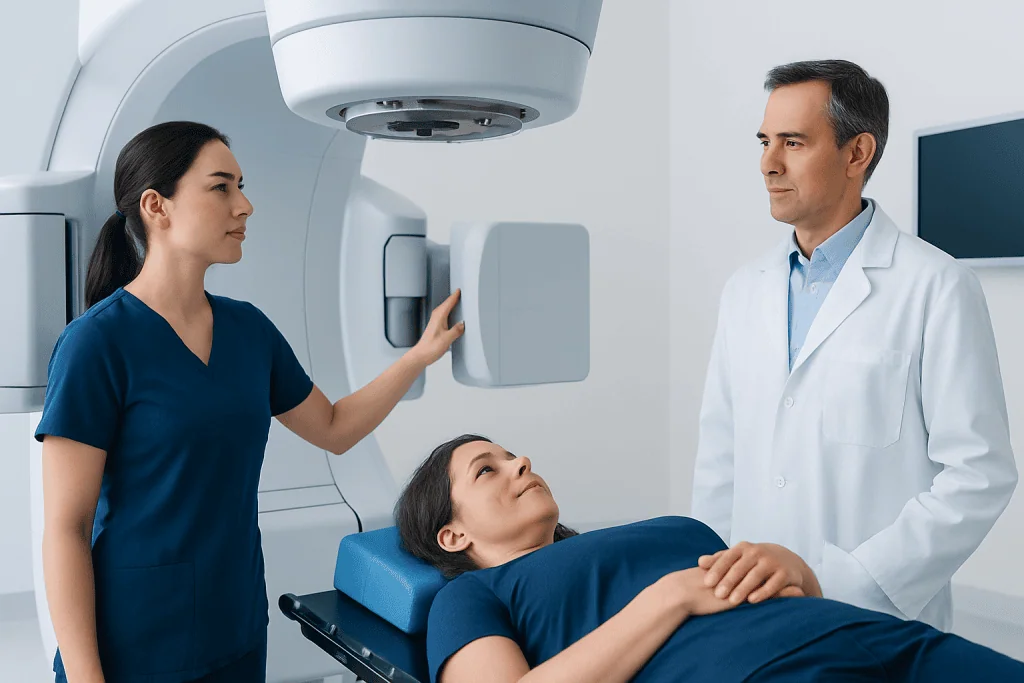
Doctors usually begin by naming a cancer according to its primary site, meaning the first place it developed. This is important because cancers that start in different organs can act very differently, even when they look similar on a scan. A tumor in the colon and a tumor in the pancreas are managed differently because their cells, biology, and patterns of spread are not the same.
Cancers are also named by the tissue or cell type involved. For example, tumors arising from epithelial cells, which line organs and body surfaces, are commonly called carcinomas. Tumors arising from connective tissues such as bone, muscle, fat, or blood vessels are usually called sarcomas. Blood-related cancers have their own naming groups, such as leukemia and lymphoma.
Some names reflect both location and cell type. Examples include adenocarcinoma of the stomach, squamous cell carcinoma of the cervix, or osteosarcoma of the bone. Other cancers may be identified further by special laboratory findings, including hormone receptors, protein markers, or gene changes. This more detailed naming is increasingly important in modern medical oncology.
Main Categories of Cancer

There are several broad groups of cancer. Carcinomas are the most common and start in epithelial tissues such as the skin or the lining of organs. Many common cancers, including breast, lung, prostate, and colorectal cancers, are carcinomas. Subtypes include adenocarcinoma, which develops in gland-forming cells, and squamous cell carcinoma, which forms in flat surface cells.
Sarcomas begin in connective or supportive tissues such as bone, cartilage, muscle, fat, or blood vessels. They are less common than carcinomas but include many different subtypes. Leukemias are cancers of blood-forming tissues, especially the bone marrow, and often involve large numbers of abnormal blood cells circulating in the bloodstream.
Lymphomas and myelomas affect cells of the immune system. Lymphoma starts in lymphocytes, a type of white blood cell, while myeloma starts in plasma cells. Melanoma develops in pigment-producing cells called melanocytes, usually in the skin but sometimes in other sites. Tumors of the brain and spinal cord are also classified separately because they arise from specialized nervous system tissues and are assessed differently from many other cancers.
- Carcinoma: starts in lining or glandular cells
- Sarcoma: starts in bone, muscle, fat, or other connective tissues
- Leukemia: starts in blood-forming tissue
- Lymphoma: starts in the lymphatic system
- Myeloma: starts in plasma cells
- Melanoma: starts in melanocytes
- Central nervous system tumors: start in the brain or spinal cord
Grade, Stage, and Molecular Classification
Beyond the main type of cancer, doctors also classify tumors by grade and stage. Grade describes how abnormal the cancer cells look under a microscope and how quickly they may grow. Lower-grade tumors tend to look more like normal tissue, while higher-grade tumors usually appear more irregular and may behave more aggressively.
Stage describes how much cancer is present and how far it has spread. Staging often considers the size of the primary tumor, whether nearby lymph nodes are involved, and whether the cancer has spread to distant organs. Many solid tumors use the TNM system, which stands for tumor, nodes, and metastasis. Stage is one of the most important tools for planning treatment and discussing outlook.
Increasingly, cancers are also classified by molecular or genetic features. Tests may look for changes in DNA, proteins, or cell receptors that can affect prognosis and treatment response. This approach is especially important in some breast, lung, colon, and blood cancers, where targeted therapies or immunotherapies may depend on specific tumor markers. In some situations, doctors may discuss related topics such as metastatic cancer when explaining spread and staging.
How Cancer Classification Is Diagnosed
Diagnosis usually begins with a medical history, physical examination, and tests based on symptoms or screening results. Imaging such as ultrasound, mammography, CT, MRI, or PET scans can help identify a suspicious area and show its size or spread. Blood tests may provide supportive information, but they usually cannot define the exact type of cancer on their own.
A biopsy is often the key step in classification. During a biopsy, a doctor removes a small sample of tissue or cells so that a pathologist can examine it under a microscope. The pathology report often identifies the cancer type, subtype, grade, and other features such as receptor status or genetic markers. These details are central to confirming the diagnosis.
Sometimes, additional procedures are needed to establish the stage or determine the best treatment path. This may include endoscopy, bone marrow testing, lymph node sampling, or advanced imaging. In many cases, care is coordinated through cancer screening and diagnostic pathways that bring together radiology, pathology, surgery, and oncology specialists.
Why Classification Matters for Treatment
Cancer classification is more than a label. It helps doctors choose the most appropriate treatment, estimate how the disease may behave, and compare treatment results across patients and research studies. Two cancers in the same organ may receive very different care if they have different cell types, grades, stages, or molecular findings.
Treatment options may include surgery, radiation therapy, chemotherapy, targeted therapy, immunotherapy, hormone therapy, stem cell transplant, or a combination of approaches. For example, some early-stage cancers are best treated with surgery alone, while others benefit from added chemotherapy or radiation. In advanced disease, molecular profiling may guide the use of medicines designed to act on specific tumor features.
Multidisciplinary decision-making is often important, especially for complex cases. Pathologists, radiologists, surgeons, medical oncologists, and radiation oncologists may review the findings together before recommending a plan. Depending on the cancer type, treatment may involve options such as chemotherapy or radiation oncology as part of a personalized strategy.
Risk Factors, Prevention, and Self-Care
Not all cancers can be prevented, and many develop through a combination of age, genetics, environment, and chance. However, some risk factors are known. These include tobacco use, excessive alcohol use, obesity, limited physical activity, unhealthy diet, certain infections, ultraviolet exposure, radiation exposure, and some inherited gene changes.
Prevention focuses on reducing modifiable risks and supporting early detection. Helpful steps include avoiding tobacco, maintaining a healthy weight, staying physically active, limiting alcohol, protecting the skin from the sun, and keeping up with recommended vaccinations and screening tests. Screening can help find some cancers before symptoms develop or detect precancerous changes that can be treated early.
For people already diagnosed with cancer, self-care remains important. Nutrition, rest, emotional support, and regular follow-up visits can all help during treatment and recovery. It can also be useful to ask the care team to explain the exact cancer name, stage, grade, and any biomarker results in plain language, since these details often shape the next steps.
When to See a Doctor
Many symptoms are not caused by cancer, but persistent or unexplained changes should be discussed with a doctor. Examples include a new lump, unusual bleeding, ongoing pain, unexplained weight loss, a persistent cough, changes in bowel or bladder habits, difficulty swallowing, or a skin lesion that changes in size, shape, or color. The right evaluation depends on the symptom, the person’s age, and medical history.
It is also important to seek medical advice if there is a strong family history of cancer or concern about inherited risk. In such cases, a doctor may recommend earlier screening, genetic counseling, or more tailored follow-up. People who have already had cancer should attend regular surveillance visits so any recurrence or new problem can be assessed promptly.
Clear communication can make the process less overwhelming. Patients may wish to bring a written list of questions and ask for copies of pathology or imaging reports. Near the end of the diagnostic or treatment journey, some people seek care at specialized centers; Acibadem International’s multidisciplinary specialists and JCI-accredited hospitals diagnose and treat cancer for international patients.
Frequently asked questions
What is the difference between a cancer type and a cancer stage?
Cancer type describes what kind of cancer it is and where it started, such as breast cancer or lymphoma. Stage describes how much cancer is present and whether it has spread. Both are important because they help guide treatment decisions.
Why is a cancer still called by its original name after it spreads?
Cancer is named by the place where it first began, called the primary site. If it spreads to another organ, it keeps the original name because its cells still have the biology of the first cancer. This matters because treatment is based on the primary cancer type, not just the organ where it is found later.
What does carcinoma mean?
Carcinoma is a broad term for cancer that starts in epithelial cells, which line the skin and many internal organs. It is the most common major cancer category. Many breast, lung, prostate, and colorectal cancers are carcinomas.
How do doctors find out exactly what type of cancer someone has?
Doctors often use imaging tests to locate a suspicious area, but a biopsy is usually needed to confirm the diagnosis. A pathologist examines the tissue sample under a microscope and may perform additional laboratory tests. These results help define the cancer’s type, subtype, grade, and sometimes molecular features.
Can two people with the same cancer have different treatments?
Yes. Even if two people have cancer in the same organ, their treatment may differ based on stage, grade, overall health, and specific tumor markers. Modern cancer care is often personalized to these details.
Are all tumors cancer?
No. A tumor is an abnormal mass of tissue, but it may be benign or malignant. Benign tumors do not invade nearby tissue or spread in the same way cancer does, while malignant tumors are cancerous.
References
- World Health Organization
- National Cancer Institute
- American Cancer Society
- UICC Union for International Cancer Control
- College of American Pathologists
This article is for general information only and is not a substitute for professional medical advice. Please consult a qualified doctor about your individual situation.
Oncology care in Turkey — second opinion and treatment plan
JCI-accredited · board-certified surgeons · reply within 24h
Add us as a Preferred Source to see more of our trusted health content across Google Search, AI Overviews and Discover.